What You Need to Know
A first flat on a desolate stretch of highway, 30 minutes from civilization, with nothing but a rusty tire iron and a prayer, is a common wake-up call. It was a rookie mistake. Spending 43 minutes wrestling with the spare, covered in grease, is the exact situation a good kit prevents. The honest version: a proper roadside emergency kit isn't about being a prepper; it's about not being stranded with a dead phone and no help.
Road and Track says breakdowns don't send calendar invites, and they aren't wrong. Imagine this: it's a Tuesday afternoon, you're on your way to an important meeting, and suddenly your engine sputters and dies. Or perhaps you're on a family road trip, miles from the next service station, and a deer jumps out, leaving you with a damaged headlight and a shaken family. These aren't far-fetched scenarios; they're everyday realities for countless drivers. Without a well-stocked kit, these minor inconveniences can quickly escalate into costly and potentially dangerous situations.
A basic roadside emergency kit for 2026 should go far beyond a simple tire iron. Think about the essentials that can get you back on the road or at least keep you safe while you wait for assistance. This includes a reliable jump starter, capable of cranking a dead battery multiple times, especially crucial in cold weather where battery performance plummets. Consider one with a built-in power bank for charging your phone – because a dead phone is often worse than a dead car. You'll also want a sturdy tire repair kit, complete with plugs and a portable air compressor, which can be a lifesaver for slow leaks or minor punctures, potentially saving you a tow fee of $100 or more. Don't forget a bright LED flashlight with extra batteries, reflective triangles or flares for visibility, and a basic first-aid kit for minor cuts and scrapes. Even a simple Mylar blanket can be invaluable in unexpected cold weather, providing crucial warmth for just a few dollars. Investing in a comprehensive kit, typically ranging from $75 to $200, is a small price to pay for peace of mind and genuine safety on the road.
Top Picks
Forget the 'professional preparedness' kits that cost more than your car payment. The real test is a blizzard jump-start with cheap cables that melt. The real move is gear that handles real-world abuse, not just looking good in a pristine trunk. YouTube reviewers highlight various kits for 2026, but I'm looking for the stuff that saves your bacon, not just your wallet.
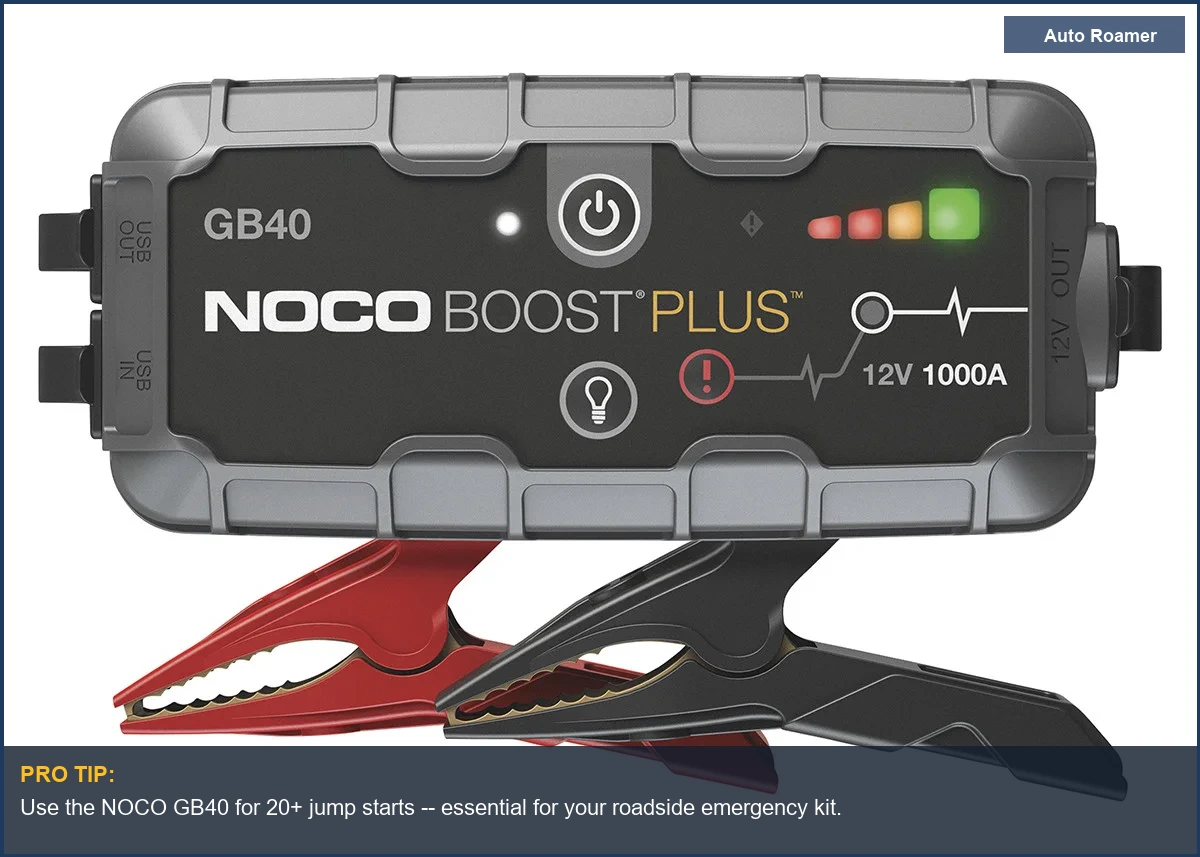
- NOCO Boost Plus GB40 Jump Starter (~$120)
- Specs: 1000 Amp, for up to 6-liter gas and 3-liter diesel engines.
- Pros: Super compact, holds a charge for months, easy to use even if you've never jump-started a car. It works even on a beat-up truck stuck in a muddy field. It just works.
- Cons: More expensive than basic cables.
- Best-for: Anyone who drives alone, or just wants to avoid asking strangers for a jump.
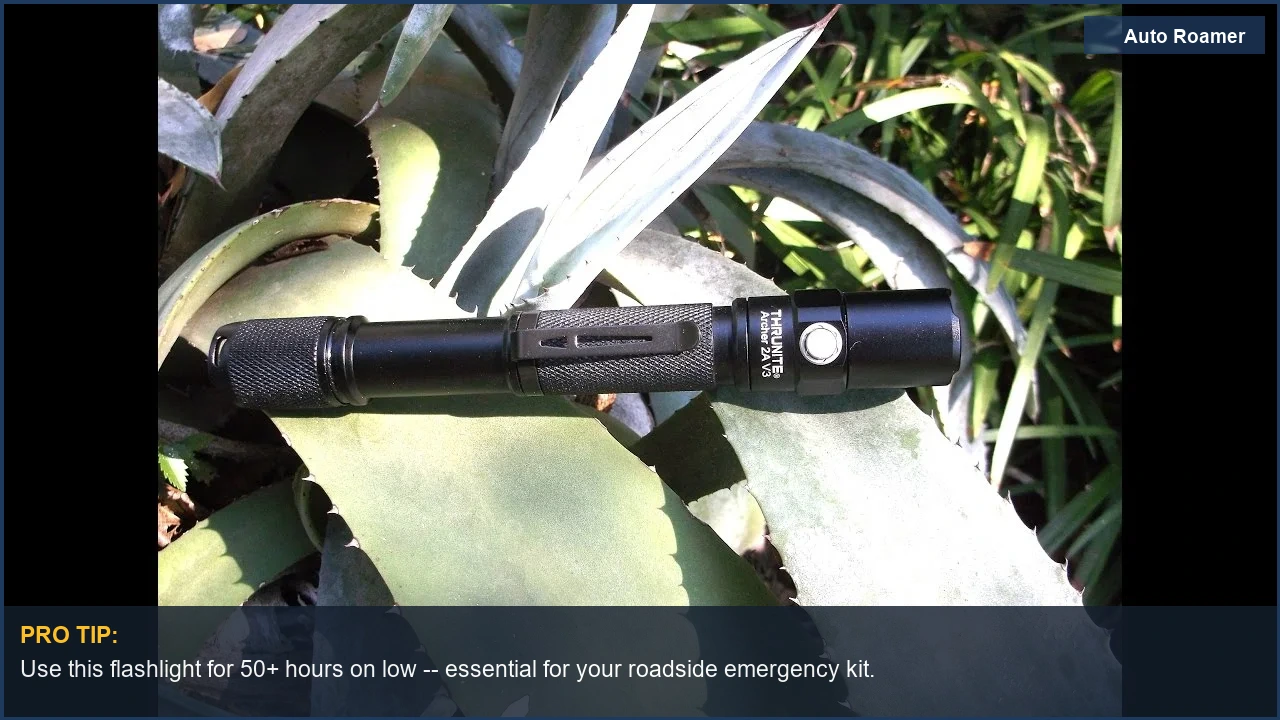
- ThruNite Archer 2A V3 Flashlight (~$40)
- Specs: 500 lumens, uses two AA batteries, waterproof.
- Pros: Bright enough to actually see what you're doing under the hood at 2 AM. A cheap flashlight can die after 10 minutes in a light drizzle. This one survives repeated downpours.
- Cons: Uses AA batteries, so you need spares.
- Best-for: Seeing things in the dark, obviously.
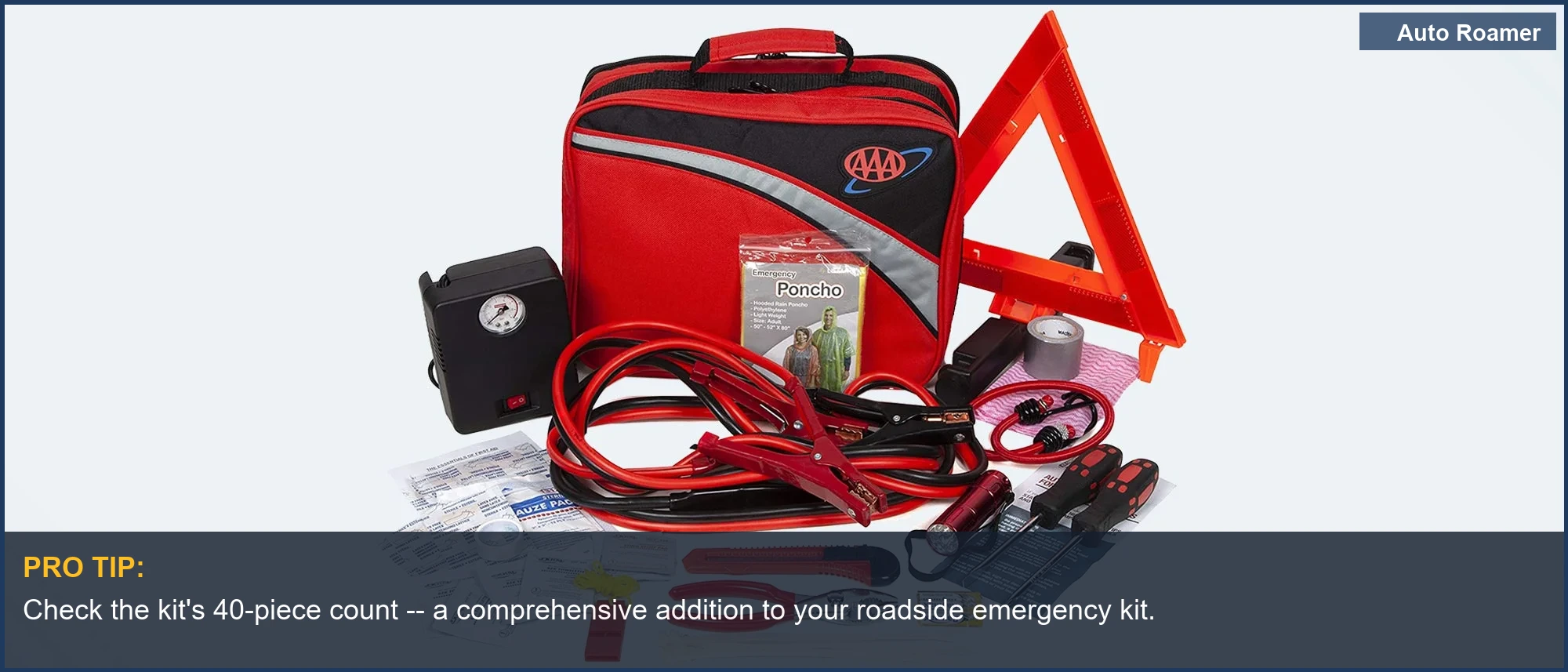
- Lifeline AAA Excursion Road Kit (~$50)
- Specs: 76 medical items, jumper cables, reflective triangle, basic tools.
- Pros: A good all-in-one starter kit, especially for the price. Medical Gear Outfitters mentions this kit's balance of first aid and automotive tools.
- Cons: The jumper cables are often a bit thin for larger vehicles. The tools are entry-level.
- Best-for: The absolute beginner who wants a decent baseline without breaking the bank.
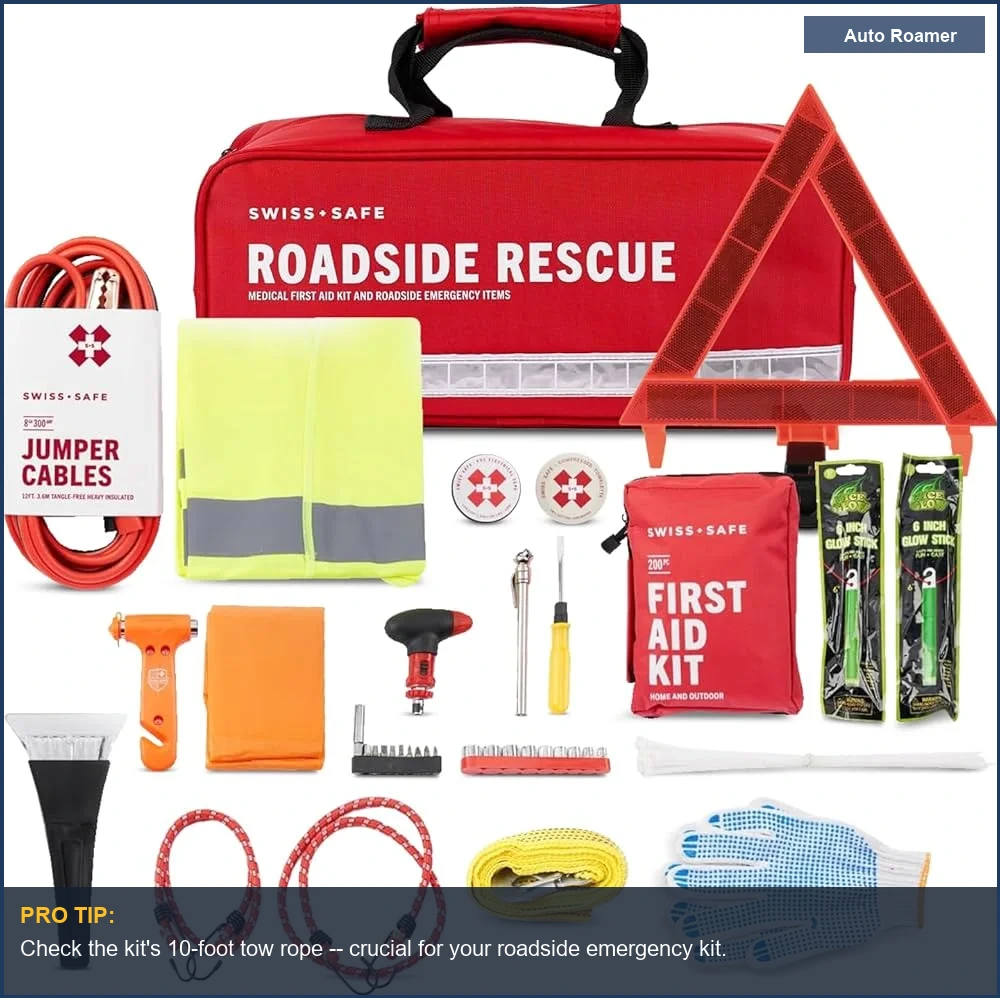
- Swiss Safe 2-in-1 Roadside Car Emergency Kit (~$70)
- Specs: Extensive first aid kit, basic roadside tools, reflective vest.
- Pros: Tom's Guide praises its comprehensive first aid kit. This is the real move if you're worried about cuts and scrapes more than major mechanical failures.
- Cons: Less focus on heavy-duty tools.
- Best-for: Families, or anyone who frequently travels with kids or pets and prioritizes medical preparedness.
- Rhino USA Recovery Tow Strap (~$35)
- Specs: 30 feet, 31,518 lb break strength.
- Pros: If you ever get stuck in mud, snow, or sand, this thing is a lifesaver. One of these can pull a Subaru Forester out of a ditch after you ignore the 'deep mud' warning sign.
- Cons: Requires another vehicle to use.
- Best-for: Anyone who ventures off paved roads, or lives in an area with snow and ice.
- First Alert PRO5 Fire Extinguisher (~$30)
- Specs: UL rated 5-B:C, rechargeable.
- Pros: Because sometimes, things catch fire. The New York Times recommends this as exceeding minimum size. Better to have it and not need it, than need it and have your car become a bonfire.
- Cons: Bulky, requires inspection.
- Best-for: Everyone. Seriously.
Quick Verdict
After enough car camping and roadside 'adventures,' the lesson is that less is often more. You don't need every gadget under the sun. You need the essentials that actually get you home. Car and Driver lists a lot of great gear, but my focus is on what a beginner can realistically use.
- The $50 Version: If you're on a tight budget, grab the Lifeline AAA Excursion Road Kit (~$50). It hits the basics, includes a first-aid kit, and won't make your wallet cry. Just upgrade the jumper cables later if you can.
- The Weekend Warrior's Choice: For a step up, combine the NOCO Boost Plus GB40 Jump Starter (~$120) with the Swiss Safe 2-in-1 Roadside Car Emergency Kit (~$70). This combo covers dead batteries and most minor injuries, which are the most common roadside headaches.
- What Nobody Tells Beginners: A full tank of gas is your best friend. Ready.gov reminds us a full tank prevents fuel lines from freezing. A blanket is also critical; it's easy to nearly freeze waiting for a tow on a cold winter night.
- Ditch the Fluff: You probably don't need a tire plug kit unless you know how to use it. A can of Fix-a-Flat is a decent temporary solution for a small puncture, but it's not a permanent fix.
- The Real Game-Time Decision: Always, always, always have a fully charged phone and a car charger. This isn't just about calling for help; it's about not being bored for 3 hours while you wait.