
Understanding Battery Types and Their Charging Requirements for Car Camping
The heart of your car camping power setup is the battery, and understanding the different types and how they want to be fed electricity is key. Forget the fancy jargon for a second; it's about knowing what you're working with so you don't end up with dead devices when you actually need them.
The heart of your car camping power setup is the battery, and understanding the different types and how they want to be fed electricity is key. Forget the fancy jargon for a second; it's about knowing what you're working with so you don't end up with dead devices when you actually need them. My first trip I just plugged my phone into the car and prayed. That lasted about 4 hours before the car wouldn't start.
Ben & Michelle break down the confusing terms, but the real lesson is in what happens when the temperature drops or you forget to turn off the fridge. It's not just about capacity; it's about how the battery handles the stress of being used and recharged out in the wild. Reddit threads are full of people who learned this the hard way, often with expensive gear going silent miles from anywhere.
Better Tech talks about chemistry, which sounds complicated, but it really just means how the battery behaves when you're actually using it.
The Core Answer
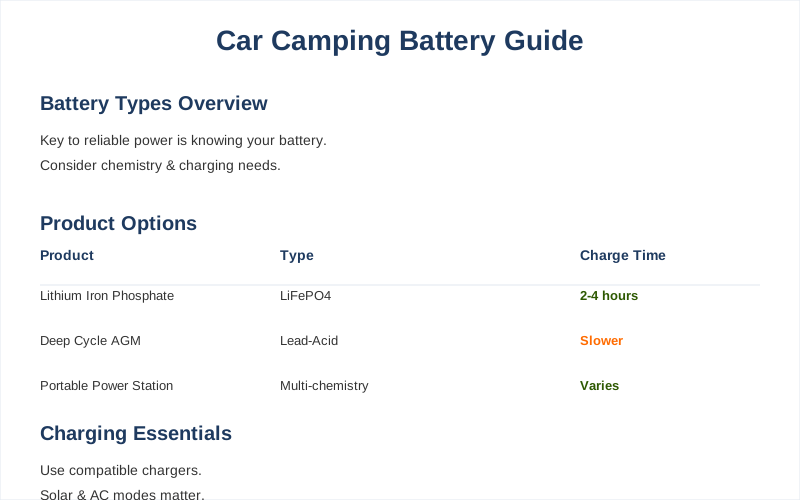
Lithium batteries are a bit more particular. While they can accept a faster charge, you still need the right charger. Many solar charge controllers and AC-to-DC chargers are designed with specific modes for lithium batteries. These modes ensure the correct voltage and current are delivered throughout the charging cycle. For instance, a 100Ah lithium battery can often be fully charged in 2-4 hours with a compatible 20-amp charger or a decent solar setup on a sunny day. Reddit users often recommend a 100-200 watt solar panel for a 100-200Ah lithium battery to keep things topped up on longer trips. The main thing nobody tells beginners is that your alternator charging system might not be ideal for lithium batteries without a specific DC-to-DC charger designed for them. These devices manage the voltage and temperature better than a standard alternator. It's not just about throwing power at it; it's about smart charging.Why This Matters for Your Setup
- Lead-Acid (AGM/Flooded): These are the workhorses you've probably seen in most cars. They're heavy, and you don't want to drain them past 50%. If you're running a small fridge and some lights for a weekend, a 100Ah lead-acid battery might work, but you'll need to be mindful of usage. Charging them takes longer; think 10-12 hours from 50% with a 10-amp charger. Better Tech highlights their weight as a major downside for portable setups.
- Lithium (LiFePO4): These are lighter, you can use almost all of their capacity (down to 10-20%), and they charge faster. A 100Ah lithium battery is like having 80-90Ah of usable power. Charging can take as little as 2-4 hours with a 20-amp charger or good solar. The upfront cost is higher, sometimes $500-$1000, but the lifespan (3000-5000 cycles) makes them cheaper long-term than replacing lead-acid batteries every few years. Texas Diamond Garage mentions their portability as a key advantage.
- Charging Methods: You can charge from your car's alternator (best with a DC-to-DC charger for lithium), solar panels (need a charge controller), or a shore power charger (when at a campground). For lead-acid, a simple solar controller is fine. For lithium, a more advanced controller or dedicated charger is often recommended. Kickass Products points out that lithium batteries have different charging needs.
- What Nobody Tells Beginners: Most car alternators aren't designed to fully top off a deep-cycle battery, especially lithium. You'll often need a separate charging source like solar or a shore power charger to keep them healthy. Also, the 'amp hour' rating isn't the whole story; usable capacity is what matters.
Making the Right Choice
- Know Your Chemistry: Lead-acid is cheaper upfront but heavier and less forgiving. Lithium is lighter, lasts longer, and offers more usable power, but costs more initially. For a first-timer, a smaller, pre-built power station (often lithium) might be the easiest entry point. Better Tech emphasizes understanding battery chemistry for performance.
- Charging is Crucial: You need to match your charging method to your battery type. Don't try to charge a lithium battery with a charger meant only for lead-acid. My first attempt at this nearly fried my brand new lithium battery. Use a solar setup with a proper charge controller for off-grid charging. Kickass Products details the differences in charger types.
- Capacity Matters, Usable Capacity More: Don't just look at the amp-hour rating. For lead-acid, assume you can only use about half of that. For lithium, you can use 80-90%. This impacts how long you can run your fridge or charge your devices. Reddit users often discuss usable capacity for longer trips.
- Long-Term Value: While lithium batteries have a higher sticker price, their longer lifespan and greater usable capacity often make them the more economical choice over several years of camping. Texas Diamond Garage notes their advantage for extended adventures.
Frequently Asked Questions
If I need a new battery for my rig, is it cheaper to just buy one from an auto parts store or get a specific 'camping' battery?
Do I really need a fancy multimeter to check my battery's voltage, or can I just look at the indicator light on the battery?
What if I accidentally use my lead-acid battery down to 10% charge? Is it totally ruined?
Can charging my lithium battery with the wrong charger permanently damage it?
I heard you can just use your car's alternator to charge your camping battery indefinitely. Is that true?
🏅 Looking for Gear Recommendations?
Check out our tested gear guides for products that work with this setup: