Why Your Lug Nuts Want an Impact Wrench, Not an Impact Driver
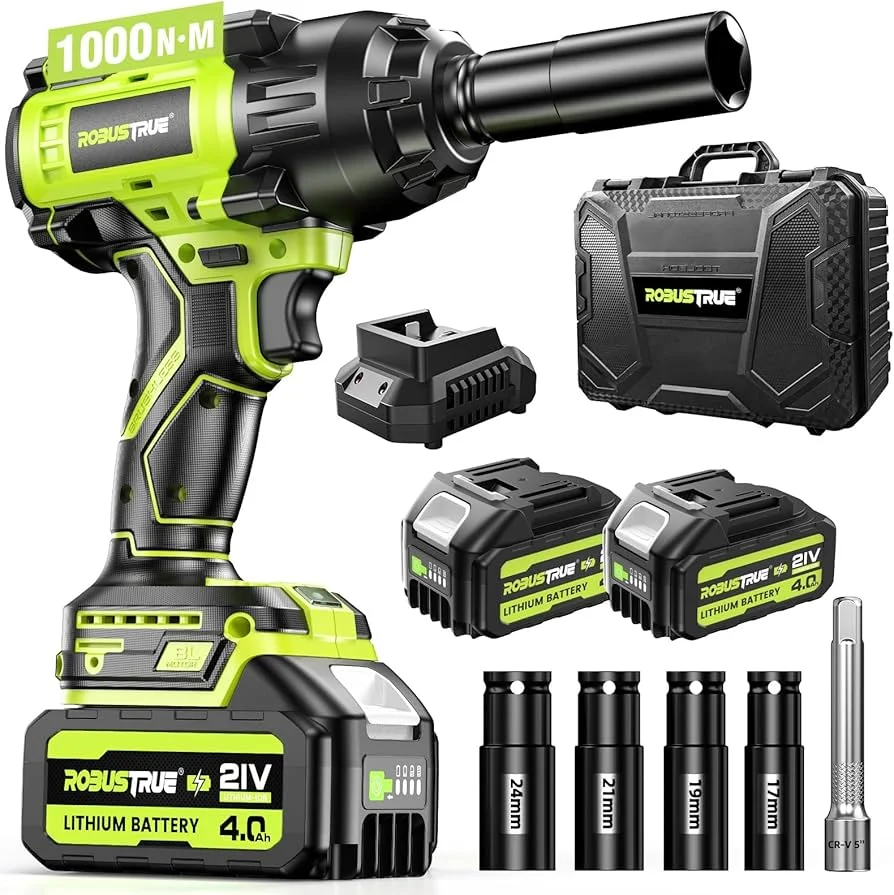
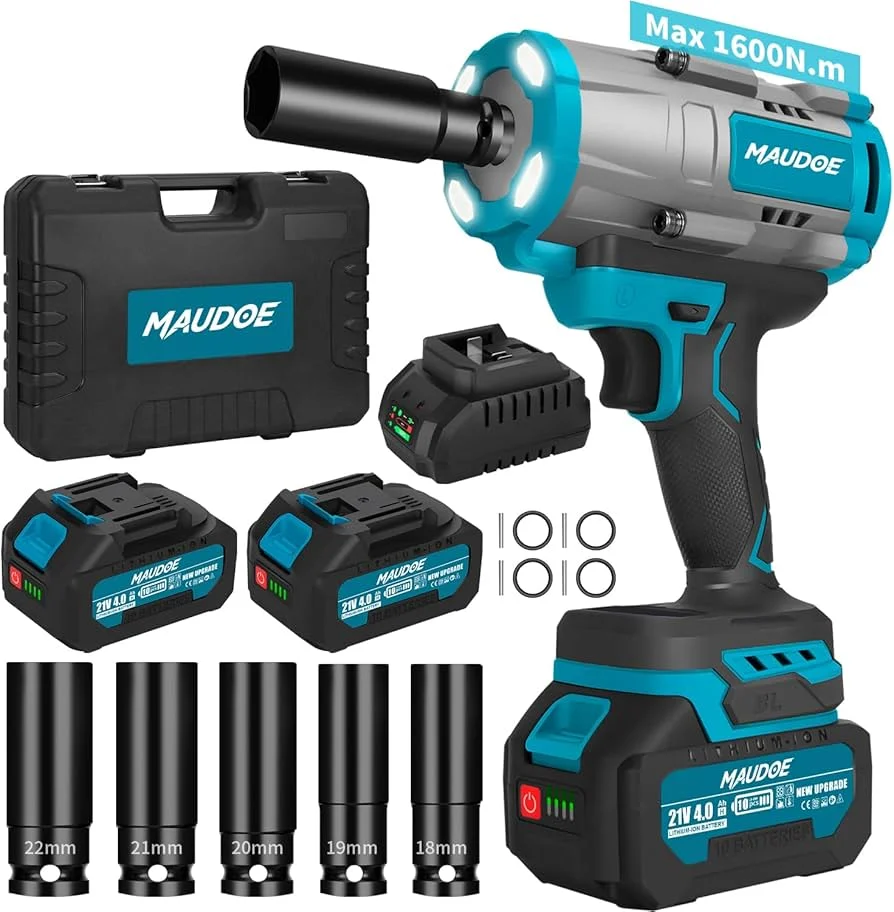
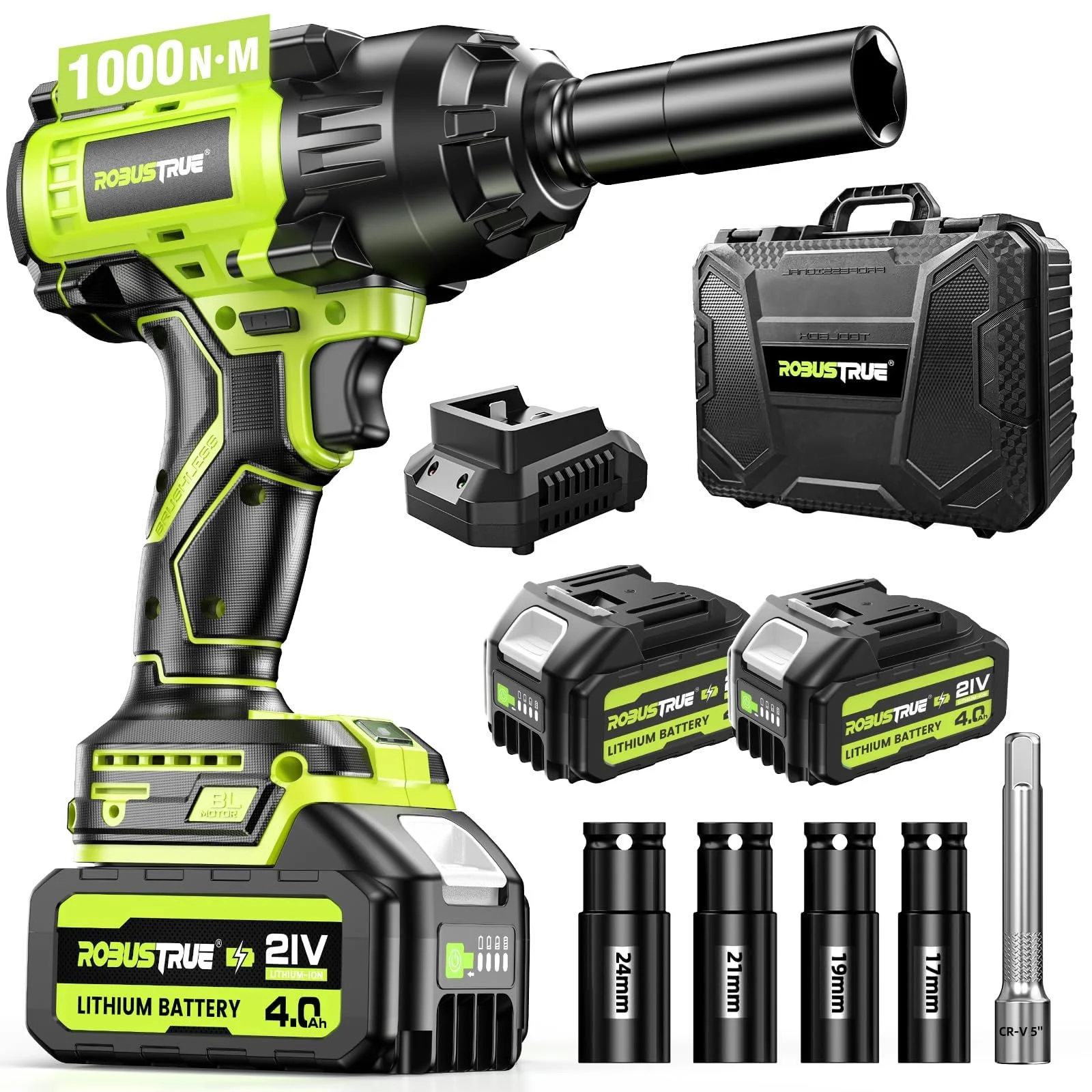
Search "battery impact gun for tires" and half the results hand you the wrong tool. What you actually want is a cordless 1/2-inch impact wrench — the gun that pops lug nuts loose in a couple of seconds — and right now kits like the Robustrue Cordless Impact Wrench 738ft-lbs do that job for under $95.
Eighteen years under hoods taught me one thing about this: the air gun was the sound of a shop making money. The battery version riding in your trunk costs less than the one tow it replaces.
The naming mess first. An impact driver swings a 1/4-inch hex chuck and lives for deck screws; I covered cordless impact drivers for tire changes separately, and they're a compromise at lug-nut duty. An impact wrench — the thing most people mean by "impact gun" — puts three to ten times the twist through a 1/2-inch square anvil.
This guide covers what lug nuts actually need (less than you think), why the torque numbers on marketplace listings are fiction (more inflated than you think), the two or three specs worth reading, and the picks by budget — including the 12-volt plug-in gun that runs off your accessory socket.
The marketing in this category is the loudest I've heard since fuel-additive infomercials. The numbers on the boxes are fantasy. The tools underneath are mostly fine. We'll separate the two.
One rule before the picks, because it saves you a set of rotors: the gun is for taking lug nuts off. Putting them back on ends with a hand torque wrench set to the number on your door jamb. We'll get into why.
What Lug Nuts Actually Need: The 80–140 ft-lb Reality
Here's the number nobody prints big. It's in your owner's manual, and it's the only torque number on this page that isn't marketing:
- Most passenger cars: 80 to 100 ft-lb of lug-nut torque
- Trucks and big SUVs: 120 to 140 ft-lb
- Real breakaway target: two to three times spec — call it 250 to 400 ft-lb
Why the multiplier? Breaking a nut loose takes more than the number it was tightened to. Corrosion, heat cycles, and the last shop's air gun all add resistance — that working rule comes from years of wheel-off jobs.
That's the whole requirement. A gun that genuinely delivers 300 ft-lb of breakaway handles every properly torqued passenger lug nut in the country. Everything above that is headroom for rust and for gorillas with air tools.
Now the asymmetry that matters: removal is the gun's job, installation is not. An impact wrench hammering a lug nut to 400 ft-lb stretches studs, crushes hub mating faces, and warps rotors a few hundred miles later. The spec that matters vs the one that's marketing — this is the one that matters.
So the routine: gun off, hand-thread on, snug at the gun's lowest setting in a star pattern, then a click torque wrench to the door-jamb number. A $40 torque wrench against a $400 rotor-and-pad job. The math does itself.
And recheck the wheel after the first 50 to 100 miles — alloy wheels seat and lose a little clamp, which is why every tire shop prints the recheck reminder on the invoice nobody reads. Two minutes with the wrench beats finding out on the highway which nut was loosest.
Sticker Torque vs Real Torque: The Marketplace Inflation Problem
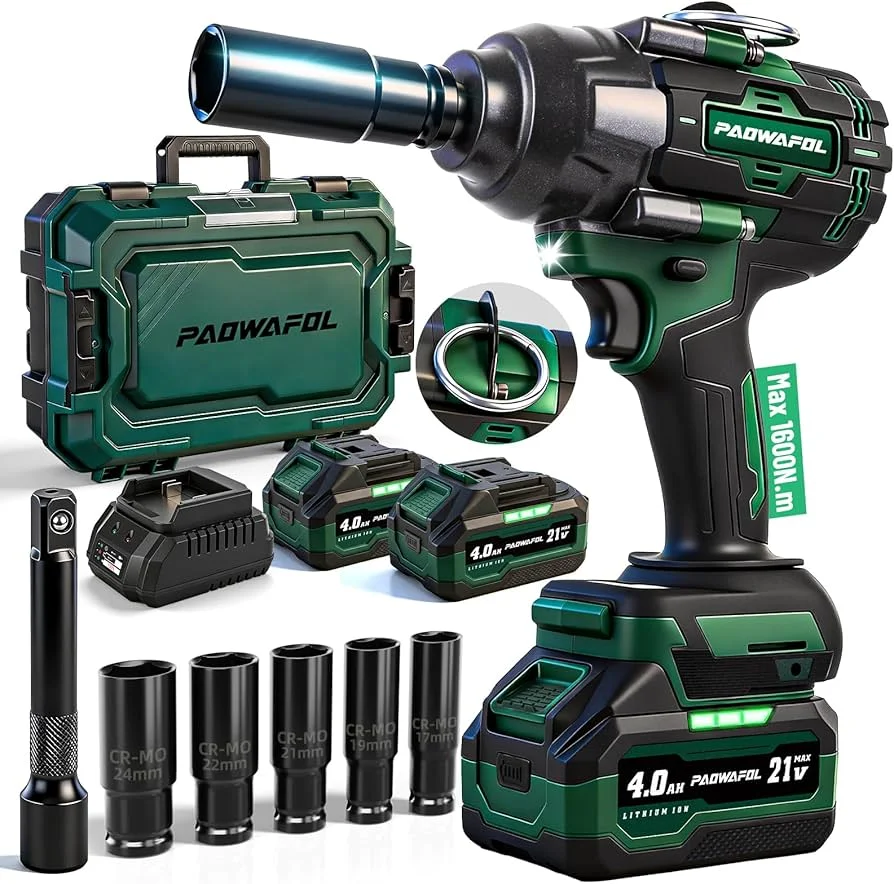
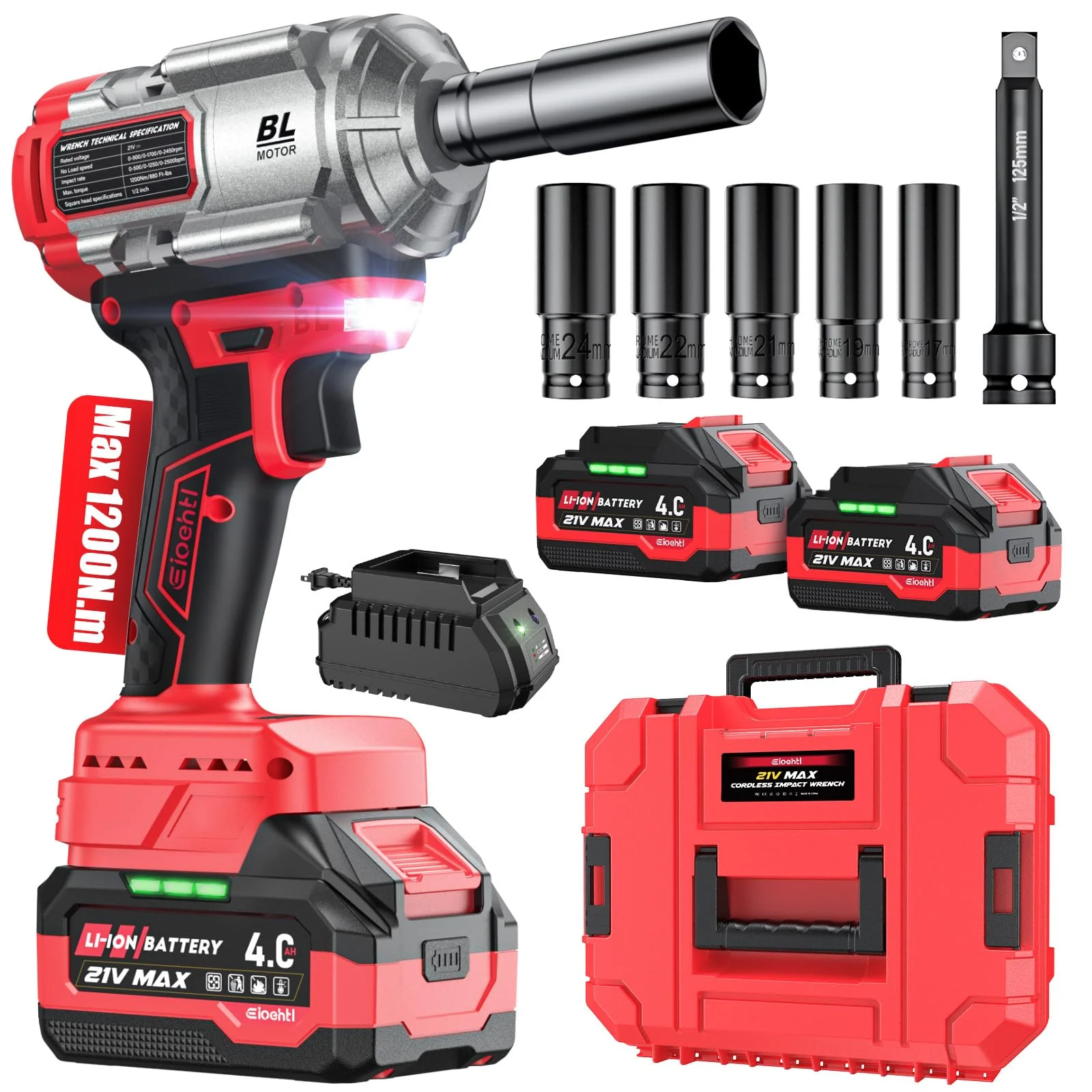
Time to read some boxes. The PAOWAFOL 2026 Impact Wrench claims 1,180 ft-lb for $94.98. The Eioehtl Cordless Impact Wrench claims 1,200 N·m — about 885 ft-lb — for $71.98. DeWalt's and Milwaukee's high-torque flagships are rated around 1,000 ft-lb and run north of $350 bare, no battery included.
So either a no-name factory out-engineered the two biggest tool R&D budgets on earth and passed the savings to you, or the sticker is fiction. Here's what the reps won't tell you: it's the second one.
| Gun | Sticker claim | Sticker ÷ 3 (the bench-test pattern) | Price |
|---|---|---|---|
| PAOWAFOL 2026 | 1,180 ft-lb | ~390 ft-lb | $94.98 |
| Eioehtl | 1,200 N·m (~885 ft-lb) | ~295 ft-lb | $71.98 |
| DeWalt / Milwaukee flagships | ~1,000 ft-lb (bench-verified class) | — | $350+ bare |
The consensus from people who bolt these guns to dynamometers is consistent. Torque Test Channel's published bench numbers for budget 21V wrenches routinely land between a third and half of the printed claim, and Project Farm's side-by-side runs show the same gap — the guns work, but the number on the box is aspirational.
There's also a definitional shell game. "Nut-busting" torque is a brief breakaway spike measured under ideal conditions; fastening torque — what the tool sustains — is always far lower. Budget listings print the biggest number they can generate and skip the qualifier.
Here's the twist that makes this market survivable: divide the lie by three and most of these guns still clear the bar. A third of 1,180 ft-lb is roughly 390 — comfortably past the 250-to-400 breakaway window a passenger car needs. The claim is fake; the adequacy is usually real.
Buy the gun. Ignore the number. Judge the kit — batteries, charger, sockets, case — because that's the part of the listing that's checkable, and the part that actually decides whether the thing earns trunk space.
Anvil, Drive, and Sockets: The Specs That Matter
Strip the marketing away and an impact wrench for tire duty has three specs worth reading. None of them are the torque number, which we've established is creative writing. All seven picks below get these mostly right — here's what to check.
1/2-Inch Anvil or Don't Bother
Lug-nut sockets, torque sticks, and every accessory in the tire aisle assume a 1/2-inch square drive. A 3/8-inch gun plus an adapter wastes hammer energy in the joint and works the adapter loose mid-job. Every gun in this guide swings a 1/2-inch anvil, and that should be a hard filter in your search too.
Anvil retention comes in two flavors: a friction ring (hog ring) that lets sockets pop on and off fast, or a detent pin that locks them in place. For tire work the friction ring wins — swap speed beats retention at lug-nut torque.
The Sockets in the Box Are a Starting Point
Common lug sizes to cover:
- 17, 19, 21, and 22 mm on most modern cars
- 13/16 and 7/8 inch on older domestics
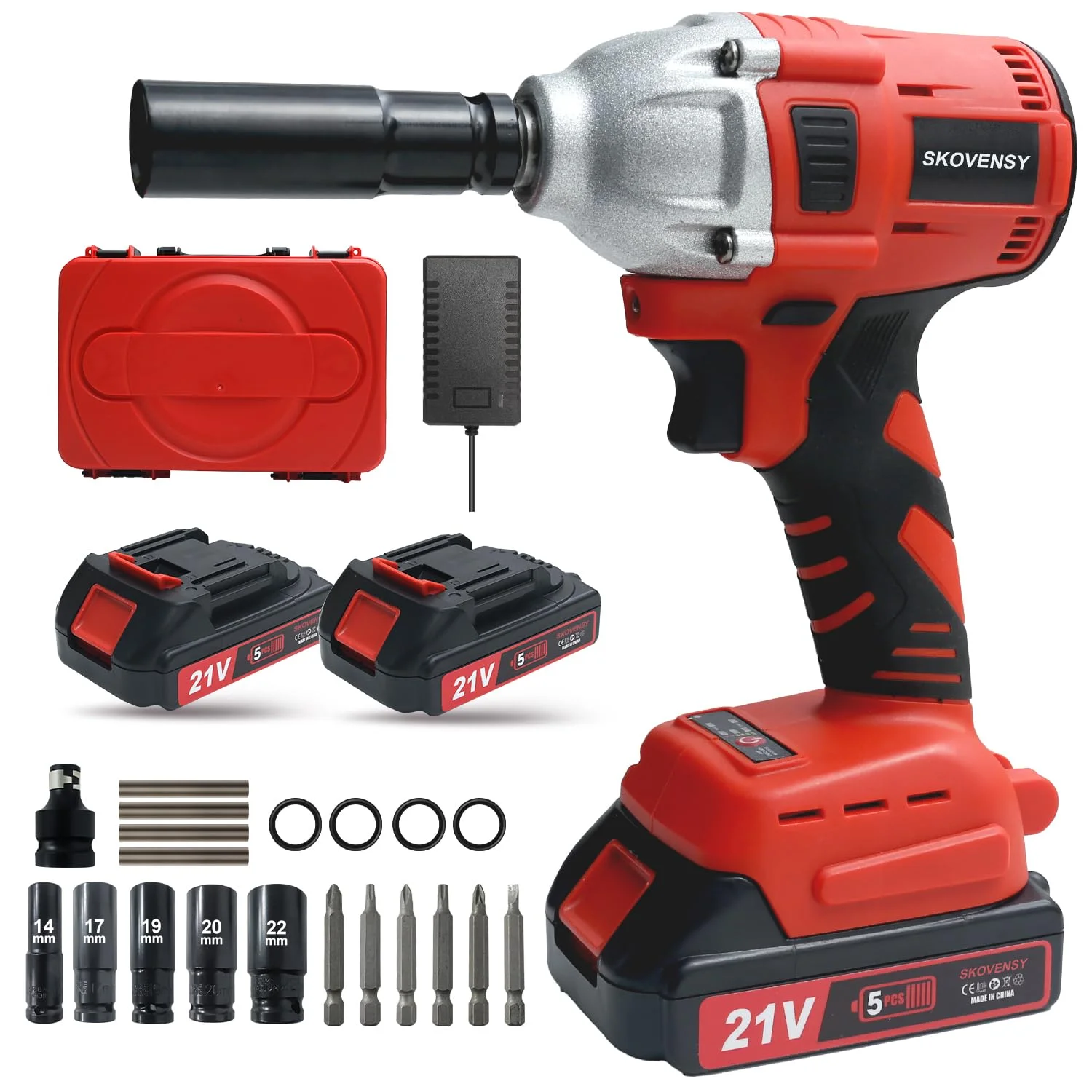
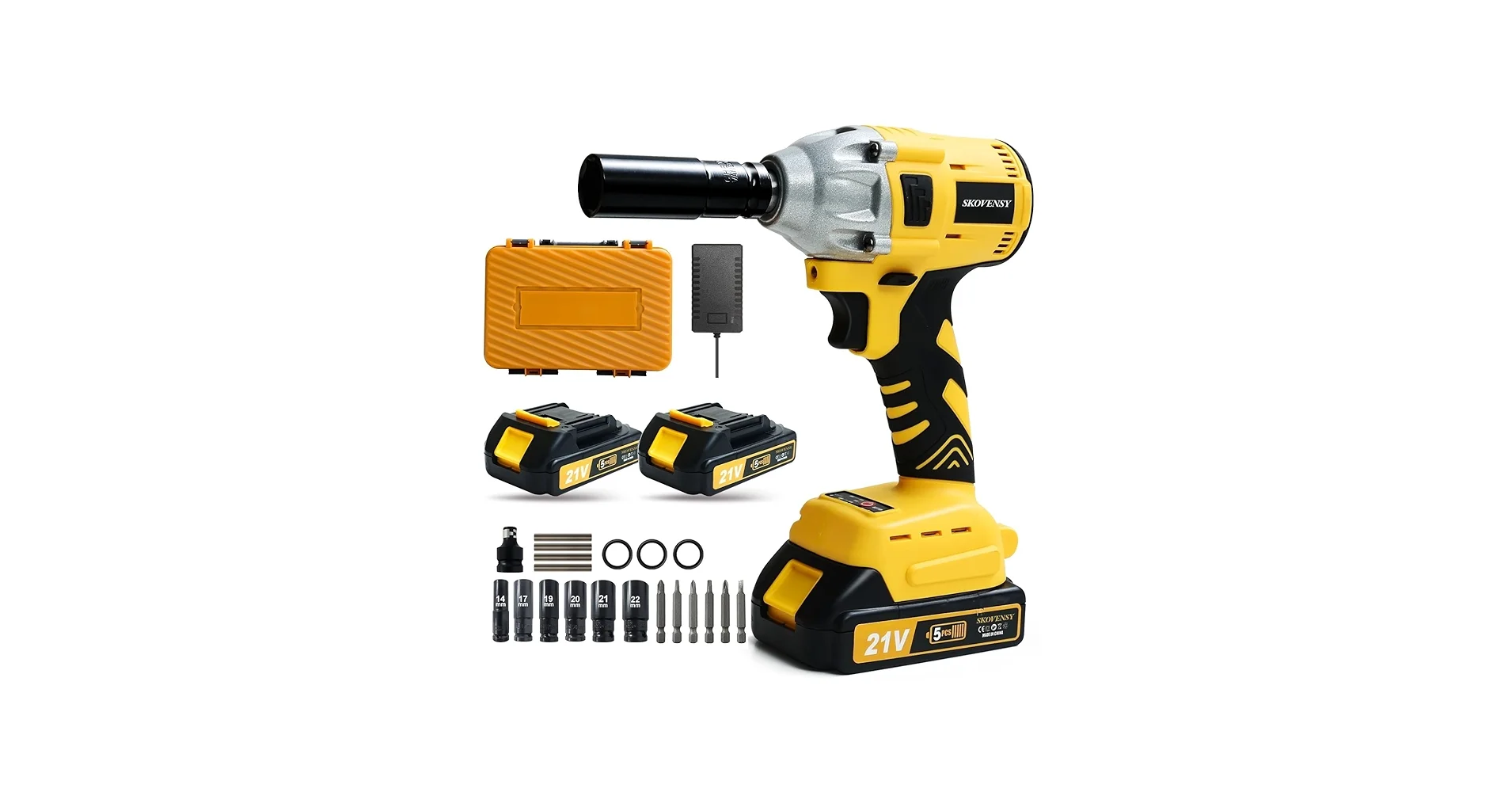
The bundled kits cover most of that — the 738's case packs four sockets, the SKOVENSY ships six — but bundled sockets are thick-walled, and thick walls scratch and stick in alloy-wheel lug pockets.
The $20 upgrade that earns its keep: a thin-wall impact socket set with plastic sleeves. It slides into tight lug pockets without chewing the finish, and it's cheaper than a single curbed-wheel refinish, which runs $150 before the shop finds something else to fix.
One non-negotiable: impact-rated sockets only. The chrome sockets from a hand-tool set are hard, brittle, and can shatter under hammer blows. Black oxide, marked "impact," every time — and safety glasses, ask any tire tech who's been doing this a while.
Battery-Platform Logic: Buy Into Packs You Already Own
First, decode the voltage. Every "21V" gun on these listings is an 18V tool wearing its peak charger voltage as a badge — same five lithium cells, measured at the top of the charge curve instead of nominal. DeWalt's "20V Max" plays the identical game, so nobody gets to be smug here.
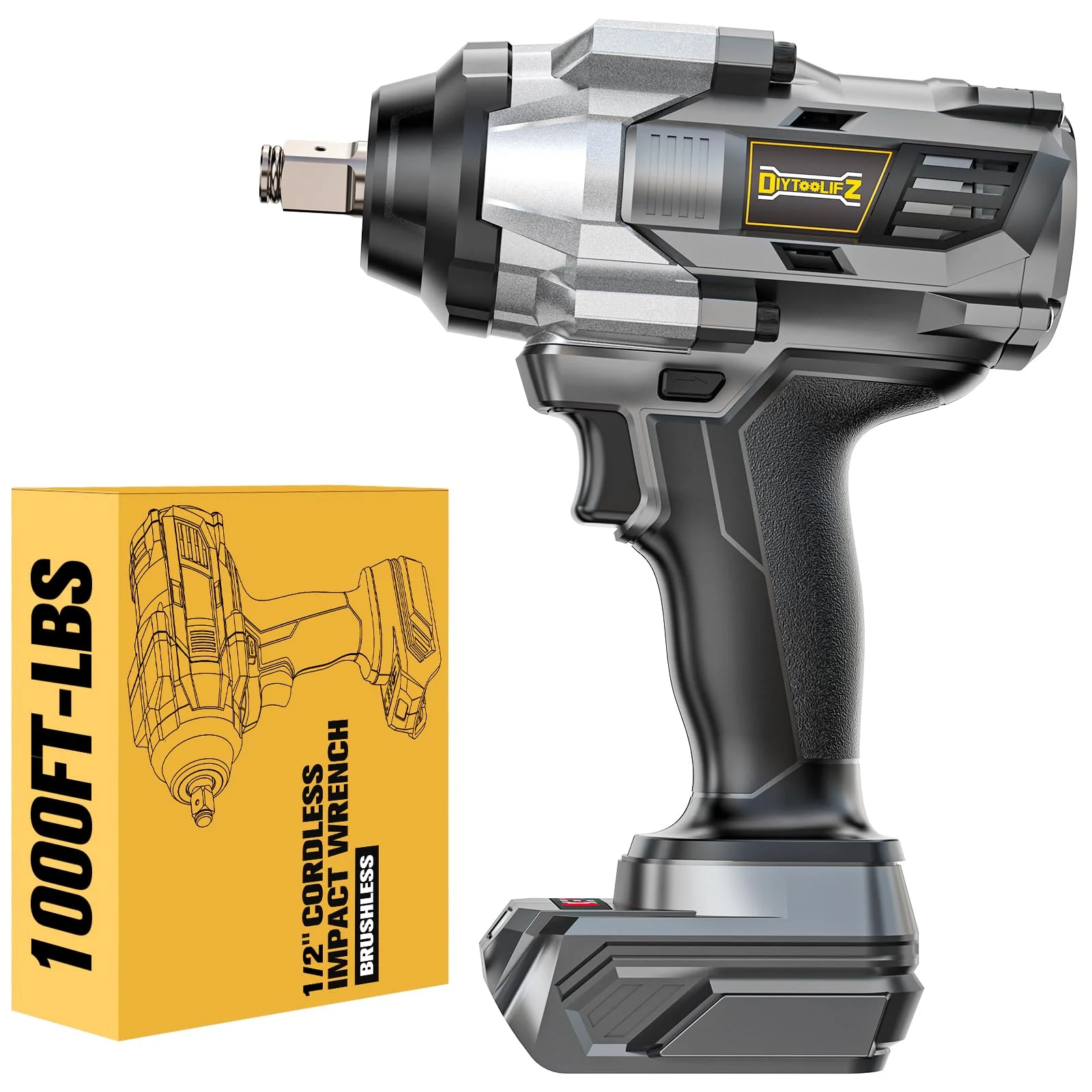
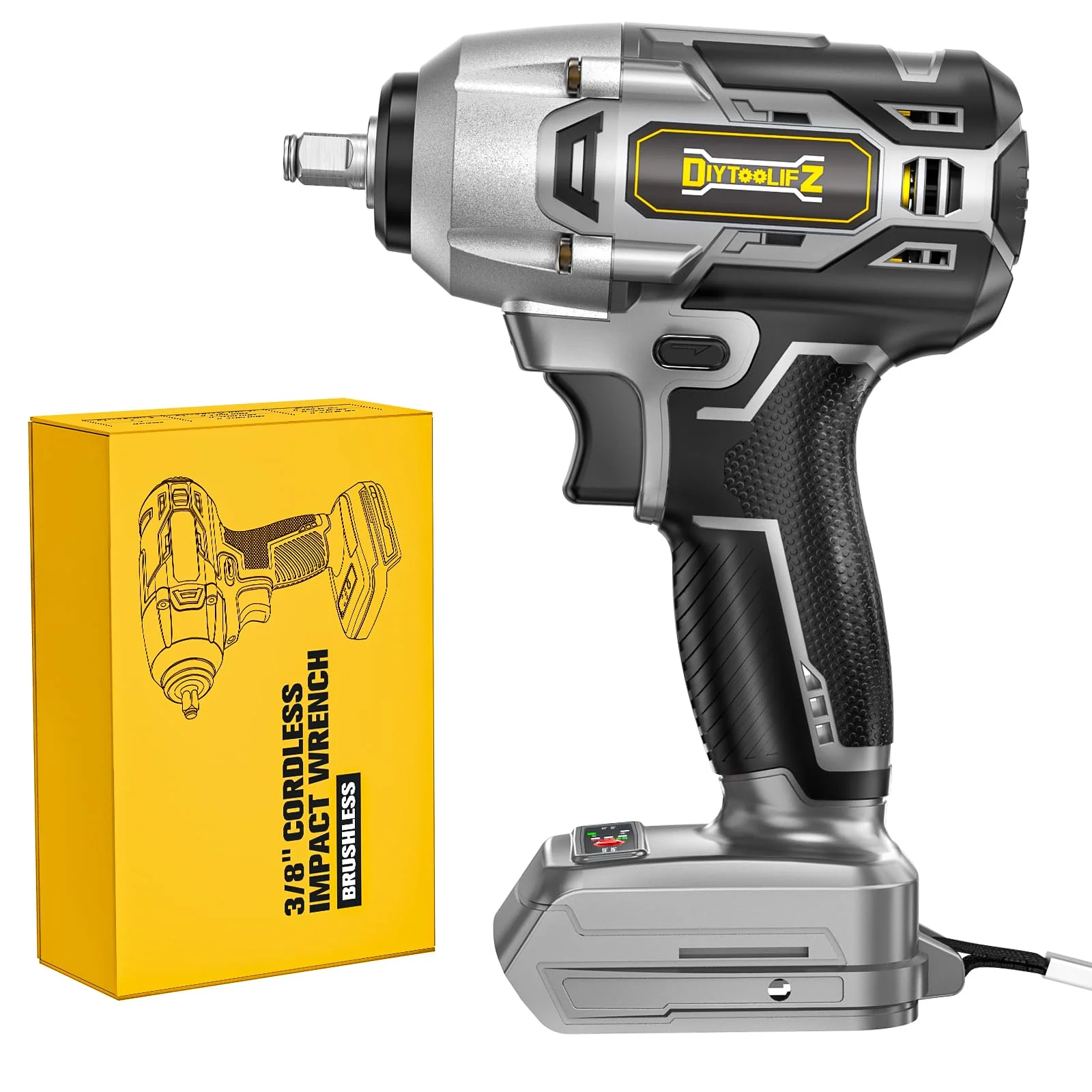
That matters because the real cost of cordless tools is the battery ecosystem. If you already own DeWalt 20V packs, the DIYtoolifz Cordless Impact Wrench is a bare tool at $50.99 that runs them — no second charger on the shelf, no orphan packs in three years. That's the cheapest legitimate path to an impact gun in this whole guide.
Same logic up the ladder. Milwaukee M18 and DeWalt 20V mid-torque wrenches carry factory ratings in the 550-to-650 ft-lb class and cost $200-plus bare; Ryobi's One+ wrench is the value play if your garage already runs green. Staying on your platform usually beats any kit price.
The budget kits flip the equation. The $70-to-$95 bundles include two 4.0Ah packs and a charger, which is genuinely useful — one pack working, one charging — but those packs fit nothing else you'll ever own. When the proprietary charger dies, the batteries become paperweights with a lithium disposal problem.
Run the watt-hours and the bundled packs are plenty: 4.0Ah at 18V nominal is 72 Wh, and a full tire rotation draws a sliver of one pack. The second battery isn't for the job. It's for the years of self-discharge between jobs.
Orphan batteries are how a $94 bargain becomes a $94 subscription. The platform question is boring, which is exactly why the listings never mention it.
The Picks Under $100: Four Kits, Two Honest Choices
The Robustrue Cordless Impact Wrench 738ft-lbs is the kit to beat at $94.99: two 4.0Ah batteries, a fast charger, four impact sockets, and a case. Its rated 738 ft-lb (1,000 N·m) of breakaway, derated by the bench-test pattern above, still lands around 250 to 350 — square in the window passenger lugs actually need.
The case for it is completeness rather than heroics: two packs, charger, sockets — everything a wheel-off job needs in one box, with the spare pack covering the months between rotations. That's the right reason to buy a budget gun, and it's why this one leads the list.
The PAOWAFOL 2026 Impact Wrench is the same money — $94.98 — with a taller tale on the box: 1,180 ft-lb claimed, 3,800 RPM. The spin speed is the spec that's real and useful. Once a nut cracks loose, high RPM runs it off the stud in a second instead of five.
The Eioehtl Cordless Impact Wrench undercuts both at $71.98 and carries the feature that actually saves studs: three speed modes, so you can snug nuts at low power instead of full send, plus a built-in LED for the dark-shoulder tire change. Its 1,200 N·m sticker gets the standard divide-by-three treatment.
The Robustrue 590 ft-lb kit (800 N·m claimed, $69.99) is the saner buy if the budget stops at $70 — same kit format, smaller motor. Its listing calls it "the market's highest torque," a title its own 738 sibling twenty-five dollars up the page quietly disputes. Marketing departments don't read their own catalogs.
Between the four, same-money decisions go to the saner spec sheet and the better kit: the 738 bundle for most buyers, the Eioehtl if $23 matters and the speed modes appeal.
The Budget Floor: $40 to $51, Eyes Open
The SKOVENSY Cordless Impact Wrench wears the most honest number of the bunch: 258 ft-lb claimed (350 N·m), $40.90, two batteries, six sockets. Notice what that claim is — roughly triple a passenger car's spec torque, sized for the actual job instead of the fantasy one. I respect a modest sticker.
What actually fails first at this price is headroom. A nut some shop gorilla ran to 200 ft-lb, or one that's spent five winters rust-welding itself on, will stall it — and then you're back on the breaker bar this gun was meant to retire. Budget motors also hate long stalls; ten seconds of hammering with no movement is the signal to stop.
The DIYtoolifz bare tool at $50.99 claims 900 ft-lb, then its own listing adds: "Not recommended for heavy truck tires — ideal for everyday car tire changes." When a seller's fine print walks back the seller's headline, believe the fine print. It's the most honest sentence on the page.
For DeWalt-pack owners that contradiction barely matters — at $51 with no batteries to buy, it's the sharpest value in this guide for everyday rotations and roadside flats, exactly as the fine print promises.
Both belong in the same mental bucket: fine for spec-torqued passenger lugs, out of their depth on seized hardware, and a fraction of the price of being stranded. Neither is a shop tool. Neither pretends to be — well, one of them half-pretends.
The 12-Volt Plug-In Gun: Roadside Insurance, Not a Shop Tool
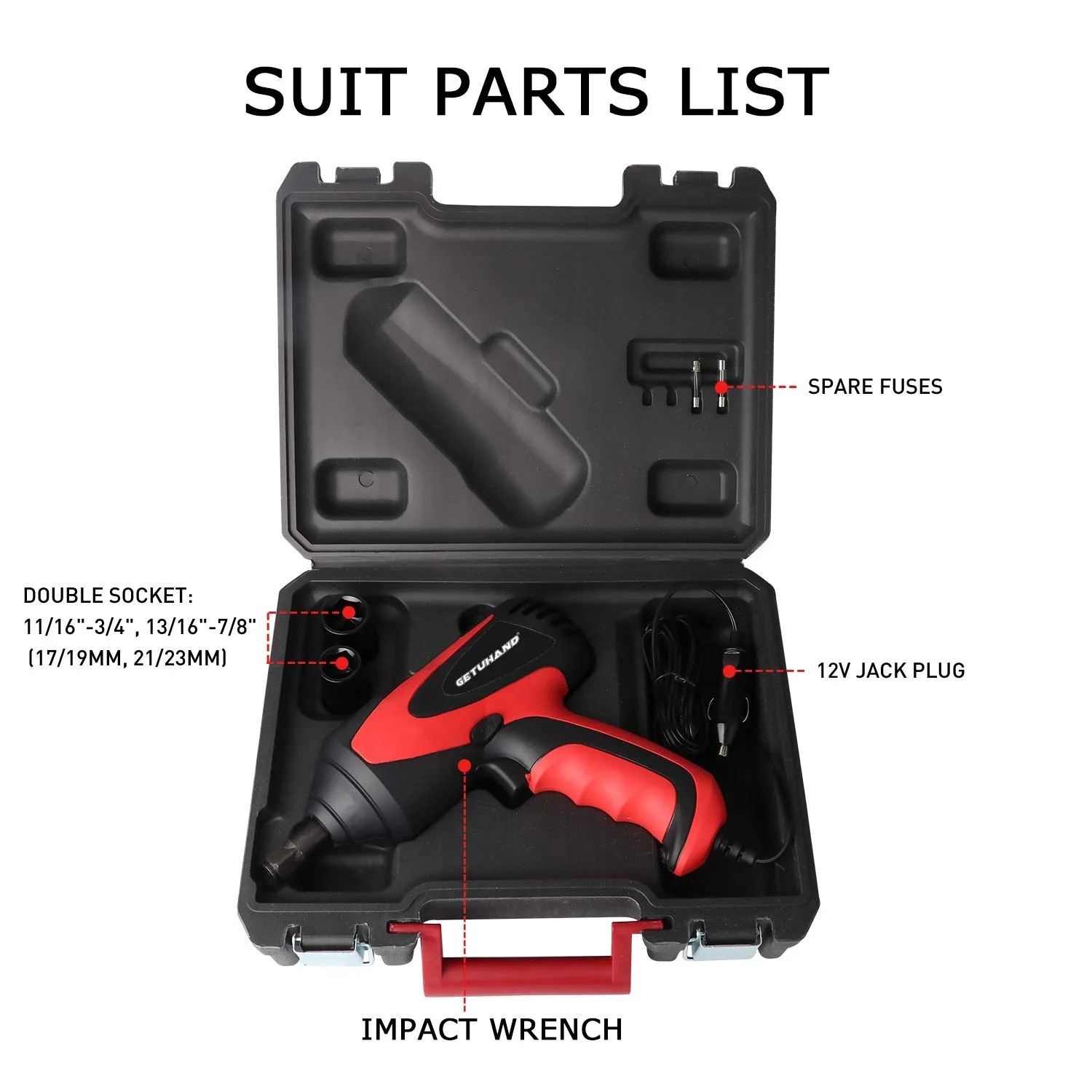
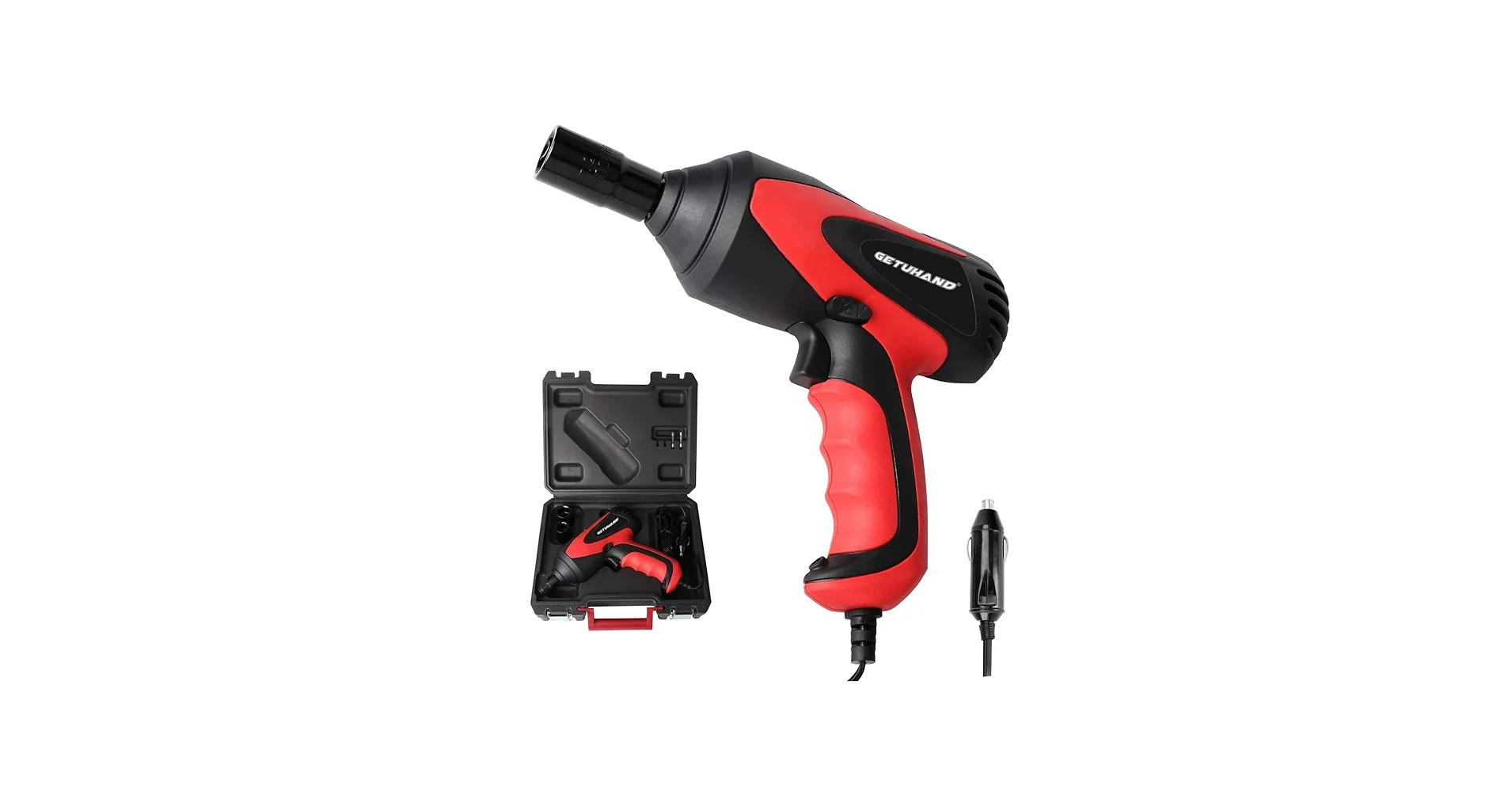
The GETUHAND Car Impact Wrench ($45.99) skips batteries entirely — it plugs into your car's 12-volt accessory socket on a long cord. That sounds like the obvious answer for a trunk tool, so here's the physics the listing skips: an accessory socket is typically fused around 15 amps.
Fifteen amps at 12 volts is roughly 180 watts of ceiling — a fraction of what an 18V pack dumps into a brushless motor. The maker's claim of loosening "each lug nut in 5 seconds" assumes a nut torqued to spec, not one that's been rust-welding itself on since 2022.
The case for it anyway: it is always charged. A battery gun that sat in the trunk for two years greets a flat tire at 40 percent and falling; the plug-in greets it at whatever your alternator's doing. For a tool you hope to never use, that's the spec that matters.
The honest expectations: slower hammering, a stall on overtightened nuts — the fallback being the breaker bar it was supposed to replace — and a cord that decides which corners of the car you can reach. Measure socket-to-rear-wheel before you trust it with the job.
It pairs naturally with the rest of the 12-volt roadside kit; the same socket that runs a portable tire inflator runs this. It's the spare tire of impact guns: not good, exactly, but there — and there counts at midnight.
Buy it as insurance and it's a $46 hedge against a $150 tow. Buy it expecting a shop tool and you'll end up writing the angry review yourself.
Technique: The Part That Outlives Whatever Gun You Buy
Seat the socket completely before you pull the trigger. A half-seated impact socket rounds lug nuts, and a rounded lug nut converts a ten-minute tire change into an afternoon with an extractor set. Square to the nut, full depth, then power.
Work in short bursts. If nothing moves in ten seconds, stop — continuous hammering on a seized nut cooks budget motors and accomplishes nothing useful. Penetrating oil, a few minutes of patience, and a breaker bar for the one stubborn nut beat a dead gun every time.
Crack all the nuts a quarter turn while the tire is still on the ground, jack up, then spin them off. The ground holds the wheel still, so the hammer energy goes into the nut instead of into rocking the car on the jack.
Installation, one more time, because this is the one that costs money:
- Hand-thread every nut to avoid cross-threading.
- Snug at the gun's lowest speed in a star pattern.
- Finish with a click torque wrench at the door-jamb spec.
Full-power installs are how studs stretch and rotors warp.
Recheck torque after 50 to 100 miles, and while you're at the wheel, put a real tire pressure gauge on all four corners — the two-minute habit that catches a slow leak before it strands you somewhere with one bar of signal.
None of this is glamorous. It's also the difference between a tool that saves you money and a tool that introduces you to your local driveline specialist.
The Verdict: Which Battery Impact Gun Belongs in Your Trunk
For most drivers: the Robustrue Cordless Impact Wrench 738ft-lbs kit is the answer at $94.99. Complete case, two 4.0Ah packs, fast charger, four sockets — and even after you discount the torque sticker by the bench-test pattern, it carries the 250-plus ft-lb of real breakaway that passenger lugs demand.
Already on a battery platform? Buy the bare tool instead. The DIYtoolifz at $50.99 on DeWalt 20V packs is the sharpest value here, and the equivalent bare-tool play on Milwaukee, Ryobi, or whatever color your garage runs will beat any orphan-battery kit over the long haul.
Tightest budget: the SKOVENSY at $40.90, bought with the understanding that its honest 258 ft-lb sticker means spec-torqued lugs only — keep the breaker bar in the trunk as its co-pilot. Roadside-insurance-only buyers: the GETUHAND plug-in, with expectations set accordingly.
What I'd skip: paying the same $95 for a bigger fictional number. The PAOWAFOL and the Eioehtl are competent guns, but their 1,180 ft-lb and 1,200 N·m stickers aren't real enough to out-vote a better kit or a saner claim at the same money.
And the standing rule, one last time, since it protects every wheel this page touches: the gun takes lug nuts off. A hand torque wrench, set to the number in your manual, puts them back on. Get those two sentences right and any gun on this list earns its trunk space. — Marcus Bell