Before any gear, the 2025 Pilot asks you one off-road question most three-rows can't
Most camping-accessory lists for a three-row SUV open with a cargo number and start selling. The 2025 Honda Pilot deserves a different opening, because it asks a question its rivals can't honestly ask: how far off the pavement are you actually going? Unlike a Palisade or a Highlander — where the ‘rugged’ trim is mostly a look — the Pilot offers a TrailSport that is a genuine off-road build: 8.3 inches of clearance (versus 7.3 for the rest of the lineup), all-terrain tires, steel skid plates, recovery hooks and a TrailWatch off-road camera. Answer that one question and the whole gear list reorders itself.
With both rear rows folded, Honda publishes about 87 cubic feet and a long flat floor — enough for a full-length SUV mattress and two adults. Every figure below comes from Honda's published specs, dealer spec sheets and the Piloteers owner threads — no trip I didn't take. This guide pairs those numbers with six accessories that genuinely fit — the FBSPORT Bed Car Mattress, a Dometic CFX3 12V fridge, a Goplus roof box, a Rightline Gear tailgate canopy, a Drive Auto organizer and a BDK trim-to-fit cargo mat — and explains which change with your trim. For the full sleeping walkthrough, see our Honda Pilot car-camping sleeping setup.
Which Pilot trim to camp in: TrailSport or the rest of the lineup
On most SUVs the trim choice buys screens and leather. On a 2025 Pilot the choice that decides where you can camp is real hardware that can't be added after purchase. The lineup runs Sport, EX-L, TrailSport, Touring, Elite and Black Edition, but for a camper the meaningful fork is TrailSport versus everything else.
- TrailSport (the genuine off-road trim). 8.3 inches of clearance against the lineup's 7.3, all-terrain tires on 18-inch wheels, steel front and rear skid plates, recovery hooks, a recalibrated suspension and TrailWatch cameras in the off-road modes. That extra inch and the AT rubber are the difference between turning back at a washed-out forest road and reaching the dispersed site at the end of it.
- Sport, EX-L, Touring, Elite, Black Edition. The same 3.5-liter V6 and cargo box, but on the standard 7.3 inches and road tires — fine for gravel weekends, packed dirt and snowy lots, just not what the TrailSport clears.
Two more order-sheet facts shape your gear list. The 115V/150W AC outlet appears only on EX-L, Touring and Elite — Sport and base trims have none. And only the eight-passenger trims get the removable second-row center seat; TrailSport is captain's-chairs-only. Settle clearance and outlet at the dealer — no accessory here adds an inch of clearance or a factory inverter after you drive away.
The pop-out center seat: a 25-pound cargo trick for camping the Palisade can't match
Here is a Pilot party trick worth planning your whole setup around, because the rival three-rows don't offer it. On the eight-passenger trims (EX-L, Touring, Elite, Black Edition) the second-row center seat is removable — about 25 pounds, pops out in under a minute with no tools, and stows in the under-floor well or at home. Pull it and the bench becomes two captain's chairs with a walk-through gap down the middle.
For a camper that gap is a feature. Leave the center seat at home and you get a clean pass-through from the cargo bed to the front of the cabin — reach the cooler from the driver's seat, run a power cable forward, and load long gear (a paddle, a fishing rod, an awning pole) down the center. On a four-up trip you can pull just the center seat and still seat four with a usable aisle; on a two-up trip you fold both rear rows for the full 87-cubic-foot floor.
The seat doesn't change the bed length — it changes how you live in the box around the bed, the kind of Pilot-specific detail a generic accessory list skips. Folded, expect a nearly-flat floor with a low step where the seatbacks meet the cargo deck; a 5–7 cm topper erases it.
The three cargo numbers that size a Pilot bed — and the under-floor well most owners forget
Honda's brochure says ‘class-leading space.’ The numbers a camper plans a bed around are three, because the Pilot's whole appeal is that you choose how much of it to fold (all figures from Honda's published specifications):
- 18.6 cu ft behind the third row, all seats up — a cooler and duffels with the whole family aboard (about 21.8 cu ft loaded to the roof).
- 48.5 cu ft behind the second row with the third row folded — a solo sleeper's rig with a passenger riding shotgun (about 59.5 cu ft to the roof).
- 87.0 cu ft with both rear rows folded — the two-adult bedroom and the long flat floor that makes a full-length SUV mattress realistic (owner setups load it past 110 cu ft to the headliner for gear).
The detail dealer pages bury is the under-floor storage well behind the third row — a hidden bin below the cargo deck, the natural home for the recovery strap, jumper pack, tools and that removable center seat: weight you want aboard but never touch at 2 a.m. Measure your own floor with the front seats where you'd actually sleep before buying a mattress — the span is generous, but seat-fold gaps vary by trim, and your specific Pilot's number is the one the bed has to satisfy.
Sizing an air mattress to the Pilot's flat, folded floor
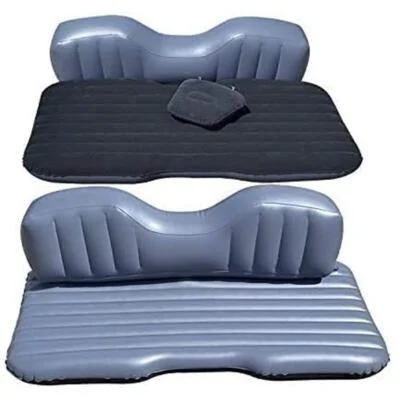
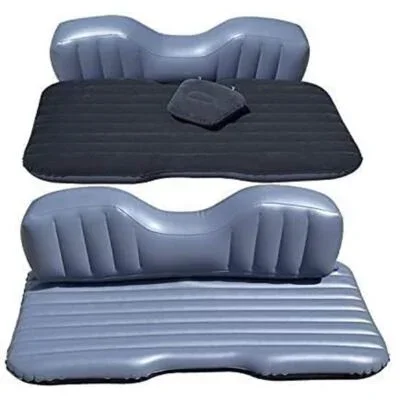
The single accessory that changes a Pilot road trip the most is a sleeping platform sized to the folded floor. The FBSPORT Bed Car Mattress is built for exactly this: per its product listing it's a universal SUV inflatable mattress with an extended air-couch design and two included air pillows, meant to flatten across a folded SUV cargo area. The Pilot's roughly 87-cubic-foot floor with both rear rows down is what lets that extended mattress lie wide and level instead of buckling over a seat ridge.
A few checks separate a level night from a lumpy one: compare the mattress's stated inflated length against your folded load-floor length, confirm whether it includes a pump or runs off a 12V socket, and keep foam wedges for the low step where the seatbacks meet the floor. If you camp most weekends, the upgrade path is a plywood platform with foam on top — flatter, with tailgate-access drawers underneath that play perfectly with the Pilot's pass-through if you've pulled the center seat. Solo campers behind a standing second row (48.5 cu ft) can skip both and run a thick self-inflating pad. For the full sleeping walkthrough — bedding, window coverage, leveling — see our Honda Pilot car-camping sleeping setup.
Why your trim decides your power plan — and what runs a fridge off-grid
Power on a Pilot is a trim story, so check the badge before you plan. The factory 115V/150W AC outlet is fitted only to EX-L, Touring and Elite — Sport and base trims don't have it. And even where it exists, 150 watts runs a laptop charger and phone bank and no more. A 12V compressor fridge spikes well past 150 W on startup, so it trips that outlet or won't start the compressor. Treat the factory inverter as a convenience, never a power plan.
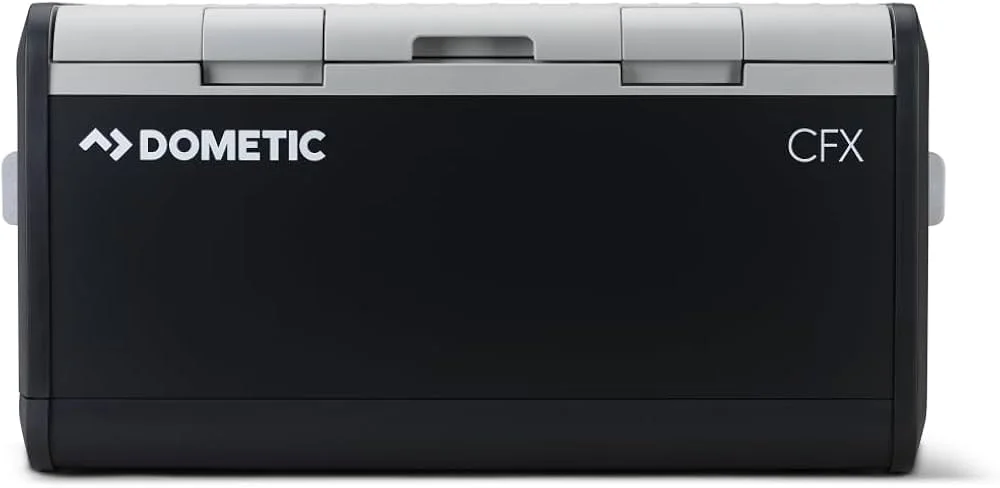
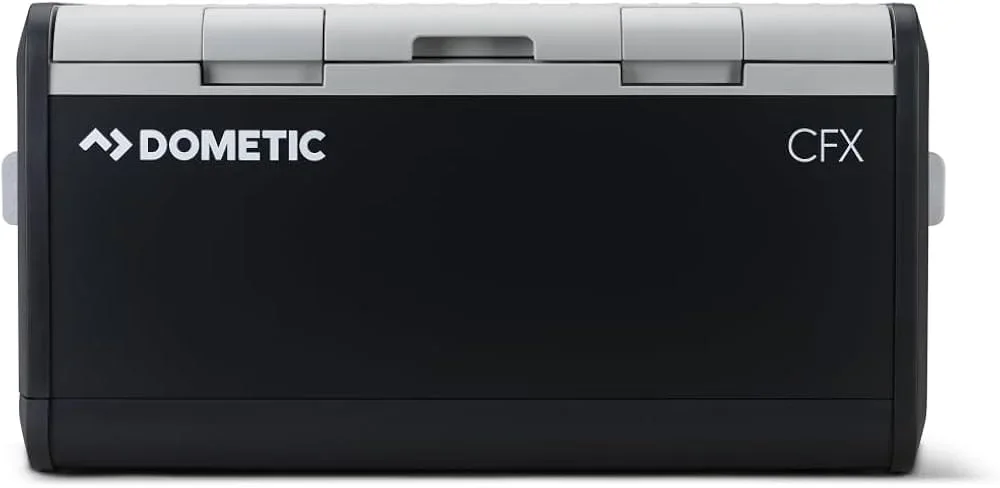
The fridge is the accessory that most separates a comfortable multi-day trip from a soggy-cooler one. The Dometic CFX3 Portable Electric Cooler is a compressor fridge-freezer whose published temperature range runs from −7°F to 68°F — deep-freeze or refrigerate — holding temperature on vehicle power without an ice run. Feed it off-grid with a 500–700 Wh LiFePO4 power station that recharges from the 12V socket as you drive or from solar at camp.
- Drive-time: a 12V socket handles the fridge on the move on any trim — the Pilot puts sockets up front and many trims add one in the cargo area, so you can site the fridge near the liftgate and still feed it while driving.
- Overnight: a power station, so the fridge never leans on the starter battery while you sleep and the V6 still cranks in the morning.
- Pre-chill: load the fridge already cold — a compressor unit holds temperature far more efficiently than it pulls it down from warm, which stretches a given battery a lot further over a multi-day trip.
The golden rule on any trim: keep heavy loads OFF the 12V starter battery so the 3.5-liter V6 always cranks, and never idle the engine overnight for climate — a carbon-monoxide risk you never take. Weighing a lighter-duty 12V cooler? Our 12V car cooler roundup covers the trade-offs.
Moving gear up top so the second row becomes a bedroom
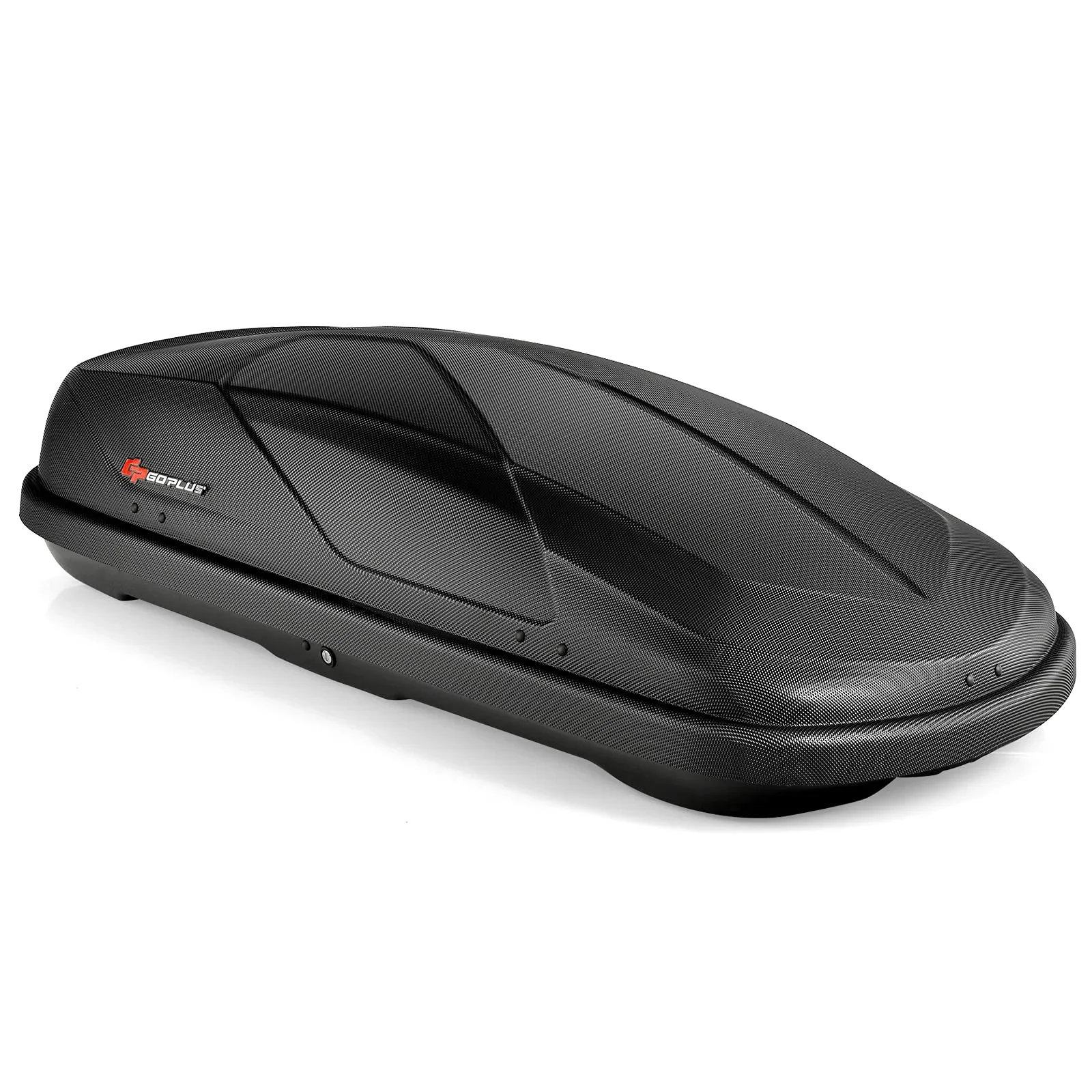
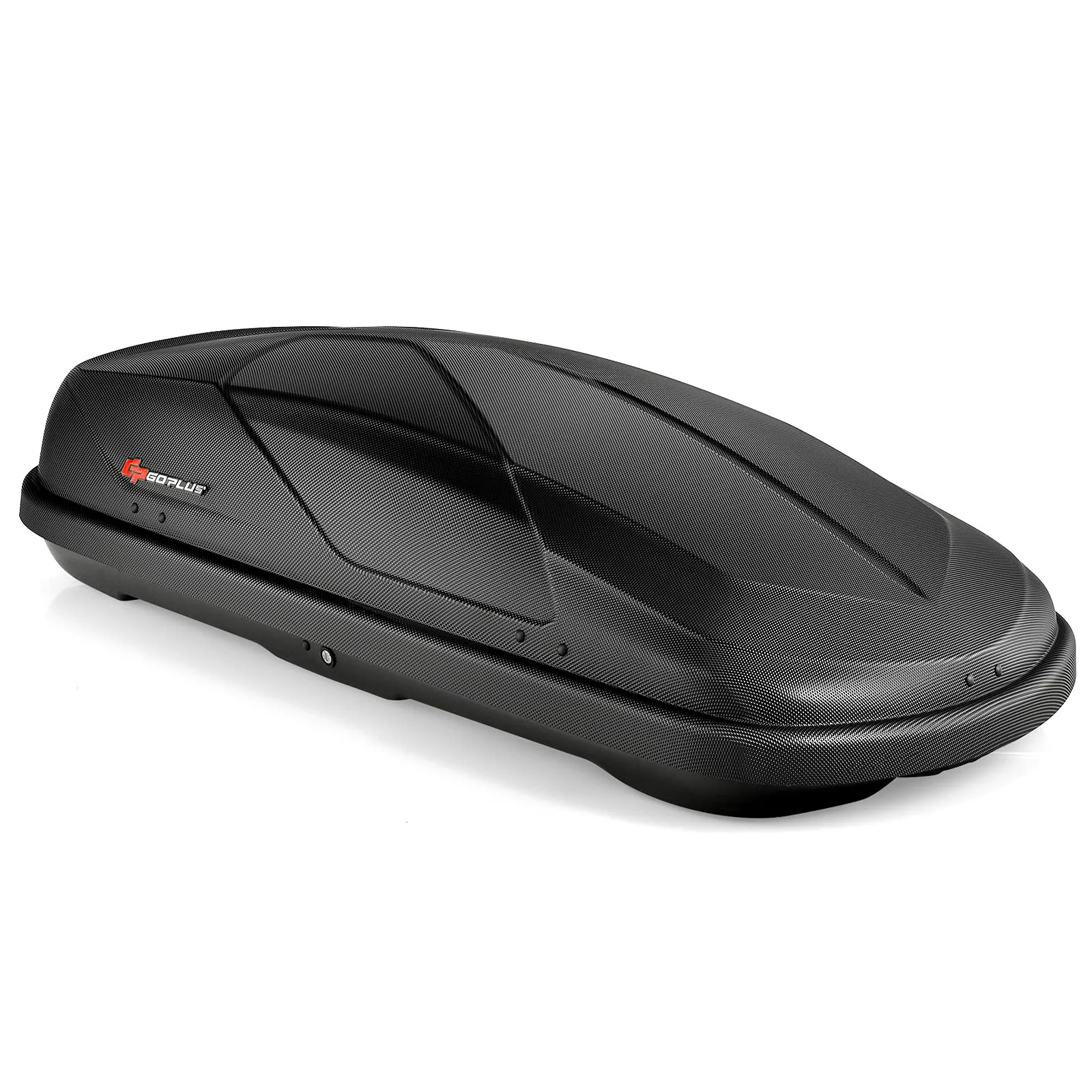
If you're sleeping inside, the gear has to go somewhere — and the Pilot's standard roof rails (most trims) make the roof the answer. The Goplus Rooftop Cargo Carrier Hard Shell lists 14 cubic feet of waterproof storage, a 165-pound capacity, dual-side opening and a security key, and per its spec fits crossbars 17 to 22.8 inches wide. Moving bulky duffels up top is what turns the 48.5-cubic-foot second-row space into a usable bedroom.
Roof load is the spec people most often get wrong, and a box's own rating is only half of it. Your real limit is the lowest of three numbers: the box's rating, the crossbar's rating, and Honda's published dynamic roof load — cross-check all three and plan to the smallest. On a TrailSport especially, roof weight eats into the ground clearance and raises the center of gravity you paid for, so keep heavy items low in the cabin and only bulky-light gear up top.
Inside, favor soft duffels over hard cases — they squash into the wheel-well gaps a three-row has in abundance, and pack heavy bins low in the under-floor well and forward over the rear axle so the loaded Pilot stays settled on forest roads. Choosing between a hard box and a soft bag comes down to weather and storage; our rooftop cargo box guide and soft roof cargo bag comparison lay out both sides.
Keeping the big glass clear: condensation and a fast tailgate shade
Two adults breathing for eight hours in a sealed cabin fog every window and leave the bedding damp — and the Pilot has a lot of glass. The fix is cross-ventilation: crack two windows on opposite sides so air moves. In rain, in-channel window visors let you leave the glass open an inch without water coming in — the most cost-effective condensation fix there is — and a clip-on 12V fan on low pushes air across the wide cabin. Wipe the glass before bed and tuck a moisture-absorber tub in the under-floor well overnight.
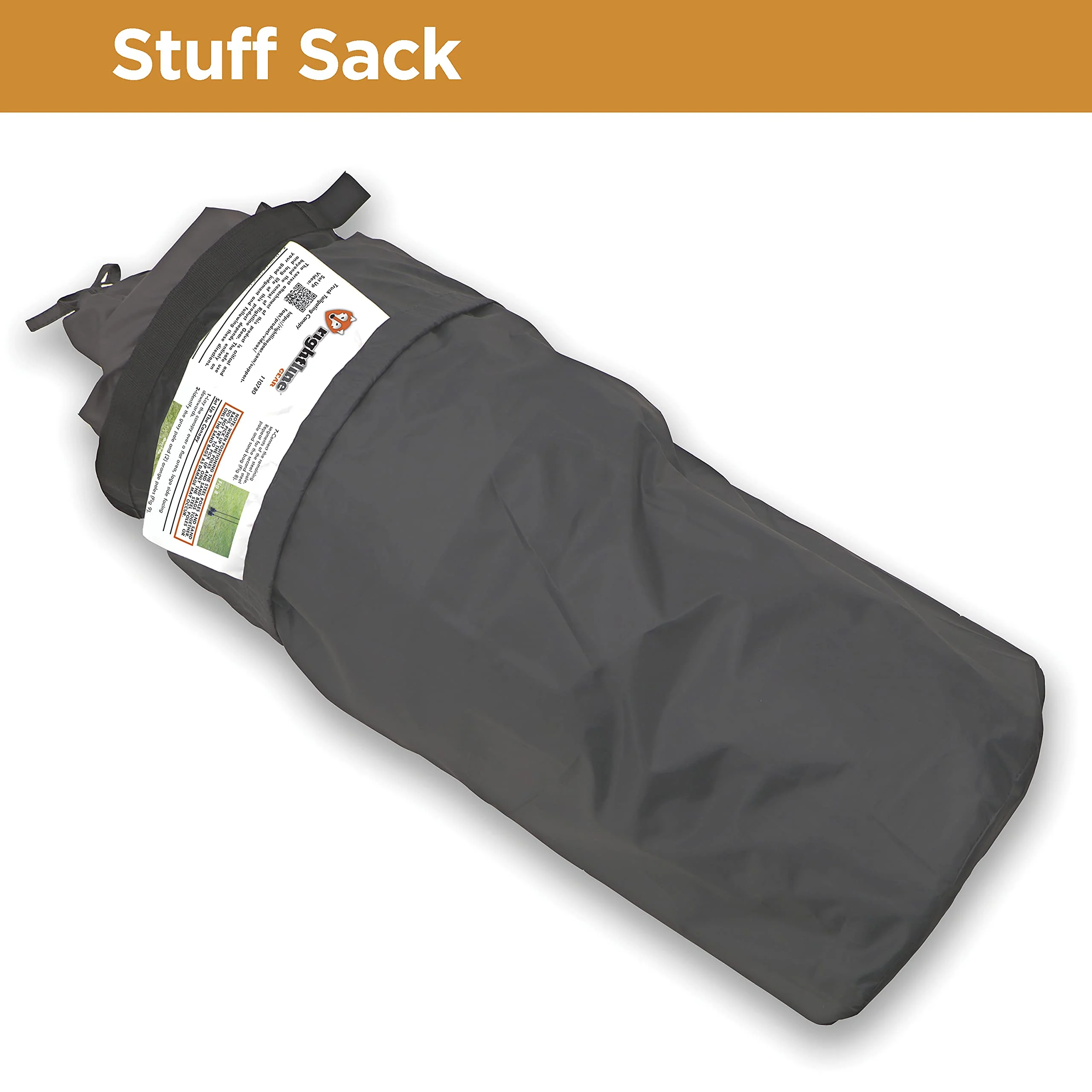
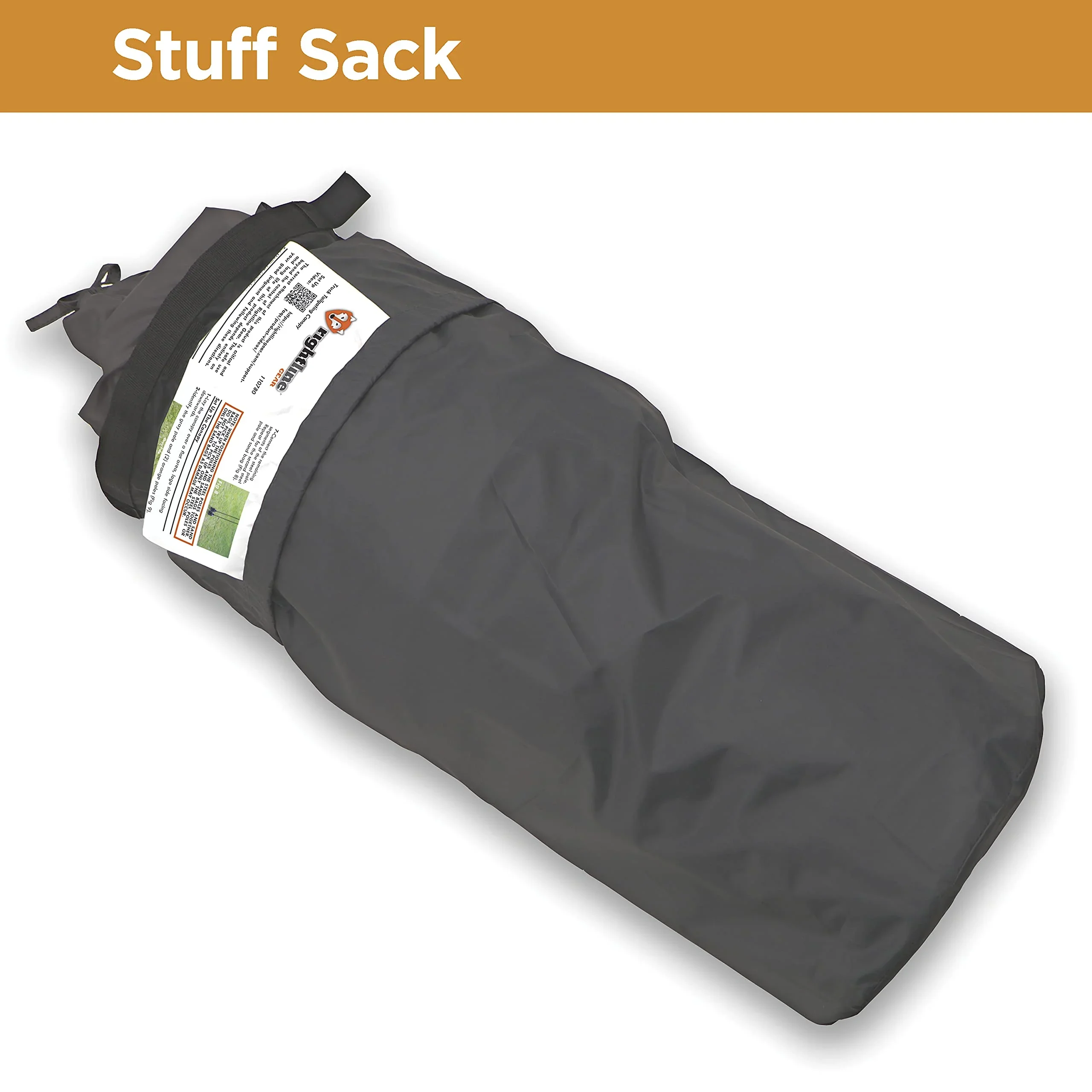
For shade and a weather break by day, the Rightline Gear Universal-Fit Truck Tailgate Portable Canopy is described by the maker as a compact tailgate shade tent that replaces a bulky pop-up by attaching at the rear to extend covered space behind the open hatch. It's the fast way to cook or gear up out of the sun at a quick stop, and it pairs naturally with the Pilot's wide liftgate.
On cold, still nights — when condensation is worst — run the fan on low and lean on insulation over powered heat: a four-season bag, a wool layer and reflective window covers carry you through most three-season nights without ever drawing from the battery you need to start the V6.
TrailSport off-road: what its extra inch handles, and the mistakes to avoid
Be honest about what the TrailSport's hardware does and doesn't do, because the badge invites overreach. The 8.3 inches of clearance, all-terrain tires, skid plates and i-VTM4 torque-vectoring all-wheel drive handle most of what car camping demands: rutted gravel forest roads, packed dirt, muddy site entrances, light rock, snow and washed-out two-tracks that would high-center a 7.3-inch trim. The TrailWatch cameras make picking a line easier at low speed.
The honest limits are a road-biased unibody with no low range: deep rock gardens, technical trails and steep ledges are out, and the long wheelbase makes tight turnarounds a chore. What it has that the compacts in our other guides don't is a 5,000-pound tow rating when equipped — a real teardrop on the hitch — plus the recovery hooks if you find the edge of your luck. The takeaway: if you camp where it's rutted, snowy or genuinely off-pavement, the extra inch and AT tires are worth real money and can't be retrofitted. If it's gravel-road-and-campground, a Touring or Elite on 7.3 inches sleeps two adults just as flat — spend the difference on the fridge and power station.
Two cheap accessories that protect the floor and tame the clutter
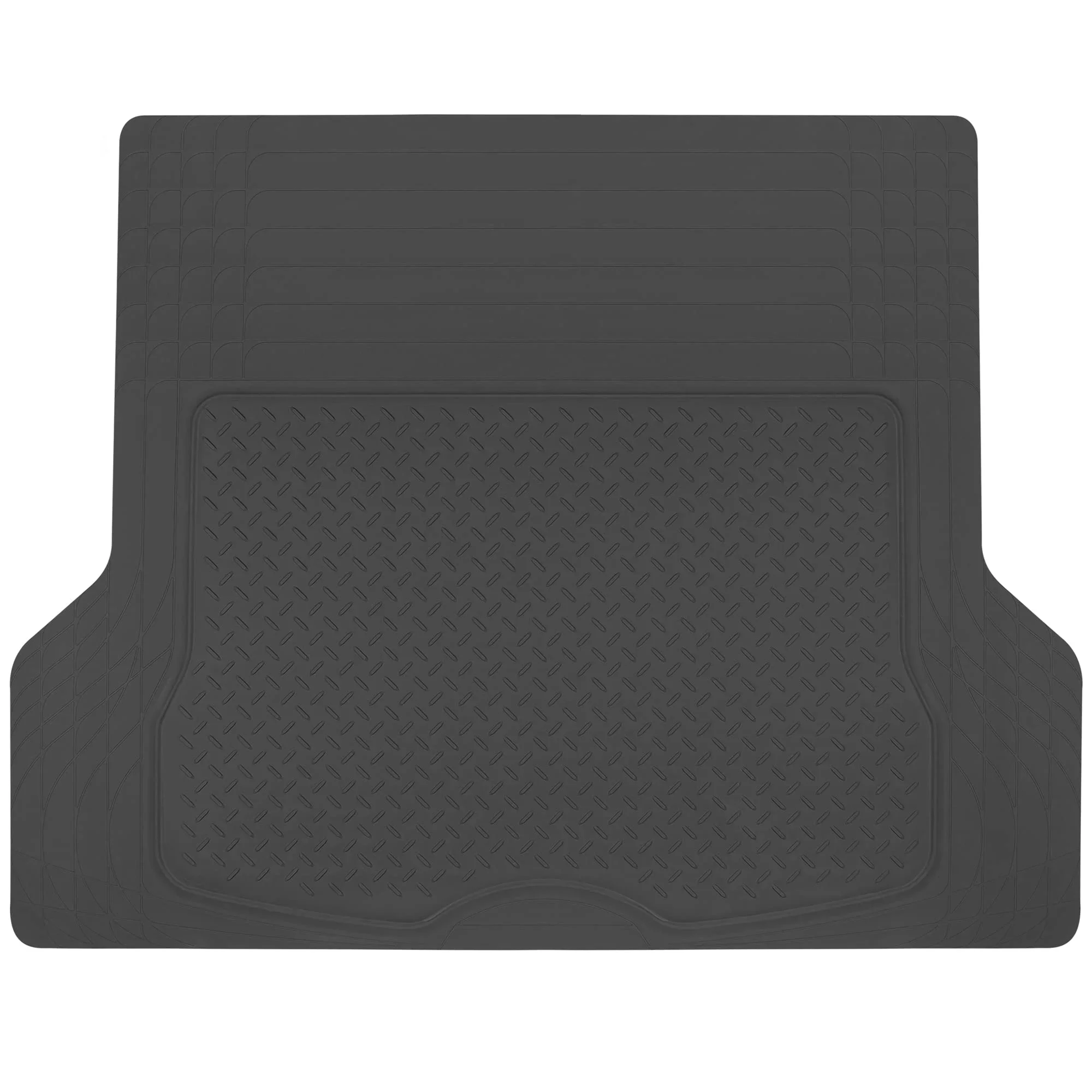
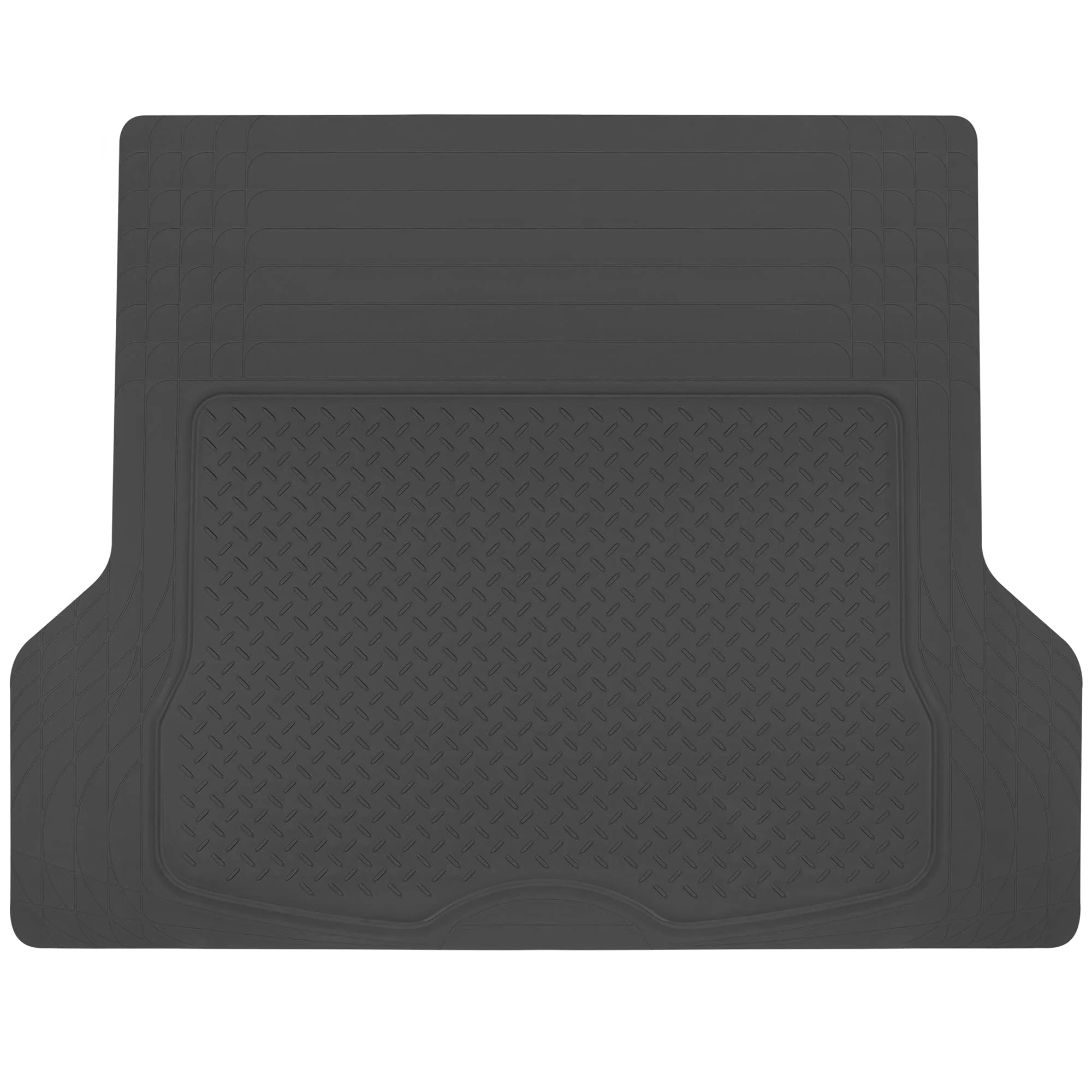
Two inexpensive pieces do more for daily livability than their price suggests. The BDK Trim-to-Fit Heavy Duty Cargo Mat is a universal rubber trunk liner with published dimensions of 54 x 43.5 x 0.25 inches, described as waterproof, non-slip and all-weather — you trim it to your exact cargo-floor shape. In a Pilot it protects the load floor from wet gear, a dripping cooler or muddy boots after a hike, and it hoses clean for resale day.
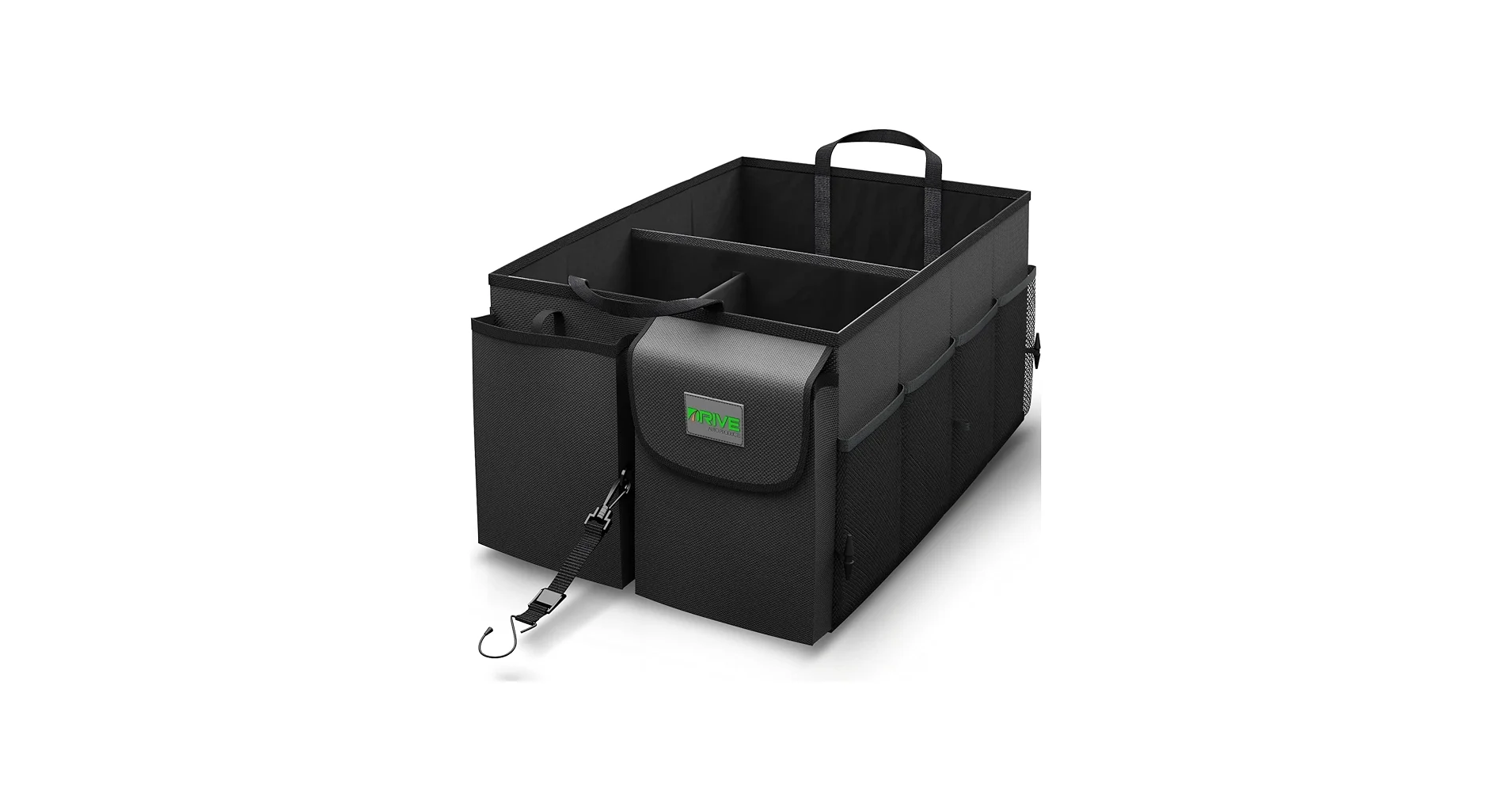
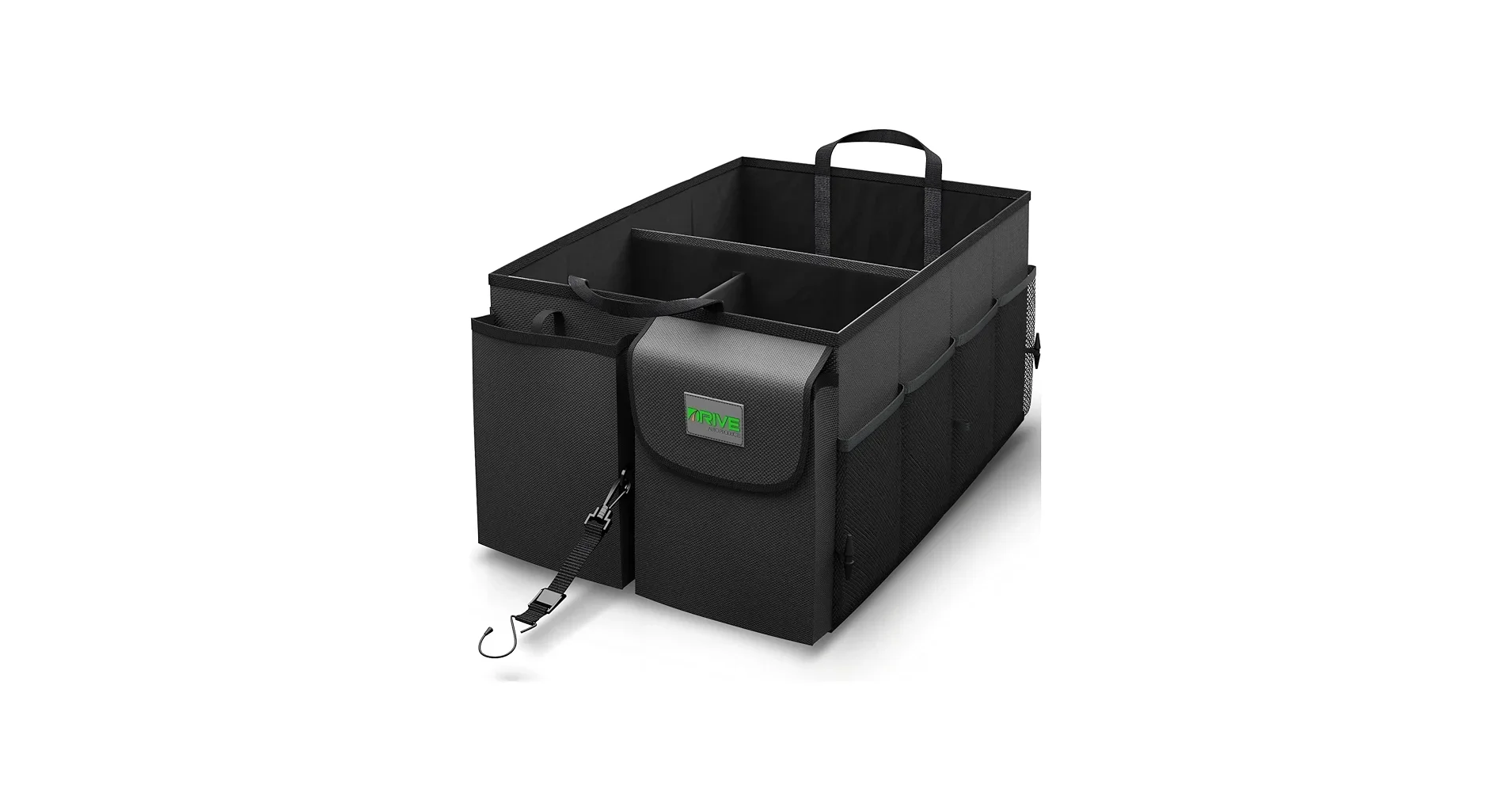
For the loose items that otherwise slide around an 87-plus-cubic-foot bay, the Drive Auto Car Trunk Organizer is a multi-compartment collapsible organizer made for SUV and truck cargo areas, per its description — it keeps cookware, tools and camp-kitchen items from migrating while you drive. Both lift out in seconds, so the changeover to the flat sleeping platform is fast.
The workflow that keeps a Pilot livable: lay the trimmed BDK mat first, load the organizer with the small items that otherwise roll, and clear both at night to reclaim the bed. If you've pulled the center seat, the organizer rides forward in the pass-through within arm's reach of the front seats. For a category-by-category checklist beyond the Pilot, our car camping essentials list covers the rest of the kit.
Pilot spec snapshot: the numbers that set your bed, your build and your buy
The figures a camper actually plans around, pulled from Honda's published specifications, dealer spec pages and owner measurements — read it as a build sheet:
| Spec | Figure | Source / note |
|---|---|---|
| Max cargo (both rear rows folded) | 87.0 cu ft | Honda; the two-adult bedroom and long flat floor |
| Behind 2nd / behind 3rd row | 48.5 / 18.6 cu ft | solo rig with a front passenger / family-aboard storage |
| Ground clearance | 8.3 in TrailSport / 7.3 in rest | the off-road call you can't add later |
| TrailSport off-road kit | AT tires + skid plates + recovery hooks + TrailWatch | genuine, not an appearance package |
| 2nd-row center seat | removable ~25 lb (8-seat trims) | EX-L/Touring/Elite/Black Ed.; TrailSport = 7-seat captains |
| 120V power | 115V / 150W (EX-L, Touring, Elite only) | charging only — won't start a fridge; Sport has none |
| Engine | 3.5L V6, 285 hp / 262 lb-ft, 10-spd | never idle overnight for climate — CO + dead-battery risk |
| Towing | up to 5,000 lb (AWD-equipped) | a real teardrop/small camper — beyond any compact crossover |
| Roof box (Goplus) | 14 cu ft, 165 lb, fits 17–22.8 in bars | plan to the LOWEST of box / crossbar / dynamic roof load |
Read it as a build sheet: the clearance line is the off-road decision, the 87-cu-ft line sizes the mattress, the outlet line says bring a power station, and the seat line tells you whether you can run a center pass-through. Settle clearance and outlet at the dealer; everything else you add later.
The bottom line: a staged Pilot setup and our recommendation
You don't have to buy all six at once, and for most owners it's smarter not to. Build around sleeping and food first, then add space and comfort as trips get longer:
- Sleep: the FBSPORT mattress plus the BDK cargo mat turns the 87-cu-ft floor into a protected bedroom for a modest outlay.
- Food and power: add the Dometic CFX3 fridge and a 500–700 Wh power station so multi-day trips stop revolving around ice — essential if your trim lacks the factory outlet.
- Space: the Goplus roof box frees the interior and the Drive Auto organizer tames the rest.
- Comfort: the Rightline Gear tailgate canopy adds shade and shelter at camp.
The thread through every stage is fit: each pick lines up with the Pilot's published cargo and roof figures — verify the numbers against your own trim and crossbars before buying. But the two biggest decisions aren't accessories at all: the TrailSport-or-not clearance call and whether your trim has the factory outlet, both settled at the dealer. Get those right, match the gear to your real numbers, and a 2025 Pilot is a genuinely comfortable base from a one-night trailhead stop to a week down a forest road. For the in-vehicle sleeping side, our Honda Pilot sleeping setup guide pairs directly with this list.