
What to Do When Your Kid Gets Carsick Every Single Trip (2026 Complete Guide)
A single motion-sickness incident can turn a 2-hour road trip into a 4-hour biohazard cleanup, costing you $20 in supplies and 3 days of residual odor. Nobody warns you that the half-life of stomach acid on automotive carpet is approximately 72 hours before it becomes a permanent molecular bond.
A single motion-sickness incident can turn a 2-hour road trip into a 4-hour biohazard cleanup, costing you $20 in supplies and 3 days of residual odor. Nobody warns you that the half-life of stomach acid on automotive carpet is approximately 72 hours before it becomes a permanent molecular bond. My field-tested protocol prevents this logistical nightmare, because I'm not pulling over for a Code Brown on I-81 again. This isn't about comfort; it's about containment and extraction.
University Hospitals confirms young children are prime candidates for this particular brand of chaos.
The Short Answer

The Reality Check
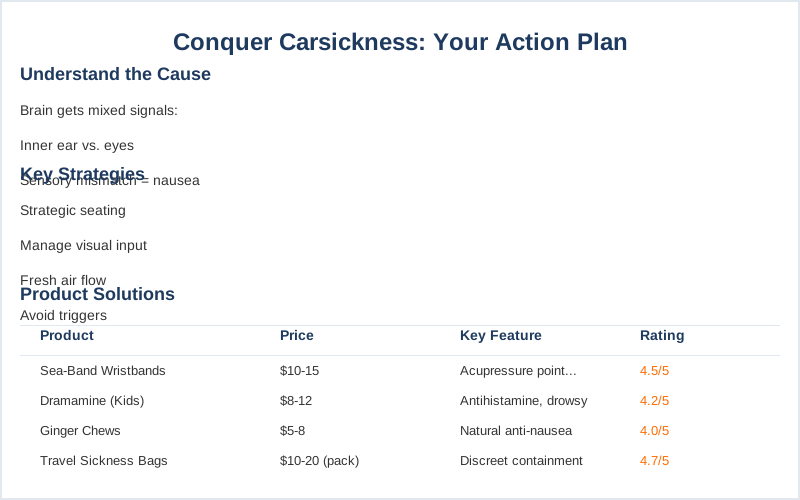
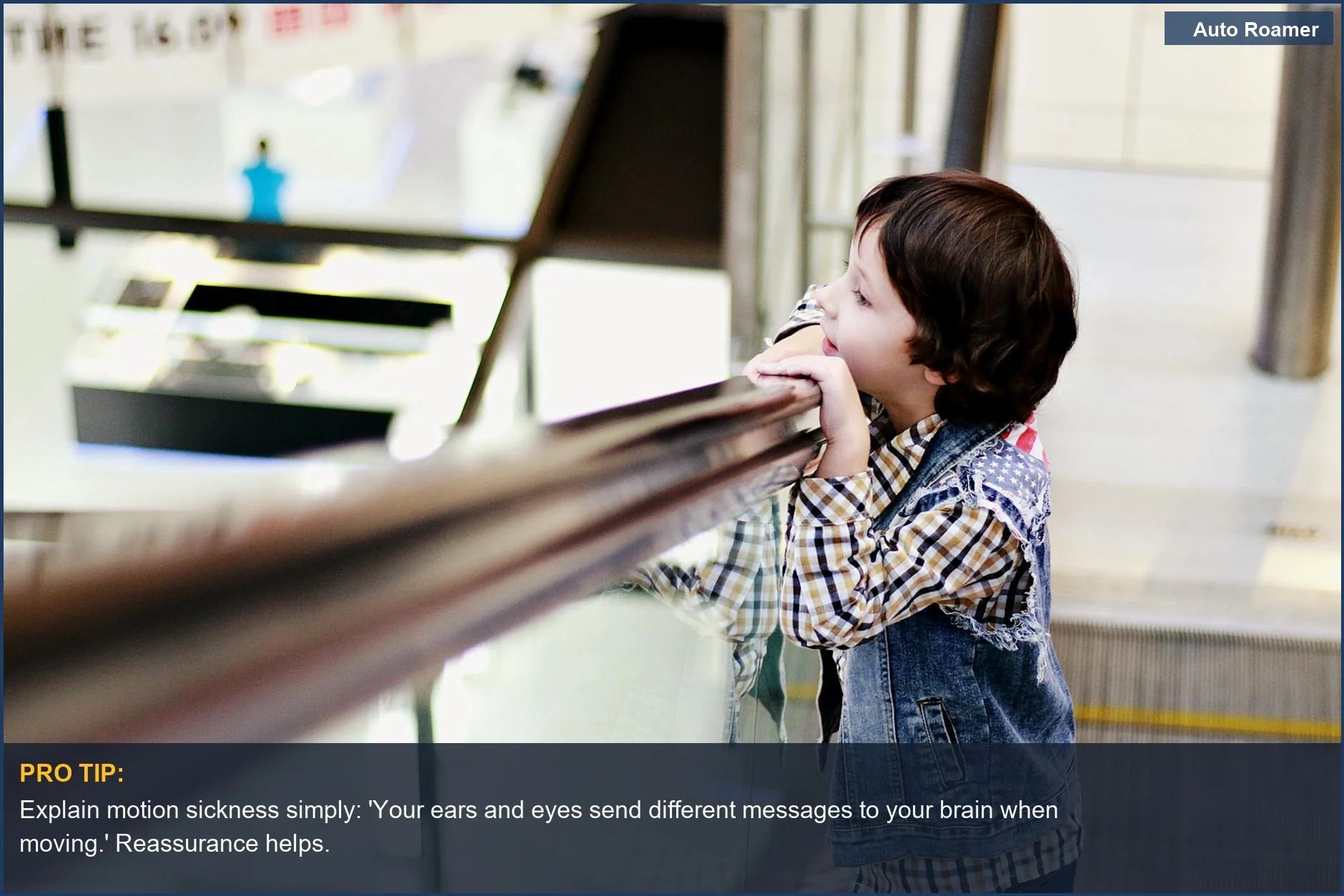
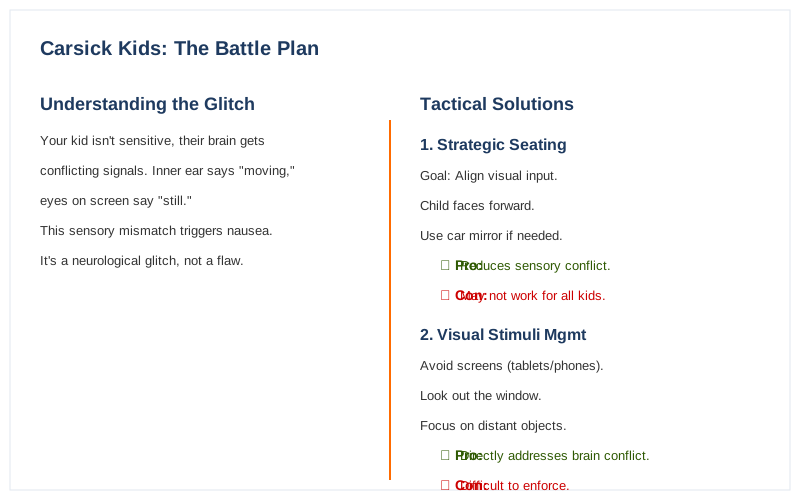
Motion sickness is a physiological response to sensory conflict, not a sign of weakness. Your child's vestibular system, located in the inner ear, detects motion, while their eyes send visual data. When these don't align, the brain gets confused. This confusion manifests as nausea, dizziness, and ultimately, a projectile biohazard. The CDC confirms this sensory mismatch. Young children, especially those between 2 and 12 years old, are at a higher threat level. Their developing brains are less equipped to process these conflicting signals. This isn't a theory; it's a documented physiological vulnerability. Nationwide Children's Hospital emphasizes this age range. Vehicle dynamics also play a role. A winding road or aggressive braking creates more abrupt sensory input changes. These sudden shifts increase the likelihood of a sensory mismatch, triggering the nausea response faster. My load-out must account for variable road conditions and their impact on the internal environment. Here's a breakdown of common failure points and their associated costs:| Component | How It Fails | Symptoms | Fix Cost |
|---|---|---|---|
| Carpet/Upholstery | Vomit saturation | Sour odor, permanent stain | $180 detailing / $500 replacement |
| Child Car Seat | Strap/crevice contamination | Biohazard risk, lingering smell | $75 professional cleaning / $250 replacement |
| Electronic Devices | Liquid damage (iPad, etc.) | Non-functional, sticky residue | $300-600 replacement |
| Air Filtration System | Odor absorption | Car smells like sick for weeks | $50 cabin filter / $200 ozone treatment |
How to Handle This
1. Pre-Load Your Containment Kits (T-Minus 60 Minutes): Before engine start, give your child a small, bland snack like crackers or dry cereal. This prevents an empty stomach from churning, which exacerbates nausea. Simultaneously, administer any anti-nausea medication like Dramamine, if cleared by a medical professional. Dramamine recommends giving it an hour before travel. My field-tested load-out includes two gallon-sized ziplock bags per child, each pre-loaded with a smaller grocery bag and a small pack of unscented wipes. Total prep time: 5 minutes. 2. Optimize Seating for Horizon View (T-Minus 30 Minutes): Position your child in a booster or car seat that allows them to see the horizon through the windshield. This aligns their visual input with their inner ear's motion sensing. Rear-facing seats are a known risk factor for sensory mismatch. UR Medicine recommends elevating children. For infants who must be rear-facing, a dark, quiet environment with minimal visual stimuli is critical. 3. Manage In-Cabin Visual Stimuli (Engine Start): Prohibit screen time. Tablets, phones, and books force the eyes to focus on a stationary object while the body moves, creating the sensory conflict. Instead, engage with audiobooks, music, or conversation. Mayo Clinic Health System suggests distractions like music. 4. Maintain Optimal Cabin Environment (En Route): Keep the car cool and well-ventilated. Overheating exacerbates nausea. Crack a window or run the AC. Avoid strong odors from food, air fresheners, or cleaning products, as these can trigger the gag reflex. HealthyChildren.org stresses keeping the car cool. 5. Immediate Containment Protocol (Code Brown): At the first sign of distress (yawning, paleness, unusual quiet), deploy a pre-loaded ziplock bag. Instruct the child to use it immediately. The goal is to contain the biohazard before it spreads. The inner plastic bag catches the main event, and the ziplock seals the odor and contents. St. Louis Children's Hospital advises having a bag handy. 6. Post-Incident Extraction and Debrief (Pull Over ASAP): Pull over safely at the earliest opportunity. Remove the sealed biohazard bag. Offer small sips of water or a carbonated drink to settle the stomach. A few plain crackers can also help. Change any soiled clothing immediately. My Health Alberta suggests crackers and a fizzy drink. The debrief involves assessing the cause of failure - was it a missed medication dose, screen time, or an overly winding road?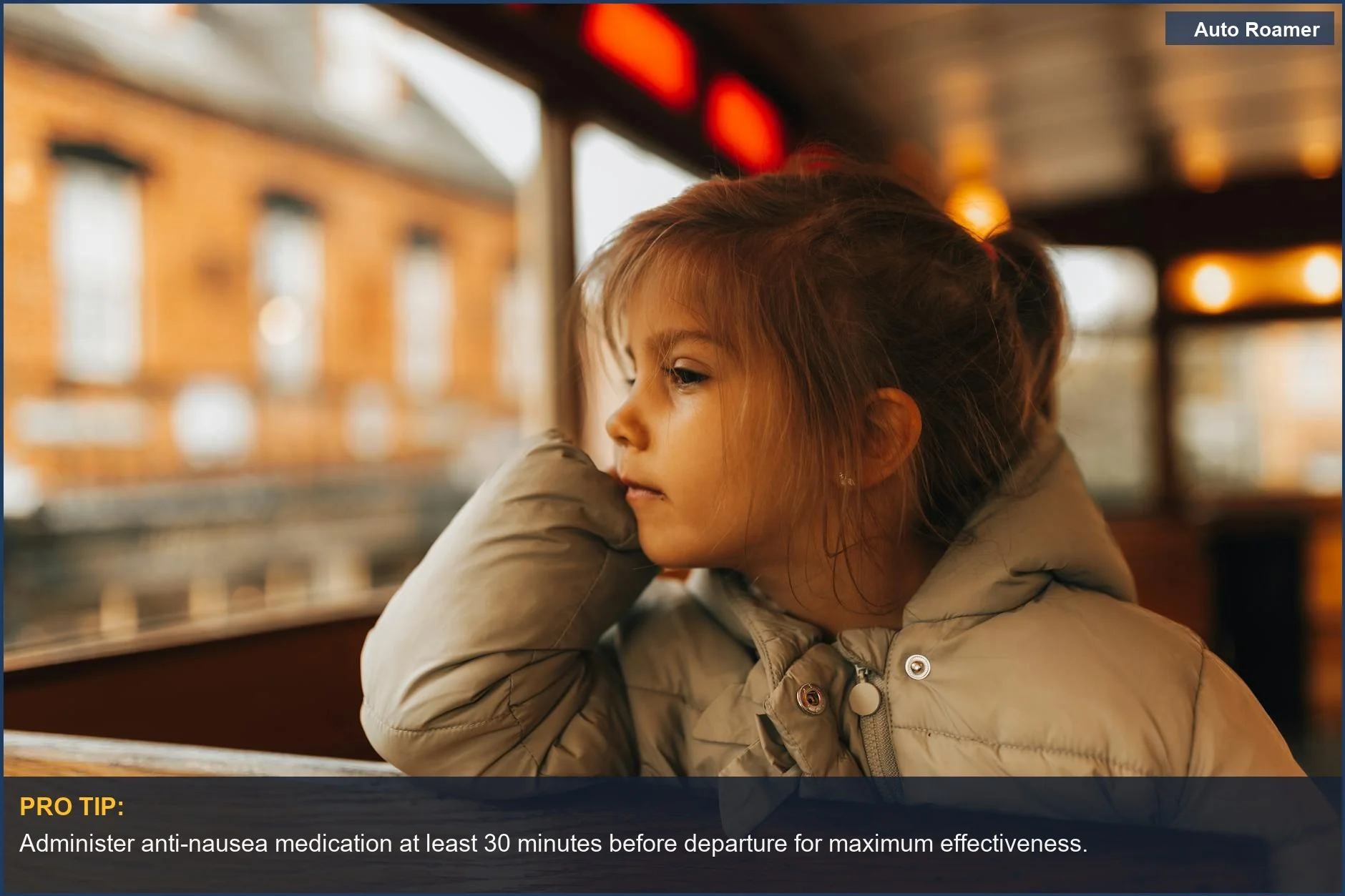
What This Looks Like in Practice
When my 7-year-old deployed a Code Red on a scenic mountain pass, I had 45 seconds to react before the entire back seat of my Subaru Outback became a hazmat zone. The tactical load-out of pre-packed gallon ziplock bags with grocery liners and wipes saved me a $200 detailing bill and 3 hours of roadside scrubbing. Total cost of proactive prep: $8. The alternative was a full interior decontamination. On a 5-hour drive to Grandma's, my 4-year-old started yawning excessively - a critical pre-vomit indicator. I immediately deployed a pre-loaded ziplock bag and offered a small ginger chew. The quick response averted a full-scale biohazard event. A Girl's Guide to Cars mentions peppermints and carbonated drinks, which are similar in principle. I once witnessed a parent hand their child an iPad during a particularly curvy stretch of highway. 15 minutes later, the child's lap, the iPad, and a significant portion of the rear floorboard were covered in undigested goldfish crackers. The half-life of that mess becoming permanent was approximately 30 minutes in the July heat. That's a logistical nightmare. My nephew, notorious for motion sickness, now rides with a small, battery-operated fan clipped to his booster seat, directed at his face. The constant airflow and slight distraction help mitigate symptoms, especially on hot days. It's a low-cost, high-impact sanity-saver. HealthyChildren.org highlights the importance of keeping the car cool. A long-haul trip with my youngest involved a scheduled 15-minute stop every 90 minutes, regardless of perceived need. This proactive approach allowed for fresh air, horizon viewing, and a quick re-assessment of threat levels. It added 30 minutes to the total travel time but ensured zero biohazard incidents. That's efficient logistics. I've seen parents try to 'power through' mild nausea, hoping it will resolve itself. This almost always escalates to a full-blown projectile incident. The extraction time for a minor queasy feeling is 5 minutes with fresh air; for a full vomit event, it's 45 minutes of roadside cleanup and lingering odor. Prioritize immediate, decisive action.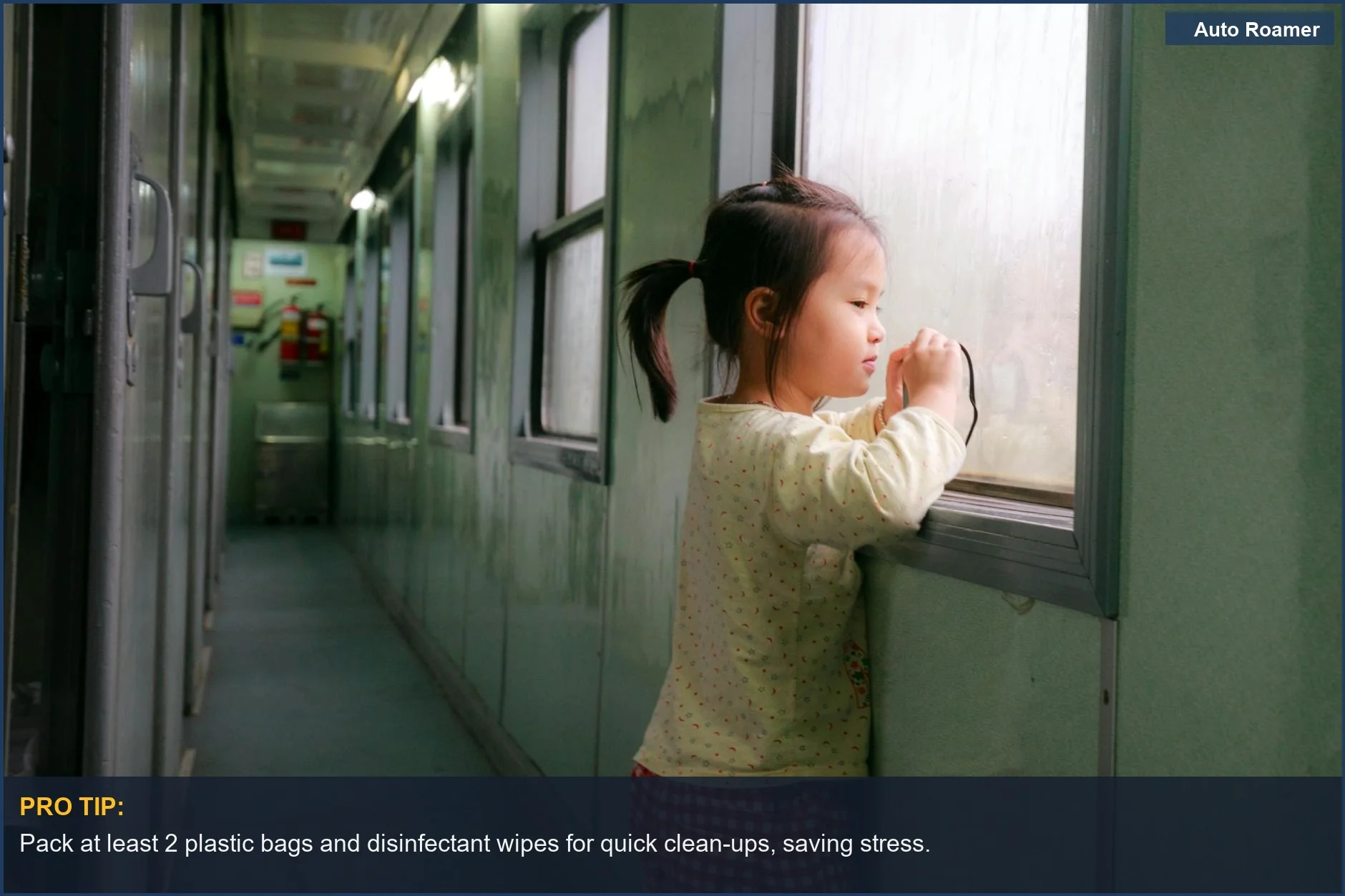
Mistakes That Cost People
| Mistake | Consequence | Why It Fails | Mitigation Protocol |
|---|---|---|---|
| Allowing screen time | Sensory mismatch, guaranteed vomit | Eyes see still, inner ear feels motion | Audiobooks, horizon viewing, distraction |
| No pre-medication (if advised) | Medication too late, no effect | Dramamine needs 60 mins to activate | Administer 1 hour before departure |
| Overfeeding before trip | More material for projectile event | Full stomach increases nausea risk | Small, bland snack; sips of water |
| Ignoring early symptoms | Minor nausea escalates to Code Brown | Yawning, paleness are critical warnings | Immediate bag deployment, fresh air, stop |
| No containment kit | Car interior becomes biohazard zone | Vomit spreads, permanent odor/stains | Pre-packed ziplocks with liners & wipes |
| Hot, stuffy car interior | Exacerbates nausea, increases discomfort | Heat and stale air trigger gag reflex | Maintain cool temp, open window |
| Reading in the car | Intensified sensory conflict | Similar to screen time, but worse for some | Prohibit books, provide audio alternatives |
Key Takeaways
To avoid turning your vehicle into a biohazard zone, remember these core principles for managing motion sickness:Frequently Asked Questions
My kid just vomited, and I don't have a bag. Should I try to clean it myself with paper towels, or head straight to a professional detailer?
Do I really need specialized 'motion sickness bags,' or will any plastic bag work for containment?
What if I try all your steps – no screens, pre-medication, horizon view – and my kid still gets carsick?
Can frequent carsickness permanently damage my child's inner ear or brain development?
I heard ginger ale and crackers are great for carsickness. Is this true, or just an old wives' tale?
🏅 Looking for Gear Recommendations?
Check out our tested gear guides for products that work with this setup:
Sources
- 7 Tips to Prevent Children's Car Sickness During Road Trips
- How to Prevent and Treat Car Sickness in Kids | University Hospitals
- Tips to prevent your kids from getting car sick - Mayo Clinic
- What's your experience with traveling with a kid who gets motion sick?
- Why Children Get Carsick—And What to Do - UR Medicine
- My son gets carsick frequently. What can I do? - HealthyChildren.org
- Motion Sickness | Travelers' Health - CDC
- Motion Sickness in Children: Care Instructions - My Health Alberta
- Motion sickness: First aid - Mayo Clinic
- The Best Car Sickness Tips I've Learned Over the Years
- Why Children Get Carsick—And What to Do
- put-brakes-on-motion-sickness