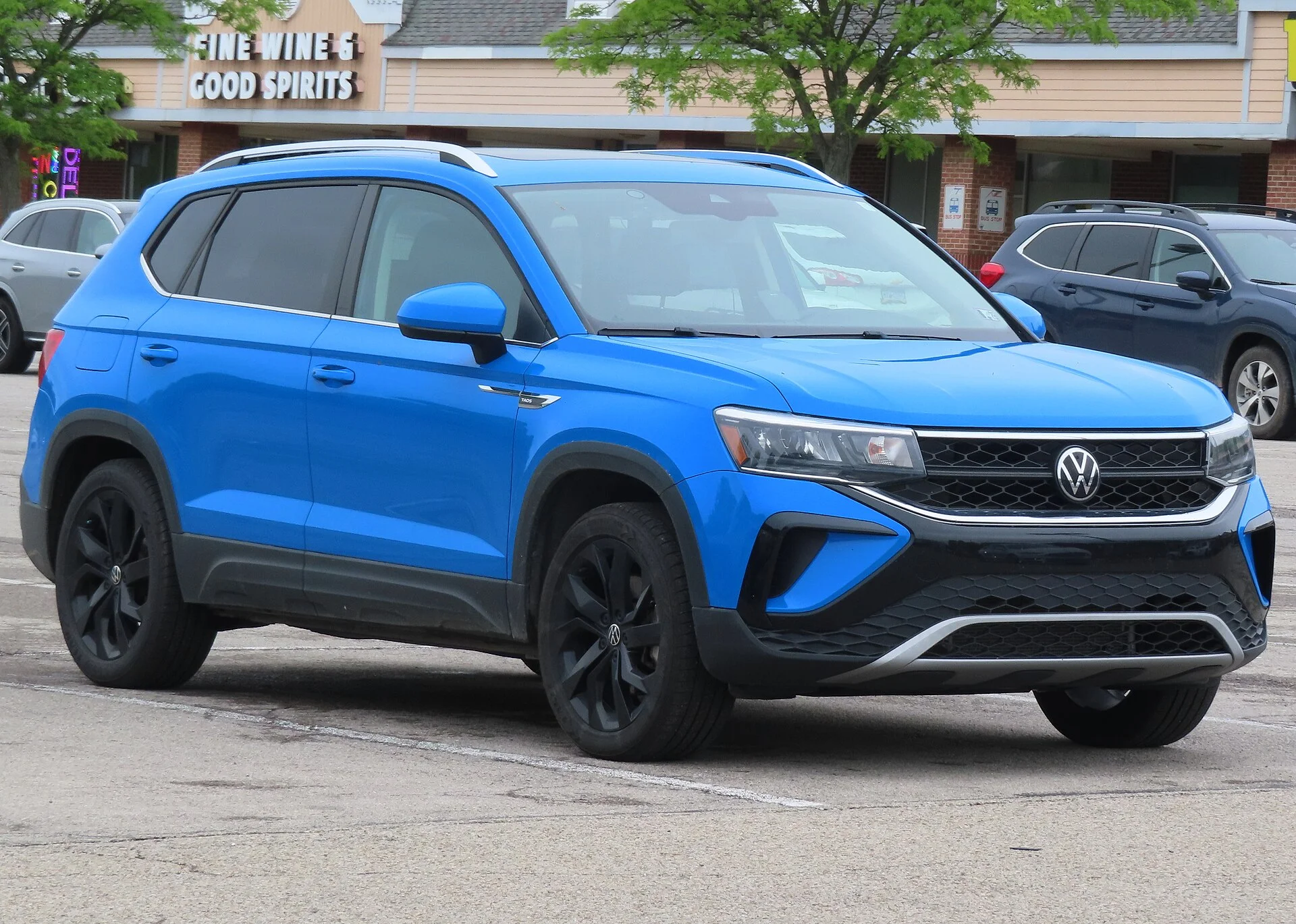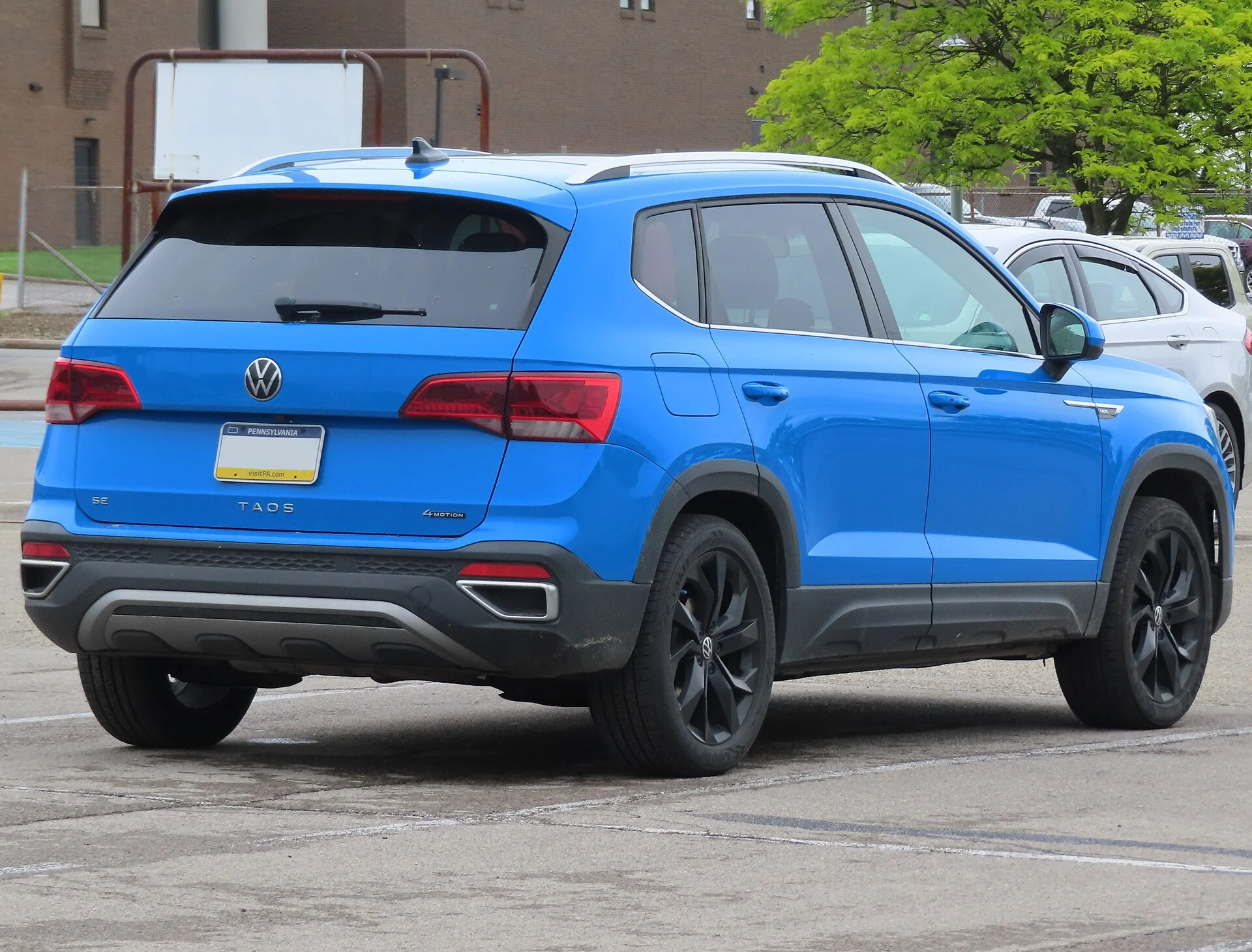
The short version: one sleeps well, two need a plan
The Volkswagen Taos is a subcompact SUV, and the honest first question is whether two adults can sleep in the back without it turning into a contortion act. The short answer: one person sleeps genuinely well back there, and two can do it — but only if you accept a slightly diagonal, slightly bent-knee layout, or move the sleeping surface to the roof.
The reason is a single measurement that gets misreported constantly. A front-wheel-drive Taos gives you 65.9 cubic feet with the rear seats folded and 27.9 cubic feet behind them. A 4MOTION all-wheel-drive Taos gives up meaningful space to the rear differential: 60.2 cubic feet folded, 24.9 behind the seats. That is a 5.7-cubic-foot gap between two cars wearing the same badge, and it is the first thing to check on your own window sticker before you buy a mattress.
Volume is not the constraint that decides whether you sleep well, though. Length is. The Taos front seats do not slide far enough forward to open a flat, full-length run from the tailgate — a limitation almost every listicle skips. This guide covers what actually fits, the mattress and platform options sized to the real floor, power and ventilation for a night inside, when the roof is the better answer, and how the Taos stacks up against the Honda HR-V and Subaru Crosstrek that shoppers cross-shop it against.
The hard numbers: what 65.9 cubic feet actually buys you
Cargo volume is a bucket measurement — it tells you how much loose gear you can pour in, not whether a body fits. Both matter, so start with the volume and then translate it.
- Taos FWD — 27.9 cu ft behind the second row, 65.9 cu ft folded
- Taos 4MOTION — 24.9 cu ft behind the second row, 60.2 cu ft folded
The all-wheel-drive penalty is real and it lands exactly where a car camper feels it — under the floor and in the last few inches of usable height.
For a weekend, 27.9 cubic feet behind the seats is genuinely plenty: a cooler, a two-person kit, a duffel each and a folding chair per person disappear into it with the seats still up. That is the configuration to use if you are tent camping and the Taos is transport rather than bedroom.
Folded flat, the picture changes. The seatbacks fold to a near-level floor with a modest step where the seatback meets the cargo deck, and that step is what a mattress or a platform has to bridge. The load floor is flat enough side to side for a standard-width pad; it is the fore-aft run that runs out, because the folded seatbacks stop where the front seats begin.
The powertrain is a 1.5-litre turbocharged four rated at 174 horsepower on 2025-and-newer cars, with EPA figures around 28 mpg city and 36 mpg highway in front-drive form. For a car camper that number does real work: it is the difference between one fuel stop and two on a 500-mile run to a trailhead, and it is one of the Taos's strongest arguments against a larger SUV.
The front-seat limit — why a Taos is not a flat bed
The Taos front seats do not slide far enough forward to create a flat, full-length sleeping surface. You can fold the rear seats, push the fronts to their stops, and still not get an uninterrupted run long enough for an average adult to stretch out straight.
This is the finding that matters most and the one the spec sheet will never tell you.
That is a limitation for taller individuals and for couples in particular. If you are under about 5'8" you can usually lie straight with your feet in the footwell space behind the front seats. Above that, you are choosing between sleeping diagonally — corner to corner buys the most length any small SUV can offer — or sleeping with knees bent, which is fine for one night and tiring by the third.
Two adults side by side is the harder case. The width is workable; the length is not, and there is no seat-position trick that fixes it. The honest options are: one person inside and one in a ground tent, both people diagonal on alternating nights, or a rooftop tent that moves the whole problem upstairs.
Do the measurement yourself before you buy anything. Fold the rear seats, slide the fronts fully forward, and run a tape from the closed tailgate to the back of the front seats at floor level. That number — not the cubic-foot figure — is the one that decides which mattress fits and whether you will sleep straight.
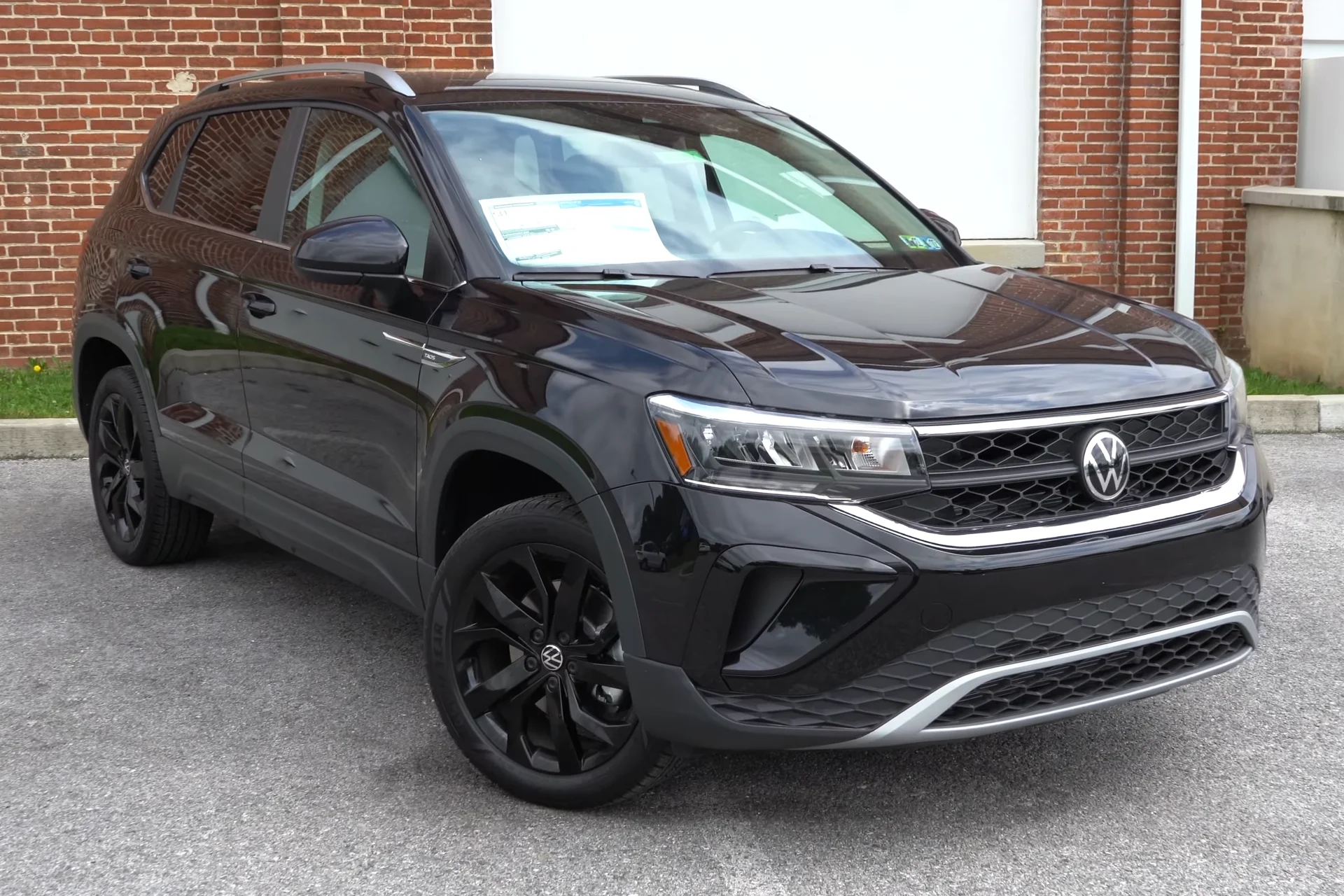
Mattresses and platforms sized to the real floor
Because the usable run is short, the wrong purchase here is a full-size or queen air mattress. It will not lie flat, it will ride up the folded seatbacks, and you will spend the night sliding toward the tailgate.
What works in a Taos, in rough order of cost and effort:
- A trimmable foam pad. Closed-cell or high-density foam cut to the measured floor is the cheapest solution and the most forgiving of the seatback step. It never leaks, never needs inflating, and stores rolled against the side of the cargo area during the day.
- A short or 3/4-length inflatable pad. Backpacking-style pads are narrow enough that two fit side by side and short enough that they do not fight the front seats. Two independent pads also let two people use slightly different diagonals, which is the practical way to make the length work.
- A sleeping platform. A simple plywood deck on legs levels the seatback step, gives you a genuinely flat surface, and turns the space underneath into gear storage that is not on top of you. The honest trade is height: every inch of platform is an inch of headroom, and the Taos does not have inches to spare. Keep it low.
Whatever you choose, put something between the pad and the metal floor. A cargo-area liner or an old blanket stops the cold-sink effect that makes a car floor feel ten degrees colder than the air.
Storage: keeping the bed clear of your gear
The rule in a vehicle this size is that anything left in the cargo area at bedtime is something you are sleeping on. Everything needs a home that is not the sleeping surface.
The front seats are the obvious answer and the one most people underuse. A single crate or soft-sided bin that lifts from the cargo floor onto the passenger seat at night — kitchen kit, food, headlamps, whatever you need in the morning — clears a third of the floor in one motion and puts your gear where you can reach it from the bed.
Volkswagen's Urban Loader accessory is worth a look for the daytime half of the problem. It is a load-management attachment for the cargo area that keeps bags, coolers and camp chairs from migrating across the floor while you drive, which matters more than it sounds when the same floor becomes a bed at the campsite.
A collapsible trunk organiser does the same job for less money. Whichever you use, pack in reverse order of need: sleeping gear on top, cooking kit next, recovery and tools at the bottom where you will hopefully never look.
Wet gear needs its own plan, because in a car this size there is nowhere for it to dry and nowhere for it to be out of the way. Boots, a rain shell and a wet towel sealed into a dry bag in the footwell keep that humidity out of the sleeping area. Leaving them loose in the cargo bay is how you wake up to fogged glass and a damp sleeping bag even with the windows cracked.
Roof storage is the release valve. A roof box or a rack-mounted bag moves the bulky, light, low-frequency items — sleeping bags, spare clothes, chairs — out of the cabin entirely. Check the Taos's dynamic roof load in your owner's manual before you load it; factory side rails on a vehicle this size carry a modest dynamic rating, and that number governs everything you bolt up there. The larger VW Atlas camping setup is the alternative if you find yourself needing all of it at once.
Power for a night in the Taos
The Taos does not offer a household 110-volt outlet in the cargo area. What you get is a 12-volt socket and USB ports, and both are wired to shut off with the ignition on most trims. That is the whole power story, and it decides what you can and cannot run overnight.
- Fine off the car's USB: a phone, a headlamp, a small fan, a speaker.
- Not fine off the car: a 12 V compressor fridge, a CPAP machine, an electric blanket, a laptop running through the night.
Running the second group off the starter battery is how you fail to crank in the morning at a trailhead with no cell service, and a subcompact SUV's battery has very little margin.
The right answer is a portable power station in the 300 to 500 watt-hour band. That size runs a fan all night, keeps a small fridge cold for a day or so, charges everything you own several times over, and still fits in a footwell. Smaller than 300 Wh and you are rationing; larger and you are carrying weight and volume that a Taos does not have to spare.
Charge it on the move. The 12 V socket will trickle a station back up while you drive between campsites, and a folding solar panel on the dash or the roof covers a stationary day. Whatever you do, keep the starter battery out of the loop — it exists to start the car.
Ventilation and condensation — what ruins the first night
Two people breathing in a sealed subcompact for eight hours put out a surprising amount of moisture. In a Taos, with less air volume than a mid-size SUV, that shows up as water running down the inside of the glass by about 3 a.m., damp sleeping bags, and a cabin that smells wrong for the rest of the trip.
The fix is cross-ventilation, not a single cracked window:
- Open two windows on opposite sides an inch each, so air moves through rather than swirling.
- Fit mesh window socks or magnetic screens so you can do that with the bugs outside — the single highest-value accessory for sleeping in any vehicle.
- Point a small USB fan at the ceiling. Moving air keeps moisture off cold glass and does more for warm-night comfort than anything else you can carry. Run it off the power station, not the car.
Cold nights need the same ventilation plus insulation, which sounds contradictory and is not. Reflective window covers cut the radiant heat loss through the glass — the main reason a car gets cold fast — while the cracked windows keep the humidity moving out. Sealing the car up tight is the mistake; you wake up cold and wet.
Roof and tailgate: when the inside isn't enough
If the front-seat limit is a dealbreaker for you — and for two adults over about 5'10" it usually is — the answer is to stop trying to sleep inside.
A tailgate tent is the cheapest fix. Napier's SUV tailgate tents attach at the open hatch and extend the sleeping area out behind the car, so the cargo floor becomes a raised platform at one end of a much longer tent. Expect to pay somewhere in the $200-300 range depending on model and season. It packs small, needs no roof hardware, and it is the option that turns a Taos into a genuine two-person setup without modifying the car.
A rooftop tent is the premium answer and the one to think hardest about on a vehicle this size. It gives you a full-length flat mattress and leaves the whole cargo area free for gear. The cost is height, fuel economy, a setup and pack-down routine every day, and — most importantly — roof load. Factory side rails on a subcompact SUV carry a modest dynamic rating, and a rooftop tent plus two occupants is a static load applied to hardware sized for driving. Read the manual, check the rail rating, and do not assume the static figure and the dynamic figure are the same number.
For the vehicle itself, Volkswagen's Basecamp accessory package adds fender flares and side-door skid plates. It is a dealer-fitted appearance and protection package rather than a capability upgrade — it will not raise the roof rating or lengthen the floor — but it does protect the lower bodywork on the rough forest-road approaches that campsites tend to sit at the end of.
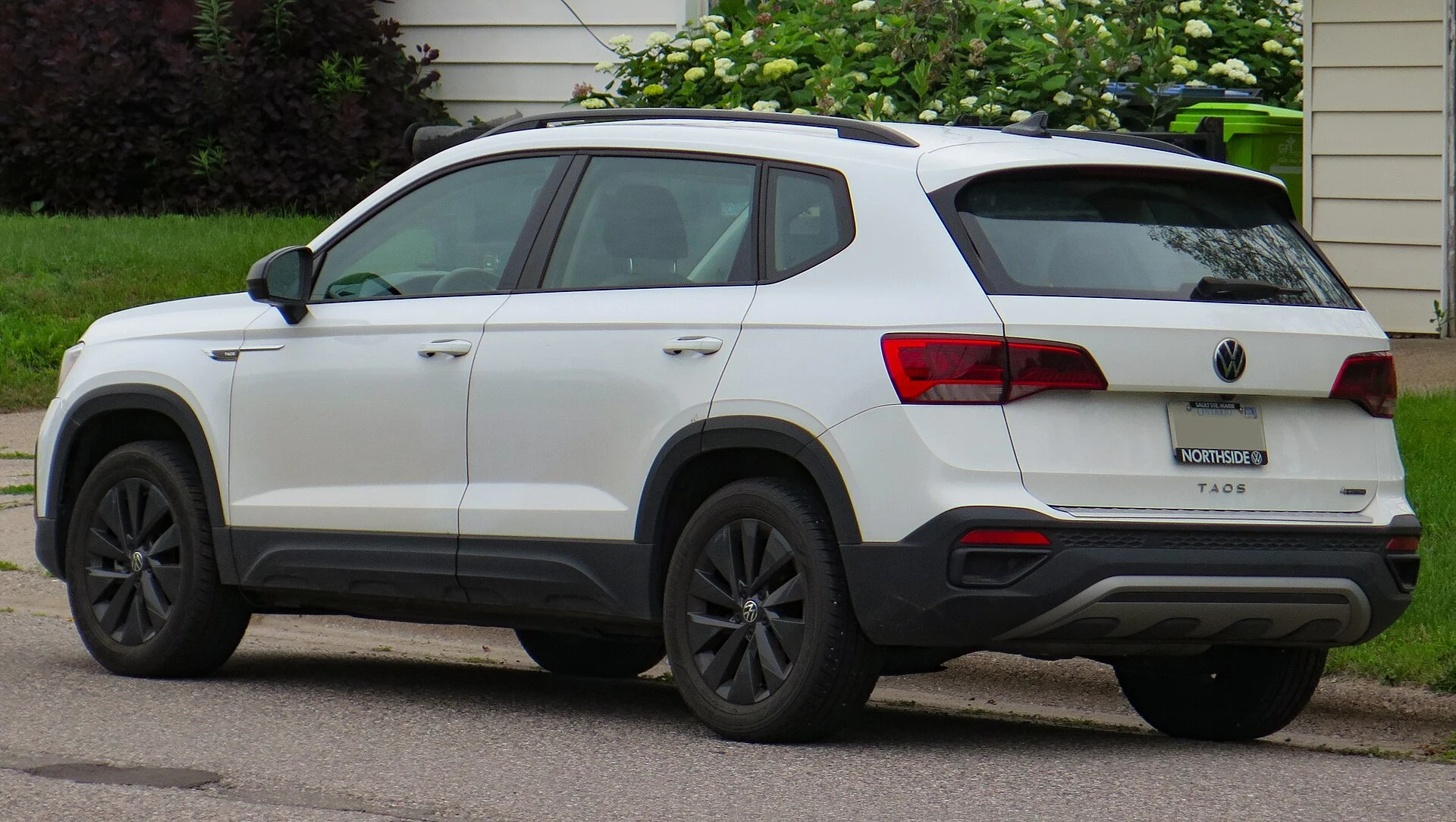
Taos vs HR-V vs Crosstrek: which one sleeps better
These are the three cars that end up on the same shopping list, and on cargo volume the Taos wins outright — which is not the same as sleeping better.
The Honda HR-V offers 24.4 cubic feet behind the rear seats and 55.1 with them folded. The Subaru Crosstrek offers 19.9 and 54.7. Against the front-drive Taos's 27.9 and 65.9, the VW carries roughly eleven more cubic feet than either with the seats down. Even a 4MOTION Taos at 60.2 keeps a five-cubic-foot advantage.
So the Taos is the best gear-hauler of the three by a clear margin. The nuance is that all three share the same fundamental problem — a folded floor that ends at the front seats — so none of them is a flat, full-length bed, and the extra volume in the Taos mostly buys you room for stuff, not for legs.
Where the Crosstrek claws back ground is clearance and standard all-wheel drive, which matters if your campsites sit at the end of unmaintained road. The HR-V's advantage is a slightly more accommodating rear seat for passengers. The Taos's advantage is the cargo hold and the highway fuel economy — 36 mpg makes long approaches cheap.
Buying purely to sleep in? The Taos is the right pick of the three, and the extra volume is the reason. Buying to reach places the other two cannot? That is the Crosstrek's argument, and it is a fair one.
Pros and cons: the honest trade-offs
What the Taos does well:
- Carries the most gear in its class — 65.9 cu ft in front-drive form, roughly eleven more than the obvious rivals.
- A load floor flat and wide enough for a standard pad, with a low, square cargo opening you can slide a platform through.
- Around 36 mpg on the highway, which makes long approaches to remote campsites genuinely cheap.
- Small enough to park at a trailhead where a full-size SUV cannot.
What it does not:
- The front seats will not slide far enough forward for a flat, full-length bed — the biggest limitation, and unfixable.
- Choosing 4MOTION costs 5.7 cu ft, so the all-wheel drive you wanted for the road in makes the bedroom smaller.
- No 110-volt outlet in the cargo area, so a power station is a requirement rather than a luxury.
- Headroom tight enough that a tall sleeping platform becomes self-defeating.
- Modest ground clearance — a compact SUV for maintained forest roads, not for overlanding.
Who it is wrong for. Two adults over roughly 5'10" who both want to sleep inside, every night, without a tent. That combination does not work in a Taos and no accessory changes it.
Final verdict: who should car camp in a Taos
The Volkswagen Taos is a genuinely good one-person camper and a workable two-person camper with a tent involved. That is the honest framing, and it is more useful than the version where every compact SUV sleeps two comfortably.
If you are travelling solo, the Taos is close to ideal: the biggest cargo hold in its class, a flat floor that takes a trimmed foam pad without complaint, fuel economy that makes long approaches affordable, and a footprint that parks anywhere. Add a trimmable pad, window screens, a 300-500 Wh power station and a reflective window set, and you have a complete setup for a few hundred dollars and no modifications to the car.
If you are travelling as a pair, budget for a tailgate tent in the $200-300 range or a rooftop tent, and check your roof rails' dynamic load before you commit to the latter. Trying to make two adults fit inside is the one path that reliably disappoints.
Two things to settle before you spend anything. First, look at your window sticker: front-drive gives you 65.9 cubic feet, 4MOTION gives you 60.2, and that gap decides which mattress fits. Second, take the tape measure to the folded floor with the front seats all the way forward — that single number tells you more about how you will sleep than any cubic-foot figure ever will.
Want the next size up? The VW Tiguan car camping guide covers the same ground with the length the Taos does not have.