
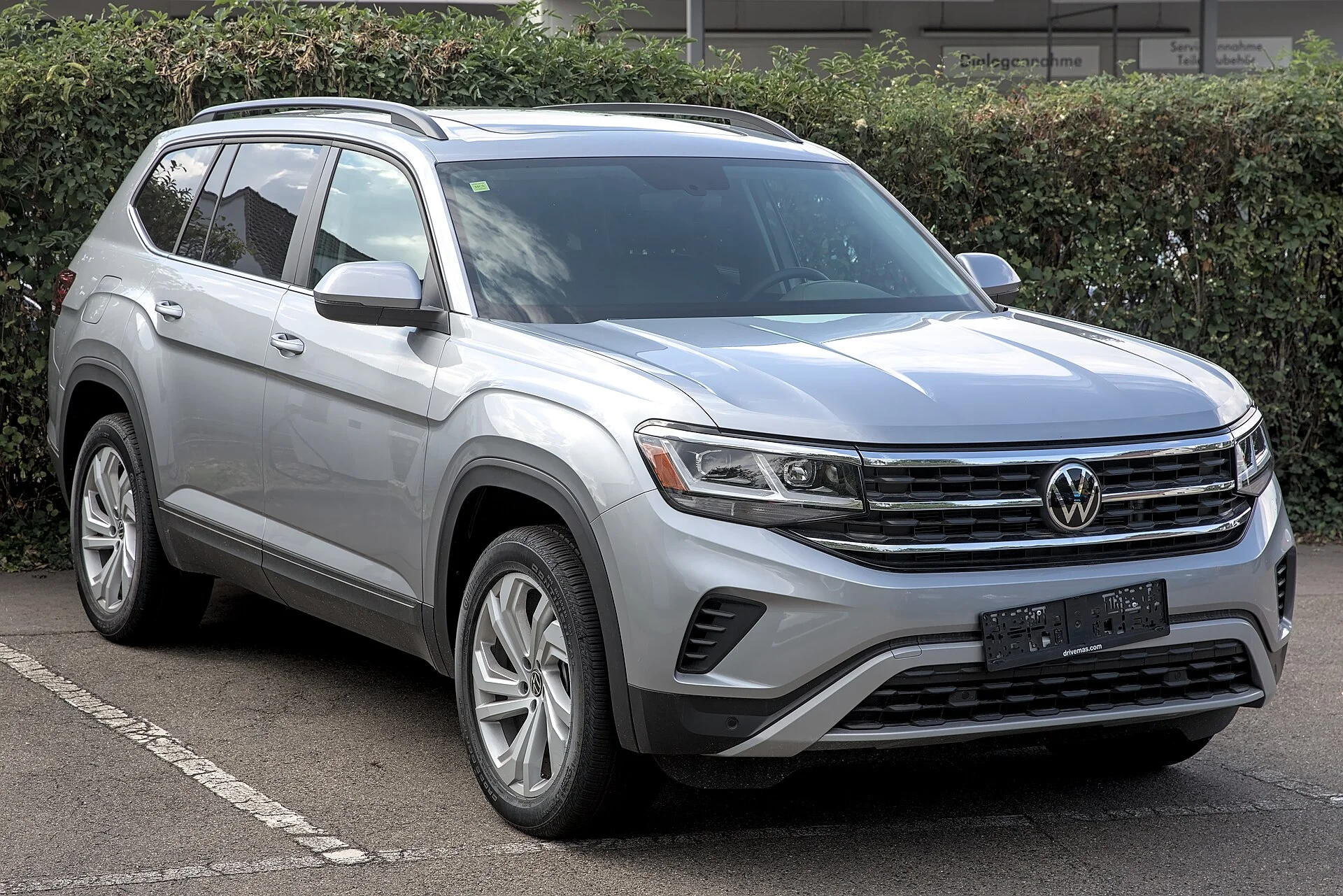
Sleeping Space: Does the Atlas Fit an Adult Bed?
Yes, with room to spare for one adult and workable room for two. Folding the second and third rows opens 96.8 cubic feet of cargo volume, and the resulting flat load floor runs roughly 72 inches from the tailgate to the front of the folded second row. That length accommodates most adults up to about 6 feet tall lying flat, without the knees-bent compromise that shorter hatchbacks force.
Why the numbers matter before gear gets bought
The cargo bay measures approximately 82.5 inches in length and about 48.4 inches in width between the wheel wells. The wheel-well width is the number that actually decides what fits, because most inflatable mattresses and plywood platforms are cut to clear that narrower dimension rather than the overall floor length. A platform built to the full 82.5-inch length but ignoring the 48.4-inch pinch point will bind against the wheel wells and refuse to sit flat.
Two other figures set the practical ceiling on a build. The Atlas carries a listed cargo weight capacity of about 1,500 pounds, which covers a mattress, bedding, a cooler, and several days of gear without approaching the limit. Its maximum towing capacity of 5,000 pounds matters for campers planning to bring a small trailer, a kayak rack, or a bike carrier rather than fitting everything inside the cabin.
None of these numbers guarantee comfort on their own — they only describe the envelope. The sections below work through what actually goes inside that envelope: which sleep surface suits the space, how to organize gear around it, and how to keep the cabin livable overnight. Anyone cross-shopping a smaller SUV for the same purpose can compare the Atlas's footprint against the Volkswagen Taos's 65.9 cubic feet, which is meaningfully tighter for the same two-adult sleeping arrangement.
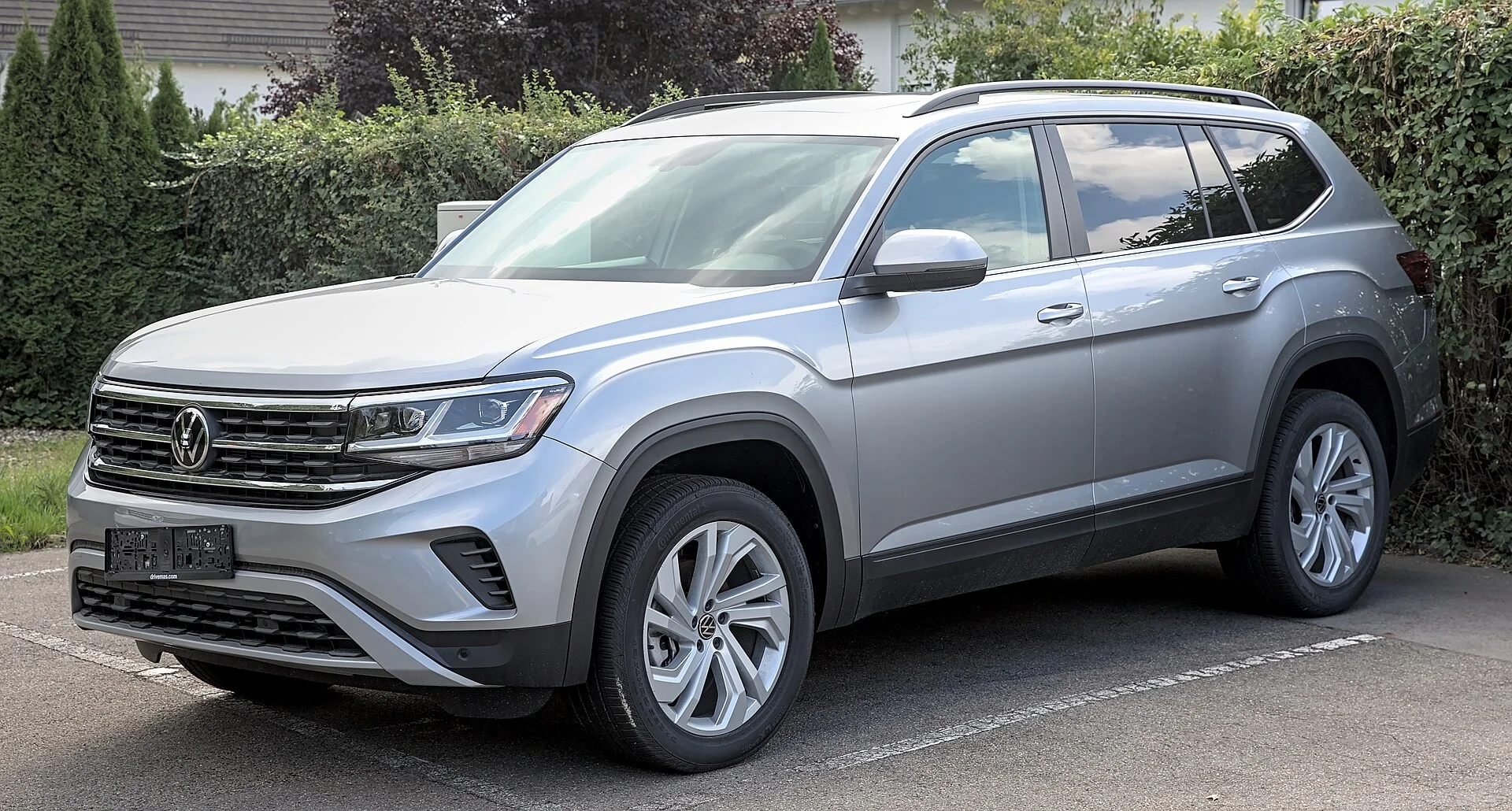
Mattress or Plywood Platform: Making the Call
The core decision is comfort-now versus customization-later. An inflatable mattress cut specifically for the Atlas's cargo footprint drops in, inflates in a few minutes with a built-in pump, and requires no tools or modification. Systems built for this vehicle typically retail in the $250-$300 range and are reported to comfortably fit two adults, with enough length for taller sleepers to stretch out fully rather than bending at the knees.
- Inflatable mattress: fastest setup, no permanent changes to the vehicle, softer sleeping surface, but offers no under-mattress storage and can shift slightly on a slope.
- Plywood platform: built from 3/4-inch plywood (roughly $50 in material from a hardware store), creates a rigid, stable surface and opens storage space underneath, but demands measuring, cutting, and an afternoon of assembly.
- Hybrid approach: a thinner foam pad over a low platform, which trims storage height slightly in exchange for a firmer, more consistent sleeping surface.
The trade-off is straightforward: a platform earns back storage volume that a mattress-only setup gives up entirely, but only for someone willing to build and haul a rigid structure. Anyone who camps a handful of nights a year gets more value from the inflatable route; anyone converting the Atlas into a semi-permanent camping rig gets more value from a platform, because the underneath cubbies compound in usefulness over repeated trips.
The failure mode to watch for either way is oversizing. A platform cut too wide will jam against the 48.4-inch wheel-well gap noted above, and a platform built too large overall can block access to the front seats, which becomes a real problem for anyone traveling with a second person who needs to move between rows during the trip.
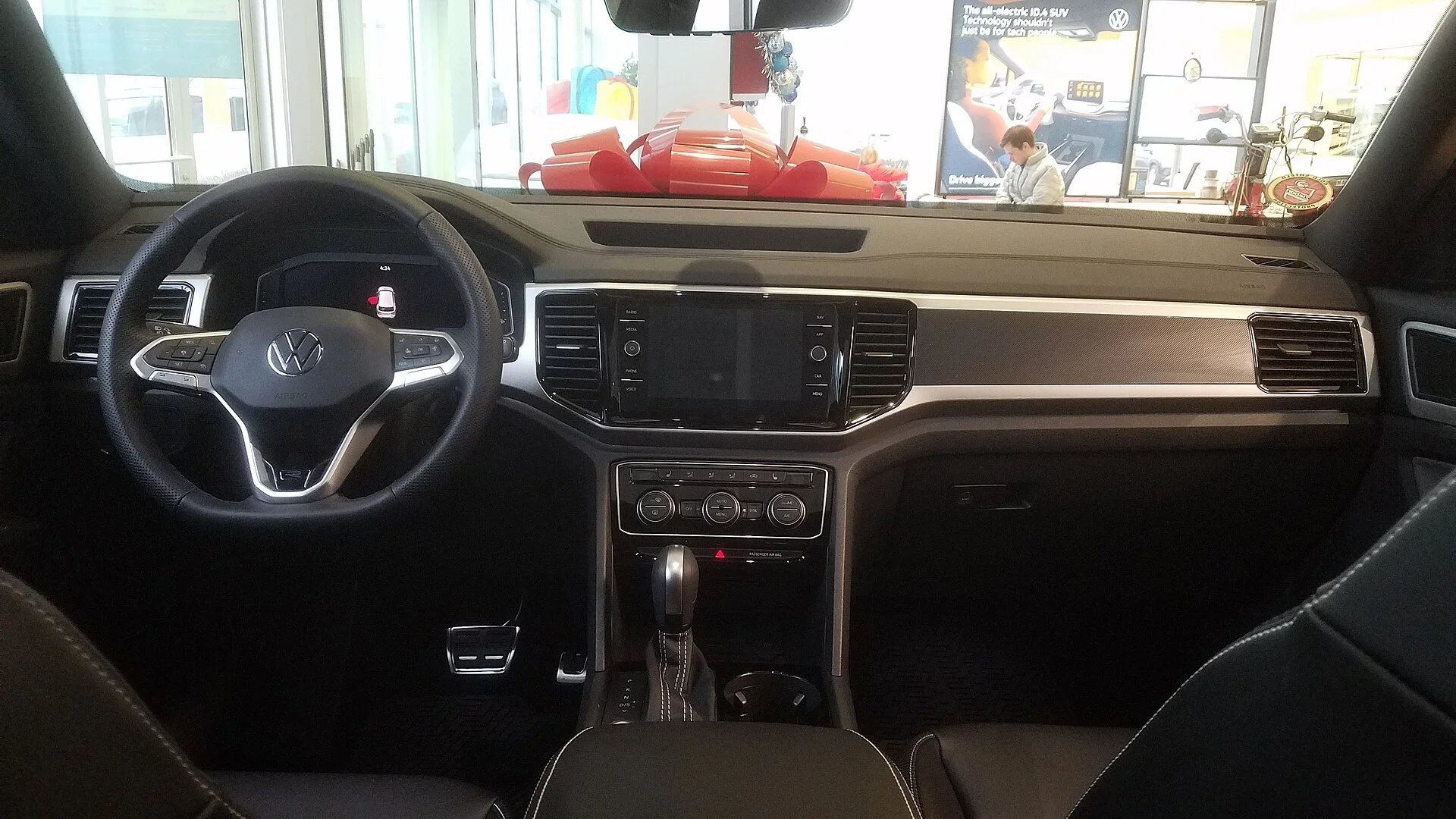
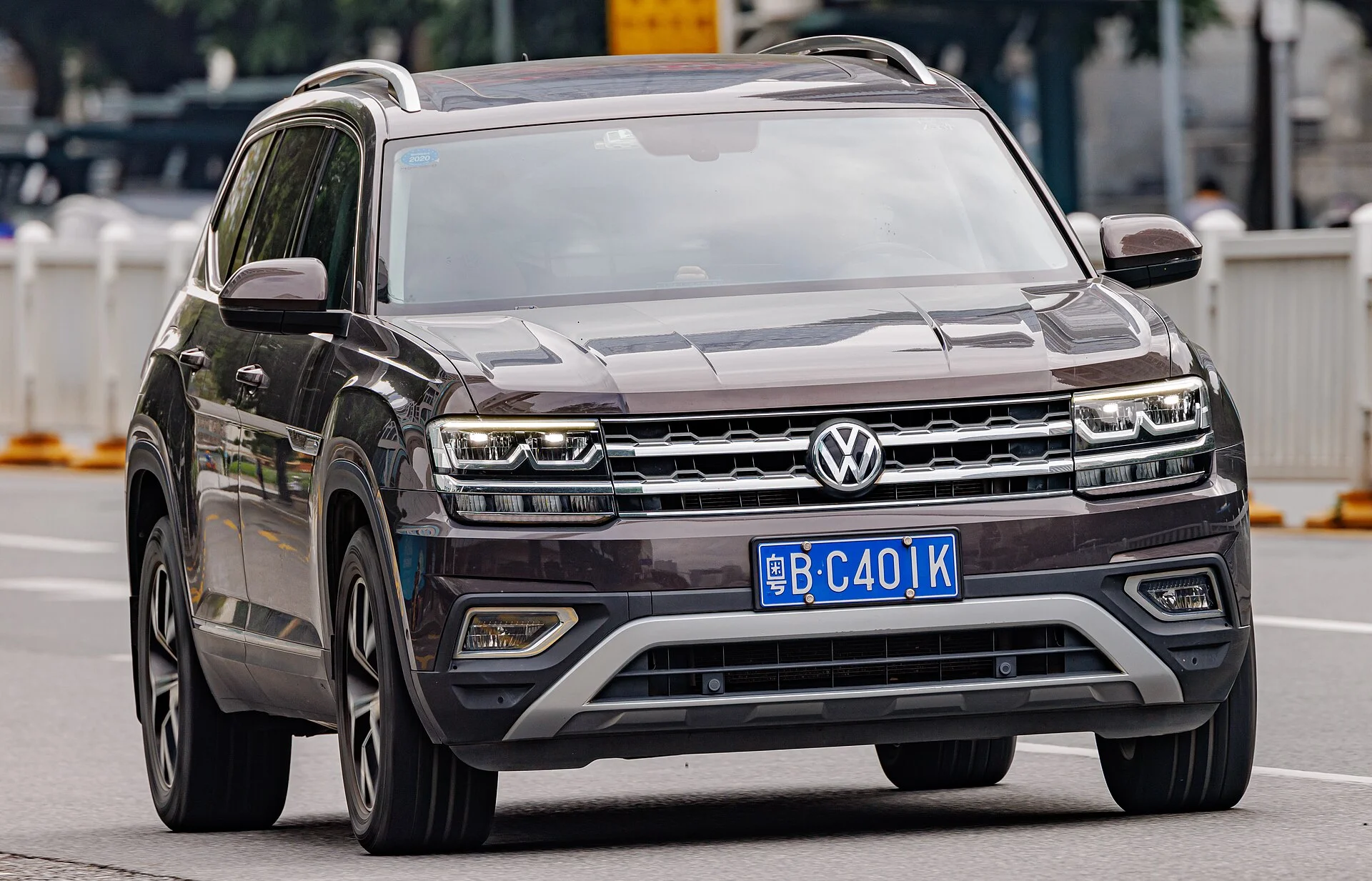
What Owners Report About the Fit in Practice
Reports from Atlas owners on the actual sleeping experience are consistent with the measured dimensions above: the space works, but only once seats are folded completely flat and any gaps are padded out.
"VW Atlas: Uncovering Sleep Comfort in the Back" — a video review from autojeffreviews on TikTok walks through folding the second and third rows and testing the resulting flat surface for overnight sleep, concluding the load floor is usable for an adult without a raised platform.
Community discussion echoes the same conclusion with more nuance around two-adult setups. A camping thread in a Facebook owners' group covering car camping setups and tips for a VW Atlas with two adults describes the same folded-seat approach, noting that padding the small seam gaps where the rows meet is the detail that separates a comfortable night from a lumpy one.
The order of operations that owners describe matters more than any single product choice. Seats need to fold completely flat before a mattress goes in, otherwise the inflatable surface tents over the seam and creates a ridge down the middle of the bed. Bedding or a foam layer over that seam, laid before the mattress inflates, removes the ridge. Skipping that step is the single most common complaint in owner discussions of the setup, and it costs nothing to fix — it only costs a few extra minutes of prep before the mattress goes down.
A broader resource for this kind of build, the Highway Handbook car camping guide, also stresses testing the full sleep setup in a driveway before the first overnight trip, which catches gaps, drafts, or fit problems while help and daylight are still available.
Storage and Organization Around the Sleep Space
Once the sleeping surface is decided, the remaining cargo volume needs a system, or gear ends up piled loose around the mattress by the second night. Clear plastic storage bins are a practical starting point: cooking utensils, food supplies, and outdoor gear stay visible and separated, which matters more in a packed SUV than in a garage, since digging through stacked bags in the dark is the most common camping-night frustration.
- Load the mattress or platform first, then build storage around its footprint rather than fitting the mattress into whatever space is left.
- Keep a cooler and cooking supplies within reach of the tailgate, since that gear gets used most frequently and shouldn't require unpacking the whole cargo area.
- Use the Atlas's built-in cupholders and door compartments for small, easily lost items — flashlights, phone chargers, and keys — rather than burying them in a bin.
- Consider a weatherproof roof box for bulky, low-frequency items like sleeping bags and spare clothing, which frees interior volume for the items used daily.
A weight limit applies to any roof-mounted storage, and it should be checked against the specific rack before loading it, since exceeding that limit affects both fuel economy and highway stability.
Family-focused guidance from a Volkswagen dealership's camping storage tips for the Atlas makes a similar point about sequencing: pack heavier, less-frequently-used items low and toward the front of the cargo area, and keep the last few feet near the tailgate open for items that get pulled out and put away throughout the day. That ordering does more for a workable campsite than any single storage product, because it reduces how often gear has to be fully unloaded and reloaded to reach something buried underneath.
Powering Devices, Lights and Small Appliances Overnight
A portable power station is the practical center of an overnight power setup. A unit in the 293Wh class provides AC, USB and DC outputs from a single battery, enough to charge phones, tablets, and run small appliances or lighting across a night without needing the vehicle's engine running.
Solar charging extends that capacity for multi-day trips. A 100W solar panel kit paired with a power station of that size can meaningfully top off the battery during a full day of sun, which matters most for trips longer than a single overnight where wall power isn't an option between stops.
Lighting draws relatively little power but changes the usability of a campsite after dark. A lantern rated up to roughly 400 lumens, particularly one that doubles as a secondary battery bank, covers both cooking-area lighting and emergency device charging without adding a second dedicated power source.
| Power option | Key spec | Best for |
|---|---|---|
| Portable power station | ~293Wh, AC/USB/DC outputs | Charging devices, running small appliances overnight |
| Solar panel kit | 100W | Multi-day trips without shore power |
| Lantern/power bank | Up to ~400 lumens | Campsite lighting plus backup charging |
| Power inverter | ~300W | Running standard household plugs off the Atlas's 12V outlets |
The Atlas's built-in 12V outlets can also run standard household electronics through a roughly 300W power inverter, which is useful for a portable cooler or simultaneous device charging without draining a separate battery pack. Whichever combination gets used, testing the full power setup before departure — not on the first night at the campsite — catches a dead cable or an incompatible plug while a fix is still convenient.
Ventilation, Insulation and Condensation Control
Airflow matters as much as the sleeping surface once the doors are closed for the night. A compact, battery-operated fan around 10 inches in diameter, running roughly $25, moves enough air inside the cabin to make warm-weather nights tolerable without needing the engine or a wall outlet.
Window coverage handles both privacy and temperature. Reflective window covers cut to fit the Atlas's specific window shapes block early morning light and reduce solar heat gain during the day, typically running around $100 for a full set. A looser blackout curtain works for privacy but does less for temperature control than a reflective, fitted cover, since gaps around the edges let heat through.
Temperature strategy splits by season rather than by a single product choice:
- Cold-weather trips call for a sleeping bag rated to roughly 0°F, layered over the mattress or platform rather than relied on alone against the cabin floor.
- Warm-weather trips are better served by a portable rechargeable air conditioner, with units in this class running around $300 and drawing on the power setup described above.
Condensation is the failure mode that catches first-time car campers off guard, since a closed cabin with two sleeping adults generates enough moisture overnight to leave windows and bedding damp by morning. A moisture-absorbing desiccant product placed discreetly in the cargo area pulls that humidity out of the air over the course of the night. Cracking a window slightly does the same job through airflow instead, though it trades some warmth and security for that ventilation — a call that depends on the campsite and the weather rather than a fixed rule.
Atlas Car Camping: The Real Pros and Cons
Where the Atlas earns its space
The Atlas's interior dimensions are its strongest argument: a full-size inflatable mattress fits with room to spare, the folded rear rows create a flat surface without an elaborate conversion, and cupholders and compartments placed throughout the cabin keep small essentials accessible rather than lost in a duffel bag. The vehicle also scales beyond the sleeping setup itself, with enough capacity to add a roof box for extra storage or a bike rack for daytime activity without overloading the 1,500-pound cargo weight limit.
Where it falls short
The same size that creates interior room works against the Atlas off pavement. Narrow trails and tight campsite access roads are harder to navigate in a three-row SUV than in a smaller vehicle built specifically for off-road use, and fuel economy over a multi-day trip runs behind more compact camping vehicles. The interior-only sleeping approach also has a real limitation for anyone who prefers a traditional tent-and-sleeping-bag setup, since sleeping inside the vehicle confines the experience to the cabin rather than opening onto the campsite itself.
The practical summary is that the Atlas trades off-road range and fuel efficiency for interior space and setup speed. For a family or group prioritizing comfort and simplicity over rugged trail access, that trade works in the Atlas's favor. For someone chasing remote, technical camping spots, the same size becomes the limiting factor rather than an asset — worth weighing against a smaller footprint like the one detailed in the guide to sleeping in a Toyota 4Runner.
Who the Atlas Setup Actually Suits
The Atlas car camping setup suits a specific kind of trip more than it suits camping in general. Weekend getaways, family trips, and multi-day road trips where comfort and setup speed matter more than trail access are where the vehicle's dimensions and cargo capacity pay off. A single adult or a couple gets the most out of the roughly 72-inch sleeping platform, since that length comfortably fits one person up to 6 feet tall and works, with some compromise, for two adults side by side.
It suits less well anyone planning technical off-road routes, since the Atlas's size limits access to narrow trails that smaller SUVs handle without issue. It also suits less well campers who specifically want a tent-based, outside-the-vehicle experience, since the appeal of this setup is precisely that everything happens inside the cabin.
For those already convinced by the Atlas's cargo footprint, the accompanying guide to Volkswagen Atlas camping setup and gear covers the broader equipment list beyond the sleep surface. Anyone dealing with light leaking through the windows regardless of vehicle choice can also review dedicated coverage of full-cabin blackout window shades, since fitted coverage matters as much for temperature control as for privacy, as covered in the ventilation section above.
Taken together, the Atlas earns its place among car camping vehicles through cargo volume and a genuinely flat sleeping surface rather than through any single accessory. The dimensions do the heavy lifting; the mattress, storage, power and ventilation choices layered on top are what turn that space into a workable, repeatable camping setup rather than a one-time experiment.