What You Need to Know
My first car camping table was a wobbly plastic thing I bought for $35 at a discount store. It folded down okay, but figuring out how to shove it into my already packed Civic felt like a Tetris masterclass gone wrong. The honest version: transporting and storing your camping table is half the battle, and most online guides just show you pretty pictures without the grunt work.
Facebook groups are where the real field notes live, full of people wrestling with bulky gear. This isn't about fancy aluminum alloys; it's about not sacrificing your entire trunk to a flat surface. Your table needs to disappear when you're driving and reappear like magic when you need to chop onions or play cards. It's a crucial piece of camp furniture, but if it takes 30 minutes to load, your stoke level plummets before you even leave the driveway.
We've all been there, staring at a packed car and realizing the table is the one thing that absolutely will not fit. This is about making that table a friend, not a foe, on your adventures.
The Core Answer
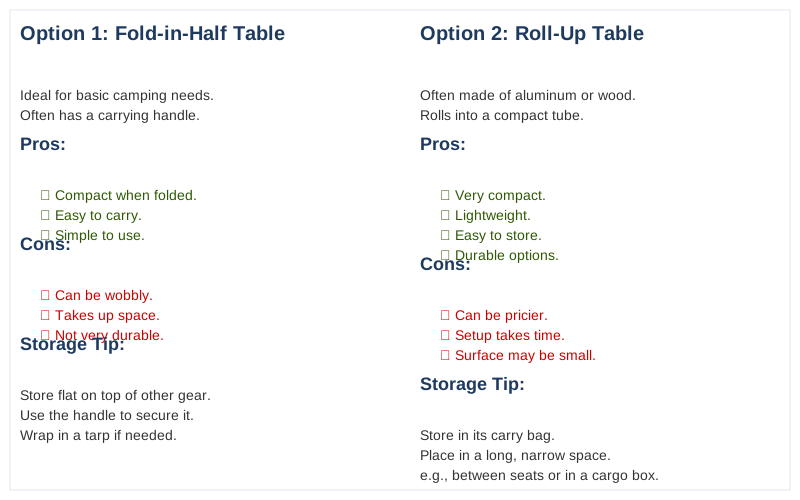
The real move for transporting and storing your camping table isn't about finding the 'perfect' table, it's about finding the right system for the table you have. Most beginner tables are the fold-in-half or fold-out-legs kind. My first one was a $35 plastic monstrosity that weighed about 15 pounds and took up a ridiculous amount of space even when folded.
What nobody tells beginners is that storage isn't just about the table itself, but how it interacts with everything else in your vehicle. Think of it like packing a suitcase. You don't just shove clothes in; you roll them, use compression sacks, and strategically place them. Your table needs that same respect.
For most common folding tables, the goal is to make them as flat and unobtrusive as possible. If it's a table that folds in half, it usually has a handle. This handle is your friend. You can often slide this handle into the gap between your car seats and the center console, or wedge it along the side of your trunk, especially if you have something like a roof rack or a cargo box that creates awkward spaces.
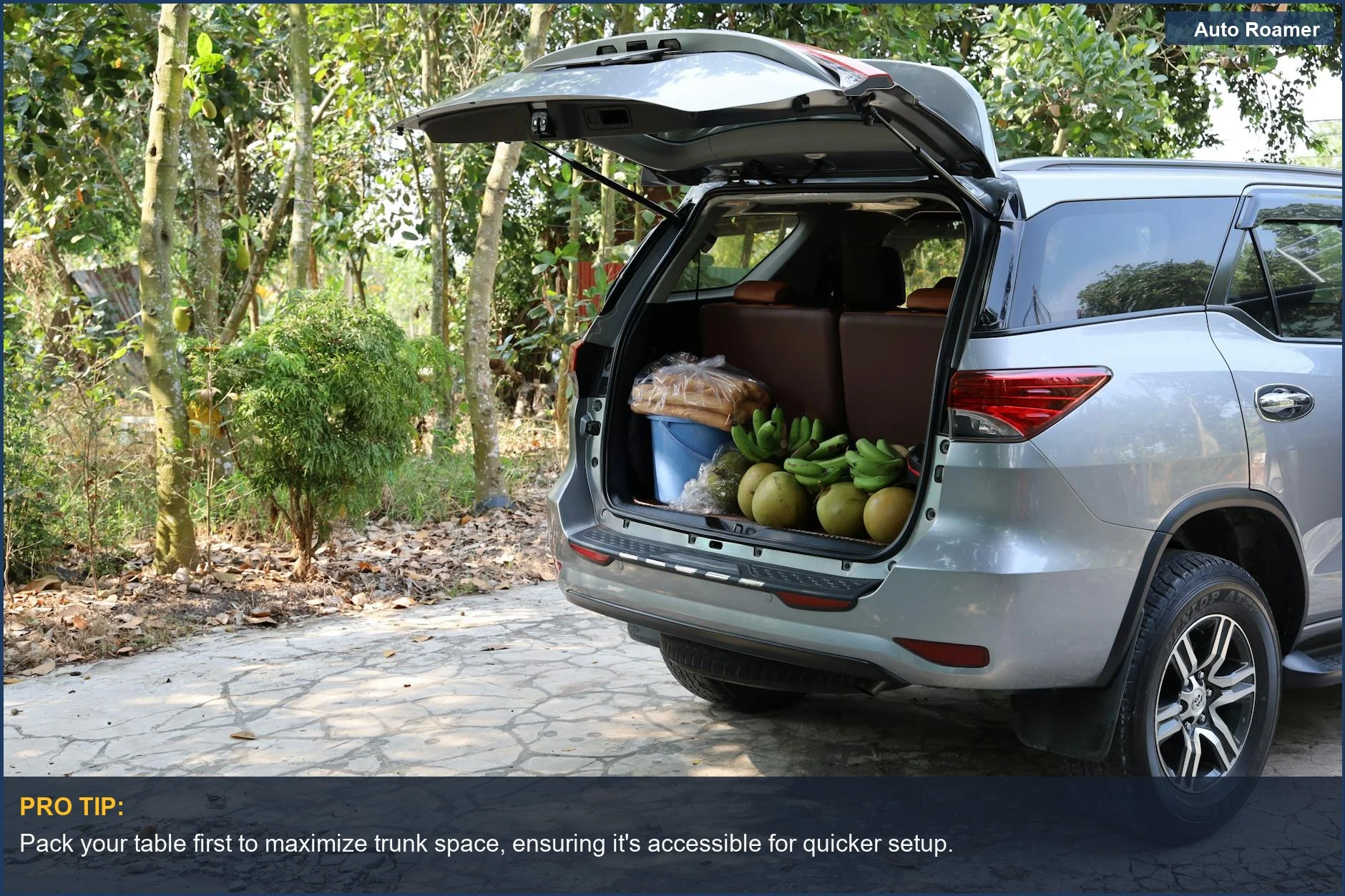
Another rookie mistake is just throwing it on top of everything. This guarantees it'll shift, scratch other gear, or even fall out if you're not careful. The honest version: secure it. Use bungee cords if you have to. I learned this the hard way when my table slid out on a bumpy road in Pennsylvania, thankfully missing a passing cyclist but causing me a solid 10 minutes of panic while I retrieved it from the ditch.
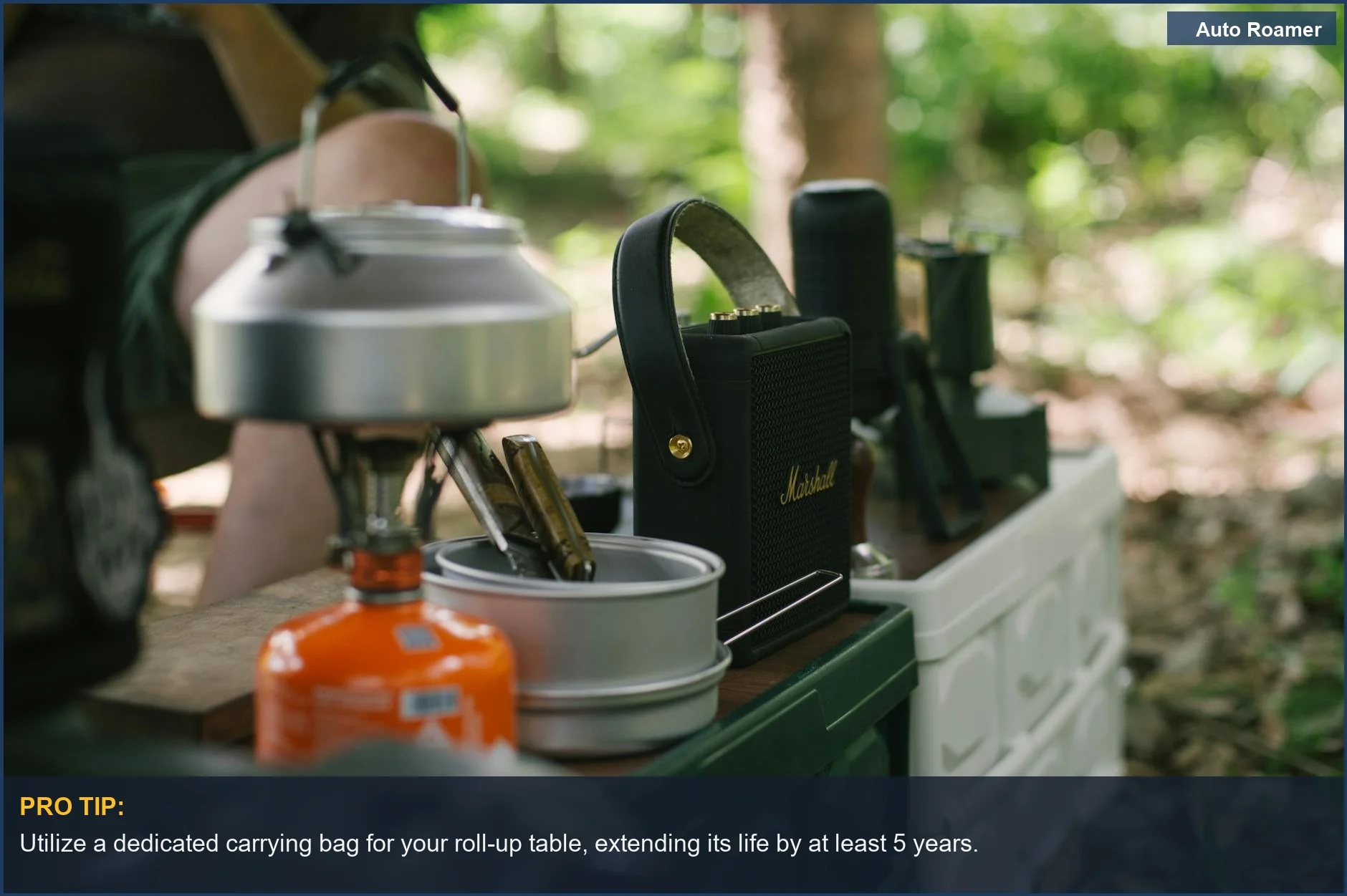
If your table is one of those multi-piece roll-up ones, that's a different story. Those are usually much more compact, often fitting into a dedicated bag. The bag is key. Treat that bag like a delicate piece of equipment. Store it upright or on its side where it won't get crushed by heavier items. Some people even get creative and mount these bags to the inside of their vehicle doors or under seats using straps or Velcro.
The $50 version of a table storage solution is often just a good old-fashioned tarp or a large garbage bag to keep it clean and prevent scratches. The $200 version might be a custom-fit storage bag or a dedicated cargo management system. But the physics are the same: minimize its footprint and prevent it from becoming a projectile.
When you're at camp, the table needs to be accessible. Storing it somewhere you have to unload half your car to get to it is a game-time killer. The real move is to park it where it's one of the first things out, or integrated into your campsite layout so it doesn't require a major excavation project.
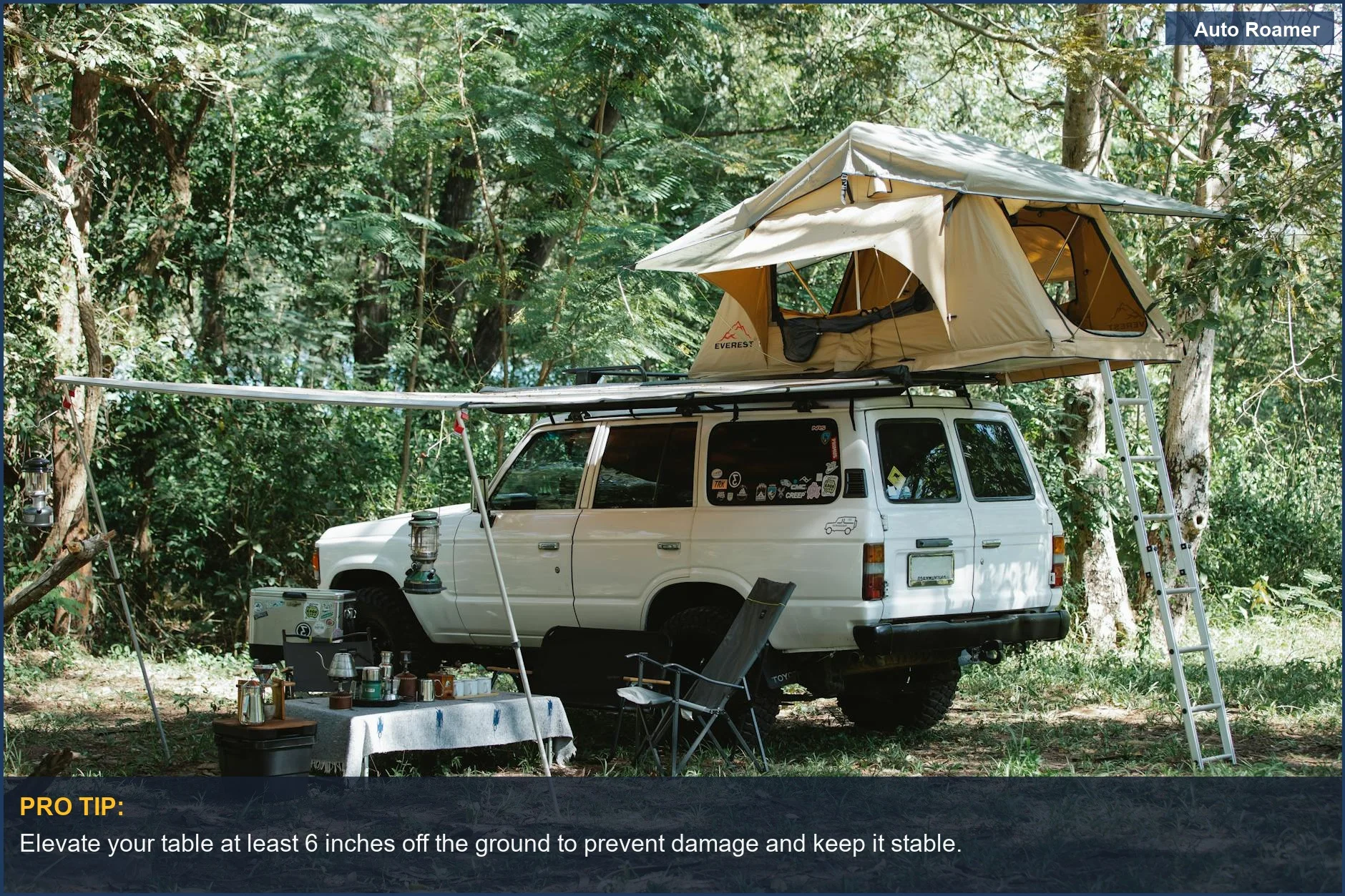
My second trip, I kept my table accessible by sliding it under the edge of my tent platform, which worked surprisingly well until it rained and I had a muddy table to clean off.
Why This Matters for Your Setup
Why this matters is simple: a table is your command center. Without a stable spot for it, your whole camp setup suffers.
- * Easier Setup: When your table isn't a wrestling match to get out of the car, you can set up camp faster. No more digging around for 20 minutes trying to find it.
- * Better Organization: A table provides a flat, dedicated surface. This means your food, cooking gear, and even your map don't end up scattered on the ground, getting dirty or lost.
I learned this when my first camping trip involved prepping dinner on a cooler lid, which was about as stable as a unicycle in a hurricane according to some forum posts.
- * Increased Comfort: Having a proper table means you can eat meals without balancing plates on your lap. It also provides a space for games, reading, or just resting your drink.
It's the difference between roughing it and car camping.
- * Vehicle Protection: Properly stored, your table won't scratch your car's interior or damage other gear. A loose table bouncing around is a recipe for disaster. Think of the scratches on your dashboard from that time you tried to wedge it in there as seen in organization guides.
- * Reduced Stress: Honestly, if your gear is a pain to pack and unpack, you're going to dread future trips.
Making your table a non-issue means more enjoyment and less frustration. My first few trips were filled with 'where did I put that?' moments, and the table was a frequent culprit.
Making the Right Choice
Making the right choice for your camping table storage and transport is about practicality, not perfection.
- * Assess Your Table: Is it a folding panel, a roll-up, or something else? This dictates your best storage strategy. My current table is a roll-up type, which fits neatly into a long bag that slides under my sleeping platform as recommended by gear storage experts.
- * Consider Your Vehicle: A small sedan has different needs than an SUV or a truck. You might need to get creative with vertical storage or utilizing gaps.
That Civic hatchback I started with? It forced me to get creative, often using the space between the front seats and the back.
- * Prioritize Accessibility: You want your table to be easy to grab when you arrive at camp. Don't bury it under your sleeping bags and firewood.
The $10 solution here is just thinking ahead about your unloading order as shown in no-build setups.
- * Protect Your Investment (and Your Car): Even a cheap table can be damaged if stored poorly. And nobody wants their car's interior looking like it went through a tornado. Using a simple bag or a few straps can prevent a lot of headaches and damage.