The Short Version
My first car camping trip was a $47 experiment in a Honda Civic hatchback in Shenandoah Valley. Mid-October. I had a Walmart foam pad, a sleeping bag rated to 40F, and zero idea that the temperature drops 15 degrees F after midnight in the mountains. By 2AM I was wearing every piece of clothing in my bag and still shivering. The fix was a $12 fleece liner from Amazon that turned my 40F bag into a 25F bag.
Three years later I still use that same liner on every trip. REI Expert Advice has a whole page on choosing rooftop tents, but they forgot to mention the most important part: size. It's not just about fitting on your car; it's about fitting your life. Backpacker Magazine tested one and liked it, but I bet they didn't screw up the size on their first try. Let's talk about how not to do that.
The Core Answer
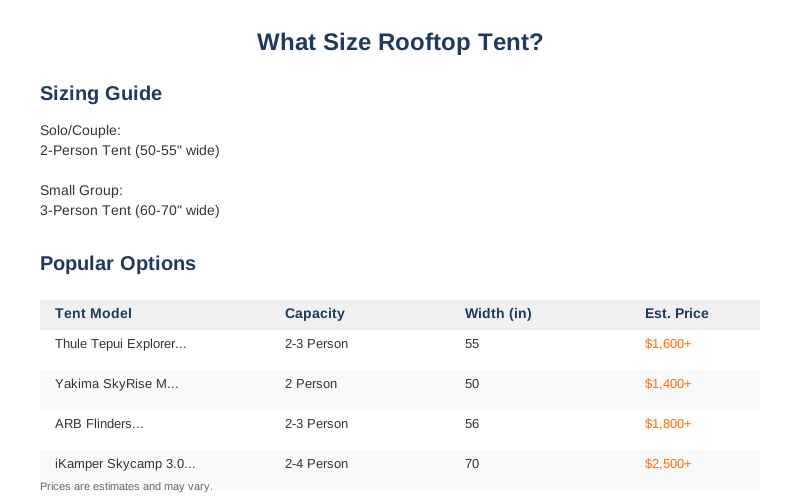
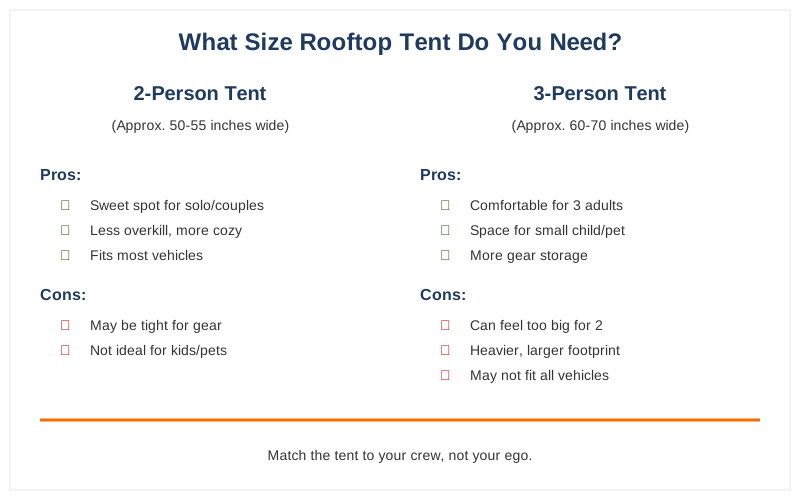
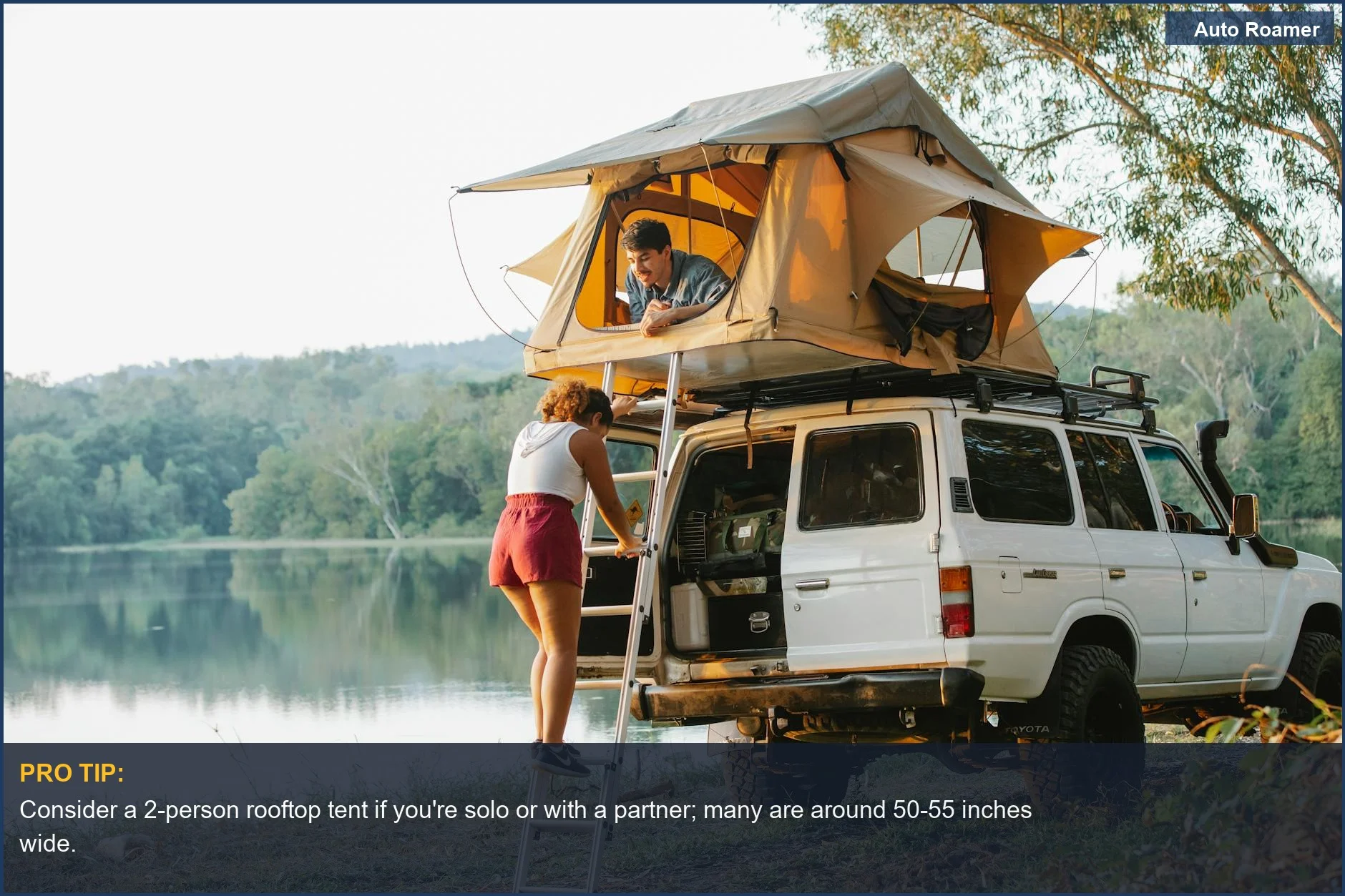
The honest version is, most people overthink rooftop tent sizing. You don't need a tent that's bigger than your entire car. Think about who's actually sleeping in it. For a solo mission or you and a significant other, a 2-person tent is usually the sweet spot. These typically measure around 50-55 inches wide. I made the rookie mistake of thinking more space was always better. My second trip out, I got a 3-person tent for just me and the dog.
It was overkill and felt like sleeping in a ballroom. Backpacker Magazine mentioned a 60-inch wide tent being 'doable' for three people. Doable is not comfortable when you're trying to sleep. The real move is to match the tent to your crew, not your ego. A 3-person tent is generally around 60-70 inches wide. If you're camping with two adults and a small child, or three adults who really like each other, then a 3-person might make sense.
But if it's just you and your partner, that extra 10 inches of width is just more fabric to deal with when you're packing up. I learned this the hard way at a campsite in Moab, Utah, during a windy weekend. My giant tent acted like a sail, and I spent half the night trying to keep it from blowing away. Brilliant engineering.
Dometic points out that soft shell tents are often larger and more spacious, which sounds good, but also means more bulk. Hard shell tents, on the other hand, are more compact. Overland Vehicle Systems says you need to check your vehicle's roof load capacity. This is crucial. A massive tent on a small car is a recipe for disaster. Most vehicles can handle a tent up to about 150-200 pounds static load.
Your tent's weight, plus your weight, plus your sleeping bags, adds up fast. Don't get a tent that's too heavy for your rig, or you'll be looking at expensive repairs. Reddit users echo this: stay within your vehicle's dynamic weight rating. That means the weight limit while you're actually driving. Most are around 165 pounds, but check your manual.
The best tents for car camping are often the ones that aren't trying to be a king-size bed for six people. Think about your vehicle's roof rack system too. Does it look like it could hold a small refrigerator? If not, you might be limited in what size tent you can safely mount. Bushbuck suggests an optimal height of 1.1-1.3 meters for your tent setup.
This is more about the overall profile and wind resistance than the sleeping space inside. The goal is to have a comfortable sleeping area without turning your car into a wind tunnel. The $50 version of this advice? Measure your people, then measure your car, then buy the tent in the middle.
Why This Matters for Your Setup
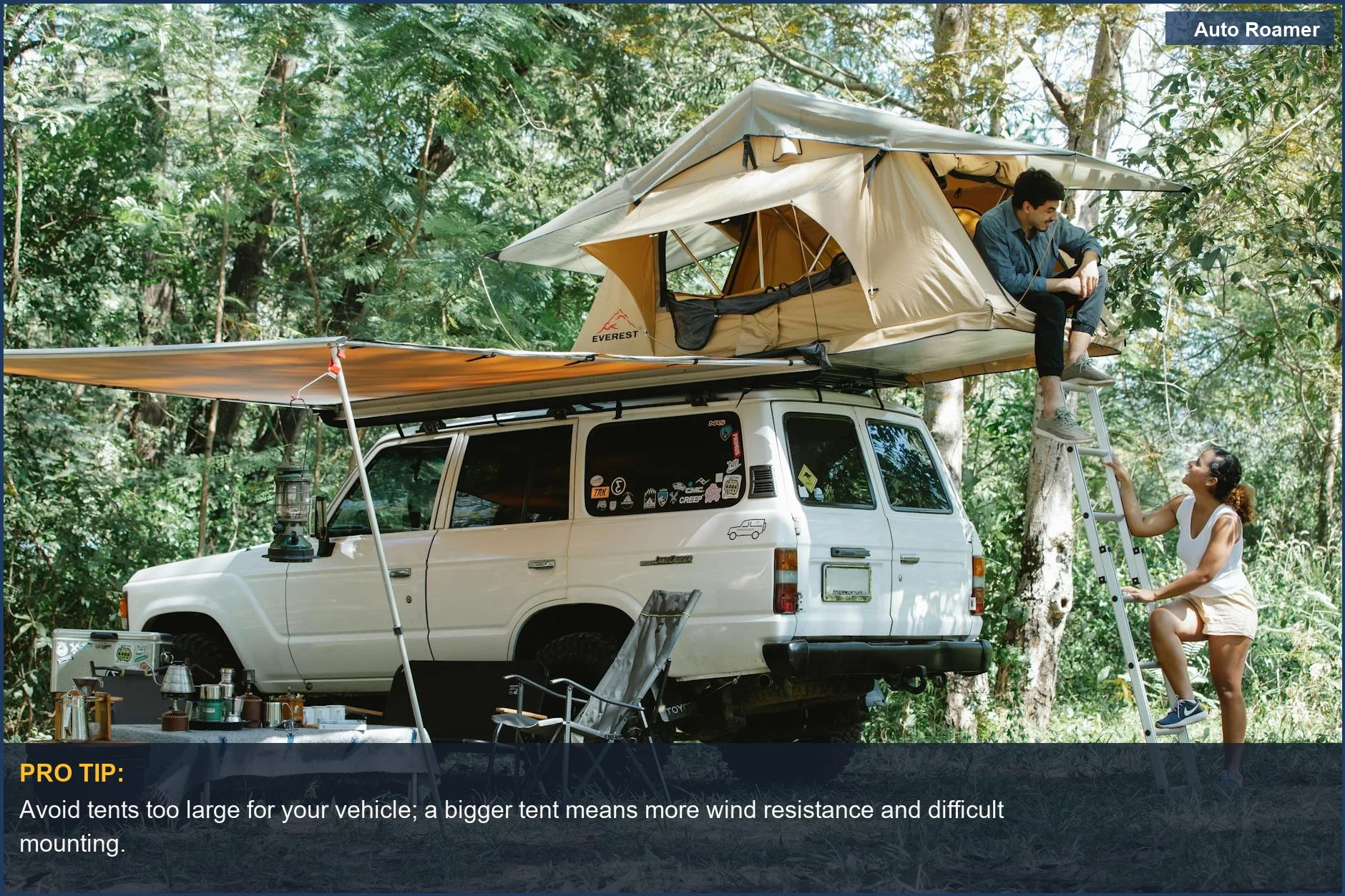
Why does this matter? Because a tent that's too big is a pain. It's heavier to lift onto the roof rack, it catches more wind, and it might not even fit on your vehicle's roof bars properly. Overland Vehicle Systems stresses checking your vehicle's load capacity. This isn't just a suggestion; it's a safety requirement. Exceeding it can damage your car's roof, rack, and even affect handling.
I saw a guy once at Joshua Tree National Park with a tent that looked like it was about to take flight off his tiny sedan. He looked stressed. Don't be that guy.
- Weight is King: Your tent, plus occupants and gear, must not exceed your car's roof load limit. A typical 2-person tent might weigh 100-150 lbs, with a 3-person tent going up to 150-200 lbs Reddit. Check your car's manual for the dynamic weight limit, which is usually lower than the static limit.
- Aerodynamics Matter: A wider, taller tent creates more drag. This means worse gas mileage and a noisier ride.
My 3-person tent made my Subaru Outback feel like a sail in Wyoming. Bushbuck mentions the overall height of the setup.
- Setup Speed: While most tents set up fast, a smaller tent is generally quicker to deploy and pack away. This means more time for actual adventuring. Dometic says hard shells take under 2 minutes, soft shells 5-10 minutes.
A bigger tent can sometimes mean more poles or more fabric to wrestle with.
- Vehicle Compatibility: Not all tents fit all vehicles. A massive tent might overhang your roofline, making it look ridiculous and potentially unsafe. YouTube has videos breaking this down. Make sure your rack can handle the tent's mounting points.
Making the Right Choice
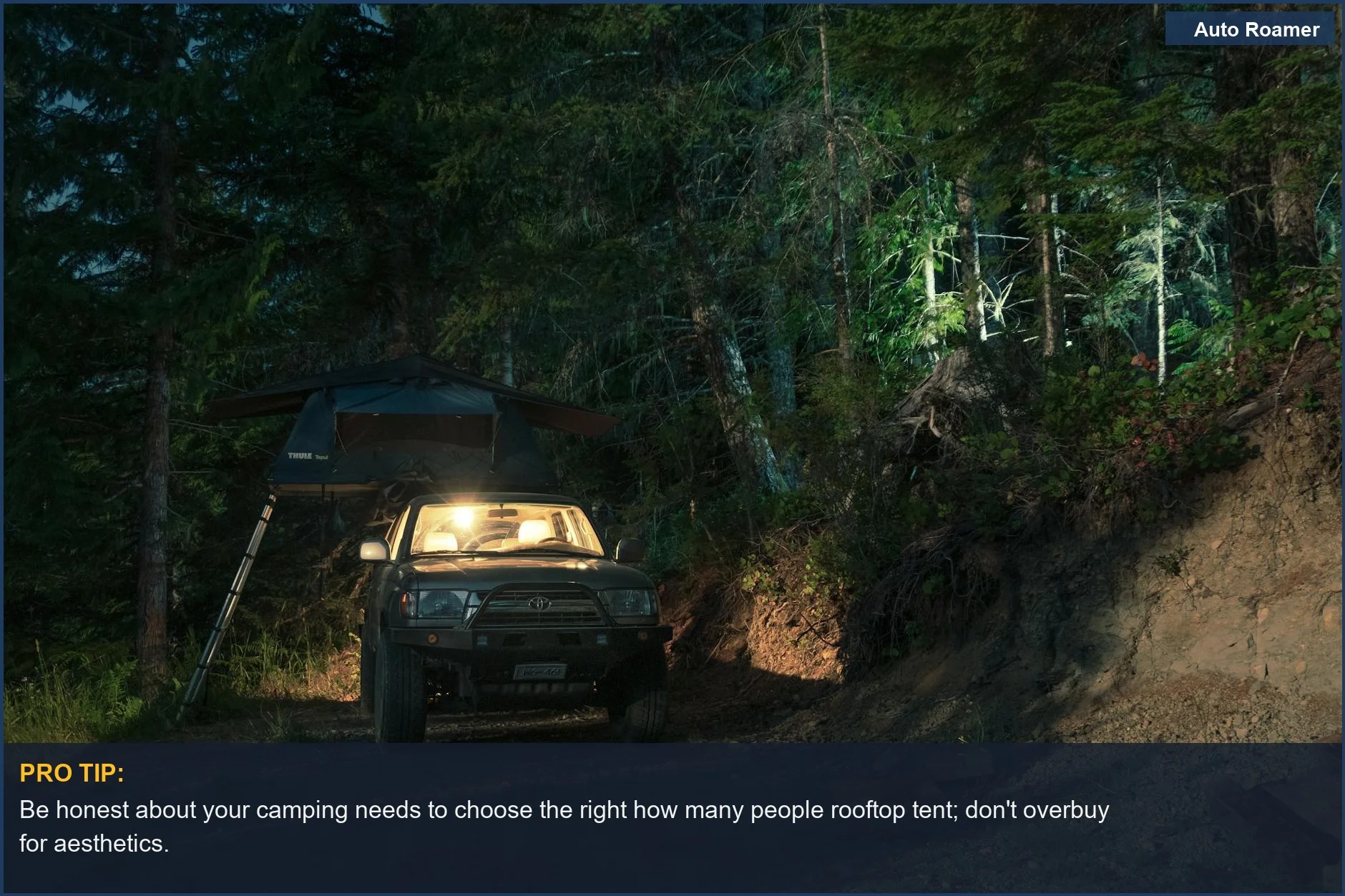
Choosing the right size rooftop tent isn't rocket science, but it does require a bit of honesty about your camping habits. Don't buy a tent that's bigger than you need just because it looks cool. Bushbuck emphasizes the balance between size and weight. The $50 version of this advice is: measure twice, buy once.
- Know Your Occupancy: If it's just you and a partner, a 2-person tent (around 50-55 inches wide) is usually perfect. Don't get a 3-person tent for two people unless you have a specific reason, like a lot of gear you want inside the tent with you. Backpacker Magazine found a 60-inch tent doable for three.
- Respect Your Vehicle's Limits: Always check your car's roof load capacity, both static and dynamic.
A tent that's too heavy can damage your car and be dangerous to drive with. Reddit users are adamant about this.
- Consider Your Use Case: Are you mostly weekend warrior camping, or are you planning week-long expeditions? For shorter trips, a more compact tent might be better. For longer trips or family adventures, you might need that extra space. Dometic mentions soft shells are good for longer stays.