
Car Accessories

How to Choose the Right Roof Rack Mount for Your Vehicle

Casey - The Weekend Warrior
6 min read
Includes Video

My first attempt to haul camping gear on my Honda Civic involved trying to strap a cooler to the roof. It lasted about 5 miles before sliding off into a ditch in rural Pennsylvania. That's when I realized I needed a proper roof rack, not just some bungee cords and optimism.

My first attempt to haul camping gear on my Honda Civic involved trying to strap a cooler to the roof. It lasted about 5 miles before sliding off into a ditch in rural Pennsylvania. That's when I realized I needed a proper roof rack, not just some bungee cords and optimism.

The honest version: you can spend $100 on a cheap set of bars that will warp after one trip, or you can invest a bit more and actually haul stuff without it becoming a projectile.Rhino-Rack buying guide lays out the basics, but what nobody tells beginners is how many ways these things can attach to your car. It's not just one size fits all. Your car's roof is not a blank canvas waiting for any old rack.

It's a specific engineering challenge that requires specific solutions. Think of it like buying shoes - you wouldn't put hiking boots on someone who needs ballet slippers.

The Core Answer

The real move for attaching a roof rack boils down to what your car has for a roof, and what you plan to haul. Forget the fancy jargon for a second; it's about how the rack grabs onto your vehicle. Rack Attack's guide breaks down the components: towers (the feet), load bars (the bars), and fit kits (the vehicle-specific bits). For a first-timer, the easiest way to figure this out is to use a vehicle selector tool on a good retailer's site. You type in your car's year, make, and model, and it shows you what works. Most cars fall into a few categories. You might have factory-installed raised rails, which are those bars running front-to-back along the sides of your roof. These are the easiest. You just need towers that clamp onto those rails and then crossbars. I learned this the hard way when I tried to attach a rack to my friend's Subaru Outback with factory rails. It took me 10 minutes, not the 2 hours I'd budgeted. Then there are vehicles with fixed mounting points. These are little threaded holes hidden under plastic covers, usually at the edges of your roof. You pop off the covers, and the rack system bolts directly into those. This is a super secure method. My buddy's old Ford Escape had these, and the rack felt like it was part of the car. No rattling, no worries. Some cars have nothing at all - just a bare roof. This is where things get a bit more involved. You'll need towers with specific "fit kits" or "clips" that grab the edge of your door frame. This is the most common type for sedans and coupes. It feels a little less robust than the other methods, but when done right, it's perfectly safe. Just make sure the clips are the right shape for your car's door jamb. I saw a guy at Yosemite with a rack that was clearly not seated right, and his kayak was listing like the Titanic. For hauling serious weight, like a rooftop tent, you'll want beefier bars. Aluminum bars are generally lighter and stronger than steel, and they often have T-slots for easier accessory mounting. Public Lands mentions aluminum's higher load-carrying capacity. The $50 version of these bars will likely be steel and bend under load. The real move is to get a system rated for what you want to carry. Don't skimp here; your gear is worth more than a cheap rack. Crossbars come in two main styles: overhang and flush. Overhang bars stick out a bit past the towers, giving you more surface area for mounting accessories. Flush bars sit neatly between the towers for a cleaner look. For most weekend warriors, overhang is more practical because you can fit more stuff. My first rack had flush bars, and I always felt like I was playing Tetris with my gear. Brilliant engineering for looks, less so for actual hauling.
Understanding the right roof rack can help you decide if roof racks are necessary for your gear-hauling needs.
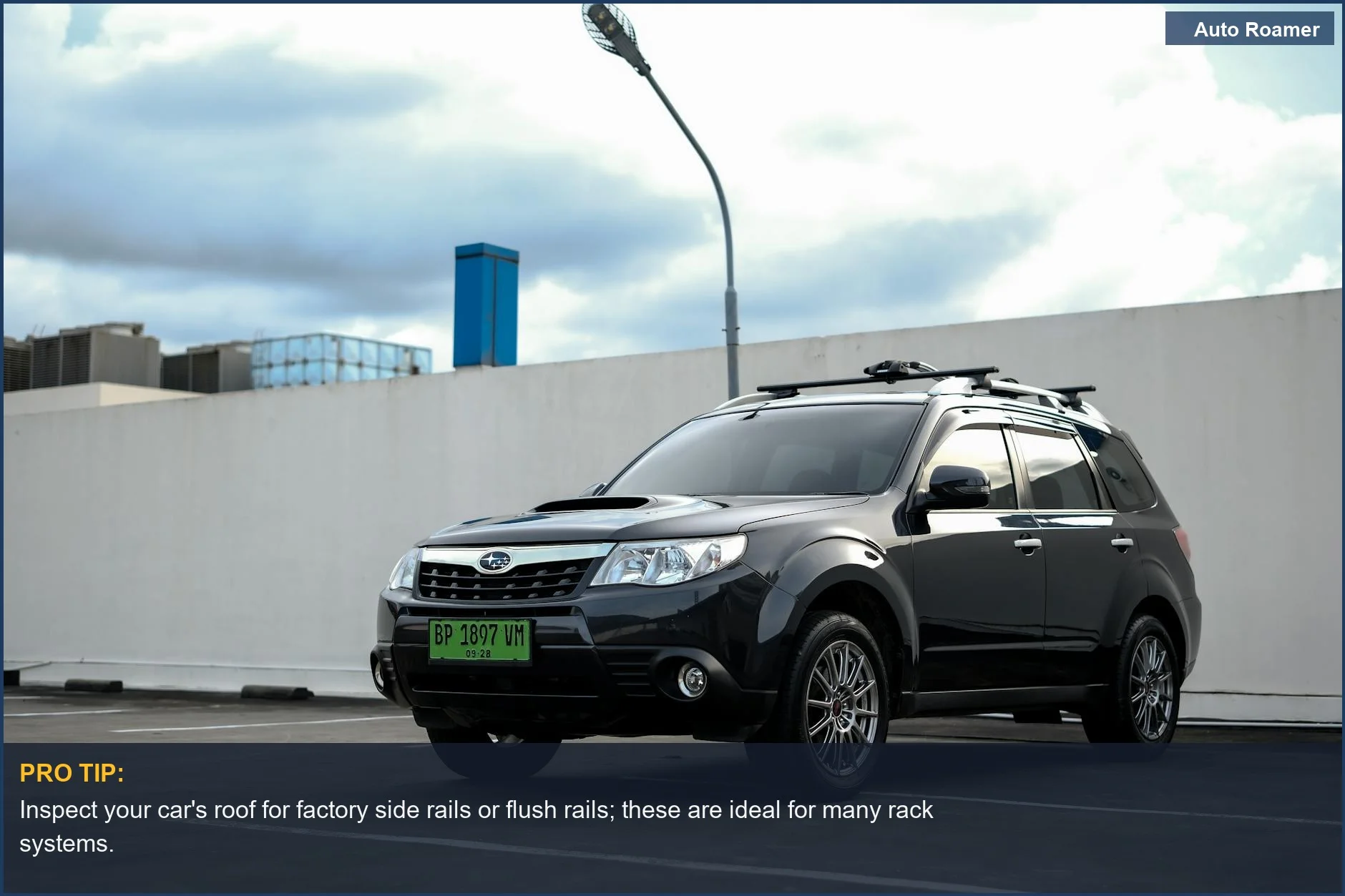
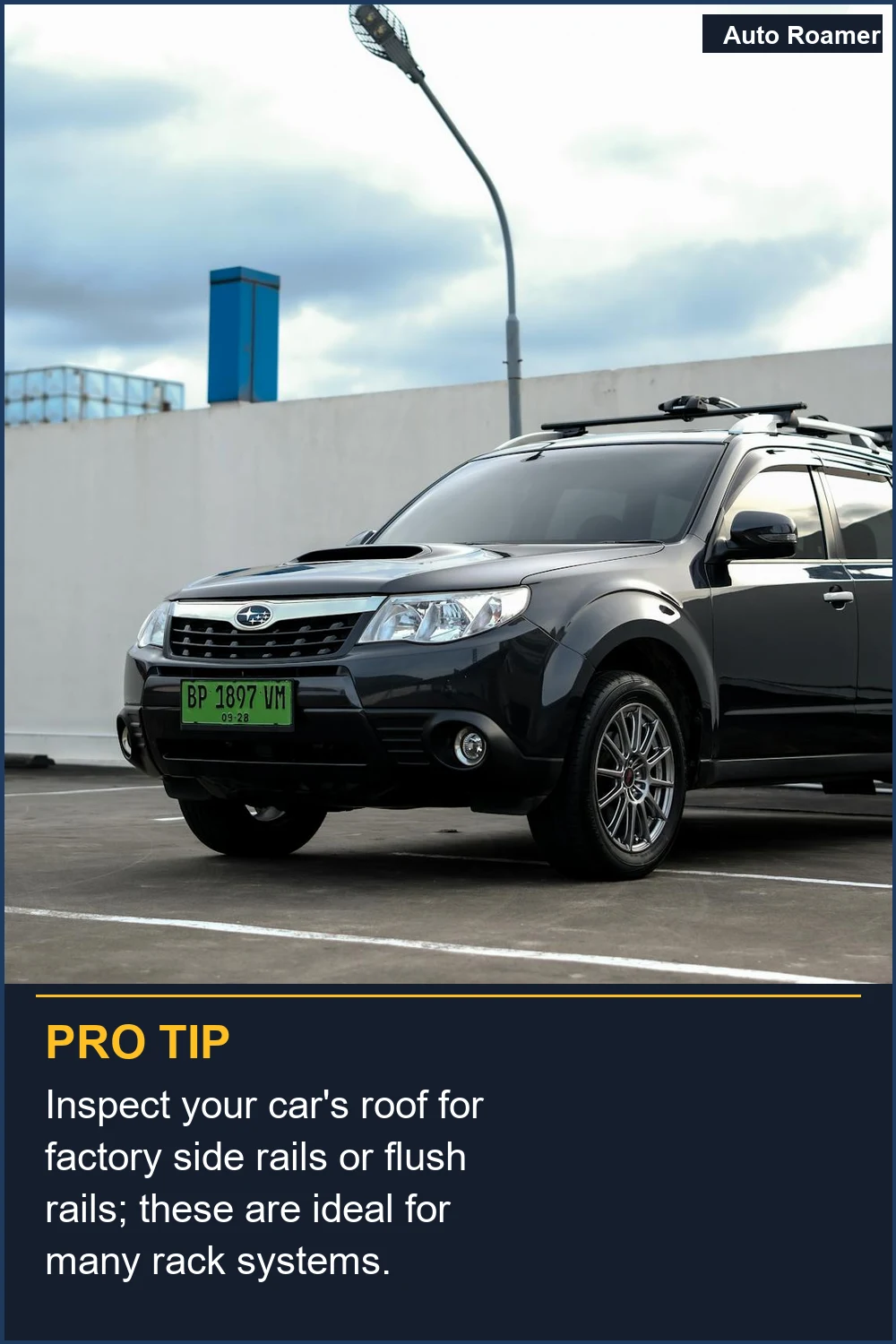
Inspect your car's roof for factory side rails or flush rails; these are ideal for many rack systems.
Understanding your car's roof is key to selecting the right roof rack mounting types. Most Subaru Foresters offer versatile options for securing gear. | Photo by Ayyeee Ayyeee

Why This Matters for Your Setup

When I first started camping, I thought a roof rack was just for looks. Then I tried to stuff a tent, sleeping bags, and a cooler into my Toyota Corolla. It was a disaster. The honest version: a roof rack is essential if you want to bring more than just a toothbrush and a granola bar.
  • More Space Inside: This is the obvious one. My $500 cooler and bulky tent now live on the roof, leaving my backseat free for actual humans, not just gear. Rhino-Rack says it's a space-saving alternative. Duh.
  • Transporting Odd Shapes: Kayaks, bikes, skis - stuff that just doesn't fit inside. I saw a guy at Lake Arrowhead with a canoe strapped to the roof of a minivan using just bungee cords. Rookie mistake. A proper rack with the right carriers is game-time.
  • Keeping Things Clean: Hauling muddy boots or wet gear? A rooftop cargo box keeps your car's interior pristine. My first trip involved a leaky cooler, and my trunk smelled like a fish market for weeks. Thule knows this is a big deal.
  • Weight Capacity: This is crucial and often overlooked. Your car's roof isn't designed to hold a ton of weight. Most factory racks are good for about 100-165 pounds. Gobi Racks emphasizes checking the load capacity. Overload it, and you're asking for trouble, or worse, a rack failure.
  • To maximize your space and efficiency, understanding roof rack size is key for camping trips.
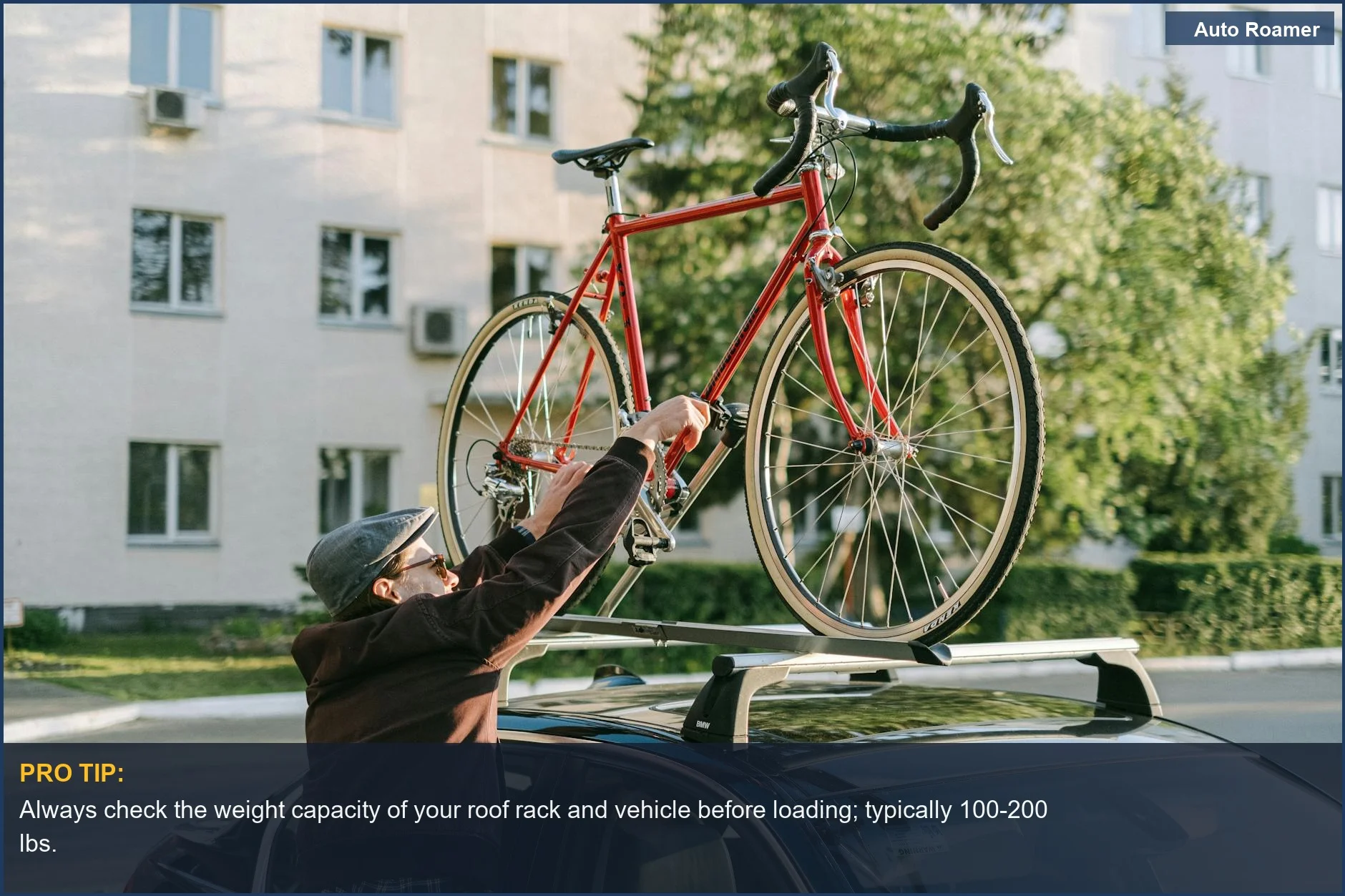
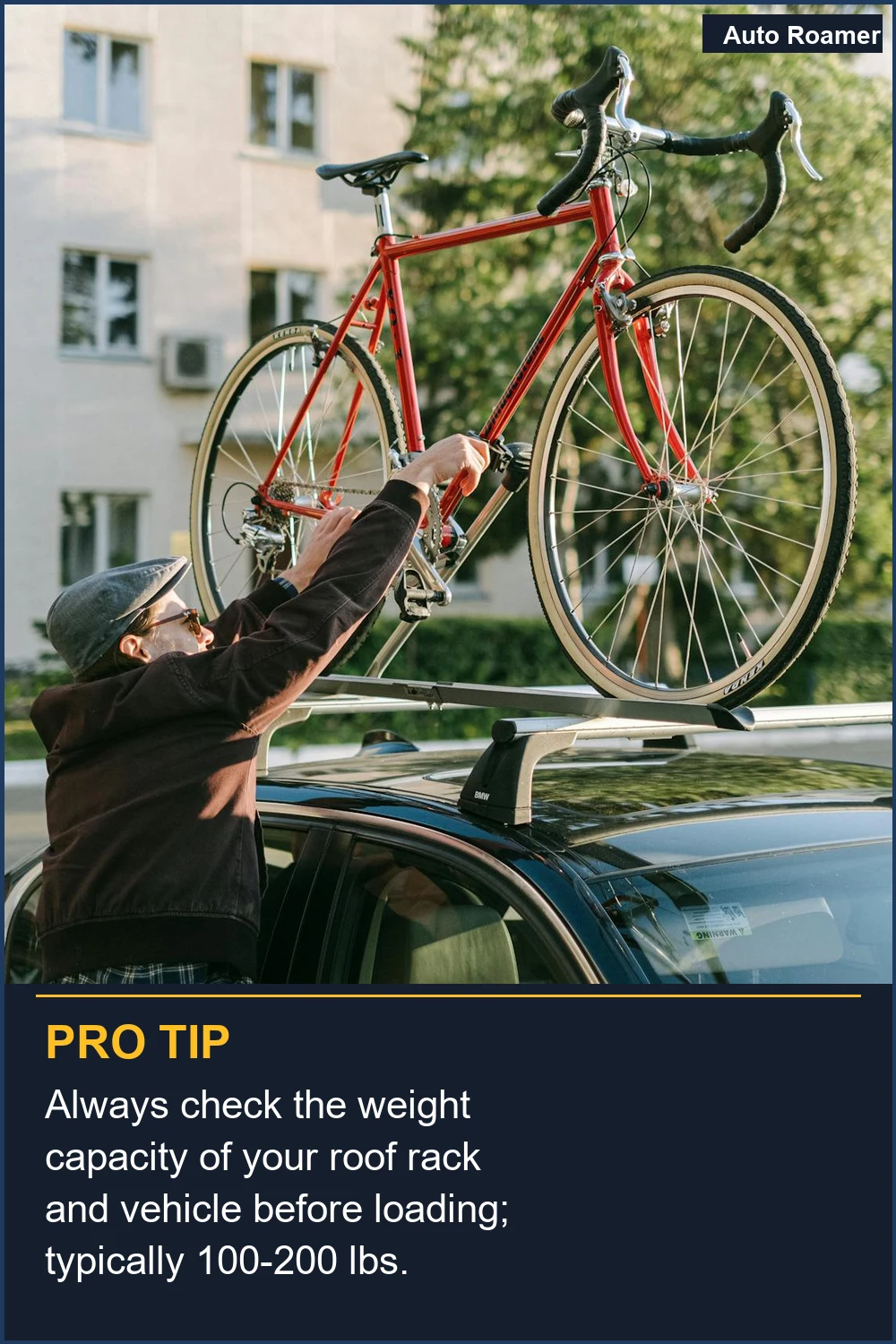
    Always check the weight capacity of your roof rack and vehicle before loading; typically 100-200 lbs.
    Learn how to attach a roof rack to your car securely, making adventures easier. This setup efficiently carries your bike, freeing up interior space. | Photo by Ivan S

    Making the Right Choice

    So, how do you pick the right roof rack mount? First, know your car. Does it have factory rails, fixed points, or a bare roof? Use a vehicle selector tool online - it's the easiest way to see what fits. YouTube videos are great for seeing actual installations, which is way more helpful than just reading.
  • Match the Mount to Your Car: Raised rails, fixed points, or bare roof - each needs a different type of tower and fit kit. It's not rocket science, but it's also not guesswork.
  • Consider What You'll Haul: A weekend of camping gear is different from hauling lumber for a DIY project. Check the weight capacity of both the rack and your vehicle's roof. Toyota of Orlando points out durability is key.
  • Don't Go Too Cheap: A $100 rack might seem like a steal, but it's likely to fail. I've seen it happen. Investing $300-$500 for a reputable system from brands like Thule or Rhino-Rack is usually the $500 version of the $50 mistake.
  • Install It Right: Take your time. Read the instructions. If you're unsure, pay for professional installation. A poorly installed rack is a safety hazard. My first attempt at installing a bike rack took me 3 hours and I still have a slight wobble.
  • To complement your cargo basket choice, understanding how to select the right size roof rack cargo carrier is essential.
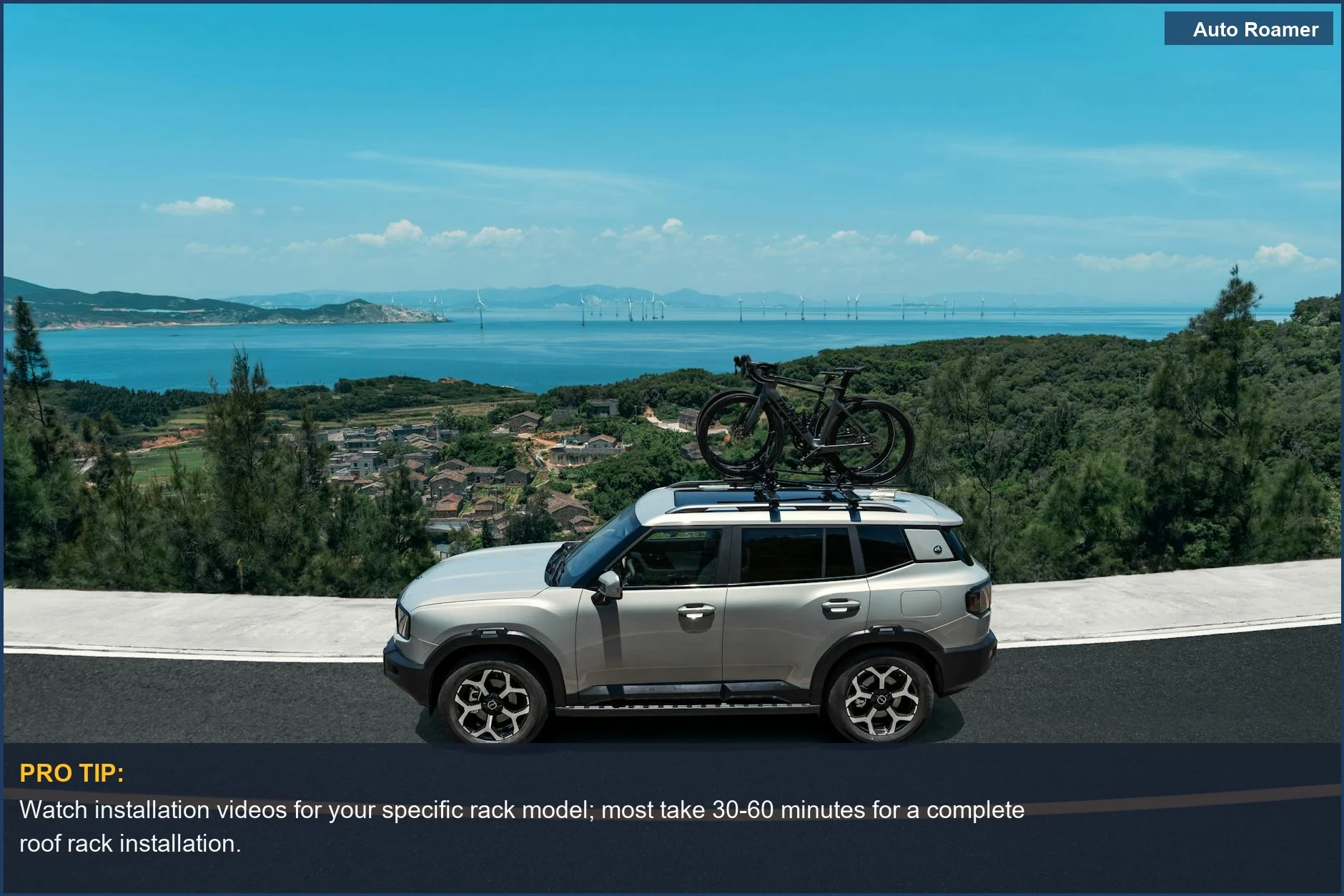
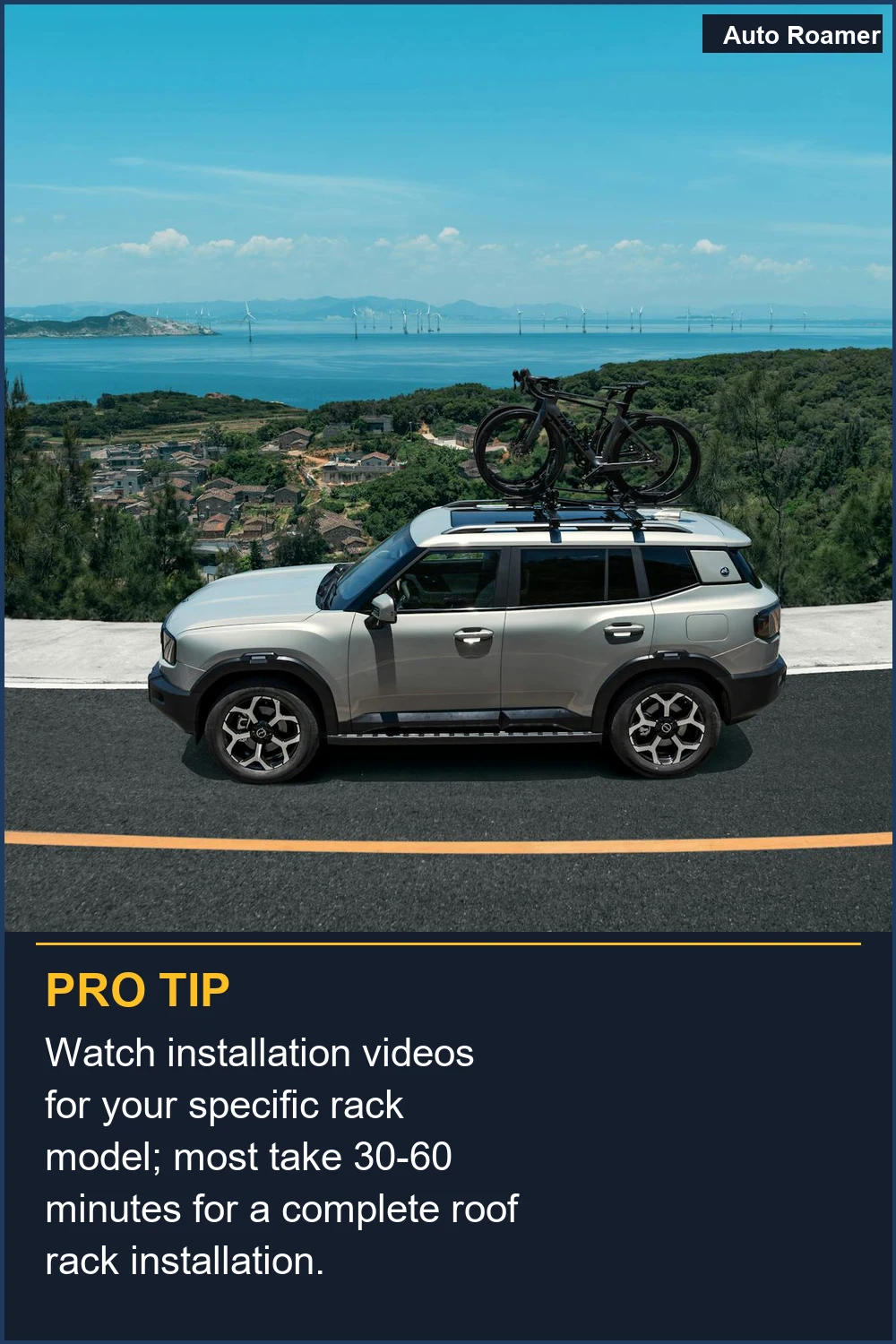
    Watch installation videos for your specific rack model; most take 30-60 minutes for a complete roof rack installation.
    Proper roof rack installation on this silver SUV allows for scenic coastal drives with bikes. Ensure your rack is correctly fitted for safety and performance. | Photo by Jetour Georgia

    Frequently Asked Questions

    Is it cheaper to buy a generic roof rack online or get one installed at a shop?
    Buying a decent set of crossbars and towers from a reputable online retailer like Rack Attack will likely cost you between $300 and $600. Having a shop install it on top of that could add another $100-$200. So, the $500-$700 range is pretty standard for a quality setup you install yourself, which is usually the best value unless you're completely lost.
    Do I really need a torque wrench to install my roof rack?
    If your rack kit specifies torque values for the bolts, then yes, a torque wrench is the real move. Overtightening can strip threads or crack mounting points, while undertightening means your gear could fly off. For most clamp-on or rail-mount systems, hand-tight plus a quarter turn with a wrench is usually sufficient, but always check the instructions.
    What if my roof rack makes a ton of wind noise even after I installed it correctly?
    Wind noise is a common complaint, especially with older-style square bars. The fix often involves adding fairings (those plastic wind deflectors) to the front crossbar, which can cost around $100. Sometimes, simply repositioning the crossbars slightly can make a difference. Aerodynamic bars are quieter but cost more upfront.
    Can leaving a roof rack on my car all the time permanently damage the paint or roof?
    Leaving a rack on can cause paint wear if it rubs or if dirt gets trapped between the rack and the roof. To prevent this, use the protective pads that usually come with the rack, and clean under the mounting points regularly. Prolonged exposure to harsh weather without cleaning could lead to minor cosmetic issues over years, but it won't structurally damage your roof.
    Is it true that you can just use any old crossbars on any car if you buy the right fit kit?
    That's a rookie mistake waiting to happen. While fit kits are designed to adapt towers to different vehicles, the towers themselves are specific to certain roof types (raised rails, fixed points, etc.). You can't just slap a bare-roof tower system onto a car with factory rails and expect it to work securely. Always use the vehicle selector to ensure compatibility between the entire system and your car.

    🏅 Looking for Gear Recommendations?

    Check out our tested gear guides for products that work with this setup:

    C

    Casey - The Weekend Warrior

    Weekend car camper and road trip enthusiast. Focuses on practical, budget-friendly solutions for families and first-time campers.

    Sources

    Related Articles