Setting the Scene
Understanding your Hyundai Santa Cruz roof rack's load capacity is less about fancy engineering and more about not turning your weekend adventure into a roadside disaster. Overload a rack with camping gear and you may hear a sickening creak — a sign you've exceeded its limit. The honest version is that knowing this number keeps your rig safe and your gear from becoming roadkill.
It's the kind of detail they don't put in the flashy car ads, but it's game-time critical for anyone who actually uses their vehicle for more than just commuting. Don't be the person with a crushed roof and a story that ends with a tow truck.Hyundai Santa Cruz Roof Rack Weight Limit
The Core Answer
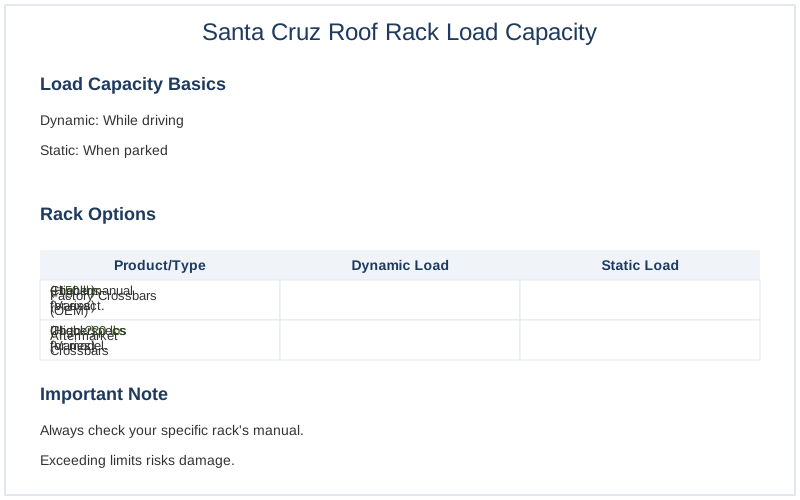
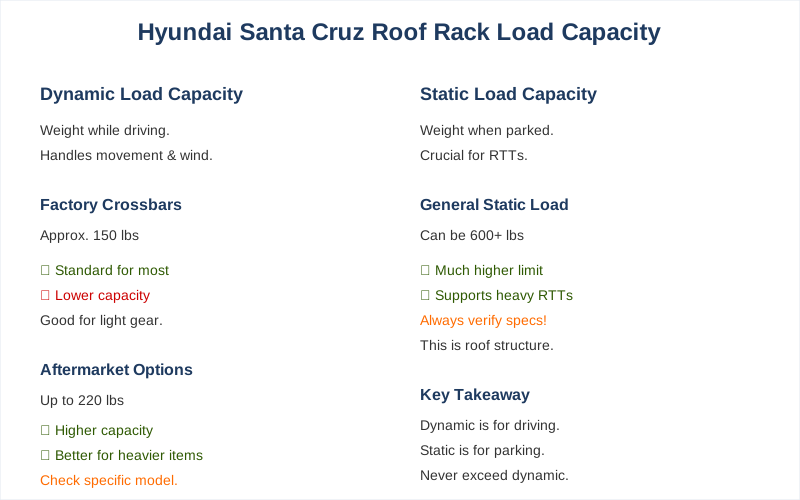
Here's the deal: your Santa Cruz roof rack has two main weight limits you need to know, and they are NOT the same thing. The first is the 'dynamic load capacity.' This is the weight your rack can handle while you are driving. Think of it like a car doing a bumpy trail - it's got to handle movement and wind.Rooftop Tent Weight Issues
Most factory crossbars for the Santa Cruz are rated for around 150 pounds dynamic load.Rooftop tent weight capacity for Santa Cruz. Some aftermarket options can go up to 220 pounds.PIXEL Roof Rack Cross Bars Compatible with Hyundai Santa ...
The second is the 'static load capacity.' This is the weight the rack can hold when the vehicle is parked. This number is always higher, and it's important if you're putting something heavy like a rooftop tent on your rig overnight. For some racks, this can be as high as 600 pounds or more, but always check your specific setup.Hyundai Santa Cruz Roof Rack Weight Limit
So, how do you calculate it? First, you need to know the weight limit of your actual rack system. This is usually printed on the rack itself or in the manual that came with it. Then, you need to know the weight limit of your vehicle's roof structure, which is usually in your owner's manual. The real move is to use the lower of these two numbers for your dynamic load. Don't try to push it.
It's tempting to pile a full camping kitchen, a cooler, and a kayak onto one SUV. Overdo it and the creaking can start about 5 miles down the highway. Rookie mistake.Roofrack loads and weights
If you have aftermarket crossbars, their rating is key. For instance, some aftermarket bars might claim a 150-pound capacity, but your vehicle's roof might only be rated for 100 pounds. In that case, 100 pounds is your absolute limit while driving. It's like trying to carry two coolers when your arms can only handle one. Your arms are the weak link.Load Rating Calculator
Most experts and forums point to a dynamic load limit of around 150-220 pounds for the Santa Cruz, but the static limit can be much higher.Roof Rack Question : r/HyundaiSantaFe. The honest version: always check your owner's manual and the specs for your specific rack. Don't just guess. Plenty of owners assume their rack can handle a rooftop tent and a couple of bikes. Turns out, the dynamic limit is often just 100 pounds.
That mismatch ends with a bent rack and a story for the insurance adjuster.
Why This Matters for Your Setup
Why does this matter? Because your gear has weight, and your roof isn't an infinite storage unit. Strapping a full-size cooler and a couple of duffel bags to an early car-camping setup is a common overreach. It can feel fine in the driveway, but on the highway, the wind plays with it like a chew toy. It's terrifying. The real move is to weigh your gear. Seriously.
Get a bathroom scale and weigh your tent, your sleeping bags, your cooler full of goodies. Then add it all up.
- Rooftop Tents: These are heavy. A typical rooftop tent can weigh anywhere from 100 to 150 pounds. Add your sleeping bags and pillows, and you're already pushing the dynamic limit of many stock racks.Rooftop Tent Weight Issues
- Cargo Boxes: Even empty cargo boxes have weight. Then you fill them with camping chairs, sleeping pads, and maybe a portable grill. It adds up fast.
Pack too much into a cargo box and the whole thing can start to sag in the middle. Brilliant engineering, that.PIXEL Roof Rack Cross Bars Compatible with Hyundai Santa ...
- Kayaks and Bikes: These accessories often need their own mounts, which add weight. A single kayak might weigh 50-70 pounds, and a bike can be 30-40 pounds. If you're carrying multiples, you're eating into your capacity quickly.
Trying to haul two kayaks and a canoe on an old station wagon quickly shows the limits. The car ends up looking like a giant metal porcupine.Roofrack loads and weights
- The "I'll Just Cram It In" Mentality: This is where most people get into trouble. They see extra space and think, "Why not?" But exceeding the dynamic load can cause your rack to flex, detach, or worse, damage your vehicle's roof.
It's not just about the weight itself, but how that weight is distributed and how it affects the vehicle's handling at speed.
Making the Right Choice
Knowing your roof rack's load capacity is a crucial step for safe and enjoyable car camping. Don't just eyeball it; do the math. The honest version is that exceeding these limits can lead to damaged gear, a damaged vehicle, and a really crummy start to your trip. Many owners learn this lesson the hard way - a sagging roof rack and a very expensive repair bill after a windy drive through the mountains.Roof Rack Question : r/HyundaiSantaFe
- Check Your Manuals: Always consult your vehicle's owner's manual for the roof's static weight limit and your specific rack's manual for its dynamic limit. The lower number wins.Load Rating Calculator
- Weigh Your Gear: Don't guess. Weigh everything you plan to put on your roof rack.
This is the only way to be sure you're not overloading it, especially when driving.
- Prioritize Safety: A few extra pounds might seem insignificant, but at 70 mph, it can make a huge difference. Stick to the limits for peace of mind and to avoid costly repairs. Trust me, the $50 you save on not buying a lighter tent isn't worth the $500 repair bill.