
Introduction
Adjusting your mirrors properly is a crucial step in ensuring our safety on the road. Many drivers underestimate the importance of correctly positioning their side and rearview mirrors, often leading to dangerous blind spots that can increase the risk of accidents. Blind spots are areas around our vehicle that are not visible through standard mirrors, making it essential to know how to adjust car mirrors properly to minimize their impact.
Research from the Society of Automotive Engineers (SAE) emphasizes the significance of proper mirror adjustment. According to a study published in 1995, the side mirrors should be adjusted outward far enough so that their viewing angles just overlap with that of the rearview mirror. While this may feel disorienting at first for those accustomed to seeing their vehicle's sides, this method effectively eliminates blind spots, reducing the need for shoulder checks during lane changes Car and Driver.
To begin the adjustment process, we recommend sitting comfortably in the driver's seat with your seat and steering wheel positioned correctly. This ensures optimal visibility when adjusting your mirrors. For the side mirrors, lean slightly towards the left and adjust the left mirror until you can just see the side of your vehicle. Repeat the process for the right mirror while leaning towards the right. This technique allows us to maximize our field of vision, significantly reducing blind spots Driving-Tests.org.
By following these guidelines, we can create a safer driving experience for ourselves and others on the road. Adjusting our mirrors is a simple yet effective way to enhance visibility and awareness while driving.
Quick Answer
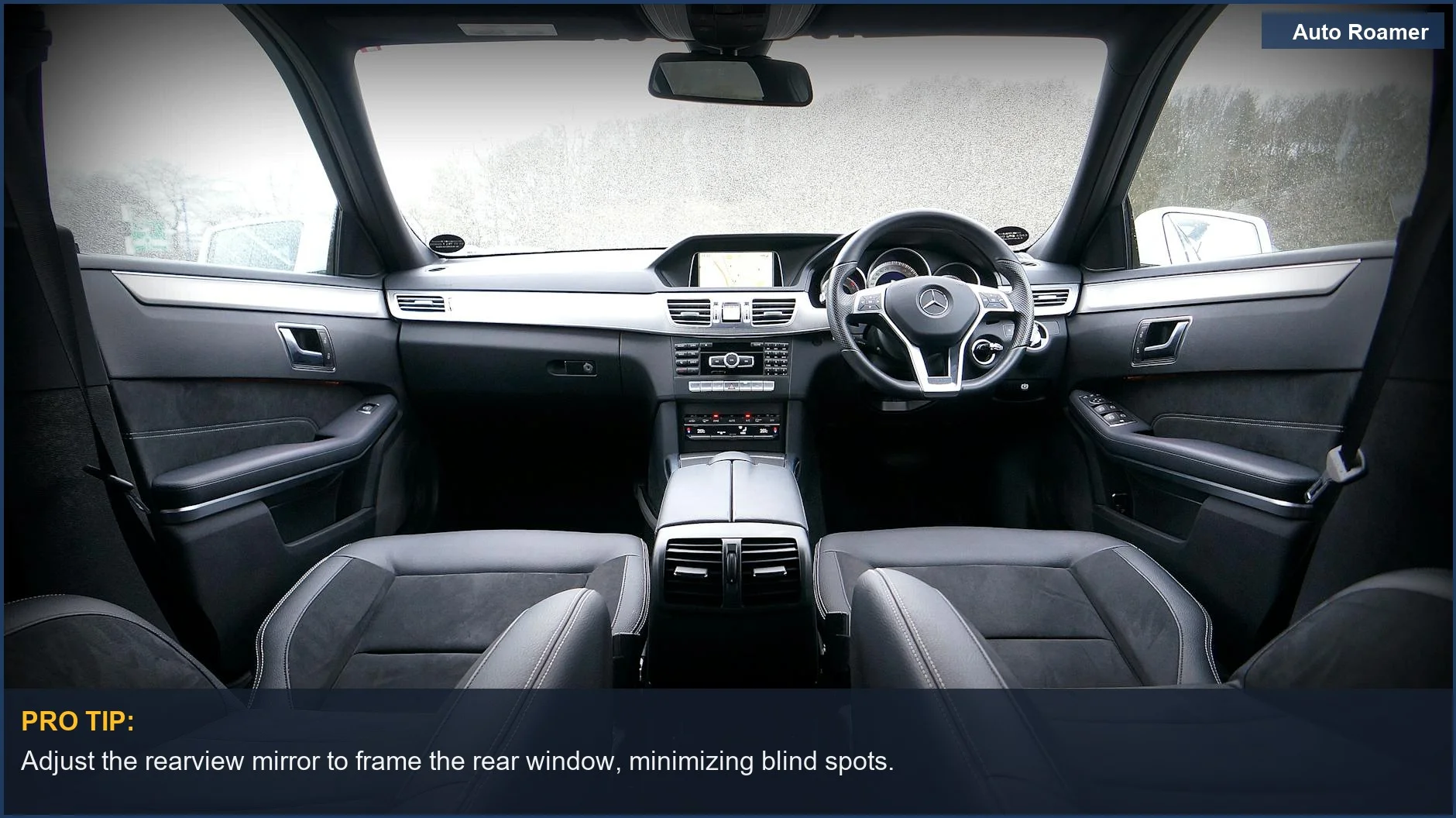
To adjust your mirrors properly and eliminate blind spots, we recommend following a systematic approach that ensures maximum visibility. Start by positioning your driver's seat comfortably, ensuring that you can reach the pedals and controls easily. Once seated, we can begin adjusting the rearview mirror. This mirror should give you a clear view of the rear window and the area directly behind your vehicle.
Next, we focus on the side mirrors. The goal is to minimize blind spots by adjusting them outward. For the left side mirror, lean your head towards the driver's side window until it touches the glass. From this position, adjust the mirror until you can see the side of your vehicle just disappearing from view. This positioning helps to expand your field of vision to the left and reduces the area that remains unseen. We can apply the same principle to the right side mirror: lean to the right and adjust it until the right side of your car just vanishes from sight.
According to the Society of Automotive Engineers, adjusting the side mirrors outward to overlap with the rearview mirror's viewing angle is the most effective way to eliminate blind spots, thus reducing the need to check over your shoulder while changing lanes Source. While this technique may feel unusual at first, it significantly enhances safety.
It's worth noting that many modern vehicles come equipped with blind-spot detection systems that can further assist in monitoring areas that traditional mirrors may miss Source. However, knowing how to adjust car mirrors properly is still a vital skill for every driver. By following these steps, we can ensure that our driving experience is safer and more confident.
What You Need to Know
To properly adjust your car mirrors and eliminate blind spots, we recommend following a systematic approach to ensure optimal visibility. First, we need to sit comfortably in the driver's seat, ensuring that the seat position allows easy access to the steering wheel and pedals. It's essential to get this right, as comfort plays a significant role in our overall control of the vehicle.
Next, we can start with the rearview mirror. Adjust it so that we have a clear view of the entire rear window. This mirror should provide an unobstructed view of what is directly behind us. Once the rearview mirror is set, we can move on to the side mirrors. For the side mirrors, the best practice is to employ the blind spot method. This technique suggests positioning the mirrors outward enough so that we can barely see the side of our car. To achieve this, we can lean towards the left side of the vehicle and adjust the left mirror until the side of the car just disappears from view. Then, we can lean to the right and do the same for the right mirror. This adjustment allows for a broader field of view, significantly reducing blind spots and enhancing safety while changing lanes or merging (Car and Driver).
Additionally, the Society of Automotive Engineers (SAE) recommends that we adjust the side mirrors outward to the point where their viewing angles overlap with that of the rearview mirror. While this may feel disorienting at first, it is a proven method to mitigate blind spots effectively, eliminating the need for frequent shoulder checks (STEISONE Safety Tips).
Lastly, we should periodically reassess our mirror positions, especially if we share the vehicle with others or if we adjust our seating position. By following these steps, we can ensure that our mirrors are adjusted properly to maximize safety on the road and minimize blind spots.
Step-by-Step Guide
To adjust your mirrors properly and eliminate blind spots, we recommend following these detailed steps to ensure optimal visibility while driving.
- Sit in the Driver's Seat: Begin by adjusting your seat to a comfortable position where you can easily reach the pedals and steering wheel. This is crucial as it sets the foundation for accurate mirror positioning.
- Adjust the Rearview Mirror: Position the rearview mirror so that it provides a clear view of the rear window. Ensure that you can see directly out of the back of your vehicle without any obstructions.
- Adjust the Side Mirrors: For the side mirrors, we will use the "blind spot method" to reduce or eliminate blind spots. Start with the left side mirror. Lean your head towards the left window until it touches the glass. From this position, adjust the left mirror outward until you can just see the edge of your vehicle. This adjustment will provide a broader view of the area alongside your car, minimizing blind spots (Source).
- Repeat for the Right Side Mirror: Now, lean towards the center of the car, positioning your head in line with the center console. Adjust the right mirror outward until you can just see the right side of your vehicle. This ensures that your side mirrors overlap slightly with the rearview mirror's field of vision, creating a continuous view of the roadway (Source).
- Test Your Adjustments: After adjusting your mirrors, take a moment to test them. While parked, check each mirror to ensure you can see the road adequately and that there are no blind spots. It may feel unusual at first, but this method allows for a more comprehensive view of your surroundings while driving.
- Practice: Finally, as you drive, practice using your mirrors regularly. Turn your head to check blind spots when changing lanes, and remember that using mirrors is a skill that improves with time.
By following these steps on how to adjust car mirrors properly, you will enhance your driving safety and awareness on the road.
Safety Considerations
When adjusting our mirrors to eliminate blind spots, we must prioritize safety to ensure not only our well-being but also that of others on the road. Properly adjusted mirrors can significantly reduce the chances of accidents, as they enhance our awareness of the environment surrounding our vehicle. According to the Society of Automotive Engineers (SAE), correctly positioning our side mirrors outward allows them to overlap with the field of view provided by the rearview mirror, which is crucial for minimizing blind spots. This method may feel disorienting at first, especially for those accustomed to seeing the sides of their car in the mirrors, but it is essential to adapt to these adjustments to enhance our safety on the road.
We also recommend ensuring that all mirrors are clean and free of obstructions before making adjustments. Dirty or foggy mirrors can impair visibility, leading to potential hazards. Additionally, it is vital that we develop the habit of frequently checking our mirrors while driving. This practice should include looking over our shoulders when changing lanes, as even perfectly adjusted mirrors cannot replace the need for situational awareness. The Driving-Tests.org emphasizes the importance of this habit, stating that consistent mirror checks can significantly reduce collision risks.
Lastly, we should be mindful of the limitations of advanced technologies like blind-spot monitoring systems. While these can provide additional safety, they should not be solely relied upon. As noted by STEISONE, understanding how to adjust car mirrors properly can eliminate the need for such systems altogether, allowing us to drive with confidence and improved awareness. Thus, taking these safety considerations into account is crucial for enhancing our driving experience and ensuring safer roads for everyone.

Common Mistakes to Avoid
One of the most common mistakes we make when learning how to adjust car mirrors properly is failing to position the side mirrors correctly. Many drivers instinctively adjust them to see the sides of their own vehicle, which actually increases blind spots. Instead, we should follow the blind spot method, adjusting the mirrors outward until we can barely see the edges of our car. This adjustment allows for a wider field of view and helps eliminate blind spots altogether, as recommended by various safety experts (STEISONE).
Another frequent error is neglecting to check our mirrors frequently while driving. It's essential to develop the habit of glancing at our side and rearview mirrors every few seconds to maintain situational awareness. Some drivers may feel uncomfortable with the new mirror positions at first, but with practice, it becomes second nature (Driving-Tests.org).
Additionally, we often overlook the importance of adjusting our seating position before setting our mirrors. It's crucial to sit comfortably in the driver's seat and ensure we have a clear view of all mirrors, as our height and body position can significantly affect visibility. Once we are seated correctly, we can make precise adjustments to our mirrors (Car and Driver).
Lastly, some drivers may rely too heavily on blind spot detection systems without properly adjusting their mirrors. While these systems can be helpful, they should not replace the fundamental practice of adjusting mirrors correctly. We recommend using both methods in conjunction to maximize safety on the road.
Final Thoughts
In conclusion, adjusting our car mirrors properly is a crucial step in ensuring safe driving by eliminating blind spots. We recommend using the blind spot method, which involves positioning the side mirrors outward until we can barely see the side of our vehicle. This technique allows us to extend our field of view and minimize the chances of missing vehicles in adjacent lanes. According to a paper published by the Society of Automotive Engineers (SAE), the ideal adjustment aligns the side mirrors in a way that their viewing angles just overlap with that of the rearview mirror, thereby negating blind spots entirely Car and Driver.
Additionally, it is important to remember to position ourselves comfortably in the driver's seat before making adjustments. We should ensure our seat and steering wheel are set up to allow for easy access to controls while providing a clear line of sight to all mirrors Driving-Tests.org. While it might feel unfamiliar at first, developing the habit of using our mirrors correctly enhances our overall awareness of the road and the vehicles around us.
Furthermore, while modern vehicles may come equipped with advanced blind-spot detection systems, understanding how to adjust car mirrors properly is a skill that every driver should master. Not only does it save us the expense of additional technology, but it also cultivates a more instinctive understanding of our surroundings. Therefore, taking the time to adjust our mirrors correctly can significantly enhance our safety and confidence while driving.