The one number almost everyone gets wrong
Ask around a campground and half the people will tell you a diesel heater will flatten your battery by morning. They are picturing an electric space heater, and they are wrong by about two orders of magnitude. A diesel parking heater - the ubiquitous 2kW, 5kW, and 8kW Chinese units, and their Webasto and Espar cousins - gets its heat by burning diesel. The only thing it asks of your 12-volt battery is enough electricity to run a glow plug at ignition, a small fuel pump, and a fan. That is a trickle, not a torrent.
So the honest answer to 'how much power does a diesel heater use' has two halves that people constantly mash together. The electrical draw is tiny: a brief surge to light it, then almost nothing to keep it running. The fuel cost is where the real consumption lives, and it is measured in liters of diesel, not amp-hours of battery. This page separates the two, gives you the measured numbers for each, and then does the math on whether a portable power station can run one overnight. Get the distinction straight and a diesel heater stops looking like a battery killer and starts looking like the most power-efficient way there is to stay warm in a parked vehicle.
Startup versus running: the two electrical numbers that matter
A diesel heater's electrical life has exactly two phases, and they draw wildly different amounts. Confuse them and every runtime estimate you make will be wrong.
Startup - the glow plug surge. When you fire the heater, a glow plug heats up to ignite the atomized diesel, and that plug is the single hungriest thing in the whole system. Dieselheat's own figures put the startup pull at roughly 6 to 10 amps for two to three minutes, and Anker's power guidance cites 8 to 12 amps, about 100 to 150 watts, over the same window. A two-year owner test measured by Camper Van Electrics on a 5kW unit saw a manufacturer spec of 15 amps but an actual peak near 9.5 amps. Call it 8 to 15 amps for a few minutes and you are safely in the real range.
Running - once it is lit. The moment the fuel catches, the glow plug switches off and the draw collapses to just the fan and control board. Dieselheat measures 1 to 2 amps; Anker cites as little as 0.5 amp; the Camper Van Electrics test recorded 1.5 amps on the lowest setting. That is roughly 6 to 24 watts - less than a phone charger and a couple of LED bulbs.
The takeaway a lot of campers miss: the surge that scares people lasts minutes, and the load that actually runs all night is smaller than the dome light you leave on by accident. Plan for the surge, and the running cost is noise.
How much power over a whole night?
Add up a full night and the diesel heater's electrical appetite is still small, though this is where honest sources start to diverge, so I will give you the range rather than a false-precise single figure. Dieselheat estimates a smaller 2.2kW unit running on low to medium all night uses about 10 to 20 amp-hours of battery - roughly 120 to 240 watt-hours. Anker's guidance is more conservative, quoting around 400 watt-hours across a full night's sleep, but its own component math (a startup plus hours of single-amp running) lands far below that, which tells you 400 is a cold-weather safety buffer, not a measurement.
The number I would actually plan around, drawn from the measured-amp sources rather than the padded one, is roughly 150 to 250 watt-hours, about 12 to 20 amp-hours, per eight-hour night on a comfortable setting. Treat Anker's 400 watt-hours as your worst-case, deep-cold, heater-running-hard number. Either way you are talking about a fraction of what people fear.
To put that in perspective: a night of diesel-heater electricity costs you about the same battery as charging two phones and running a fan. The reason it feels like it should be more is that the heat output is real and substantial - a 5kW unit will cook you out of an SUV - and the intuition is that big heat must mean big power. It does mean big power; that power just comes out of the fuel tank, not the battery, which is the whole point of the next section.
The real cost: diesel, not amps
If the battery barely notices a diesel heater, where does all that heat come from? The fuel. This is the consumption that actually matters for planning a trip, and it is measured in liters per hour. General Components' fuel-consumption guide, which publishes real-world field figures rather than best-case specs, breaks it down by heater size:
- 2kW unit: about 0.10 liters an hour on low, 0.15 on medium, 0.25 on high - roughly 1.2 liters across an 8-hour night at medium.
- 5kW unit (the most common): about 0.20 liters an hour on low, 0.35 on medium, 0.50 on high - under 3 liters for a full night at medium.
- 9kW unit: about 0.30 to 0.75 liters an hour depending on setting - around 4 liters overnight.
The two-year Camper Van Electrics review cross-checks this, citing a manufacturer range of 0.2 to 0.5 liters an hour for a 5kW unit, which lines up with the field numbers above. So the honest planning figure for the heater most people buy is a third of a liter an hour, under three liters a night. A 10-liter tank is three or four nights of warmth. That is the consumption you actually budget for - jerry cans of diesel, not amp-hours of battery.
Can a power station run one overnight? The math
Because the running draw is so small, a portable power station is a perfectly good way to feed a diesel heater - which surprises people who assume a station can only run tiny loads. The formula, straight from the runtime guides, is simple: usable watt-hours times about 0.9 for inverter efficiency, divided by the heater's running watts, gives you hours. Run that against real stations and the answer is generous.
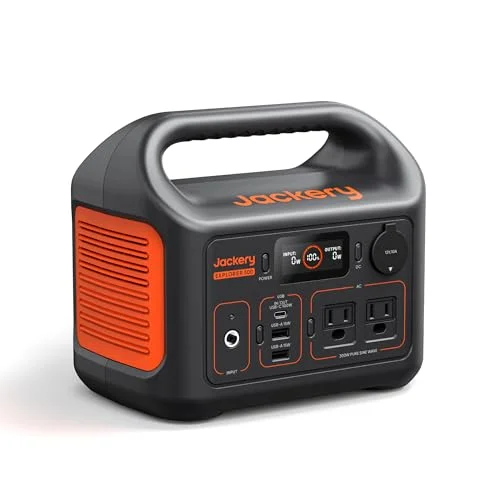
- A ~292Wh unit like the Jackery Explorer 300: roughly one night, maybe a second if the heater cycles on a thermostat. The limit here is not runtime, it is the startup surge, which the next section covers.
- A ~500Wh unit: runtime guides compute more than 50 hours at an 8-watt running draw - call it three to four nights. Anker cites real owners getting three or four eight-hour nights from a 500Wh station on a 2kW heater.
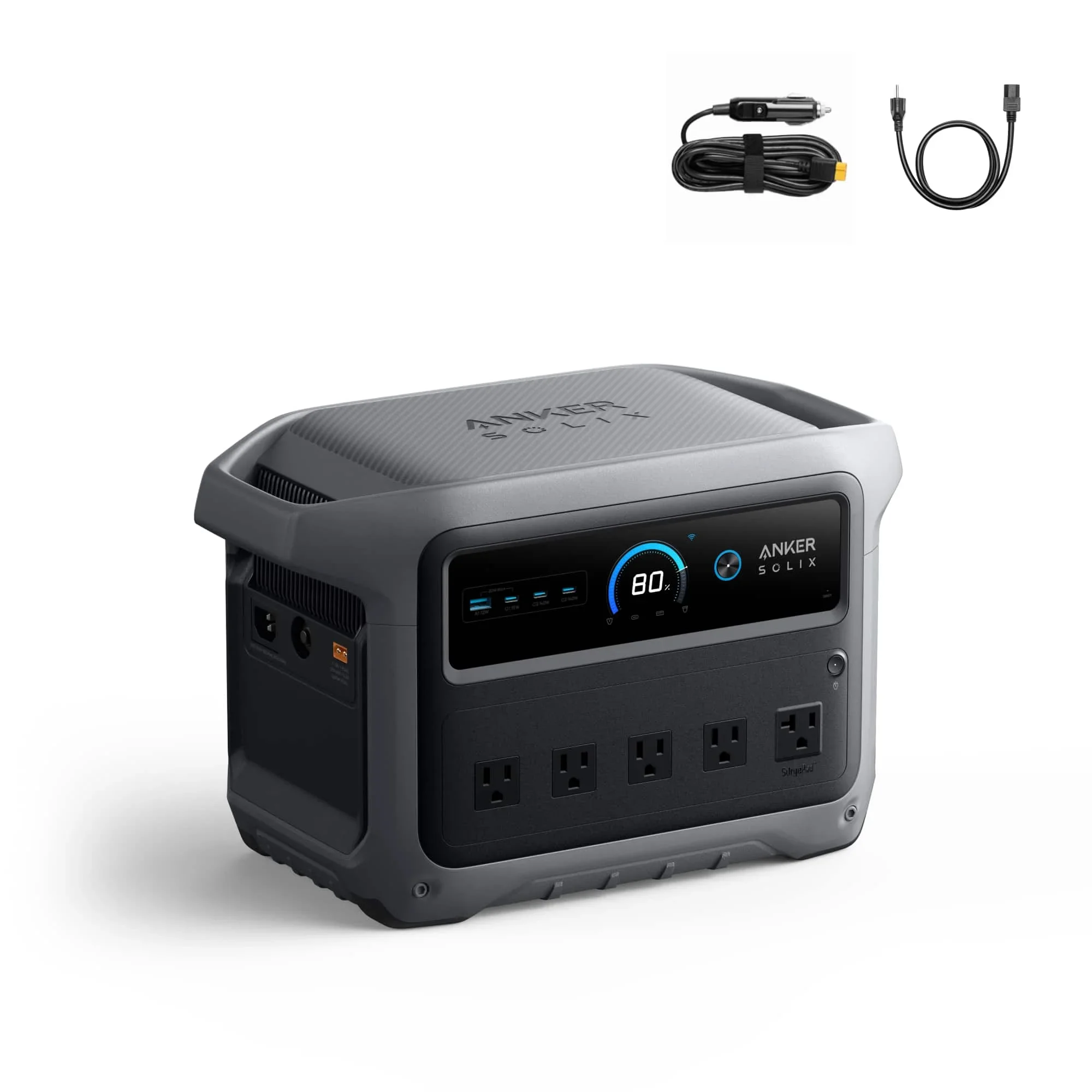
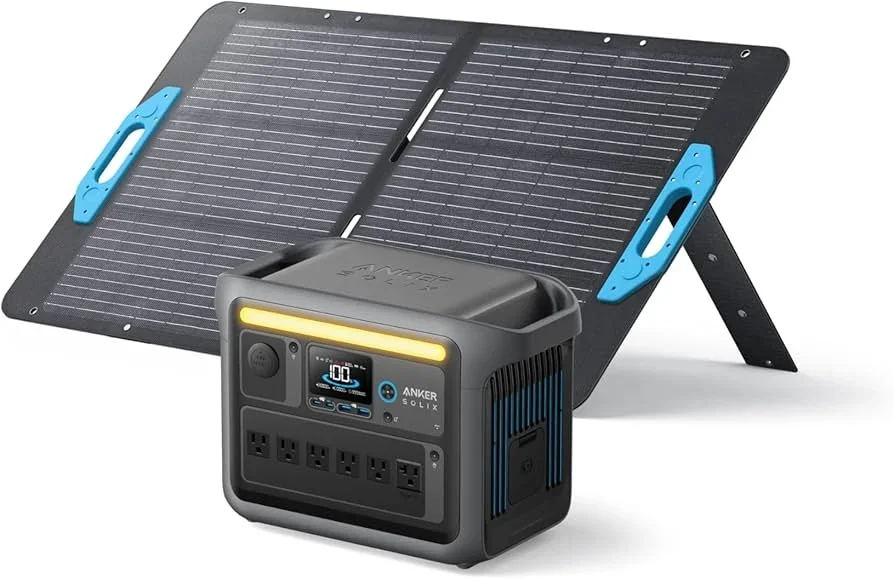
- A ~1000Wh unit like the Anker Solix C1000: comfortably several nights, and even at Anker's padded 400Wh worst-case still more than two. Our best portable power stations for car camping guide sizes stations to loads like this.
Here is the contrast that makes the whole thing click: a resistive electric heater pulls 750 to 1500 watts, so a 1000Wh station dies in under an hour. A diesel heater pulls 6 to 24 watts of electricity because its heat comes from fuel - so the same station runs it for days. Same box, hundred-fold difference, entirely because of where the heat comes from.
The startup surge is the only real gotcha
If a diesel heater ever gives you an electrical problem, it will be at ignition, not during the night. The running draw is trivial, but that 8-to-15-amp, 100-to-150-watt glow-plug surge lasts long enough to matter to a weak source. A tiny, old, cold, or nearly-flat 12-volt battery can sag below the voltage the heater's controller needs and throw an ignition fault or simply fail to light - even though it would happily sustain the running load for hours afterward.
This is exactly why people wrongly brand diesel heaters as power-hungry: the only number they ever see is the startup figure, and they never watch it drop to one amp a minute later. The fix is to size your power for the surge, not the run:
- Off a starter or leisure battery: a healthy, charged 12-volt battery clears the surge easily; a tired one is what causes 'my heater won't start' complaints in the cold.
- Off a power station: pick one whose rated output sits well above 150 watts - any modern unit does - so the ignition surge never brushes its limit.
- In deep cold: keep the battery warm and charged, because a cold battery's sagging voltage plus the glow-plug draw is the classic no-start combination.
Design for that two-minute surge and the heater will light every time, then fade into the background as the near-zero load it really is.
Sizing your power for a heater trip
Put the numbers together and sizing a system for a diesel heater is almost relaxing compared to sizing for a fridge. You are covering a small nightly draw plus a brief surge, and the fuel does the heavy lifting. Here is how I size it for the three ways people camp.
Weekender, one or two nights. A pocket station like the Jackery Explorer 300 covers a night of running draw, and any healthy vehicle battery starts the heater directly. Carry a couple of liters of diesel and you are done. This is the cheapest honest setup that works.
Long weekend to a week. Step up to a roughly 1000Wh station like the Anker Solix C1000 and you cover several nights of the heater plus your phones, lights, and a fan, recharging from the wall or the 12-volt socket as you drive between camps. This is the size most heater campers settle on.
Long off-grid stays. Add a solar panel to a 1000Wh-class station and the heater's tiny daily draw is trivially replaced by daylight, so your only real resupply becomes diesel. Because the electrical load is so low, even a modest 100-watt panel keeps the bank level. The bottleneck on a long diesel-heater trip is never the battery - it is how much fuel you can carry.
How the draw compares with the other ways to stay warm
The reason the diesel heater's numbers matter is that its rivals are so much worse on power, so much bulkier on fuel, or so much riskier on air. A quick, honest comparison puts the electrical draw in context.
- Versus an electric heater: no contest on power. An electric heater's 750-to-1500-watt draw empties any camping battery in minutes; the diesel heater's 6-to-24-watt running load is a hundredth of that. If you are running off a battery, diesel wins outright.
- Versus a propane heater: propane needs no electricity at all, which sounds like a win, but it dumps water vapor and carbon monoxide into the cabin and burns through bottles fast. Our diesel versus propane heater breakdown weighs the trade in full; on power and dry heat, diesel leads.
- Versus just more blankets: free and zero-power, but there is a temperature below which a good bag stops being enough, and that is exactly where a heater that sips 24 watts earns its place.
The through-line is that the diesel heater buys you real, dry, controllable heat for an electrical cost so low it barely registers on a power budget. That is a genuinely rare combination, and it is why the units have taken over the car-camping world despite the fiddly install.
The danger isn't the electricity - it's the exhaust
One honest warning has to sit next to all these reassuring power numbers, because the thing a diesel heater can hurt is not your battery - it is you. A diesel heater produces carbon monoxide, a colorless, odorless gas, and a small exhaust leak inside a sealed vehicle can build a fatal concentration while you sleep. The low amp draw is safe; the combustion is what you respect.
- Vent the exhaust fully outside the sleeping space, with tight connections and the outlet clear of snow, debris, and any door or window where fumes could blow back in, per rental-industry and manufacturer safety guidance.
- Run a working carbon-monoxide alarm near where you sleep. This is not optional with any combustion heater.
- Read the full safety picture before your first night - our guide to whether it is safe to run a diesel heater in your car while sleeping covers venting, alarms, and the failure modes in detail.
Handled correctly - vented outside, alarmed, installed with care - a diesel heater is a safe, warm, power-light companion. The amps were never the risk; the exhaust always is, and it is completely manageable once you plan for it.
The bottom line on diesel-heater power
So, how much power does a diesel heater use for car camping? Electrically, almost none. Budget 8 to 15 amps, about 100 to 150 watts, for a two-to-five-minute startup surge, then just 0.5 to 2 amps - 6 to 24 watts - to run all night, adding up to roughly 150 to 250 watt-hours over an eight-hour night. The heat itself comes from diesel, and a common 5kW unit burns about a third of a liter an hour, under three liters a night.
Plan for the fuel and the surge, not the running draw. A charged battery or any modern power station starts and runs a diesel heater with room to spare - a Jackery 300-class unit does a night, a 1000Wh Anker Solix C1000-class unit does several - while the diesel does the actual work.
The myth that a diesel heater will kill your battery comes entirely from mistaking it for an electric one. Once you see that the heat lives in the fuel and the electricity is just there to light it and blow it around, the whole power question relaxes: carry enough diesel, keep your battery healthy for the surge, vent the exhaust outside, and you have the warmest, most power-efficient way to sleep in a cold vehicle there is.