

Know Your Outlets Before You Wire a Thing
Measure before you mount, and map the power before you plug in. The Ford Explorer gives a car camper a genuinely useful set of power points, but they are scattered around the cabin and each has its own limits. Get the layout wrong and you either cannot reach the socket you need or you quietly drain the battery overnight — the two failures I see most.
The Explorer carries 12V outlets on the front of the center console, inside the utility compartment, on the rear of the console for back-seat passengers, and in the cargo area. It also has a 110V household-style AC outlet on the rear of the console, rated for up to 150 watts. That spread covers most camp jobs if you know which one does what.
This guide is the wiring-first tour: where each outlet lives, which fuse protects it, how much you can actually pull, and how to run gear overnight without a jump-start in the morning. It is the way an installer thinks about a vehicle — not what the brochure lists, but what actually powers your fridge and where the circuit gives out.
Everything below traces to Ford's owner documentation and the published fuse diagram, described impersonally. I have not metered a specific Explorer on a bench; I am reading the electrical layout the way I read an install spec, and flagging the step people skip that leaves them stranded with a dead battery a long way from a jump.
Every 12V Socket and Where to Find It
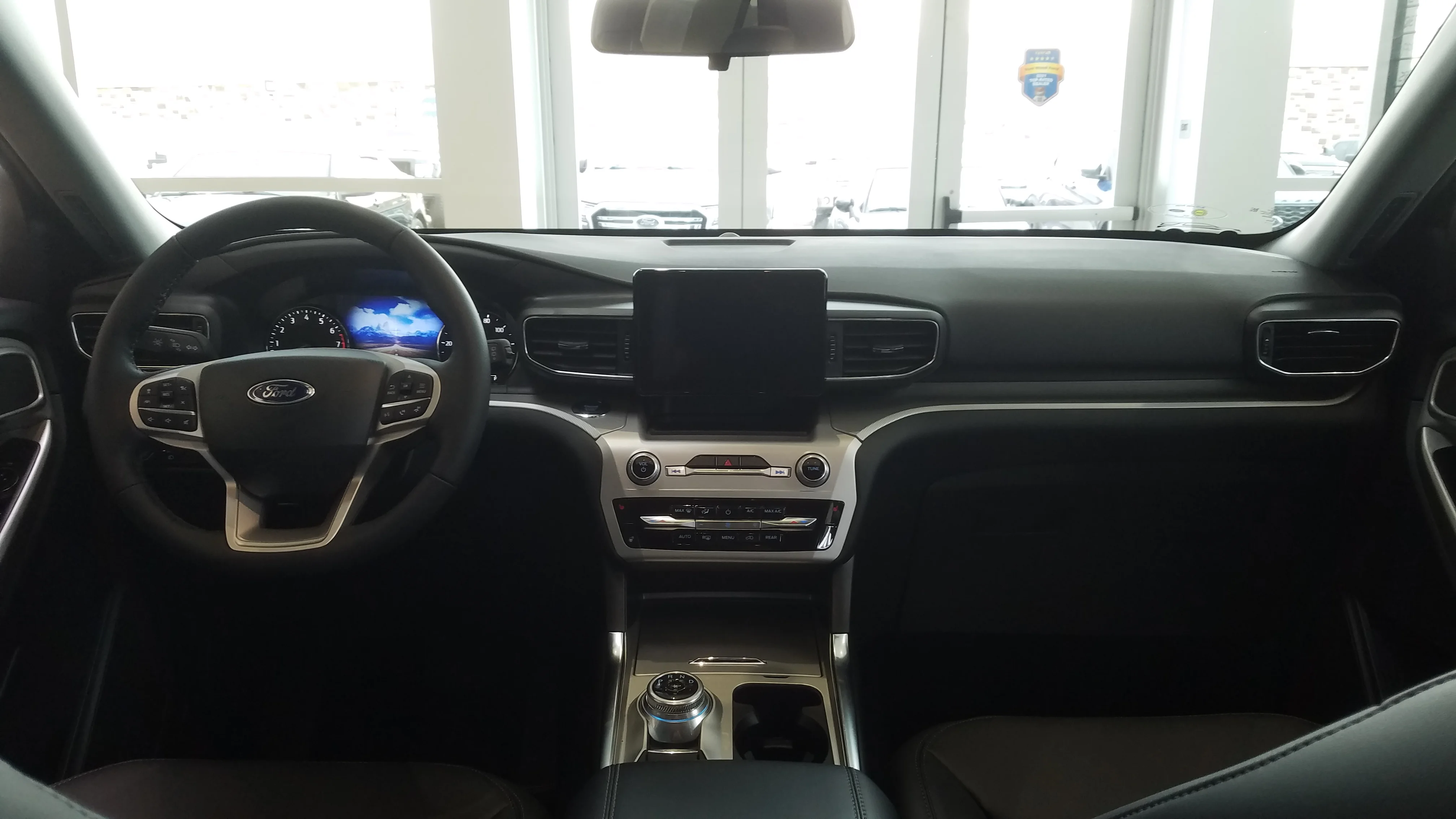
Start with the tour, because half the battle is reaching the right outlet without running a cord across the cabin. The Explorer places a 12V outlet on the front of the center console, where it is easiest for a driver or front passenger to run a phone charger, a tire inflator, or a dash device.
Move back and there is a 12V point inside the utility compartment, tucked out of the way — useful for a permanently plugged device you do not want dangling, like a dashcam hardwire tap or a small always-there accessory. Then there is a 12V outlet on the rear of the console, reachable from the second-row seats, which is the one that matters for keeping passengers or a rear cooler powered.
The one car campers care about most is the cargo-area 12V outlet. That is your fridge, your fan, or your lighting socket, because it sits right where your sleeping and gear zone lives. Being able to power a 12V fridge from the cargo bay without snaking a cable from the dash is a real convenience the Explorer builds in.
The installer's point is to match the load to the outlet's location and purpose. Charging small electronics up front, a semi-permanent tap in the utility compartment, and the heavy camp loads at the cargo socket. Planning which outlet does which job before your trip beats discovering mid-setup that your fridge cord will not reach the only free socket.
The Fuse Map: Which Fuse Protects Which Outlet
When an outlet goes dead, the fuse is where you look first, and the Explorer's power points live in the engine-compartment fuse box. Knowing the map saves you tearing the cabin apart chasing a problem that is a two-dollar fuse. Here is the layout the diagram gives.
Fuse 2 protects the power outlet in the main console bin. Fuse 33 protects the rear cargo-area power point — the one your camp fridge probably runs on, so it is the fuse to know if the cargo socket dies. Fuse 34 protects the console end-cap power point, and Fuse 35 protects the fourth power point in the box.
Why this matters for camping: if you overload a 12V socket — say, a fridge and an inverter on the same circuit — you can pop the fuse for that outlet and lose power without any warning light making it obvious. Knowing that the cargo outlet is on fuse 33 means you can check and swap it in minutes rather than assuming the fridge itself failed.
The step everyone skips is verifying the fuse chart for their exact model year and trim before a trip. Fuse assignments and amperage ratings can shift between years and configurations, and the definitive reference is the fuse specification chart in your owner's manual or on the fuse-box lid. Carry a few spare fuses of the correct ratings, and a dead outlet on the trail becomes a one-minute fix instead of a ruined evening.
The 110V AC Outlet: 150 Watts and a Hard Rule
The Explorer's 110V household-style AC outlet, on the rear of the center console, is the one that feels like a superpower for camping — until you learn its ceiling. It is rated to power devices requiring up to 150 watts, and that number is the whole story of what it can and cannot do.
One hundred fifty watts runs a laptop charger, a phone or camera charger, a small fan, or modest lighting comfortably. It will not run a microwave, a kettle, a hair dryer, or an induction burner — those pull far more than 150 watts and will trip the outlet instantly. Match your device's wattage to the limit before you count on this outlet for a given job.
Here is the hard rule Ford states plainly, and the one I want every camper to remember: do not use an extension cord with the 110V AC power point. Ford warns that a cord defeats the outlet's safety-protection design and invites overloading past the 150-watt limit by tempting you to power multiple devices from one socket. This is not fine print; it is a safety boundary.
The installer's translation: treat the 110V outlet as a single-device, low-wattage convenience, plugged directly in, not as a household extension. For anything heavier than 150 watts, the answer is a dedicated power station, not this outlet. Respecting the wattage and the no-extension-cord rule keeps the outlet working and the vehicle's electrical protection intact.
Running Gear Overnight Without a Dead Battery
This is where most Explorer campers get burned, so here is the discipline. Ford advises running the engine for full-capacity use of the power point, and specifically warns against leaving devices plugged in overnight or when the vehicle is parked for extended periods, because doing so discharges the starter battery.
The mechanism is simple and unforgiving. Your 12V and 110V outlets draw from the same battery that starts the engine. Run a fridge, lights, and a fan off those sockets all night with the engine off, and you can wake up to a battery too flat to crank. The outlets do not know or care that you need to drive home; they will happily drain the one battery you have.
The fix an installer recommends is to separate camp loads from the starter battery entirely. A dedicated portable power station charged before the trip runs your fridge and lights all night with zero risk to the vehicle, and you recharge it by driving. For heavier or longer setups, a second deep-cycle battery on an isolator keeps camp power and starting power on separate circuits.
If you do run gear off the factory outlets, do it with the engine running or for short stints, and keep an eye on it. A cheap portable power station for car camping is the single upgrade that turns the Explorer from a nervous overnight into a relaxed one, because it removes the dead-battery risk the factory sockets carry by design.
Powering a 12V Fridge from the Cargo Outlet
The most common heavy camp load is a 12V fridge, and the cargo-area outlet on fuse 33 is the natural place to run it. It works, with caveats worth understanding before you rely on it for a weekend of cold food. A fridge is a cycling load — it draws current when the compressor runs and rests between cycles — so its average draw is manageable but its startup surge is not nothing.
The first caveat is the same battery warning, amplified. A fridge running all night off the cargo 12V outlet with the engine off is exactly the overnight discharge Ford cautions against. Even an efficient fridge, cycling for hours, can pull the starter battery down far enough to matter by morning. The cargo outlet is fine for the drive and for short stops; it is a liability for unattended overnight running.
The second caveat is the fuse. If the fridge shares the cargo circuit with another device and the total exceeds the outlet's rating, you pop fuse 33 and the fridge quietly warms up. Run the fridge on its own outlet, know the fuse, and carry a spare so a trip does not swap a fuse in the dark.
The clean solution is the same as before: power the fridge from a portable power station or a dedicated auxiliary battery, and use the factory cargo outlet as a top-up while driving. That keeps your food cold and your starter battery full, which is the combination you actually want on a multi-day trip far from a jump-start.

Adding or Tapping an Outlet: The Installer's Cautions
Sooner or later a camper wants more power than the factory outlets provide, and there are right and wrong ways to add it. The wrong way is to daisy-chain splitters off a single 12V socket until you overload its circuit and pop the fuse — or worse, run current the wiring was never sized for. The factory outlets are protected by fuses 2, 33, 34, and 35 for a reason.
If you want a permanent additional outlet, the installer's approach is to run a properly fused circuit from the battery or a dedicated auxiliary source, sized for the load, rather than piggybacking on an existing socket. The utility-compartment 12V point is a tidy place to route a semi-permanent accessory, but heavy loads deserve their own protected wiring, not a shared one.
The detail people miss is fuse rating. Every added circuit needs a fuse matched to the wire gauge and the load, so a fault blows the fuse instead of the wiring. Undersize the wire or oversize the fuse and you have built a fire risk into your camp rig — the kind of shortcut that rattles loose and fails at the worst time. Measure the load, size the wire, fuse it correctly.
For most campers, though, the cleanest upgrade is not modifying the vehicle at all. A portable power station gives you multiple 12V, USB, and AC outputs far beyond the factory 150-watt AC limit, with its own protection and no risk to the Explorer's wiring. Add capability without cutting into the truck, and you keep both the warranty and the electrical safety margin intact.
USB Ports, Wireless Charging, and the Small Loads That Add Up
Not every camp power need is a fridge. The small loads — phones, headlamps, a tablet for maps, a camera battery — run constantly and quietly, and the Explorer handles them through its USB ports and available wireless charging pad in addition to the 12V sockets. Knowing which small load belongs on which output keeps your one 12V cargo outlet free for the heavy job.
The habit worth building is to push low-draw devices onto USB and the charging pad and reserve the 12V outlets for gear that genuinely needs them, like a fridge, an inverter, or a tire compressor. Charging three phones off a single 12V socket with a splitter works, but it ties up the outlet your fridge wants and adds a small constant draw to a battery you are trying to protect overnight.
Those small loads matter more than they look. A handful of devices charging all night, engine off, is exactly the slow discharge Ford warns about — no single item is heavy, but together they nibble the starter battery down. The fix is the same discipline as the big loads: charge the small stuff while driving, or run it off a power station, not off the vehicle battery while you sleep.
The installer's summary is to think in circuits and totals, not individual gadgets. Group your low-draw charging on USB and the pad, keep the 12V outlets for real loads, and move overnight draw off the starter battery entirely. Do that and the Explorer keeps every device alive without the small loads ever becoming the reason it will not start.

The Verdict: Map the Power, Then Protect the Battery
The Ford Explorer is a well-equipped platform for car-camping power once you know the map. You have 12V outlets in the front console, utility compartment, rear console, and cargo area, protected by fuses 2, 33, 34, and 35, plus a rear 110V AC outlet good for up to 150 watts — enough for chargers and small devices, not for heat-making appliances.
The two rules that keep it working are simple. Respect the 150-watt ceiling and the no-extension-cord warning on the AC outlet, and never leave gear drawing on the factory sockets overnight with the engine off, because every one of them feeds the same starter battery. Break the second rule and you trade a good night's sleep for a morning jump-start.
The installer's bottom line: use the factory outlets for what they are — convenient, protected, driving-time power — and move your heavy overnight loads to a portable power station or an isolated auxiliary battery. Map your outlets to your gear before the trip, carry the right spare fuses, and the Explorer powers a comfortable camp without ever leaving you cranking a dead battery in the dark. Treat the factory sockets as convenience, the power station as your camp supply, and the fuse chart as your troubleshooting map, and the electrical side of camping in this SUV becomes genuinely worry-free on even a long, remote trip.