The Ticking Is Good News, the No-Heat Is the Problem
That steady ticking from a diesel heater is the fuel pump doing its job. The fuel pump works by switching 12V on and off, making it pulse, or tick, to meter fuel, and the pulse rate is measured in Hz. So a ticking pump is a pump that is receiving power and trying to deliver fuel. That is actually the encouraging half of this fault.
The problem is what is not happening: no heat. A ticking pump with no heat almost always means fuel is not reaching the combustion chamber, most commonly because of air trapped in the fuel line. The pump is pulsing, but it is pulsing air, or drawing against a blockage, so nothing usable arrives at the burner and the chamber stays cold.
This matters because it points the whole diagnosis at fuel delivery rather than ignition or electrics. The pump has power, so you are not chasing a voltage or wiring fault for the pump itself. You are chasing the path the fuel takes from tank to chamber, looking for where it is being interrupted, air, a clog, a kink, or a vacuum.
The good news is that fuel-delivery faults are among the most fixable, because the fuel system on these heaters is simple and accessible. A jar, a syringe, and a few minutes of checking usually find the interruption. This guide proves the pump is working first, then walks the fuel path from the heater back to the tank to find where the fuel stops.
Match the Symptom to the Cause
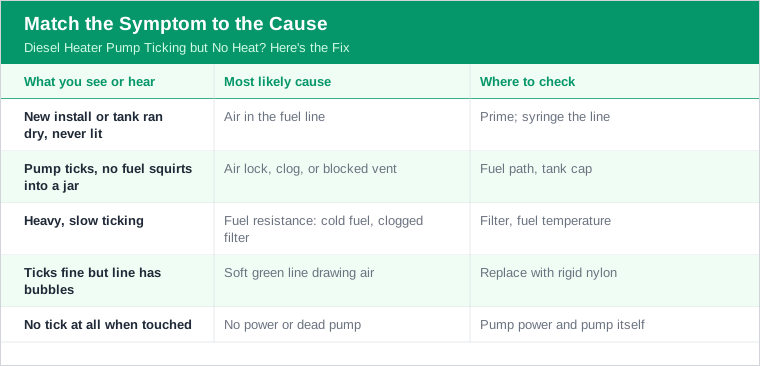
A ticking-but-cold heater has a handful of distinct causes, and the exact behavior of the tick and the situation usually reveal which. Line them up before touching the fuel system.
| What you see or hear | Most likely cause | Where to check |
|---|---|---|
| New install or tank ran dry, never lit | Air in the fuel line | Prime; syringe the line |
| Pump ticks, no fuel squirts into a jar | Air lock, clog, or blocked vent | Fuel path, tank cap |
| Heavy, slow ticking | Fuel resistance: cold fuel, clogged filter | Filter, fuel temperature |
| Ticks fine but line has bubbles | Soft green line drawing air | Replace with rigid nylon |
| No tick at all when touched | No power or dead pump | Pump power and pump itself |
The first thing this table separates out is whether the pump is even pumping. During startup you should feel a distinct clicking vibration when touching the pump body; no click means no power or a dead pump, which is a different problem from a ticking pump that is not delivering. Confirm the tick before assuming a fuel-path issue.
Once the tick is confirmed, the overwhelming favorite is air in the line, especially on a new install or after a dry tank. The clogs and vent problems come next, and an actual dead pump is last and least common when you can hear it ticking. Work the list in that order.
Prove the Pump Is Actually Delivering Fuel
Before diving into the tank end, confirm what is arriving at the heater end, because that single test splits the whole diagnosis. To check delivery, pull the fuel line off the heater and point it into a jar; you should see steady, air-free fuel squirts in time with the ticking. That is the definitive test of whether the pump-and-line combination is doing its job.
Two outcomes, two directions. If you get steady, air-free squirts in rhythm with the tick, the fuel system is fine and the no-heat problem is elsewhere, ignition or air being purged at the heater. If you get nothing, weak dribbles, or fuel broken up with air bubbles, you have found your problem: the delivery is failing somewhere between the tank and the heater, and the rest of this guide applies.
The jar test is the fork in the road. Air-free squirts in time with the tick mean the pump and line are clear; anything less, no fuel, weak fuel, or bubbly fuel, means the delivery is the fault and the tank-to-heater path is where to look.
Keep the scale in mind while you watch the jar. The pump doses only about 0.022 ml of fuel per audible pulse, so you are looking for small, crisp squirts, not a gush. Pulse frequency ranges roughly 1.4 to 5.5 Hz, so on a low setting the squirts are slow and widely spaced. What you want is that each tick produces a clean, air-free squirt, however small.
The Usual Culprit: Air in the Line
When the jar test shows bubbly or absent fuel, air is the leading cause, and priming is the cure. A new install or a tank run dry needs priming, and it typically takes 2 to 3 priming cycles to purge all the air from the line. Because the pump meters fuel in tiny doses and air is compressible, a line with a bubble in it delivers almost nothing until the air is worked out, so patience through those cycles is essential.
For a long fuel-line run, priming alone can be slow, so there is a faster method. Disconnect the line at the heater and draw fuel through with a syringe, since air is compressible and stalls the small pump, then use the prime function to fill the heater. Pulling the fuel forward with a syringe fills the line with liquid the pump can actually move, turning a frustrating series of dry prime cycles into a quick fill.
The line material itself is often the repeat offender. The soft green fuel line supplied with many kits readily introduces air bubbles, and switching to rigid nylon line prevents air-in-line no-heat faults. If a heater keeps developing air problems after being primed, the soft hose is usually why, and a length of proper rigid line is a cheap permanent fix.
Geometry keeps air out once it is purged. The pump must be angled at least 45 degrees upward so air rises out toward the heater instead of pooling and being pumped, and kinks in the fuel line restrict flow and can stop delivery despite the pump ticking, so check the line for pinches along its whole run. Get the air out, keep the pump angled up, and unkink the line, and a ticking pump starts delivering.
Clogs, Vents, and the Fuel Path
If the line is air-free and the pump still will not deliver, something is blocking the path. A clogged fuel pick-up tube or inline fuel filter starves the pump and is a common cause of ticking-but-no-fuel, so inspect and clean or replace both. The filter especially collects grit over time, and a partially clogged one shows up as heavy, slow ticking as the pump fights the resistance.
An easy-to-miss culprit sits at the top of the tank. A blocked tank-cap vent creates a vacuum as the pump draws fuel, preventing delivery even though the pump keeps ticking. The tank needs to breathe as fuel leaves it; if the vent is blocked, the pump pulls against a growing vacuum and eventually cannot lift fuel at all. Loosening the cap to test is a five-second check that solves a surprising number of no-delivery cases.
The line's own dimensions make small blockages significant. The internal fuel line inside these kits is about 2 mm inner diameter, so even small debris or a bubble can interrupt the metered flow. A speck that would pass unnoticed in a car's fuel line can choke a heater's, which is why a clean tank and a working filter matter more here than the small parts might suggest.
Distance and lift set the pump up to succeed or fail. Keep fuel-line runs short: a maximum of 2 metres from tank to pump via the filter, and a maximum of 5 metres from pump to heater, with the tank sitting no more than 2 metres below the pump so the pump can lift fuel reliably. A pump asked to lift too far or pull too long a run will tick and starve even with everything else clear.
When Cold Fuel Is the Problem
A heater that delivered fine in mild weather but ticks without heat on a hard cold morning may be fighting the fuel, not a fault. A pump that clicks heavily and slowly indicates fuel resistance from cold or thick fuel or a clogged filter, or internal pump damage. Cold diesel thickens, and thick fuel resists being drawn through a 2 mm line and a small filter.
The sound is the clue. A pump working against thick fuel labors, ticking with a heavier, slower beat than its normal crisp pulse, because each stroke has to overcome more resistance. If the heavy ticking appears only when it is genuinely cold and eases as things warm, cold fuel is the likely cause rather than a mechanical problem.
The fix is to keep the fuel flowing. In sub-zero temperatures diesel can gel and thicken, and adding about 2 litres of kerosene per 10 litres of diesel keeps it flowing to the pump. This is standard cold-climate practice and removes fuel viscosity as a variable, so a pump that was laboring against gelled diesel returns to its normal crisp tick and delivery.
Cold fuel and voltage can compound, so check both in the cold. Chinese diesel heaters operate on 12V or 24V, and low supply voltage can weaken the pump stroke, so verify at least 12.5V at the unit while it runs. A cold morning that both thickens the fuel and saps the battery can leave a pump ticking weakly and delivering little, and restoring voltage and fuel flow together is what brings the heat back.

Stop the Air From Coming Back
Clearing an air lock once is satisfying; having it return every few nights is not, and a heater that keeps developing ticking-but-no-heat faults is usually re-introducing air rather than suffering a new problem each time. The recurring nature is the clue: a one-time clog does not come back, but a line that draws air will keep doing it until the source is fixed.
The soft green line is the prime repeat offender. The soft green fuel line supplied with many kits readily introduces air bubbles, so switching to rigid nylon line prevents air-in-line no-heat faults from recurring. It is a one-time swap that removes a source of trouble the soft hose keeps re-creating every time the fuel level drops or the vehicle jostles the line.
Running habits feed the problem too. Driving with a low tank while the heater runs sloshes fuel away from the pick-up and pulls air into the line, so keeping the tank reasonably full during a run reduces the air a heater has to fight. A dedicated heater tank that stays upright and full is more reliable than tapping a vehicle tank that empties and sloshes.
Geometry locks in the fix. With the pump angled at least 45 degrees upward, the tank no more than 2 metres below the pump, and the runs within the 2-metre and 5-metre limits, air has the best chance to rise out toward the heater rather than pool and get pumped. Set the install up that way once, run rigid line, and keep the tank from running low, and the repeat air locks that cause recurring no-heat faults largely stop.
The Fix Sequence, Start to Finish
Fuel-delivery faults resolve in a clean order: prove the pump, purge air, clear clogs, then handle cold. Follow it top to bottom and stop when fuel flows and the chamber lights.
Step 1, prove the pump. Feel for the tick to confirm the pump has power, then pull the line at the heater and check for steady, air-free squirts into a jar in time with the ticking. This tells you immediately whether delivery is the fault.
Step 2, purge air. If the squirts are bubbly or absent, prime 2 to 3 cycles, or draw fuel through with a syringe on a long run and then prime. Confirm the pump is angled at least 45 degrees up and the line has no kinks. If the soft green line keeps re-introducing air, replace it with rigid nylon.
Step 3, clear the path. Inspect and clean or replace the inline fuel filter and pick-up tube, loosen the tank cap to rule out a blocked vent, and confirm the runs are within the 2-metre and 5-metre limits with the tank no more than 2 metres below the pump.
Step 4, handle cold. If the tick is heavy and slow in the cold, add about 2 litres of kerosene per 10 litres of diesel to keep the fuel flowing, and verify at least 12.5V at the unit so the pump has a full stroke.
When It's the Pump, Not the Plumbing
Most ticking-but-no-heat cases are plumbing, air, clogs, vents, cold fuel, and cost nothing but time to fix. But the pump itself can fail, and a couple of signs point at it. A pump that clicks heavily and slowly even with warm fuel and a clean filter may have internal damage, and one that will not tick at all when touched has either lost power or died.
Distinguish a dead pump from a starved one before replacing it. No tick means check the pump's power and connections first, since a wiring fault mimics a dead pump. A pump that ticks but delivers nothing through a confirmed-clear line, with the filter clean, the vent open, and the geometry correct, is the case where the pump itself is the fault, and a replacement is the fix.
Fuel pumps are inexpensive and a sensible spare to carry, given how central they are to the heater working at all. A spare diesel heater fuel pump stored with the unit turns a dead pump in the field from a trip-ending failure into a short swap, the same logic as carrying a spare glow plug.
Whole-heater replacement almost never applies to a fuel-delivery fault, because the fuel system is the most serviceable part of these units. When the pump, filter, and line are all healthy and fuel flows clean into the jar, a heater that still will not heat has moved past a delivery problem into ignition or combustion territory, which is a different diagnosis entirely. A ticking pump with no heat is, almost always, a fuel path you can clear.
The Verdict: Follow the Fuel, Not the Fear
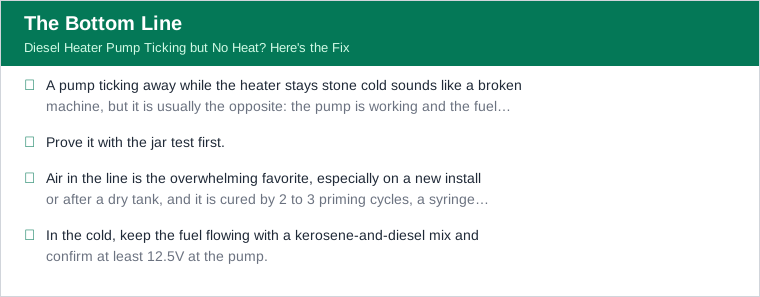
A pump ticking away while the heater stays stone cold sounds like a broken machine, but it is usually the opposite: the pump is working and the fuel simply is not getting through. The ticking confirms the pump has power and is trying to deliver, which narrows the whole problem to the path the fuel takes from tank to chamber.
Prove it with the jar test first. Pull the line at the heater and watch for steady, air-free squirts in time with the tick. Air-free squirts mean the delivery is fine and the fault is elsewhere; bubbly or absent fuel means the tank-to-heater path is the problem and points you straight at the fix.
Air in the line is the overwhelming favorite, especially on a new install or after a dry tank, and it is cured by 2 to 3 priming cycles, a syringe pull on long runs, and a swap from the soft green hose to rigid nylon line. After that, clear the inline filter and pick-up, check the tank-cap vent for a vacuum, and keep the runs within the 2-metre and 5-metre limits with the pump angled at least 45 degrees up.
In the cold, keep the fuel flowing with a kerosene-and-diesel mix and confirm at least 12.5V at the pump. Work the fuel path in order and the large majority of no-heat faults resolve without touching a part. Carry a spare pump for the rare case it is genuinely dead, and a ticking, cold heater becomes a quick fix rather than a cold night.