
Weak Heat Is Either Too Little Fuel or Too Little Air
A diesel heater that lights, runs quietly, and still leaves you cold is not necessarily broken. Weak output almost always comes down to one of two things: the burn is too small, meaning not enough fuel is being burned, or the burn is being choked, meaning carbon or an airflow restriction is strangling an otherwise adequate flame. Sorting which one you have is the whole job.
Start with honest expectations, because sometimes the heater is simply too small. Chinese diesel heaters are sold mainly as 2 kW, 5 kW, and 8 kW units, and the advertised kW rating is often optimistic, so an undersized unit for the cabin is a common cause of weak heat. A heater rated on paper for a space it cannot actually keep warm was never going to satisfy, and no adjustment fixes a genuine capacity shortfall.
If the heater is adequately sized but underperforming, the causes are the fixable kind. A setting stuck on low, a thermostat cycling early, carbon choking the burner, altitude leaning the mixture, or a restricted air inlet all rob output from a healthy heater. These are the cases worth chasing, because most cost nothing to fix.
The approach that saves money is to check the free stuff first: the setting, the thermostat, the intake screen, the pipes. Only after those are ruled out is it worth suspecting a worn part or concluding the unit is simply undersized. This guide works that order, cheapest and easiest first.
Match the Symptom to the Cause
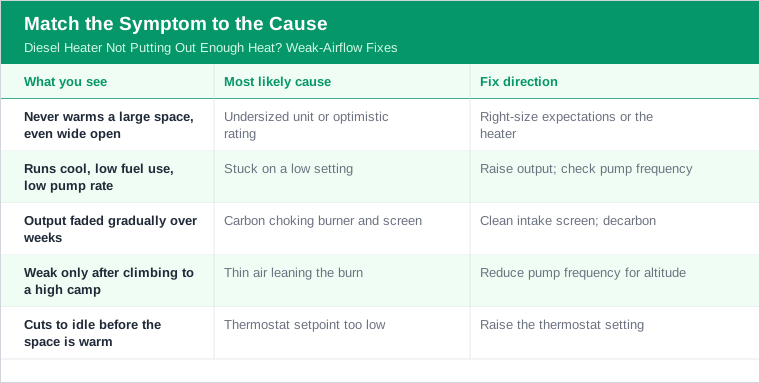
Weak heat has several distinct causes, and the circumstances usually point at one. Line them up before adjusting anything.
| What you see | Most likely cause | Fix direction |
|---|---|---|
| Never warms a large space, even wide open | Undersized unit or optimistic rating | Right-size expectations or the heater |
| Runs cool, low fuel use, low pump rate | Stuck on a low setting | Raise output; check pump frequency |
| Output faded gradually over weeks | Carbon choking burner and screen | Clean intake screen; decarbon |
| Weak only after climbing to a high camp | Thin air leaning the burn | Reduce pump frequency for altitude |
| Cuts to idle before the space is warm | Thermostat setpoint too low | Raise the thermostat setting |
The two no-cost causes, a low setting and a low thermostat, are worth ruling out before anything else, because they mimic a weak heater without anything being wrong. A heater throttled to idle by its own thermostat is doing exactly what it was told, and the fix is a setting, not a screwdriver.
After settings, the airflow-choke causes, carbon, a sooted screen, a restricted inlet, are next and mostly free to fix. Altitude is its own category, correctable with a pump adjustment. A genuinely undersized unit is the last conclusion, reached only after the fixable causes are cleared.
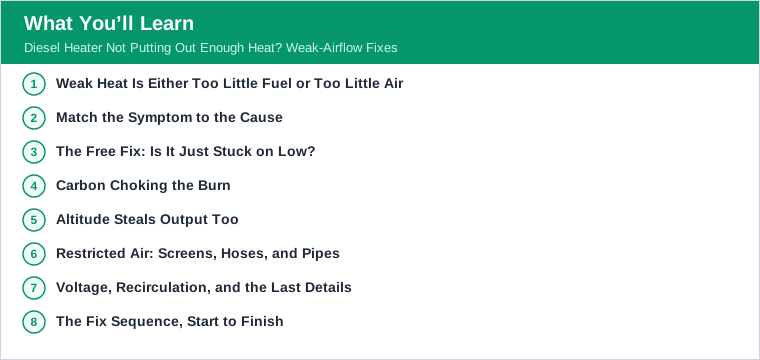
The Free Fix: Is It Just Stuck on Low?
The most common reason a heater feels weak is that it is not being asked to make much heat. Fuel burn scales directly with pump rate: about 0.079 L/hr at 1 Hz, 0.158 L/hr at 2 Hz, and 0.396 L/hr at 5 Hz, so low output on the dial directly means low heat. On a 5 kW unit the pump runs about 1.6 Hz on low, around 1680 RPM, up to about 5.0 Hz on high, around 4500 RPM, and a setting stuck low delivers little heat by design.
Fuel consumption is a useful cross-check. Typical fuel use is only about 0.03 to 0.08 gallons per hour, so a unit sipping at the low end while feeling cold is likely stuck on a low fuel setting or partly clogged. If the heater is barely using fuel, it is barely making heat, and the fix may be as simple as turning it up.
The thermostat is the sneaky version of the same problem. Thermostat cycling can make the heater feel weak: if it reaches the set temperature it throttles to idle, so a low thermostat setpoint mimics low output. A heater set to hold a modest temperature will keep dropping to idle before a cold cabin ever feels warm, which reads as weakness but is really the thermostat doing its job at too low a target.
Check both before anything else. Raise the power setting and the thermostat target, watch whether fuel use and output climb, and see if the cabin warms. This costs nothing and resolves a large share of weak-heat complaints, especially on a heater that used to satisfy and suddenly seems weak, which is often just a bumped setting.

Carbon Choking the Burn
When the settings are right and the heater still underperforms, a choked burn is the leading cause, and carbon is the usual choker. Partial carbon clogging of the burner, combustion tube, and intake screen chokes airflow and steadily reduces heat output over time. This is the classic gradual fade: a heater that warmed the space last winter and struggles this one, without any setting having changed.
The intake screen is the highest-value place to look because it is easy to reach and easily fouled. The screen sits in a small hole in the screen housing that must be cleaned and seated fully home, or air supply and heat suffer. A sooted or dislodged screen starves the burner of air directly, which both weakens the flame and, ironically, worsens the sooting that caused it.
Prevention and cure both center on running the heater hot enough to stay clean. Running the heater on high for a while before each shutdown burns off fuel residue and prevents the soot that gradually strangles output, and before finishing a trip at altitude, running at maximum power for 10 to 15 minutes burns off light carbon and restores output. A heater that lives on low will fade; one given regular hot burns keeps its output.
If the fade is advanced, a full decarbon is the reset, but for most weak-heat cases a screen cleaning plus a habit of hot finishes restores the airflow the carbon was stealing. The tell that you are in choke territory rather than setting territory is the gradual nature: settings problems appear the moment you change a setting, while carbon fades output slowly over weeks of low-and-slow running.
Altitude Steals Output Too
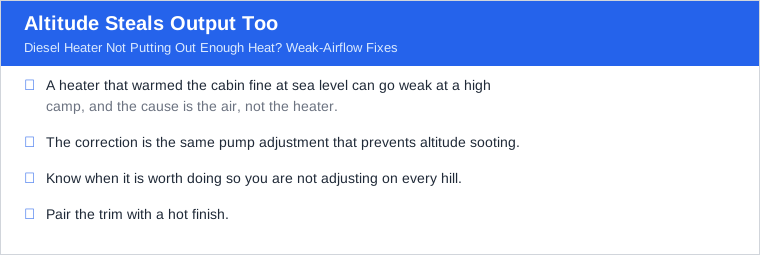
A heater that warmed the cabin fine at sea level can go weak at a high camp, and the cause is the air, not the heater. At altitude the thinner air leans the burn and leaves unburnt fuel as soot on the chamber walls, which drops heat output. The controller keeps metering the same fuel, but the thinner air cannot burn it completely, so both output and cleanliness suffer.
The correction is the same pump adjustment that prevents altitude sooting. Reduce the fuel-pump frequency by about 4% per 1,000 ft of elevation gain to keep the burn clean and maintain output at altitude. Leaning the fuel to match the thinner air restores a complete burn, which restores the heat.
Know when it is worth doing so you are not adjusting on every hill. Adjust for elevation whenever you spend more than 1 to 2 days somewhere 1,000 ft or more higher than before; 1500 m, about 4,920 ft, is already enough to matter. A few nights at a mountain camp warrants the trim; a brief drive over a pass does not.
Pair the trim with a hot finish. Before leaving a high camp, run at maximum power for 10 to 15 minutes to burn off the light carbon the thin air deposited, which keeps the next low-elevation run from starting with a partly choked chamber. Altitude weakness and altitude sooting are the same problem seen from two angles, and the same adjustment addresses both.
Restricted Air: Screens, Hoses, and Pipes
Beyond carbon, the physical airway can restrict the combustion air a heater needs, and these restrictions are common on cheap units with flimsy hardware. Debris, insulation, or incorrect mounting can restrict the combustion-air inlet, and the stock hose clamps are weak and worth replacing to seal and improve airflow. A poorly sealed or partly blocked intake starves the burner just as effectively as a sooted screen.
The intake plumbing is often undersized or leaky from the factory. Stock intake and exhaust pipe is commonly 24 mm aluminum, and some users step up to a 30 mm inner-diameter intake hose with a 30-to-24 mm reducer for freer airflow. A larger, well-sealed intake feeds the burner more combustion air, which can noticeably lift output on a heater that was air-starved. A better diesel heater intake hose and proper clamps are a cheap upgrade for a unit that never quite made its rated heat.
Length works against you if the runs are long. Combined intake-plus-exhaust pipe length should stay under about 5 metres, since over-long runs restrict airflow and cut output. A heater installed with generous, looping pipe runs can lose output purely to the airflow resistance of all that pipe, and shortening or straightening the runs recovers it.
Do not overlook the combustion blower itself. A weak or fouled combustion blower or fan motor reduces both airflow and combustion air, lowering heat, and motor faults show as E-06, or E-12 or E-13 on some controllers. If the airways are clear and the settings are right but output is still weak, a tired blower motor is a candidate, and a fan-motor error code points straight at it.
Voltage, Recirculation, and the Last Details
A couple of quieter causes round out the list, and both are easy to check. Voltage matters because the pump and fan both need it: low supply voltage weakens the pump and fan, so verify at least 12.5V at the unit while running, with less than 0.4V drop from the battery. A heater fed marginal voltage runs a weak pump and a slow fan, and both cut output even when everything else is right.
Recirculation quietly saps useful heat. The heater is not meant to draw intake air over about 30 to 35 degrees C, and recirculating its own warm output starves it and lowers useful heat. If the heater pulls its own warm output back into the intake, it both risks an overheat trip and delivers less net warmth to the space, since it is reheating already-warm air instead of cold air. Keep the cool intake and warm output genuinely separated.
Fuel quality is the last detail. Contaminated or gelled fuel reduces the delivered charge, and below 0 degrees C, adding about 2 litres of kerosene per 10 litres of diesel keeps fuel flowing and heat up. A heater fed thick, gelled diesel delivers a smaller fuel charge per pulse, which shows up as weak heat on a cold morning that clears once the fuel flows freely.
These details rarely act alone, but they stack. A cold morning can combine a sagging battery, gelled fuel, and a recirculating intake into a heater that feels far weaker than its rating, and restoring voltage, fuel flow, and clean intake air together is what brings the output back. Check them alongside the settings and airflow, not instead of them.
The Fix Sequence, Start to Finish
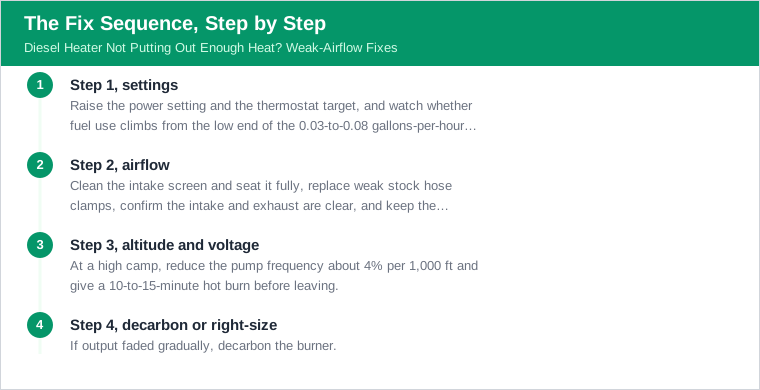
Weak heat resolves cheapest-first: settings, then airflow, then altitude and voltage, then a hard look at sizing. Follow it in order.
Step 1, settings. Raise the power setting and the thermostat target, and watch whether fuel use climbs from the low end of the 0.03-to-0.08 gallons-per-hour range. A heater sipping fuel is making little heat; turning it up may be the whole fix.
Step 2, airflow. Clean the intake screen and seat it fully, replace weak stock hose clamps, confirm the intake and exhaust are clear, and keep the combined pipe run under about 5 metres. Consider a 30 mm intake hose with a reducer if the unit was always air-starved.
Step 3, altitude and voltage. At a high camp, reduce the pump frequency about 4% per 1,000 ft and give a 10-to-15-minute hot burn before leaving. Confirm at least 12.5V at the unit with under 0.4V drop, and keep intake air under about 30 to 35 degrees C with no recirculation.
Step 4, decarbon or right-size. If output faded gradually, decarbon the burner. If the heater simply cannot warm the space even wide open, clean and correctly set, the unit is undersized for the cabin and needs to be matched to the space rather than repaired.
When It's the Unit, Not the Setup
Most weak-heat complaints are setup and maintenance, settings, screens, airflow, altitude, voltage, and cost little or nothing to fix. The free checks alone, raising the setting and thermostat and cleaning the intake screen, resolve a large share of cases, especially on a heater that used to satisfy and suddenly seems weak.
A few cases are genuine parts. A weak or fouled combustion blower motor, flagged by an E-06, E-12, or E-13 code, reduces both airflow and combustion air and is a serviceable replacement rather than a reason to scrap the heater. A chamber so carbon-choked that a normal cleaning no longer restores it needs a full decarbon or, occasionally, a new combustion tube.
The honest exception is sizing, which is not a fault at all. Because the advertised kW rating is often optimistic, a 2 kW unit asked to heat a large, poorly insulated space will run flat out and still lose the battle, and no adjustment changes physics. The fix there is matching the heater, or the insulation, to the space, not repairing a heater that is working as designed.
The budget takeaway is to spend time before money. Work the free settings and airflow checks, add cheap fixes like proper clamps and a larger intake hose only where they help, and reserve a new blower or a bigger unit for the cases the free checks prove out. A weak diesel heater is far more often choked or throttled than broken, and unchoking it is usually a screen, a setting, and a hot burn away.
The Verdict: Unchoke It Before You Replace It
A diesel heater that runs but barely warms the cabin is either making too small a burn or having a healthy burn choked. The two causes call for opposite responses, so the job is to tell them apart: a small burn means turning up the fuel, while a choked burn means clearing whatever is strangling the air.
Check the free stuff first. A heater stuck on a low setting or throttled by a low thermostat mimics weakness perfectly, and a unit sipping fuel at the low end of its 0.03-to-0.08 gallons-per-hour range is simply not being asked to make heat. Raising the setting and thermostat is the single most common fix, and it costs nothing.
After settings, chase the airflow. Clean the intake screen and seat it fully, replace the weak stock hose clamps, keep the pipe runs under about 5 metres, and consider a larger intake hose on a unit that was always air-starved. At altitude, reduce the pump frequency about 4% per 1,000 ft and finish with a hot burn, and confirm at least 12.5V at the unit so the pump and fan run at full strength.
Only after all of that comes the harder truth: some heaters are simply undersized, because the advertised rating was optimistic. But that conclusion is earned last, after the settings are right, the screen is clean, and the airflow is open. Unchoke and turn up a weak heater before replacing it, and most will deliver the heat they were supposed to all along.