Black Smoke Means Too Much Fuel, Not Too Little
Where white smoke is fuel that never burned, black smoke is the opposite problem: fuel that is burning, but not completely. Black smoke from a 12V diesel air heater signals over-fueling and incomplete combustion, meaning more fuel is entering the chamber than the available air can fully burn. The leftover carbon particles are what darken the exhaust.
That distinction matters because it points the fix in the opposite direction from a no-light. A black-smoking heater is not starved, it is drowning in fuel relative to its air supply. The goal is to restore the fuel-to-air balance, either by trimming the fuel, opening up the air, or cleaning out the carbon that a long rich spell has already deposited.
The carbon is the part that turns a nuisance into a failure. When the fuel-pump dose exceeds combustion demand for a long time, the unburnt excess bakes into carbon deposits inside the combustion chamber. That soot does not stay put: it builds on the injection and fuel-pickup device, the glow plug, the burner, the combustion tube, and the intake screen, progressively choking airflow and worsening the black smoke in a cycle that feeds itself.
Left alone, that cycle ends badly. Heavy carbon accumulation, if not cleaned, eventually causes ignition failure and heavy smoking from the heater. So black smoke is not just an ugly exhaust, it is an early warning that the burner is caking up, and addressing it promptly is what keeps a cheap heater from cooking itself into a no-start.
Match the Symptom to the Cause
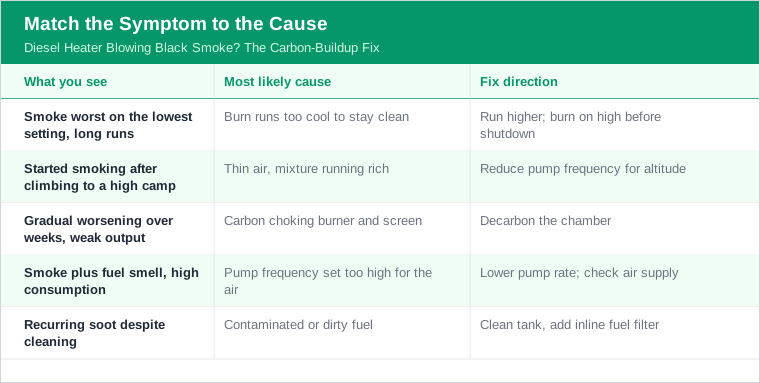
Black smoke has a few distinct drivers, and the circumstances usually reveal which one is at work. Line the pattern up before deciding what to change.
| What you see | Most likely cause | Fix direction |
|---|---|---|
| Smoke worst on the lowest setting, long runs | Burn runs too cool to stay clean | Run higher; burn on high before shutdown |
| Started smoking after climbing to a high camp | Thin air, mixture running rich | Reduce pump frequency for altitude |
| Gradual worsening over weeks, weak output | Carbon choking burner and screen | Decarbon the chamber |
| Smoke plus fuel smell, high consumption | Pump frequency set too high for the air | Lower pump rate; check air supply |
| Recurring soot despite cleaning | Contaminated or dirty fuel | Clean tank, add inline fuel filter |
The two most common causes for a camper are the low-and-slow trap and altitude, and both are operating mistakes rather than broken parts. That is good news, because it means most black smoke is corrected by how you run the heater, not by replacing anything.
The third common case, carbon choking the burner, is usually the accumulated result of the first two going unaddressed. By the time output drops and the smoke will not clear, soot has built up enough that a cleaning is needed on top of fixing whatever caused it. Catching the smoke early keeps you out of that stage.

The Low-and-Slow Trap
The single most common way campers soot up a diesel heater is by babying it. Running the heater for long periods on the lowest power setting is a leading cause of carbon buildup, because the burn runs too cool to stay clean. It feels efficient and quiet to idle the heater on minimum all night, but a cool burn is an incomplete burn, and incomplete burns leave carbon.
The mechanism is straightforward. These heaters burn cleanest when hot, because a hot chamber vaporizes and consumes the fuel completely. On the lowest setting the chamber never gets fully hot, so a fraction of each fuel dose survives unburnt and deposits as soot. Do that for hours on end, night after night, and the burner cakes up even though nothing is mechanically wrong.
The fix is counterintuitive but reliable: run the heater hotter. Where possible, size and set the heater so it spends time at a higher output rather than crawling on minimum, and specifically run the heater on high for a period before every shutdown to burn off fuel residue and prevent the soot that causes black smoke. That end-of-run hot burn is the cheapest anti-carbon habit there is.
Pump frequency is the underlying lever. The fuel pump doses about 0.022 ml per pulse at roughly 1.4 to 5.5 Hz, and a pump rate set too high for the air supply over-fuels and soots the chamber. If your controller lets you tune the pump curve, matching the fuel rate to the air the burner can actually consume is what keeps a low setting from running rich, but for most users the simpler discipline of running hotter and burning off before shutdown does the job.
Why Altitude Soots the Chamber
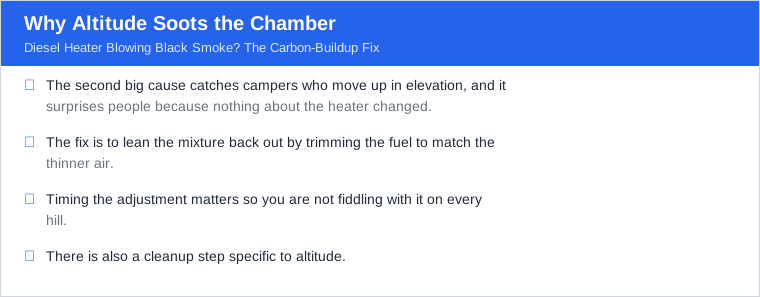
The second big cause catches campers who move up in elevation, and it surprises people because nothing about the heater changed. At altitude the air is thinner, but the controller keeps injecting the same amount of fuel, so the mixture runs rich, burns incompletely, and lays down soot. The heater is doing exactly what it did at sea level; the air simply cannot support that much fuel anymore.
The fix is to lean the mixture back out by trimming the fuel to match the thinner air. The rule of thumb is to reduce the fuel-pump frequency by roughly 4% per 1,000 ft of elevation gain to lean the mixture and prevent altitude sooting. If your controller exposes the pump frequency, that adjustment restores a clean burn without any disassembly.
Timing the adjustment matters so you are not fiddling with it on every hill. It is worth making whenever you spend more than 1 to 2 days at a location 1,000 ft or more above your previous elevation. A brief pass over a mountain does not warrant it; settling into a high camp for a few nights does. For reference, 1500 m is about 4,920 ft, enough elevation to matter for the burn.
There is also a cleanup step specific to altitude. Before ending a trip at altitude, run the heater at maximum power for 10 to 15 minutes so the higher combustion temperature burns off light carbon deposits before they set. That hot finish clears the soot the thinner air deposited during the stay, so you head down the mountain with a clean chamber rather than a caked one.
How Carbon Builds and Where It Hides
Understanding where the soot collects makes the cleaning obvious. Carbon builds up on the injection and fuel-pickup device, the glow plug, the burner, the combustion tube, and the intake screen, and each of those spots chokes airflow a little more, which makes the burn richer, which lays down more carbon. It is a self-reinforcing loop, which is why a heater that smokes a little today smokes a lot in a month if ignored.
The intake screen is a quiet troublemaker. It sits in a small hole in the screen housing that must be cleaned well and seated fully back into its hole for proper air supply. A sooted or misplaced screen starves the burner of air directly, tipping an otherwise fine mixture into the rich, smoking zone. It is worth checking early because it is easy to reach and easy to overlook.
Pipe length feeds the same problem. Combined intake-plus-exhaust pipe length should stay under about 5 metres, because overly long pipes restrict airflow and promote carbon. Stock exhaust and intake pipe is commonly 24 mm aluminum, and a partially blocked exhaust or muffler traps condensation and soot that further chokes the burn. A crushed or clogged exhaust does to the burner what a pinched straw does to a drink.
Fuel quality closes the loop. Contaminated or dirty diesel accelerates carbon and soot buildup, so a clean tank and inline fuel filter reduce recurring black-smoke problems. A cheap diesel heater fuel filter keeps grit out of the pump and burner, which keeps the burn cleaner and the cleaning interval longer.
How to Decarbon the Chamber
Once soot has built up enough to drop output or keep the smoke from clearing, no amount of tuning will fix it until the carbon comes out. Decarboning is a manageable job. The thorough method is to disassemble the unit and scrape carbon from the burner, combustion tube, and inner furnace wall with a flat-blade screwdriver, then clean with solvent and blow out with an air gun. That restores the airflow and combustion surfaces the soot had choked.
There are lighter methods for maintenance between full teardowns. The heater can be dry-burned, run without pumping fuel, about 3 to 5 times to help shed carbon deposits, using the heat and airflow to flake off lighter soot. It is not as complete as a scrape, but it is easy and requires no disassembly.
A chemical-free deep clean uses a hotter fuel. Running kerosene at high power for about an hour burns hotter and cleaner than diesel, which helps consume built-up carbon. This is a useful periodic reset for a heater that has spent a lot of time on low, and it pairs well with the dry-burn method for routine upkeep.
Whichever method you use, do not forget the intake screen and pipes on reassembly. Clean the screen and seat it fully, confirm the exhaust is clear and free-draining, and keep the combined pipe run under about 5 metres. A spotless combustion chamber feeding through a sooted screen or a blocked exhaust will simply cake up again.
Preventing It From Coming Back
Decarboning fixes the symptom; changing how you run the heater fixes the cause. The most valuable habit is the hot finish: running the heater on high for a while before each shutdown burns off fuel residue and prevents the soot that gradually strangles output. Ending every session with a hot burn is the single best thing a camper can do to keep the chamber clean.
Match the heater to the space so it is not forced to idle on minimum. A unit sized so it can run at a healthy output, rather than crawling on the lowest setting to avoid cooking you out, burns cleaner by nature. Chinese diesel heaters are sold mainly as 2 kW, 5 kW, and 8 kW units, and a smaller unit run at a moderate output often stays cleaner than a large one throttled to minimum in a small cabin.
Manage altitude proactively. When you settle into a high camp for more than a day or two, trim the pump frequency by about 4% per 1,000 ft, and give the heater a 10-to-15-minute high-power burn before you leave. Those two steps keep the mixture in the clean zone during the stay and clear whatever light soot accumulated before it sets.
Finally, keep the fuel clean. A clean tank, fresh diesel, and an inline fuel filter cut the grit that accelerates carbon, and paying attention to consumption helps too: typical fuel use runs about 0.03 to 0.08 gallons per hour, and a chronically over-fueled unit consumes at the high end while smoking black. If your heater is drinking fuel and smoking, that pairing is the tell that it is running rich and due for attention.
The Fix Sequence, Start to Finish
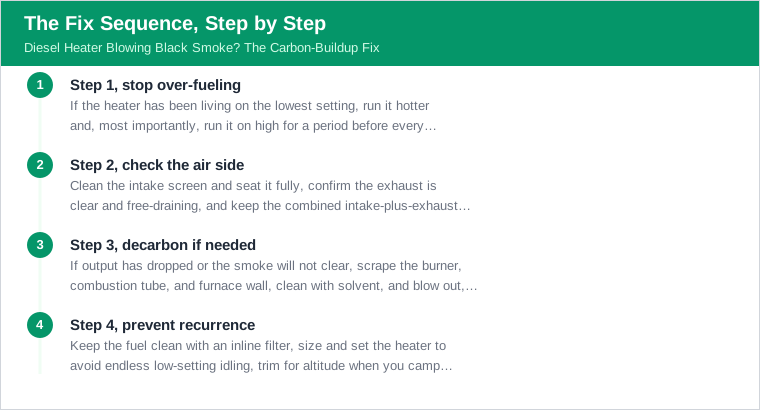
Black smoke resolves in a predictable order: correct the operating cause, clear the carbon, then prevent recurrence. Follow it top to bottom.
Step 1, stop over-fueling. If the heater has been living on the lowest setting, run it hotter and, most importantly, run it on high for a period before every shutdown. If you climbed to a high camp, reduce the pump frequency by about 4% per 1,000 ft to lean the mixture.
Step 2, check the air side. Clean the intake screen and seat it fully, confirm the exhaust is clear and free-draining, and keep the combined intake-plus-exhaust run under about 5 metres. Restoring airflow often clears smoke on its own by returning the mixture to balance.
Step 3, decarbon if needed. If output has dropped or the smoke will not clear, scrape the burner, combustion tube, and furnace wall, clean with solvent, and blow out, or use the lighter dry-burn 3-to-5-times and kerosene-hour methods for maintenance.
Step 4, prevent recurrence. Keep the fuel clean with an inline filter, size and set the heater to avoid endless low-setting idling, trim for altitude when you camp high, and end every run with a hot burn. Do that and the chamber stays clean between deep cleanings.
When Cleaning Isn't Enough
The overwhelming majority of black-smoke cases are operating habits and carbon, both of which are correctable without replacing the heater. Running hotter, trimming for altitude, cleaning the screen, and decarboning the chamber cover nearly all of them, and none of that costs more than a fuel filter and an evening of work.
A few cases need a part rather than a cleaning. A glow plug so carbon-jacketed that it no longer ignites cleanly should be replaced along with the decarbon, since heavy accumulation eventually causes ignition failure on top of the smoking. A fuel pump metering erratically, or a combustion blower too weak to supply air, can also keep a chamber running rich, and those are serviceable components rather than reasons to scrap the unit.
Whole-heater replacement enters the picture only when repeated cleaning no longer restores the burn, which usually means the combustion tube or furnace has degraded past what scraping can recover. Even then, the heater will have given plenty of warning, worsening smoke, dropping output, and eventually a no-start, rather than failing suddenly. A heater that responds to a decarbon is a heater worth keeping.
The honest bottom line is that black smoke is a maintenance signal, not a death sentence. It tells you the heater is running rich and caking up, and the response is to fix the fuel-air balance and clean the carbon out. Handle it early, build the hot-finish habit, and a cheap diesel heater will run clean for many seasons on nothing more than filters, kerosene, and the occasional scrape.

The Verdict: Balance the Burn, Clear the Carbon
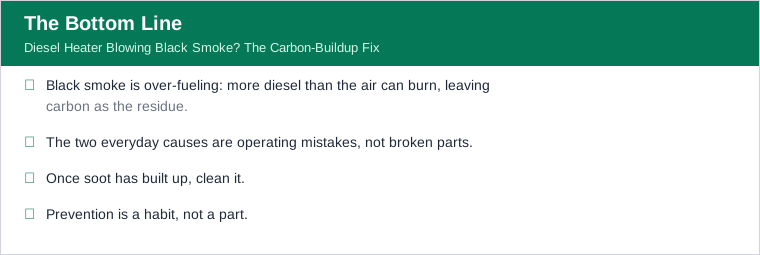
Black smoke is over-fueling: more diesel than the air can burn, leaving carbon as the residue. Unlike white smoke, which is fuel that never lit, black smoke means the heater is running but running rich, and the soot it deposits will slowly choke the burner until the heater fails if the cause is not addressed.
The two everyday causes are operating mistakes, not broken parts. Running for long stretches on the lowest setting keeps the burn too cool to stay clean, and climbing to a high camp leans nothing while injecting the same fuel, so the mixture goes rich. Both are fixed by how you run the heater: run it hotter, burn on high before shutdown, and at altitude reduce the pump frequency by about 4% per 1,000 ft.
Once soot has built up, clean it. Scrape the burner, combustion tube, and furnace wall, or use the lighter dry-burn and kerosene-hour methods, and never skip the intake screen and exhaust, since a clean chamber feeding through sooted airways just cakes up again. Keep the fuel clean with an inline filter to stretch the interval between cleanings.
Prevention is a habit, not a part. End every run with a hot burn, size the heater so it is not forced to idle on minimum, trim for altitude when you camp high, and watch for the smoke-plus-high-consumption pairing that signals a rich burn. Do that and black smoke stays a rare, quickly-cleared event rather than the slow death of a genuinely useful heater.