
Factors Affecting Dash Cam Battery Performance in Extreme Temperatures
Dash cams are supposed to be your eyes on the road, but extreme temperatures can turn them into useless bricks. My first dash cam, a cheap $75 model I picked up online, completely died on me during a heatwave in Phoenix, Arizona, leaving me with zero footage after a fender bender.
Dash cams are supposed to be your eyes on the road, but extreme temperatures can turn them into useless bricks. My first dash cam, a cheap $75 model I picked up online, completely died on me during a heatwave in Phoenix, Arizona, leaving me with zero footage after a fender bender. It turns out that tiny box crammed with electronics doesn't love sitting in 110-degree F sunshine baking through a windshield.
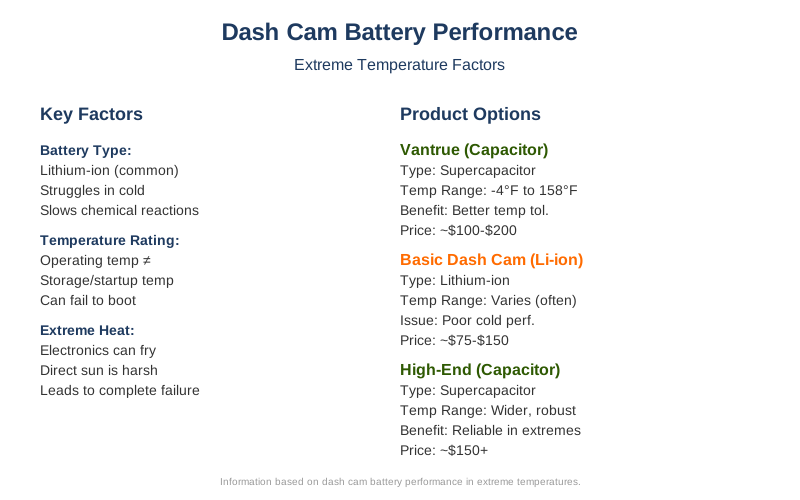
Cold weather is just as brutal, turning sophisticated electronics into sluggish paperweights that refuse to boot up. Vantrue notes that while many dash cams are rated for down to -4 degrees F, that's just the operating temperature, not necessarily the storage or startup temperature. It's a delicate dance between keeping your tech alive and hoping it doesn't fry or freeze.
The Core Answer
The biggest culprit for dash cam battery performance issues in extreme temperatures is the type of battery inside. Most dash cams rely on lithium-ion batteries, which are great for their size and power density, but they absolutely hate the cold. When it gets freezing, the chemical reactions inside the battery slow to a crawl. This means the battery can't deliver the juice your dash cam needs to power up and record, even if it shows a full charge Vantrue explains this clearly. I learned this the hard way when my dash cam wouldn't even turn on after a night in the mountains near Denver, Colorado, where temperatures dropped to 15 degrees F. It was a rookie mistake; I just assumed it would work. Reddit users often recommend dash cams with capacitors specifically to avoid these lithium-ion battery problems in temperature extremes.Why This Matters for Your Setup
So, why should you care about what's inside your dash cam's battery? Because it directly impacts whether you have crucial footage when you need it most. I once had a minor parking lot incident where the other driver tried to blame me. My dash cam, which I'd foolishly left in direct sunlight all day in Las Vegas, Nevada, had shut itself off due to overheating. No footage, no evidence. Brilliant engineering. RedTiger Cam points out that direct sunlight through a windshield is a major heat trap, easily pushing internal temperatures past 158 degrees F. DashCamTalk forums are full of stories about dash cams failing in the heat. The honest version: if your dash cam overheats, it won't record. If it freezes, it might not even turn on. That's game-time failure when you need it most.Making the Right Choice
The real move is understanding that your dash cam is a piece of tech, and like all tech, it has limits. If you live in a place with serious temperature swings, you need to consider the battery technology. Capacitors are generally much more resilient to heat and cold than standard lithium-ion batteries, though they might have shorter recording times on battery power alone. Facebook discussions often highlight capacitor models for their durability in extreme weather. Think about where you park your car - direct sun versus shade makes a huge difference. Ultimately, making an informed choice upfront saves you from a potential headache (and lack of evidence) later. It's not just about the megapixels; it's about reliability.Frequently Asked Questions
If my dash cam battery dies in the cold, can I just buy a replacement battery from the dealer to fix it?
Do I need a special thermometer to know if my car's interior is too hot or too cold for my dash cam?
What if my dash cam still won't turn on after I've tried to keep it out of the sun or bring it inside?
Can leaving my dash cam in extreme heat or cold permanently damage it?
I heard that if a dash cam overheats, it'll just shut down and be fine later. Is that true?
🏅 Looking for Gear Recommendations?
Check out our tested gear guides for products that work with this setup: