
How to Choose the Right Size Portable Power Station for Your Car Camping Needs
Figuring out the right size portable power station for your car camping trips feels like trying to pick a single sock from a laundry basket. It's not just about how many gadgets you have; it's about how much juice they suck down over a weekend.
Figuring out the right size portable power station for your car camping trips feels like trying to pick a single sock from a laundry basket. It's not just about how many gadgets you have; it's about how much juice they suck down over a weekend. These devices are essentially big batteries with plugs, and you need to understand their capacity, measured in watt-hours (Wh), to avoid being that person with a dead phone at 8 PM.
My first trip, I underestimated this and spent half the night trying to charge my phone using the car's cigarette lighter, which felt like trying to fill a bathtub with a leaky eyedropper. Getting this right means you can power your essentials without hauling a small generator.
It's about balancing convenience with what you actually need, not just what you think you might need. Modern campers are bringing more electronics than ever, so understanding watt-hours is key to staying powered up.
The Core Answer
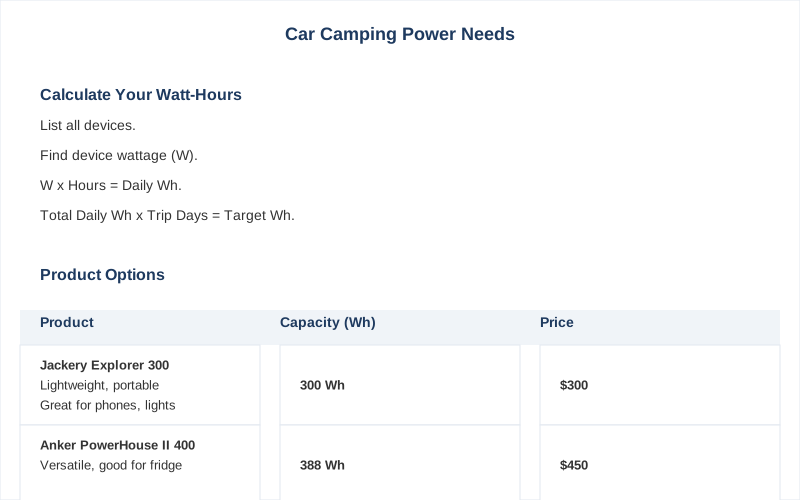
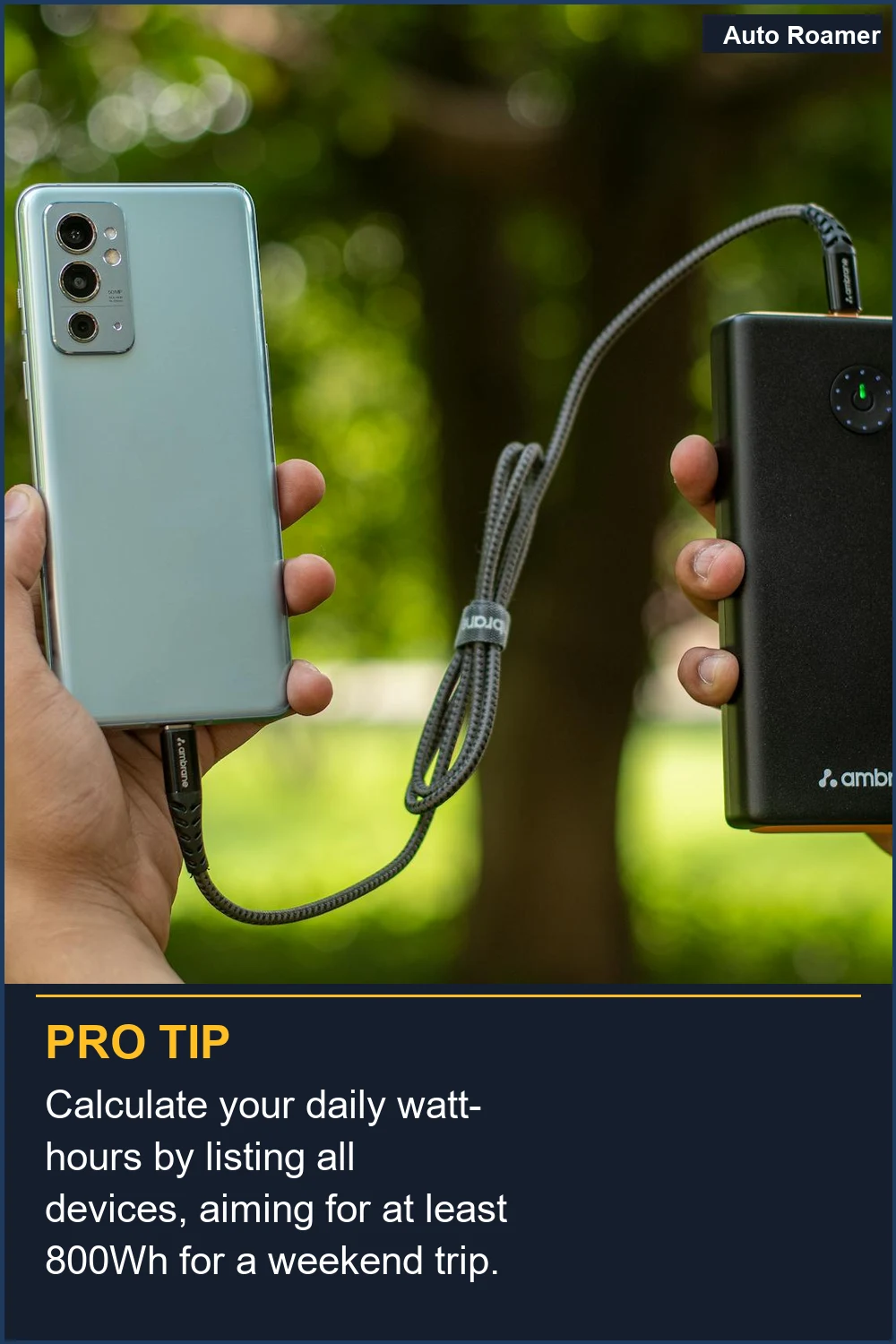
Look, nobody wants to be left in the dark, literally, because their power station died after two hours. The real move is to figure out your daily power needs in watt-hours. You do this by listing every single thing you plan to plug in - your phone, a portable fridge, your headlamp, maybe even a mini-fan if you're fancy. For each device, find its wattage (W) - it's usually on the charger or the device itself. Then, multiply that wattage by how many hours you expect to use it each day. So, if your phone charger is 10W and you charge it for 3 hours a day, that's 30 Wh. Do this for everything, add it all up for one day, and then multiply that by the number of days you'll be out. That's your target watt-hour capacity for the trip. For a typical weekend trip, say 2 nights, most people find something in the 200-500 Wh range is plenty to keep their phone charged and maybe run a small LED light. I made the rookie mistake once of buying a tiny 100 Wh unit for a 3-day trip, thinking I was being minimalist. By day two, my portable fridge was a glorified cooler and my phone was at 5% by lunchtime. You don't need a spreadsheet, just a quick tally. A 500 Wh unit is like the $50 version of a decent power station - it handles the basics without costing an arm and a leg. Bigger is not always better; a 1000 Wh unit might be overkill and just add unnecessary weight and cost if all you're powering is a phone and a light. Think about your longest-duration item. If you have a portable fridge that needs to run constantly, that's your main driver. For me, that fridge is the game-time decision maker. A 500 Wh unit paired with a 200W solar panel is often a sweet spot for many campers. That said, if you're running a CPAP machine all night, or powering a laptop for work, you'll need to bump that number up significantly. Always add a buffer of about 20% - things always take a little more power than you think, and batteries don't perform as well in the cold, which is another lesson I learned the hard way at 10 degrees F in the Adirondacks.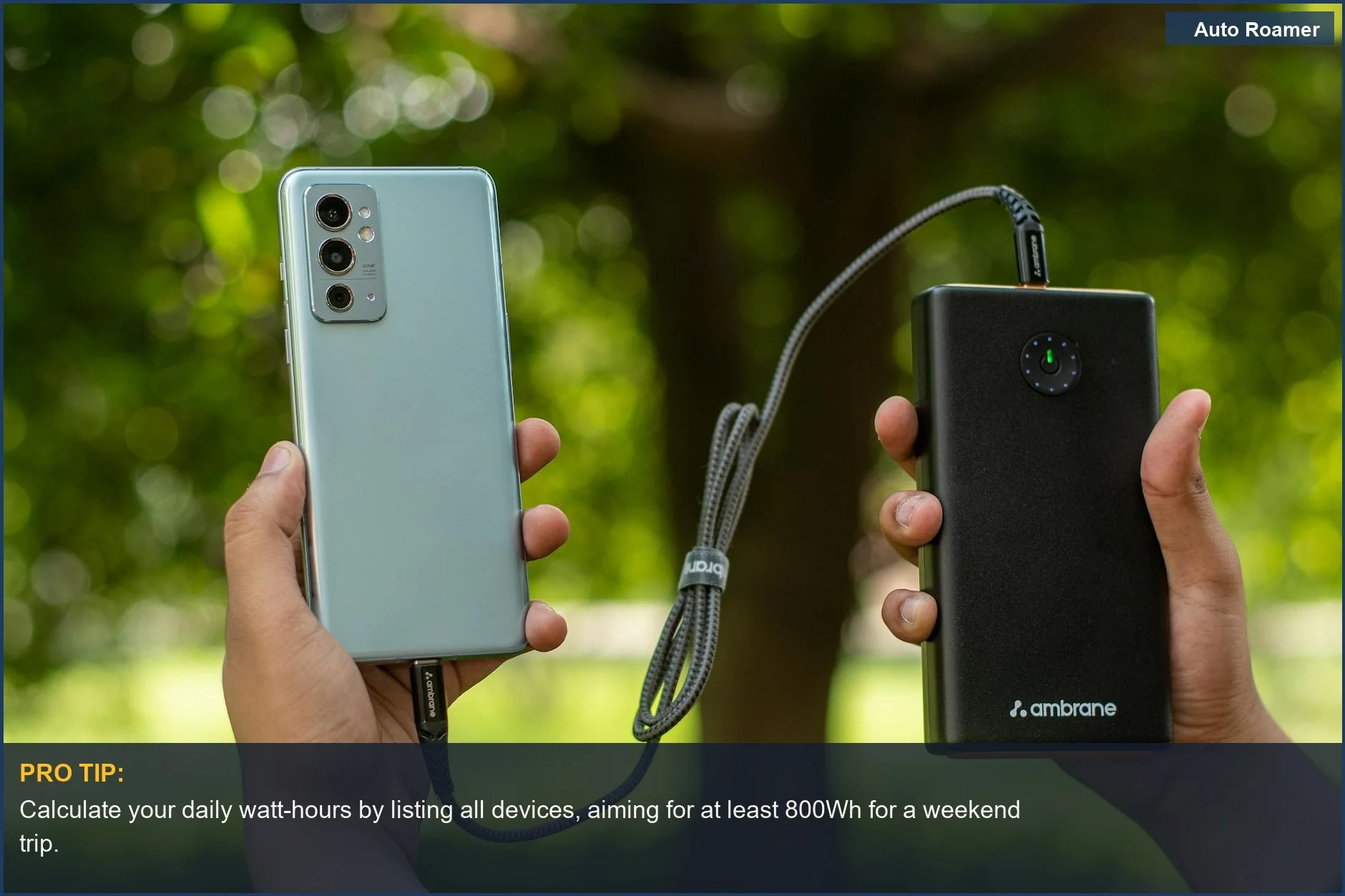
The Bottom Line
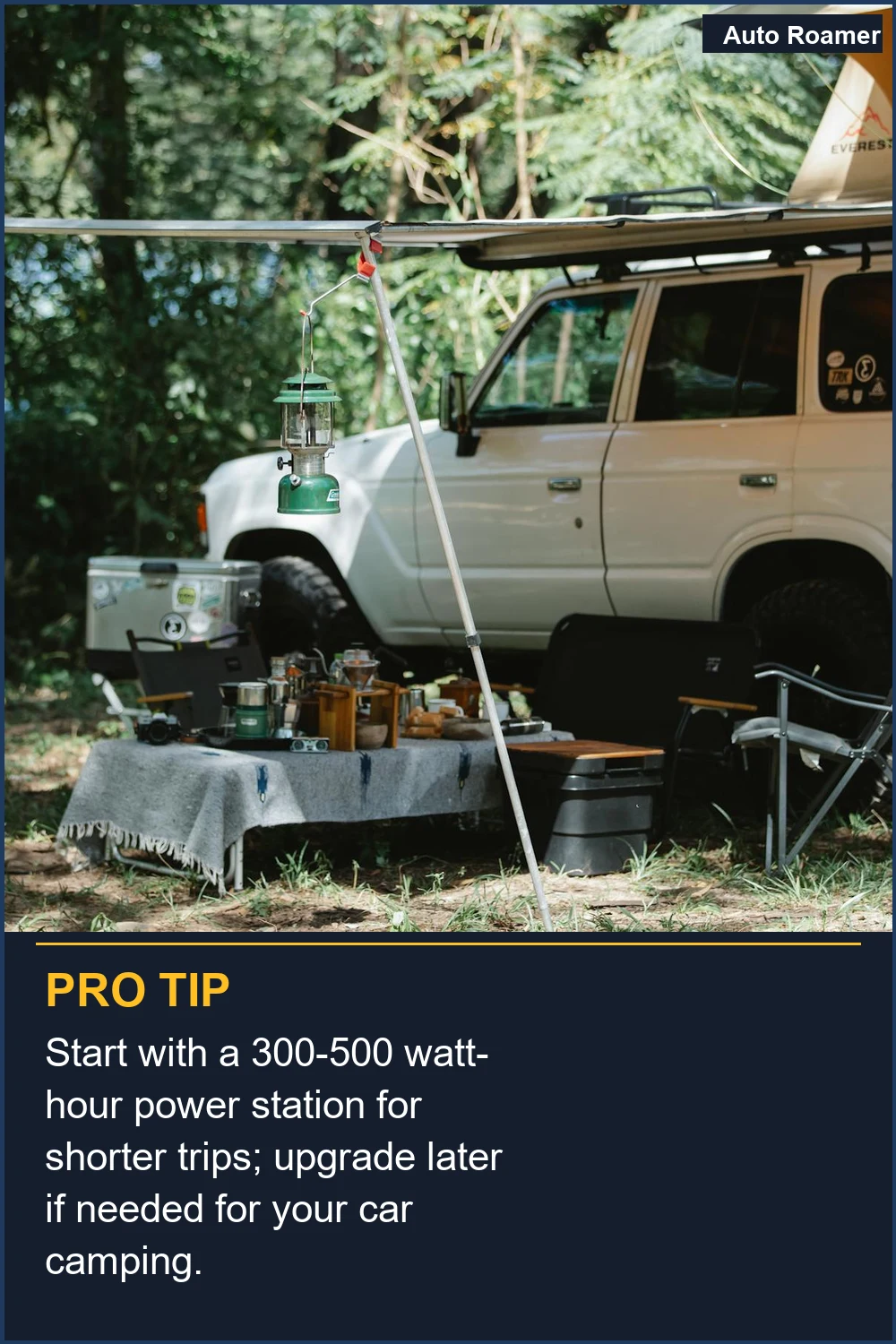
The honest version is you don't need the biggest, baddest power station out there for your first few car camping trips. Start by calculating your actual needs, not your wants. Most people find a unit around 80-120 amp-hours (which translates roughly to 400-600 Wh) is a solid starting point for weekend adventures. I used to pack like I was preparing for a zombie apocalypse, with multiple gadgets and chargers. Now, I focus on what truly matters: keeping my phone alive for navigation and photos, and maybe powering a small LED string light for ambiance. A 500 Wh unit is a good balance of power and portability for most beginners. You can always upgrade later if you find yourself consistently running out of juice. Don't get overwhelmed by the specs; just do the math on your devices. It's not rocket science, it's just about not waking up with a dead phone when you need to find your way back to civilization. Think about your longest-running device and build from there.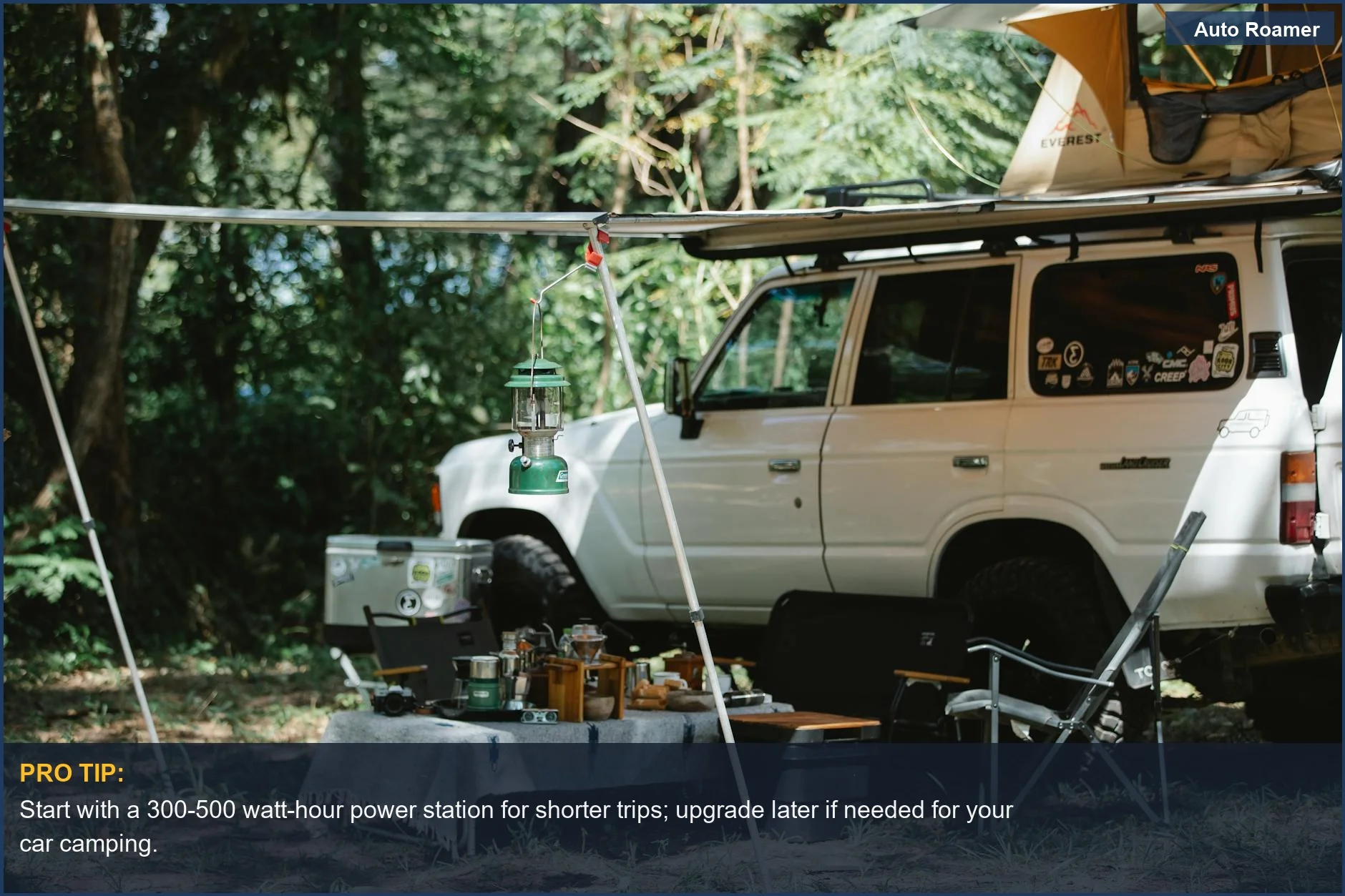
Frequently Asked Questions
Is it cheaper to build my own power station than buy one?
Do I really need to calculate watt-hours, or can I just guess?
What if I buy a power station and it's too small for my needs?
Can using a power station too often permanently damage my car's battery?
I heard you can just use your car's alternator to power everything. Is that true?
🏅 Looking for Gear Recommendations?
Check out our tested gear guides for products that work with this setup:
Sources
- how-to-choose-power-station-capacity-weekend-trips
- How to Pick the RIGHT Portable POWER STATION for Car Camping ...
- Advice on powerstations for someone who doesn't know what they ...
- rvlife.com
- The Best Power Stations of 2026 - Outdoor Gear Lab
- Camping Power Station Guide: How to Choose a Safe, Portable ...
- How to Choose the Right Power Station for Your Needs - YouTube
- What kind of power station is needed for car camping? - Facebook