
Chevrolet Traverse Camping Guide: Family SUV Comfort
Auto Roamer
8 min read
★ Best Overall
Editor picks below — verified, expert-reviewed.
The Chevrolet Traverse: Space and Comfort for Family Camping
The Chevrolet Traverse ranks as one of America's most popular three-row family SUVs, and for good reason. Its impressive cargo space, comfortable interior, and family-oriented features make it an excellent platform for car camping. With seating for up to eight passengers and approximately 144 cubic feet of cargo space when all seats are folded, the Traverse offers flexibility that appeals to camping families of various sizes. Unlike two-row SUVs, the Traverse's third row adds complexity to sleeping arrangements but enables creative solutions for families wanting to split sleeping spaces between the vehicle and tent camping. This guide explores how to optimize your Traverse for both comfort and functionality on camping adventures.
For those seeking a more compact option, the Chevrolet TrailBlazer also offers great camping capabilities.
Sleeping Configuration in a Three-Row SUV
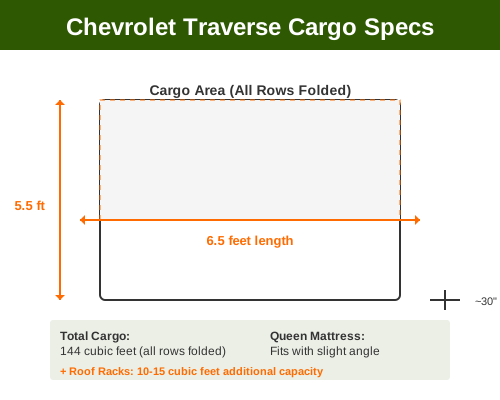
The Traverse's three-row configuration offers multiple sleeping strategies. The most common approach uses a custom sleeping platform in the cargo area with second-row seats folded down, creating a relatively flat sleeping surface measuring roughly 6.5 feet by 5.5 feet. This accommodates a queen-sized air mattress or a custom foam pad. Alternatively, some camping families use the Traverse as a basecamp, folding down the second and third rows to create maximum cargo space while setting up a tent for sleeping. This approach is popular with families of four or more who prefer the tent experience with the vehicle serving as a storage and supply hub. For smaller families, utilizing the second row only with a twin or double air mattress creates an elevated sleeping surface, though headroom becomes tighter. Third-row seats, when folded, provide additional storage space. Custom platform builders sometimes design modular sleeping systems that accommodate different row configurations depending on trip needs.
For those interested in larger SUVs, the Chevrolet Suburban also offers great camping configurations, as detailed in our Suburban camping guide.
Maximizing Cargo Space for Gear Storage
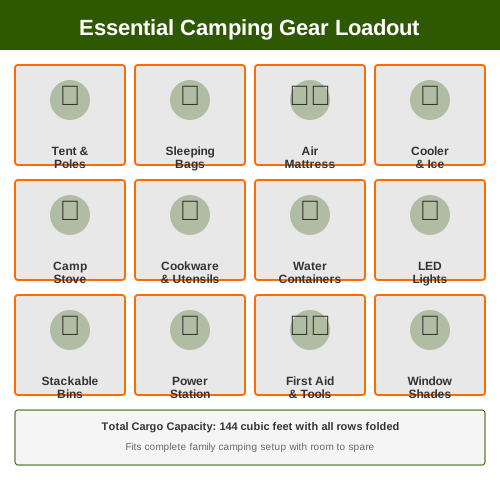
With 144 cubic feet of cargo capacity (all rows folded), the Traverse handles camping gear generously. A typical family camping setup—tent, sleeping bags, camping stove, cooler, and clothes—fits comfortably with room to spare. Strategic organization prevents gear from shifting during driving and makes items easy to access. Vertical storage using stackable bins works well in the Traverse's boxy cargo area. Roof racks add 10-15 cubic feet for bulky items like roof tents or rooftop cargo carriers. Hanging organizers on the back of front seats provide convenient access to frequently needed items without taking floor space. Keep the distribution balanced: heavier items (coolers, water containers) on the floor and centered, lighter gear above. This improves handling and fuel efficiency. The Traverse's loading edge height of around 30 inches is manageable for loading and unloading camping gear without excessive strain.
For those considering a midsize option, the Chevrolet Blazer offers great versatility for camping trips.
Climate Control and Comfort Features
The Traverse's dual-zone climate control is a significant advantage for camping, allowing different temperature zones for sleeping comfort. Opening windows slightly while maintaining security through roof vents provides adequate ventilation for sleeping, though privacy window shades are recommended for darkness and thermal regulation. During warmer months, the Traverse's air conditioning maintains comfortable sleeping temperatures efficiently. Cross-ventilation works well when you crack opposite windows slightly—the broad window configuration facilitates airflow. Reflective windshield shades and window sun shades dramatically reduce cabin temperature in hot climates. In cooler weather, the Traverse's heating system quickly warms the cabin. Running the engine periodically to warm the vehicle is an option, though it consumes fuel and creates emissions. Many campers use small electric heaters (if powered through an inverter) or catalytic heaters designed for vehicle use, ensuring proper ventilation to prevent CO2 buildup.
For those seeking a more compact option, the Chevrolet Equinox camping guide offers great solutions for outdoor excursions.
Power Solutions and Electrical Systems
The Traverse's standard 12-volt power outlets provide basic charging for devices, though they draw power from the main battery. A portable power station (1000-2000W capacity) offers better camping power without risking a dead vehicle battery. These stations charge your devices, power LED lighting, and operate small appliances like fans or coffee makers. Many Traverse owners install a DC-to-AC inverter (1000-1500W) connected directly to the battery, offering convenient access to standard household outlets. This setup requires a properly sized battery cable and breaker but avoids the expense of dual battery installations. For extended camping trips, a dual battery system with solar charging capabilities provides sustainable power. An auxiliary battery isolated from the main battery means you can run camping accessories without risk of being unable to start the vehicle. Professional installation ensures safe integration with the Traverse's electrical system.
For those considering longer trips, the Chevy Tahoe offers similar comfort and features, as highlighted in our Tahoe camping guide.
Family Camping Considerations
The Traverse's spacious interior makes it comfortable for family camping, especially with children. The multiple climate zones allow kids to sleep in comfortable conditions. Roof cargo carriers elevate gear, creating play space inside the vehicle during rainy weather. Safety features important for family camping include the Traverse's lane-keeping assist and adaptive cruise control, which reduce driver fatigue on long drives to camping destinations. The backup camera is helpful when parking in unfamiliar campsites. Wide door openings make it easy to get children in and out safely. Consider the vehicle's towing capacity (3,500-5,600 pounds depending on year) if you plan to tow a small trailer for additional gear or even a teardrop camper. The Traverse handles these additions comfortably, expanding your camping options.
For families seeking even more space, the Chevy Suburban camping setup offers excellent options.
Maintenance and Preparation Tips
Before heading out on camping trips, check tire pressure and tread depth—the Traverse's weight distribution improves with proper tire maintenance. Ensure all fluid levels are topped off, particularly during summer camping when engines work harder. Test the climate control system to confirm it maintains temperature efficiently. Regularly inspect weatherstripping around doors and windows to prevent water intrusion during rain. The Traverse's roof design sheds water well, but checking sealants around aftermarket roof racks prevents leaks. Battery health becomes important if you're adding electrical accessories; consider a battery load test before extensive off-grid camping. Install cabin air filters before frequent camping trips to maintain air quality during sleeping. Check the cargo area for cleanliness before loading gear, wiping down the floor to prevent moisture issues. The Traverse's undercarriage benefits from periodic cleaning, particularly if you camp on dusty roads. The Traverse's StabiliTrak system with trailer sway control manages loaded camping trailers safely. Apple CarPlay and Android Auto integration enable navigation to remote camping areas using offline maps. The three-row seating with power seats allows flexible cargo configurations—fold third row for gear, second row for sleeping. Available power-opening rear hatch simplifies loading camping equipment. Second-row captain's chairs (on some trims) enable middle walkthrough access to rear storage areas. The Traverse's remote start feature (via key fob or app) enables pre-heating or cooling before entering the vehicle during morning departures from campsites. Second-row seat heaters ($200-$400 option) provide comfort during cool-weather camping. The cargo area with floor protection mats ($150-$300) resists mud and debris from camping adventures. Integrated noise isolation reduces highway drone during extended camping drives, reducing driver fatigue. The Traverse's automatic transmission features all-terrain mode that adjusts shift points and traction control for rough camping roads. Integrated brake controller (on towing-capable models) enables safe trailer operation with advanced stability management. The panoramic sunroof option ($1,500-$2,000) provides open-air camping experience while parked. Power-adjustable foot pedals enable different driver comfort positions for long-distance camping road trips, reducing fatigue and improving ergonomics. Roof rails support cargo baskets and roof tents, popular upgrades for outdoor enthusiasts. The available power rear window opens ventilation while maintaining security, critical for hot-weather camping comfort. Customizable ambient lighting enables night-driving visibility and personalized camping cabin atmosphere.
For those looking to optimize their camping experience further, the Chevrolet Colorado camping guide offers valuable insights on sleeping and storage.
FAQ
Q: Will a queen-sized air mattress fit in a Traverse with second and third rows folded? A: Yes. With all rows folded, you have roughly 6.5 feet by 5.5 feet of sleeping space, accommodating a queen air mattress, though you may need to angle it slightly. Q: How much cargo space does a Traverse have for camping gear? A: 144 cubic feet with all rows folded, which easily accommodates a complete family camping setup including tent, sleeping bags, cooler, and stove. Q: Can I use the Traverse with kids sleeping in the vehicle and adults in a tent? A: Yes, many families do this. The Traverse serves as the comfortable sleeping and supply hub while adults camp in tents nearby. Q: What's a reasonable power solution for a Traverse camping trip? A: A portable power station (1000-2000W) covers most family camping needs. For extended trips, consider a dual battery system or solar charging. Q: How does the Traverse handle for towing a small camper? A: The Traverse can tow 3,500-5,600 pounds depending on year and configuration, making it suitable for small trailers and teardrop campers. Q: What temperature control features help with sleeping comfort? A: Dual-zone climate control, opening windows for cross-ventilation, and window shades for thermal regulation create comfortable sleeping environments. Q: Is the Traverse fuel-efficient for camping road trips? A: Most models achieve 23-28 miles per gallon highway, which is reasonable for a three-row SUV of its size. Q: Can I install a roof tent on the Traverse? A: Yes, the roof structure supports aftermarket roof tents when installed on proper crossbars rated for weight capacity. Q: How do I keep the cargo area organized while camping? A: Use stackable storage bins, hanging organizers on seat backs, and a clear system for frequently accessed items versus storage-only gear. Q: What's the biggest advantage of the Traverse for family camping? A: The combination of seating flexibility, generous cargo space, and comfort features makes it ideal for families who want options during camping trips.
For those considering a smaller option, the Chevy Trax is also great for camping trips.
🏅 Looking for Gear Recommendations?
Check out our tested gear guides for products that work with this setup:
Frequently Asked Questions
Can I sleep comfortably in a Chevrolet Traverse?
Yes, the Chevrolet Traverse offers ample space and various sleeping setup options, making it a comfortable choice for family camping.
What are the key features of the Traverse for camping?
The Traverse is well-suited for camping due to its generous interior space, storage solutions, power capabilities, and climate control features.
How much storage space does the Traverse have for camping gear?
The article mentions storage and organization as a key aspect, suggesting the Traverse provides sufficient room for your camping essentials.
Does the Traverse have features to keep me comfortable in different weather conditions while camping?
Yes, the Traverse includes climate control features designed to maintain comfort, which is beneficial for camping trips.
A
Auto Roamer
Experienced car camper and automotive enthusiast sharing practical advice and tested gear recommendations.