
The Straight Answer: No, and It Is Official
Open up the question and the truth is right there in IKEA's own words. Its customer-service knowledge base states plainly that overnight parking is not permitted at any IKEA store. This is not a gray area you can read a loophole into - it is a written, company-wide no, and it is the starting point for everything else here.
That official policy is only the top layer. Underneath it sit two more reasons the answer is no, and they would apply even if IKEA had no policy at all: an IKEA lot is private property governed by the owner's discretion, and local municipal ordinances often prohibit sleeping in a vehicle on a commercial lot regardless of what the store thinks.
So the honest answer is not just no, it is no three times over. The rest of this takes the question apart layer by layer - the store policy, the property rights, and the local law - so you understand exactly why an IKEA lot is a dead end for an overnight stay, and then points you to the places that actually work.
Layer One: IKEA's Written Policy
Start with the layer IKEA controls directly. The company states in its knowledge base: 'Unfortunately, overnight parking is not permitted at any IKEA store.' That is a blanket policy - not a store-by-store courtesy, not a regional rule, but a stated position that covers the whole chain. It is the clearest signal you will get, and it is unambiguous.
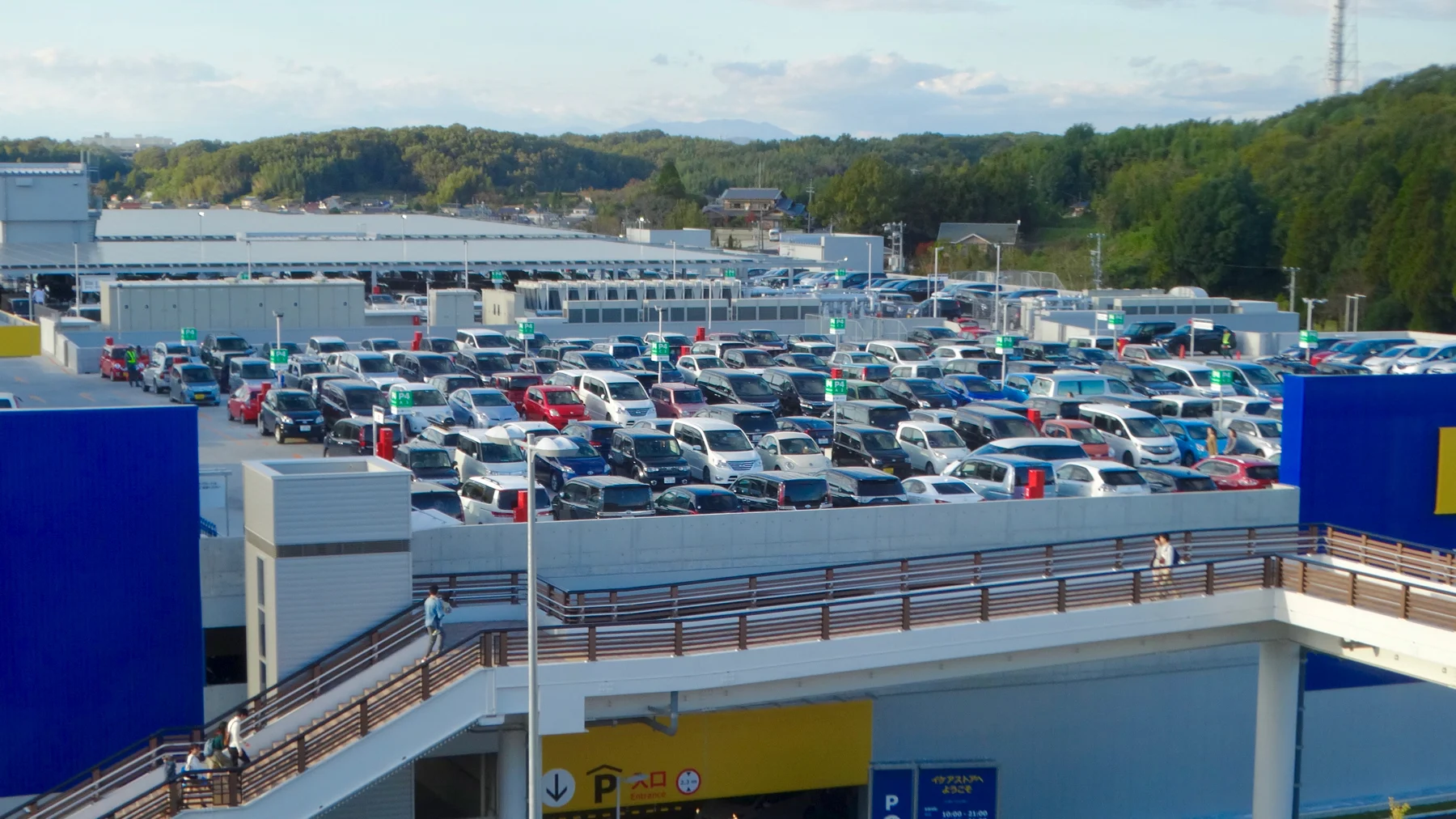
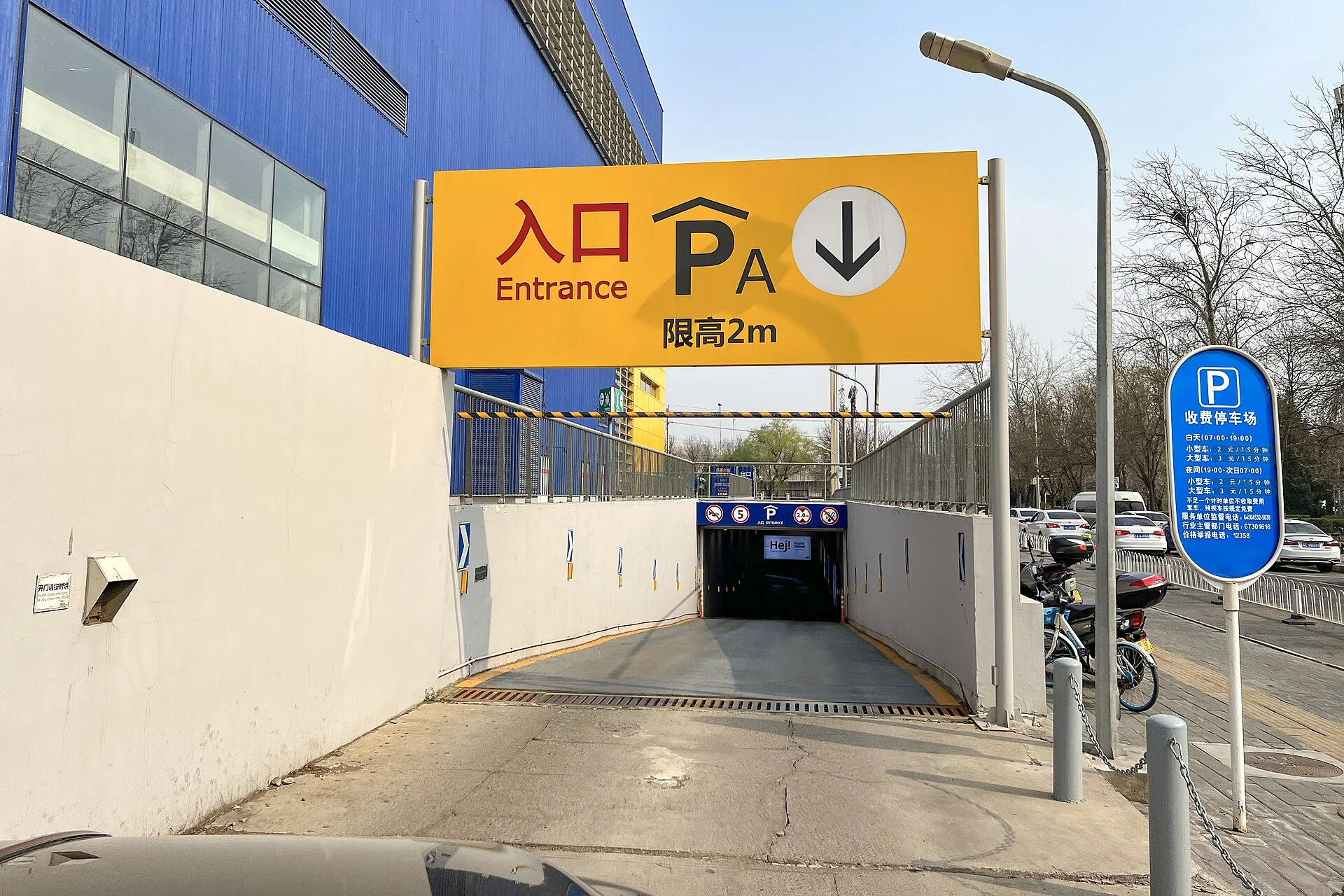
The design of the lots backs up the words. IKEA parking lots open during store hours and close shortly after the store closes, so the space is engineered around shopping visits, not overnight occupancy. The free-parking amenity everyone likes is a shopping-hours perk; 'free parking' means free while you shop, not free to sleep.
What makes this layer decisive is that it removes the most common justification people use - the idea that a big empty lot at night is fair game. IKEA has already answered that in writing. When a company publishes a specific no, that is the design choice that gives away the whole game: they thought about overnight stays and closed the door on purpose.
Layer Two: It Is Private Property
Peel back the policy and you hit the layer that would stop you even without it: an IKEA parking lot is private property. Sleeping there is not governed by any public right - it is governed entirely by the property owner's discretion. That distinction is the one most people miss, because an empty commercial lot feels public in a way it legally is not.
On private property, the owner or its security contractor can ask you to leave at any time, for any reason, and can have a vehicle towed for trespassing after hours. There is no negotiation and no grace period you are entitled to. The lot being empty does not create permission; only the owner granting permission does, and IKEA has done the opposite.
This is why a retail lot is a fundamentally different category from a public street. Sleeping in a parked car is generally legal on public streets where signage allows it, because that is public right-of-way. A retail lot is privately controlled space, and the control does not pause because the store is closed. The property layer alone makes the answer no.
Layer Three: Local Ordinances
The third layer sits above IKEA entirely: the city. Local municipal ordinances can prohibit sleeping in a vehicle or overnight parking on commercial lots, and those rules apply on top of store policy and property rights. So even in some hypothetical where a manager waved you through, a local ordinance could still make the stay illegal.
This layer is the reason a permission you think you have can still fail. Municipal codes vary widely from city to city, and many jurisdictions specifically target overnight vehicle occupancy on commercial and retail property. You cannot know a given city's stance without checking it, and the store cannot override it - a business cannot grant you an exemption from local law.
Stack the three layers and the structure is clear: IKEA says no, the property owner can remove you, and the city may ban it outright. Any one of those is enough. All three together mean there is no configuration of facts where sleeping in an IKEA lot is a reliable, legal plan. The layers reinforce each other rather than offering an escape.
How the No Gets Enforced
A policy is only as real as its enforcement, and IKEA's has teeth. The company warns that in some locations the no-overnight-parking rule is strictly enforced with parking tickets or even the towing of vehicles. That is not a passive sign nobody reads - it is active enforcement that can end your night with a citation or an empty parking spot where your car used to be.
The lots are built to catch you, too. Many IKEA locations are gated, patrolled by security, or monitored by cameras, and some post explicit 'no overnight parking' or tow-away signage. Between the closing-time lockup, the patrols, and the cameras, the odds of sleeping undisturbed in a lot designed to be empty overnight are poor by design.
And the penalties can compound. If you are asked to leave a private lot and refuse, you can be cited for trespassing, which is a separate offense from any parking violation. So a stay that starts as a quiet overnight can escalate into a tow plus a trespassing citation. The enforcement layer turns the policy from a suggestion into a real risk with real costs.
Why One Online Anecdote Is Bad Data
Somewhere online there is always someone claiming they slept at an IKEA once and nothing happened. Treat that the way a tinkerer treats a single lucky test result: as noise, not a specification. Because policy, signage, and enforcement vary by location, any single anecdote of 'I slept at an IKEA' is unreliable for your own store and your own night.
The variation is the whole problem. One store might be unpatrolled on a Tuesday; another tows on sight; a third sits in a city with a strict ordinance. A stranger's outcome at a different location on a different night tells you nothing about the layered risks at yours. Survivorship bias does the rest - the people who got towed rarely post about it.
There is also no system that would make it repeatable. Unlike apps that map Walmart or truck-stop overnight options, there is no nationwide IKEA program or app that grants overnight parking permission. Nothing turns a one-off anecdote into a dependable plan. If you cannot verify permission for your specific store, you do not have permission - you have a gamble.
IKEA vs Walmart and Cracker Barrel
It helps to see why IKEA differs from the chains that gave rise to the whole 'sleep in a store lot' idea. Some Walmart stores have historically permitted overnight RV and car parking, though it is decided store-by-store and many Walmarts now prohibit it because of local rules. The key word is permitted - a specific, granted tolerance, not a default.
Cracker Barrel is the other traditional example, a chain that has long welcomed overnight RV parking in designated areas. That is the opposite of IKEA's approach: a courtesy extended on purpose, in marked spaces, as part of the business model. IKEA, by contrast, publishes a blanket no-overnight policy for every store.
The lesson is not that store lots are fine in general - it is that permission has to be specific and granted. Even where a retailer tolerates overnight parking, that tolerance is a courtesy that can be revoked, not a legal right. IKEA simply never extends the courtesy in the first place, which is why the Walmart and Cracker Barrel model does not transfer to it at all.
The Legal Alternatives That Actually Work
The good news is that the layered no at IKEA points you straight at the options that are built for an overnight stay. The safest legal alternatives are truck stops, rest areas that allow overnight stays, designated campgrounds, and dispersed camping on public land. Each of these is either purpose-built for sleeping or explicitly permitted, which is exactly what an IKEA lot is not.
Truck stops and overnight-friendly rest areas are the closest analog to what people want from a retail lot - a paved, well-lit place to stop for the night near the highway - without the private-property and policy problems. Designated campgrounds add facilities for a fee, and public-land dispersed camping offers free, legal overnight stays where sleeping in your vehicle is genuinely permitted.
If discretion matters at any of these, a set of privacy window covers keeps the cabin private and dark without drawing attention, which is a courtesy at a rest area and a comfort at a campground. The point is to spend the night somewhere that says yes. Pick a venue designed for it, and you trade the IKEA gamble for a stay nobody can revoke.
If You Genuinely Need to Stop Near an IKEA
Suppose the IKEA is simply where you are when exhaustion hits. The only path to any permission runs through a person, not an empty lot. Because IKEA is a store-and-locality-dependent chain, the only reliable way to know a specific store's stance is to call and ask the store manager directly during business hours - and understand the answer will very likely still be no.
That call is worth making only because it is the one legitimate route. A manager cannot override the written policy, the property rules, or a local ordinance, so even a sympathetic one may have no authority to say yes. But asking is the difference between a courtesy request and a trespass; showing up and hoping is not a plan, it is the setup for a tow.
The realistic move is to use the IKEA as a landmark, not a destination. Ask the manager if you like, then head to the nearest truck stop, overnight-friendly rest area, or campground - the venues that can actually grant what an IKEA lot cannot. A few extra miles to a place that says yes beats a citation at a place that already said no.
The Verdict: Take the No Seriously
Take the whole question apart and every layer says the same thing: you cannot reliably or legally sleep in your car at an IKEA parking lot. IKEA's written policy bans overnight parking at every store, the lot is private property where the owner can tow or remove you, and local ordinances may prohibit vehicle sleeping on commercial lots outright. Any one layer is enough; all three make it a settled no.
Enforcement makes the no real rather than theoretical - tickets, towing, cameras, patrols, and the risk of a separate trespassing citation if you refuse to leave. And there is no app or program that turns a lucky anecdote into a dependable plan, so a stranger's 'I slept there once' is worthless for your night. The core principle holds: private-lot overnight sleeping needs owner permission plus local compliance, and IKEA's owner-level answer is no.
The productive response is to spend the night where sleeping is welcome. Truck stops, overnight-friendly rest areas, designated campgrounds, and public-land dispersed sites are the legal, revocation-proof alternatives, and privacy covers make any of them comfortable. Use IKEA for the flat-pack furniture, and sleep somewhere that was actually built to let you.