The honest verdict: two good budget fridges, different strengths
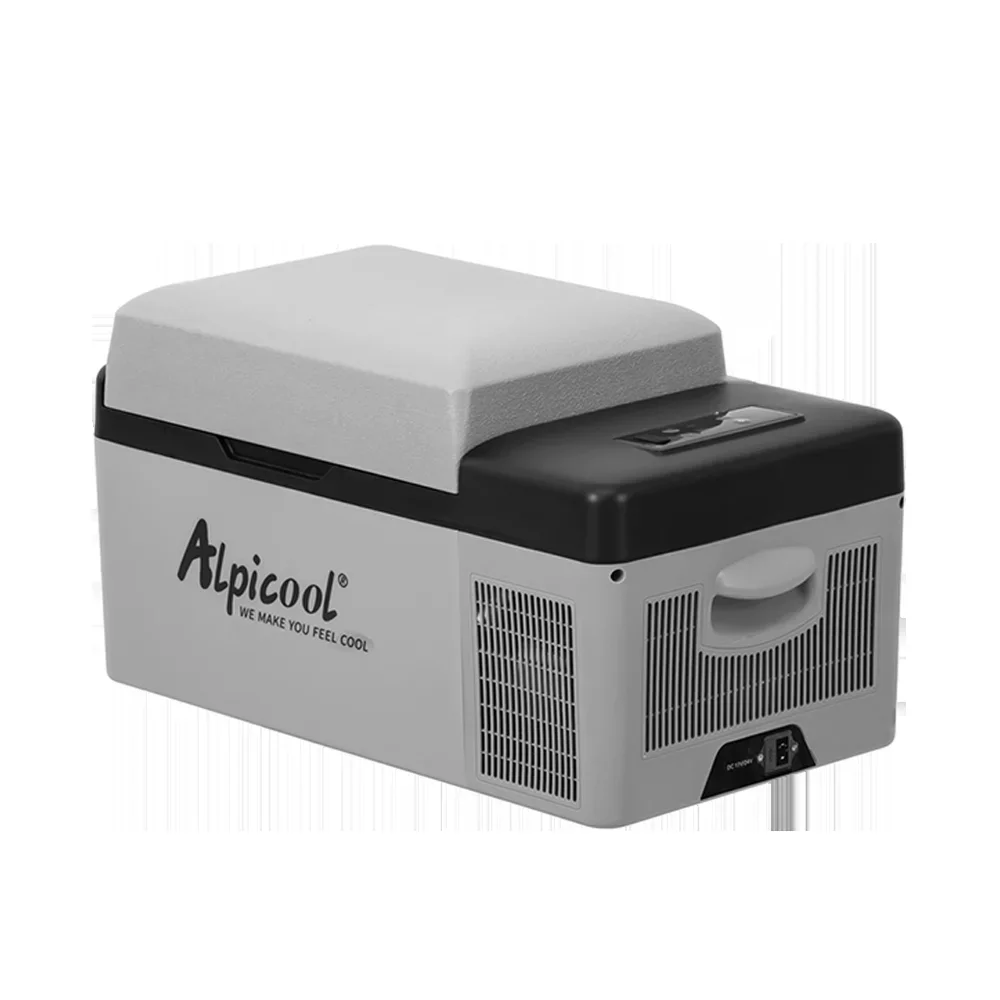
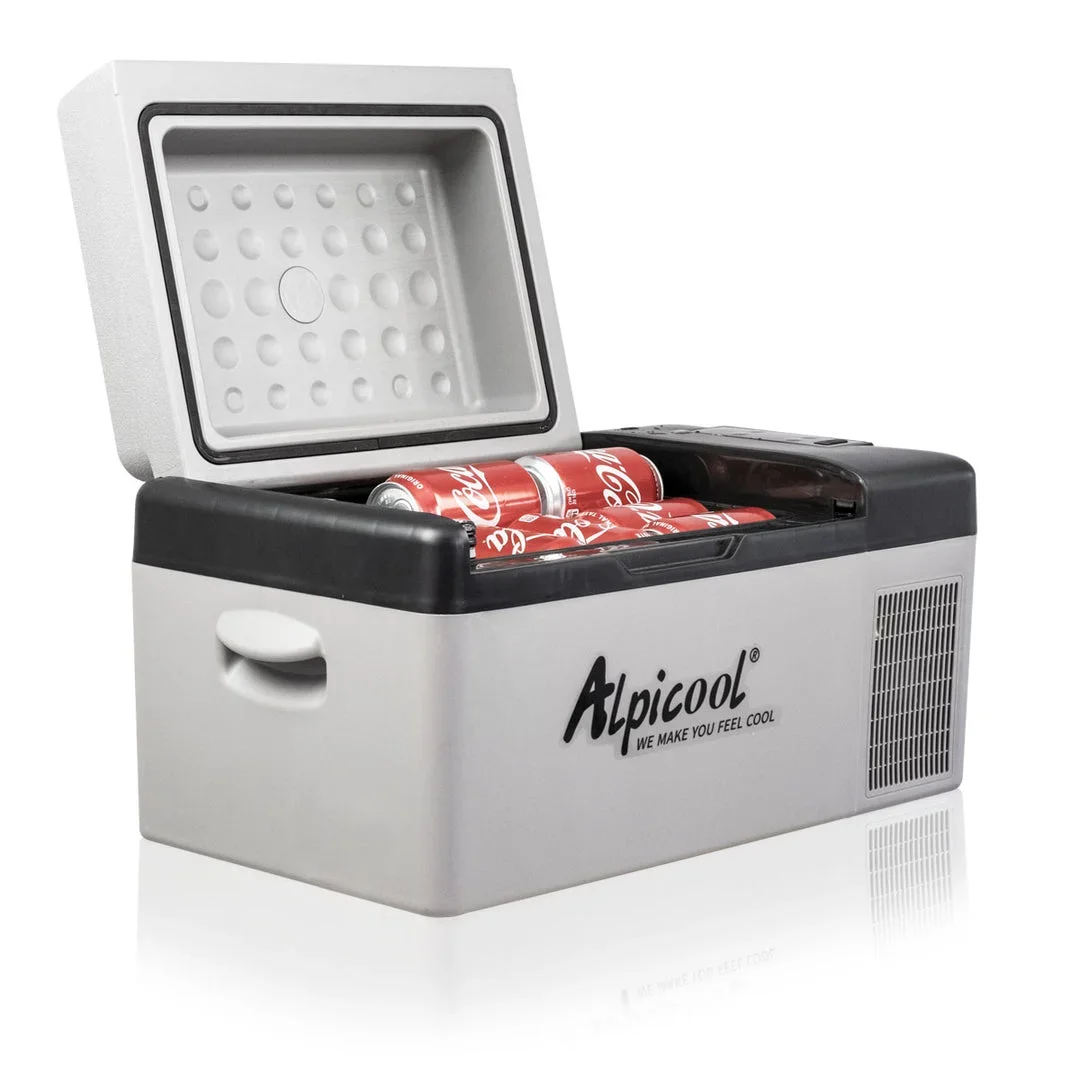
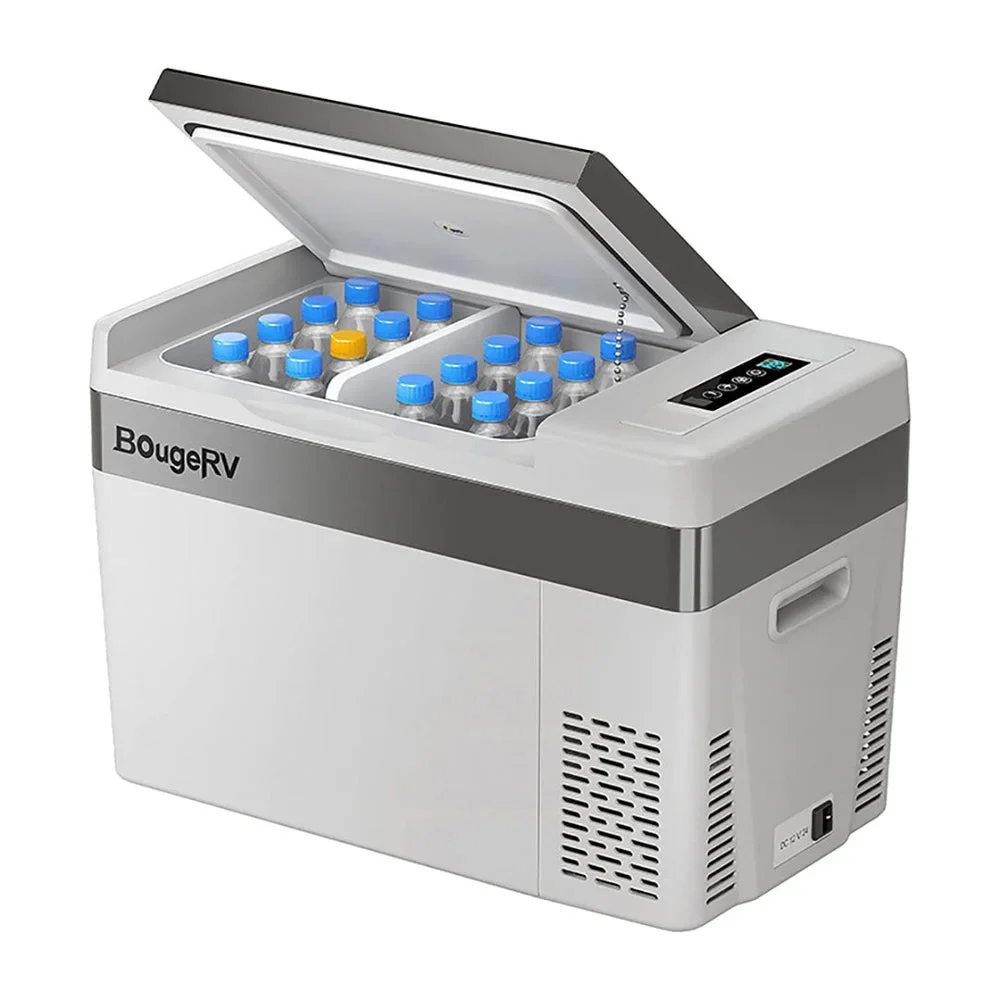
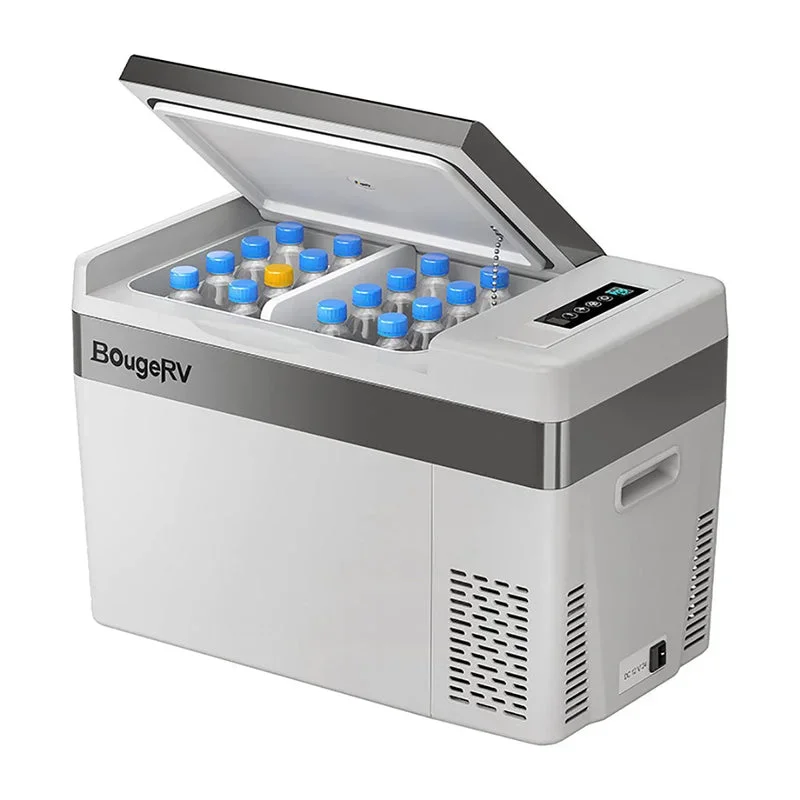
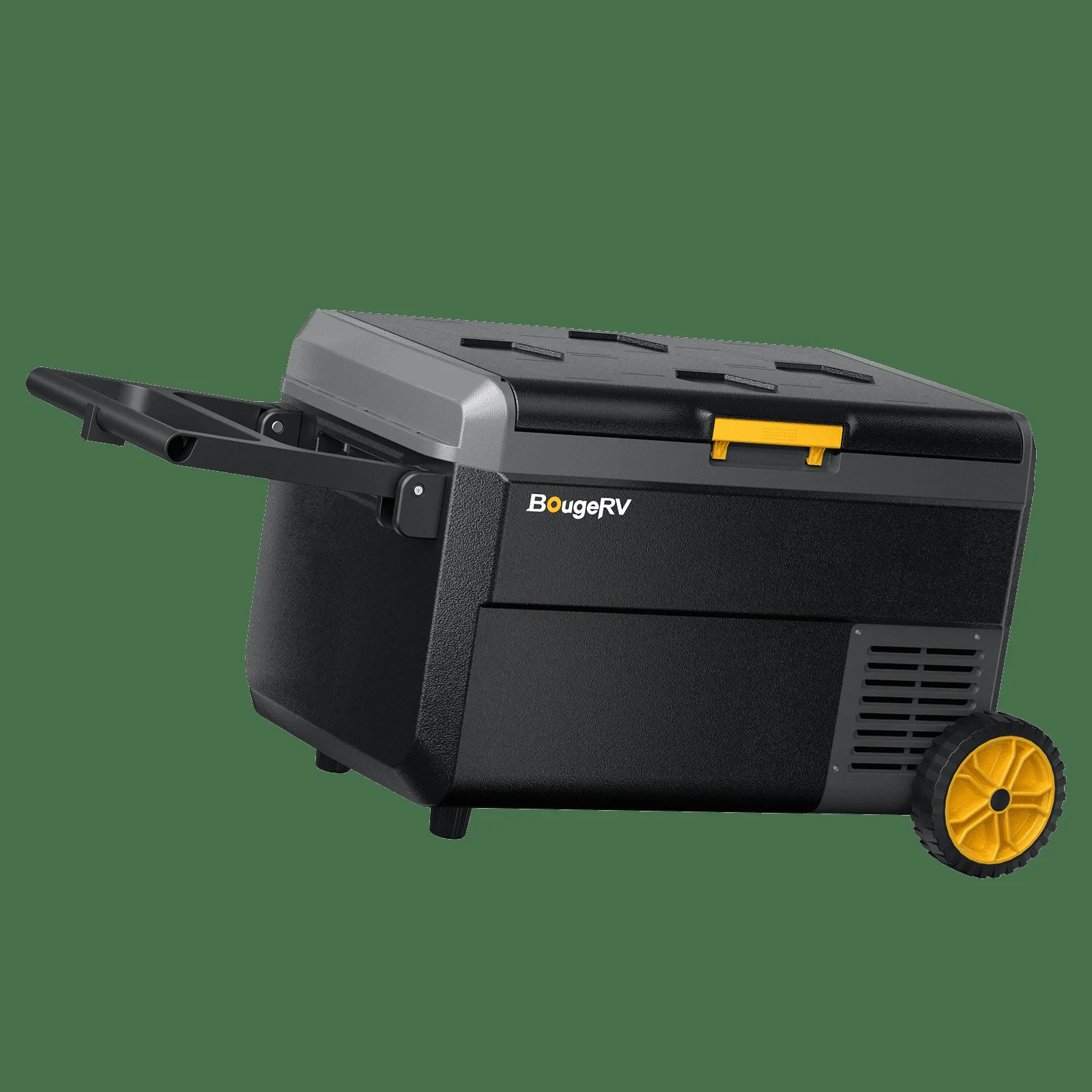
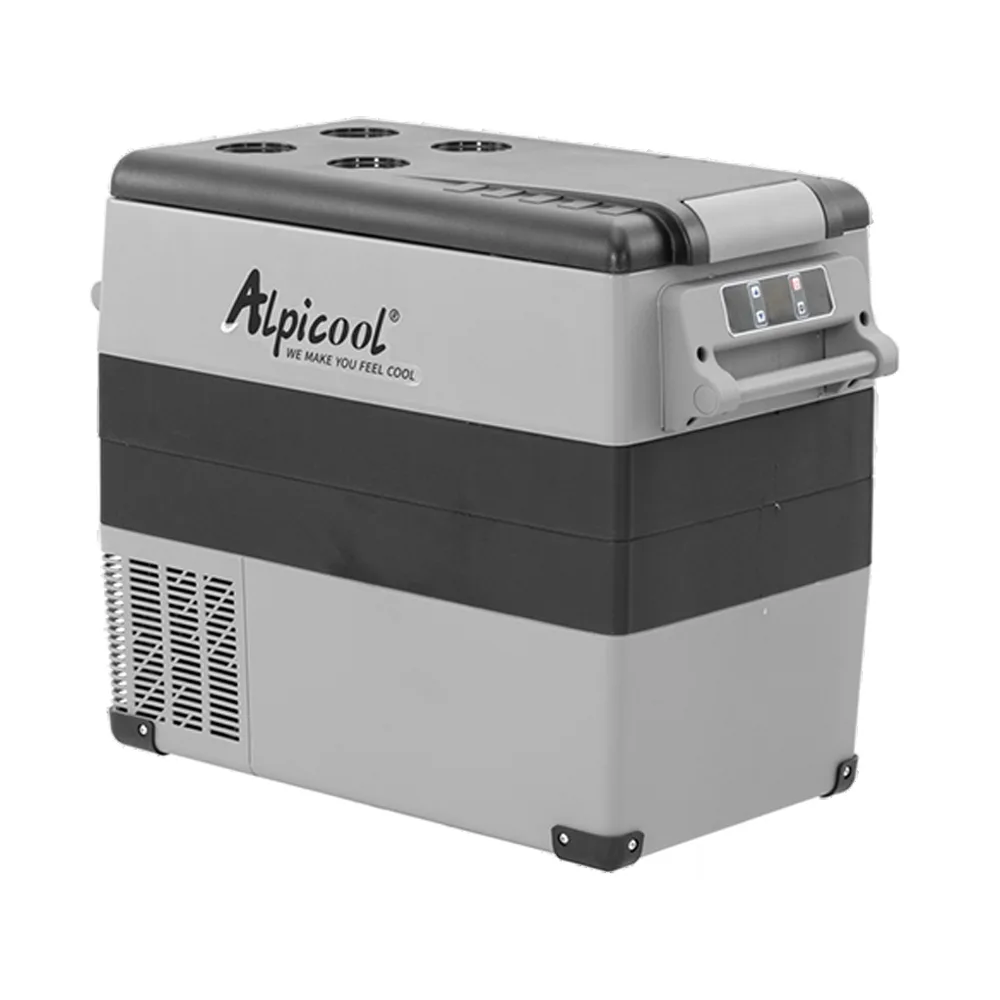
BougeRV and Alpicool live in the same corner of the market - affordable 12V compressor fridges that cost a fraction of a Dometic or an Iceco - so this is a value-versus-value fight, not a budget-versus-premium one. The BougeRV 30-quart chills to -8F, runs on 12/24V DC and 110-240V AC, and draws well under a kilowatt-hour a day in its ECO mode, per BougeRV. The Alpicool C20 is a compact 20-liter unit on an LG compressor with three-stage battery protection at around 45 watts, per Alpicool. Both are honest, capable coolers for the money.
Since I camp most weekends and hate overpaying, I treat this as a straight value question: which cheap fridge gives you more of what car camping actually needs. My short answer is that the BougeRV leans toward colder temperatures and road-trip capacity, while the Alpicool leans toward the widest choice of sizes, the simplest controls, and the lowest price. Neither is clearly better; they are aimed at slightly different campers.
Below I take size, cooling, power draw, battery protection, build, and the real-world quirks one at a time. A note up front: the units I show are a 30-quart BougeRV and a 20-liter Alpicool, so some of the gap is size, not brand - both companies sell other capacities, and I flag where the difference is really about the size you pick rather than the badge on the lid.
Size and capacity: how much food fits
Capacity is the first thing to match to your trips, and here the example units differ by design. The BougeRV 30-quart holds roughly 28 liters, enough for a couple's groceries plus some frozen items on a road trip, per BougeRV. The Alpicool C20 is a 20-liter box - great for drinks, a solo weekend, or a supplement to a cooler, per Alpicool. That is a real capacity gap, but it is a size choice more than a brand one.
Buy the size, not just the brand. Both BougeRV and Alpicool sell smaller and larger models, so pick the capacity that matches your party and trip length first, then compare features.
How to size a budget 12V fridge for car camping:
- Solo or a long weekend (18-25 qt): the Alpicool C20 class fits behind a seat and sips power.
- Couple or a road trip (28-35 qt): the BougeRV 30-quart class holds real groceries without a mid-trip resupply.
- Family or base camp (40 qt+): both brands go bigger, at the cost of weight and cargo space.
The mistake is buying oversized: a bigger fridge weighs more, eats sleeping room, and draws more power to cool more air. Our best portable fridges for car camping guide has a sizing chart across both brands.
One more sizing reality for a budget build: capacity you do not use still costs you every day in weight, cargo space, and power draw, because a bigger box has more air to keep cold. A right-sized fridge is cheaper to run and easier to pack, which matters more on a tight budget than a few extra quarts you rarely fill. Start from your typical trip - how many people, how many nights, how much you resupply - and buy the smallest fridge that covers it comfortably, whether that lands you on the compact Alpicool or the roomier BougeRV.
Which one gets colder in the heat?
Both are true compressor fridges, so both cool well below what a thermoelectric cooler can manage, but the BougeRV reaches a colder floor. The BougeRV 30-quart is rated down to -8F, cold enough to run as a real freezer, while the Alpicool C20 is rated to about -4F, per BougeRV and Alpicool. Both pull down fast from a warm start; the BougeRV's colder ceiling is the meaningful difference for anyone who wants to keep meat or ice cream genuinely frozen.
What the cooling gap means in practice:
- Fridge use (35-40F): both hold refrigerator temperatures easily, so for drinks and leftovers they are equal.
- Freezer use: the BougeRV's -8F floor freezes harder and holds frozen food more confidently in the heat.
- Hot climates: a colder floor gives more margin when a baking car makes the compressor work overtime.
If you only ever run a fridge as a fridge, this round is a tie. If you want a dependable freezer for longer trips, the BougeRV's extra cold is a genuine edge - and it feeds directly into the quirk I cover a few sections down.
It is worth understanding why a colder floor matters beyond bragging rights. In a hot car, a fridge fights a bigger temperature gap, so a unit that can pull down to -8F has more thermal headroom to keep the important food frozen even when the cabin bakes. The Alpicool's -4F is still real freezing, plenty for ice and most frozen items, but the BougeRV holds a firmer margin on a summer road trip. For pure refrigerator duty, again, the two are equals - this edge only shows up when you ask the fridge to also be a freezer, and it is the clearest reason to pay attention to the BougeRV.
Power draw: what each pulls from your battery
A budget fridge still has to sip power politely, and both do. The BougeRV 30-quart draws roughly 45 watts in ECO and up to about 60 watts at maximum, and BougeRV rates its daily use at far less than one kilowatt-hour. The Alpicool C20 draws around 45 watts while running, per Alpicool, and being smaller it has less air to cool, so its compact load is easy on a battery. Both cycle on perhaps a third to half of the time depending on heat and lid openings.
Translated into planning numbers, a compact budget fridge like these lands somewhere around 20 to 40 amp-hours a day in mild conditions, more in heat. Against a 100-amp-hour LiFePO4 battery that is several days of running; against a typical 50-to-60-amp-hour starter battery it is only part of a night before you risk not being able to start the engine. Our guide to a 12V fridge's power consumption on a road trip lays out the real draw figures.
The practical rule is the same for both brands: never trust either one overnight on a bare starting battery. Match its daily draw to a power station or a dedicated auxiliary battery and the fridge becomes a set-and-forget appliance instead of a gamble on whether the car starts in the morning.
The good news for a budget shopper is that neither of these fridges is a power hog - they pull about the same as a premium unit of similar size, because a compressor is a compressor. You are not paying a power penalty for buying cheap. What you buy with a power station or an auxiliary battery is peace of mind: a bank sized to a few days of the fridge's draw means you never think about voltage again, and you can top it up from the wall, the alternator, or a solar panel. Get the power side right once and both brands behave identically well.
Battery protection and controls
The feature that keeps a budget fridge from stranding you is the low-voltage cutoff, and here the Alpicool has a small edge. The Alpicool C20 includes three-stage battery protection - low, medium, and high cutoff settings that shut the compressor off before it drains your battery past a safe voltage, per Alpicool. The BougeRV includes low-voltage protection as well, per BougeRV, though the multi-stage granularity is the Alpicool's calling card.
On everyday controls the two are similar and simple: a digital display, setpoint buttons, and ECO and MAX modes to trade cooling speed for power draw. The BougeRV accepts the wider 110-240V AC range for international use, while the Alpicool sticks to 110V AC alongside its 12/24V DC. Neither has a control that would stop you buying it.
The important thing is to actually use the cutoff. On both fridges, set the low-voltage protection to match your battery type - a higher cutoff for a starter battery you must protect, a lower one for a deep-cycle bank you can safely draw down. That single setting is what keeps a cheap fridge from turning into an expensive no-start, regardless of which brand you choose.
The Alpicool's three-stage cutoff earns a slight nod here mainly because it gives you more granular control over exactly when the compressor backs off, which is handy if you are running off the vehicle's own battery some of the time. The BougeRV's protection does the core job of stopping a deep discharge, so this is a small edge, not a dealbreaker. Either way, the feature only helps if you switch it on and match it to your battery, so make that part of your first-night setup.
Build and portability
At this price both are plastic-bodied units, and both are honest about it. The BougeRV 30-quart is a lightweight case with side handles and a compressor tucked at one end; the Alpicool C20 is smaller and lighter still, easy to lift in and out of a car every day. Neither wears the steel armor of a premium overlanding fridge, and neither needs to for pavement and campground use.
What that means for how you carry and place them:
- Daily lift-in, lift-out: the smaller Alpicool is the friendlier one to move around a lot.
- Ventilation: both need an air gap around the compressor vents to run efficiently - do not box either into a sealed cavity.
- Rough roads: both survive normal travel; for hard washboard and heavy stacking, a steel premium fridge is the better tool.
For the camping most people actually do - drive to a site, cook, sleep, repeat - the budget build of either is entirely adequate, and the money you save over a premium unit buys a lot of other gear.
Ventilation deserves one more word because it is the most common way people hobble a budget fridge. Both the BougeRV and the Alpicool vent heat from the compressor end, and if you wedge that end against a wall or bury the fridge under a pile of gear, it runs longer, draws more power, and struggles in the heat. Leave a few inches of clear air around the vented side of either unit and you get the rated performance you paid for; skip that and you will wrongly blame the fridge for a problem your packing created.
The BougeRV quirk worth knowing
Every budget fridge has a personality, and the BougeRV's is worth flagging honestly before you buy. Owners on Expedition Portal report a roughly 10-degree swing between the setpoint and the bottom of the compressor's cycle, which means food set near a 39F fridge target can dip close to freezing at the coldest point of a cycle. BougeRV's support notes this as normal behavior for the unit, not a fault.
How to live with it, because it is manageable:
- Set a slightly warmer target: nudging the setpoint up a few degrees keeps the cycle bottom above freezing for delicate items.
- Place freeze-sensitive food away from the cold wall: keep lettuce and eggs toward the top, not against the evaporator.
- Use the cold to your advantage: if you want a freezer, that same swing and -8F floor make the BougeRV a capable one.
The Alpicool's smaller box tends to hold a slightly steadier fridge temperature for delicate produce, which is a modest point in its favor for pure refrigerator duty. Knowing the BougeRV's swing up front turns a surprise into a setting you adjust once.
Which budget camper each one suits
Stepping back, the two sort cleanly by what you want from a cheap fridge. The BougeRV is the pick for colder temperatures and road-trip capacity: its -8F floor and 30-quart size make it a strong dual-purpose fridge-freezer, and it accepts the wider AC range. You accept the cycle swing and a plastic body, but you get real freezing power for the money.
The Alpicool is the pick for the widest choice, the simplest ownership, and the lowest price. Its enormous lineup means you can match a size exactly, its three-stage battery protection is reassuring, and its compact models are the easiest to live with day to day. You give up the BougeRV's coldest floor and some capacity in the C20, but you gain simplicity and value. For a cross-tier look at where budget meets premium, our Alpicool CF45 vs Dometic CFX3 45 comparison shows what stepping up buys.
Either way, both brands deliver honest cold for far less than a premium fridge, which is the whole reason to shop this tier in the first place. The premium units win on compressor pedigree, insulation, and steel durability, but for a weekend camper on pavement and gentle forest roads, a BougeRV or an Alpicool covers the actual job at a price that leaves room in the budget for the rest of your kit - which, for most of us, is exactly the right trade.
Which to buy: match the cheap fridge to your camping
Both BougeRV and Alpicool make good budget 12V fridges that will keep your food cold for a fraction of premium prices. The decision is about which strengths you want, not which brand is better.
Buy the BougeRV 30-quart if you want harder freezing (down to -8F) and road-trip capacity, and you can work around its cycle swing. Buy the Alpicool C20 for the widest size range, three-stage battery protection, and the lowest price.
My default for a weekend car camper who mostly needs a fridge is the Alpicool - the value and simplicity are hard to beat and the size range lets you buy exactly what you need. Lean BougeRV if freezing power and road-trip capacity top your list. Whichever you pick, size it to your party, set the low-voltage cutoff, and pair it with a proper battery or power station; our best 12V car fridges for road-trip camping guide ranks both against the wider budget field.