What 'Airline Approved' Actually Means for a Soft Carrier
The phrase 'airline approved' is printed on nearly every soft pet carrier sold, and it is worth being honest about what it does and does not promise. There is no single federal certification a carrier passes; what matters is whether the bag fits the under-seat space of the specific airline and aircraft you are flying, with your pet able to stand up and turn around inside it. A soft-sided carrier earns the label mainly because its flexible walls can compress into a tighter gap than a rigid crate.
Every major U.S. carrier publishes its own maximum in-cabin carrier dimensions, and they differ. A bag that slides under a seat on one airline can be turned away at the gate on another, or even on a different aircraft within the same airline. That is why the single most useful habit is to read your airline's pet policy and under-seat dimensions before you buy a carrier, then pick a bag that fits with margin to spare.
The carriers below, including the Sherpa, are all soft-sided in-cabin models chosen because their published dimensions land within the range most U.S. airlines allow. Treat that as a starting point, not a guarantee. For a breakdown of which airlines are easiest to fly a pet on and what each one charges and requires, see our companion guide to the best airlines for traveling with pets.
Under-Seat Dimensions: The Number That Decides Everything
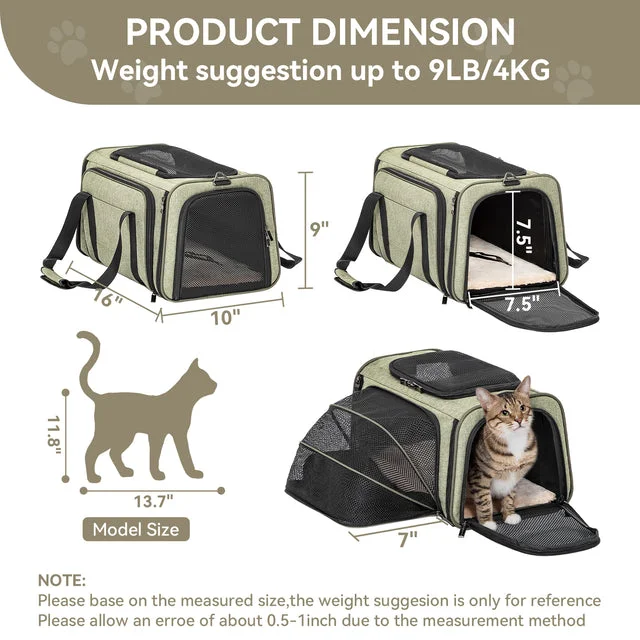
The under-seat space is the hard constraint, and it is smaller and less consistent than most first-time pet flyers expect. The opening is shaped by the seat in front of you and the entertainment box or structural bar bolted beneath it, so the usable height in particular can be far less than the carrier's listed dimensions suggest.
- Length and width usually have the most give, because the floor space under a seat is wider than it is tall.
- Height is the usual deal-breaker. Many airlines cap soft-carrier height around 7.5 to 11 inches for in-cabin pets, and a tall rigid-framed bag simply will not slide in.
- Soft walls win here. A flexible carrier can squish slightly to clear a low under-seat box, which a hard crate cannot.
Rule of thumb: measure the airline's stated under-seat maximum, subtract an inch in each dimension for real-world obstructions, and buy a carrier that fits inside that smaller box.
Will Your Pet Actually Fit? Sizing the Carrier to the Animal
The carrier has to satisfy two masters at once: the airline's under-seat limit and your pet's need to stand up, turn around, and lie down. Those two pull in opposite directions, which is why in-cabin travel is realistic only for cats and small dogs, generally under about 15 to 20 pounds depending on the airline.
Measure your pet before you measure the carrier. Stand the animal up and note its height from the floor to the top of the head or ear tips, and its length from nose to the base of the tail. The carrier's interior height should clear the pet's standing height, and its interior length should let the pet turn around. A cat that is comfortable in an 11-inch-tall interior will be cramped in a low-profile bag built to clear a tight under-seat box, so there is a genuine trade-off between airline fit and pet comfort.
Weight ratings matter too. The Henkelion and several others are rated to roughly 15 pounds, while the Diggs Passenger is built for pets up to 18. Those are structural limits for the floor and seams, not comfort recommendations, so a pet near the top of the range will be a tight fit even if the bag technically holds the weight. Buy for the animal you have, with room to stand, not the smallest bag that will pass the gate.
Ventilation: Why Mesh on More Sides Is Better
An enclosed carrier under an airplane seat can get warm and stuffy quickly, especially during boarding and on the tarmac before the cabin air is flowing. Ventilation is therefore a safety feature, not a luxury, and the amount and placement of mesh is one of the clearest ways the better carriers separate themselves.
- Mesh on multiple sides — top, ends, and at least one long side — keeps air moving even when one panel is pressed against the seat leg or your bag. The Henkelion advertises ventilation on four or five sides for this reason, and the Amazon Basics pairs its mesh panels with a top zip you can reach through without opening the front.
- A mesh top lets you reach in to soothe your pet and lets warm air rise out rather than pooling.
- Avoid sealing the carrier with a cover or stuffing it into a tight bin where airflow stops. Your pet relies on that mesh.
The American Veterinary Medical Association advises acclimating a pet to its carrier well before travel and never leaving an animal in a hot, unventilated space. In the cabin, that means choosing a well-ventilated bag, keeping the mesh sides clear, and watching your pet for signs of overheating or stress through the trip.
Soft vs Structured, and the Features That Earn Their Keep
Among soft carriers there is still a spectrum from floppy totes to semi-rigid crash-tested bags, and the right point on it depends on how you travel.
- Lightweight soft totes (Amazon Basics, Henkelion) are the easiest to wedge under a seat and the cheapest, trading some structure and crash protection for packability and price.
- Spring-frame and expandable carriers (Sherpa, Petsfit) hold their shape better and the expandable models give the pet more room once you are seated, then collapse for the under-seat phase.
Beyond structure, the features that genuinely matter are escape-proof self-locking zippers, a waterproof or wipeable base for accidents, a removable washable liner, and a safety tether inside so the pet cannot bolt when you open the bag at security. Padded shoulder straps and luggage pass-through sleeves are comfort niceties; the locking zippers and the tether are the ones that prevent a lost or injured animal.
Getting Through Security and Onto the Plane
The carrier is only half the trip; how you use it at the airport is the other half. The Transportation Security Administration requires you to take your pet out of its carrier at the checkpoint so the empty bag can go through the X-ray, while you carry or walk the pet through the metal detector. A carrier with a secure top opening and an interior tether makes that moment far less fraught.
A few habits make the day go smoothly:
- Get your pet comfortable in the carrier for weeks beforehand, with treats and short practice outings, so the airport is not its first time inside.
- Attach the leash before you open the carrier at security, and keep one hand on the pet the entire time the bag is on the belt.
- Slide the carrier fully under the seat in front of you for taxi, takeoff, and landing, as the U.S. Department of Transportation rules require, and keep it there unless a flight attendant says otherwise.
Book the pet onto your reservation in advance, because airlines cap the number of in-cabin animals per flight and per cabin. Showing up with a perfect carrier and no reservation slot is a common and avoidable way to be turned away.
Our Picks: Real Airline-Approved Soft Carriers to Compare
Every option below is a real, currently-listed carrier chosen because its published dimensions fall within the range most U.S. airlines allow for in-cabin pets. We have not flown each one ourselves on a test bench; the honest way to choose is to match the specs that decide whether the bag fits your airline and your pet — external dimensions, weight rating, ventilation, and zipper security:
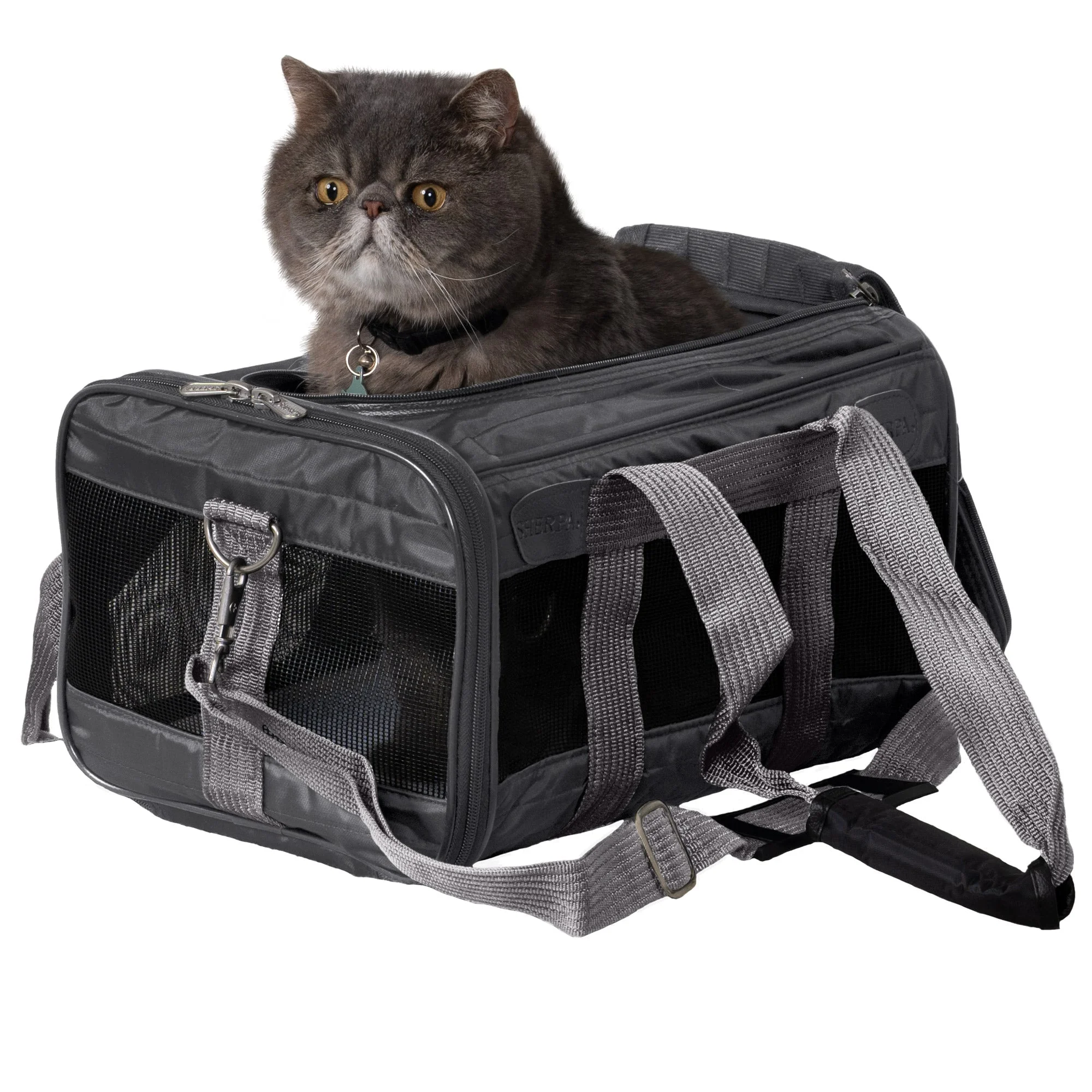
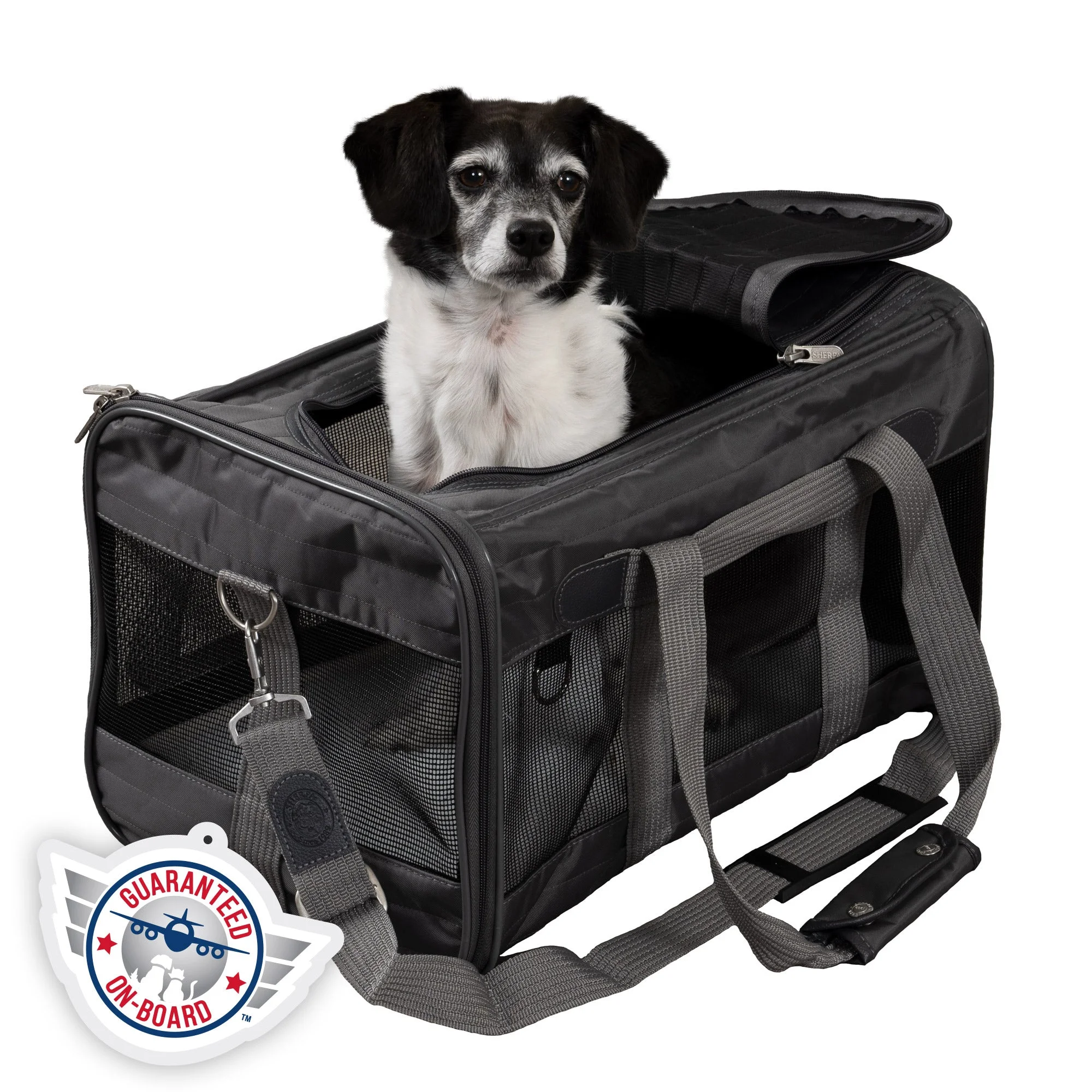
- Sherpa Original Deluxe Travel Pet Carrier (~$45, check current) — the long-standing in-cabin standard, with a patented spring-wire frame whose rear end pushes down several inches to slide under a seat; its Guaranteed On Board program is the brand's promise that the size you buy meets most major U.S. airline cabin rules. As a live Amazon listing you can confirm the exact external dimensions and weight rating against your own airline and pet before you buy.
- Petsfit Expandable Pet Carrier (17 x 11 x 11) (~$40, check current) — an expandable soft carrier (roughly 17 x 11 x 11 inches collapsed) that zips open a side mesh panel to give a cat or small dog more room once you are settled, then folds back flat to fit the under-seat space for takeoff. As a live Amazon listing you can confirm the exact external dimensions and weight rating against your own airline and pet before you buy.
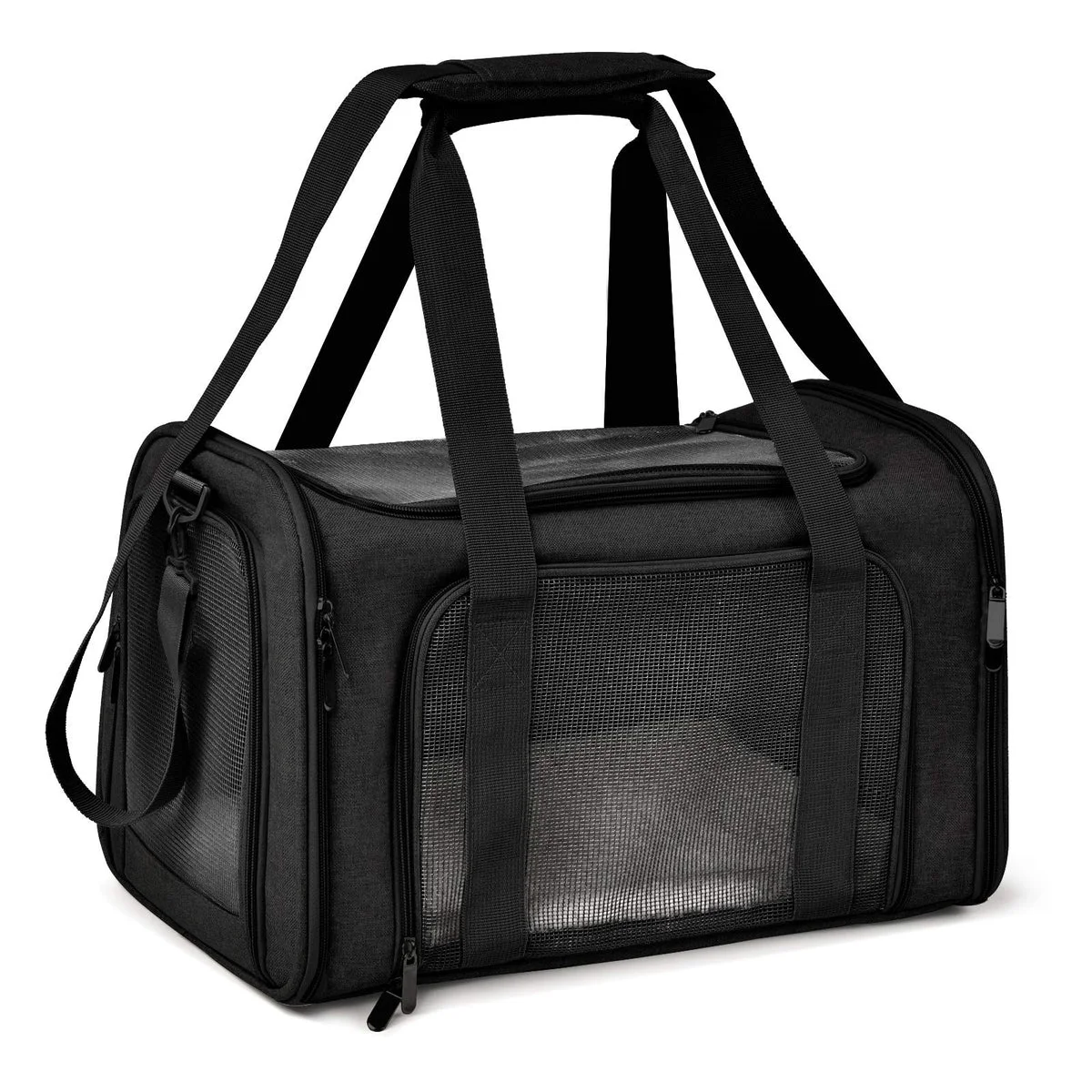
- Henkelion Soft-Sided Cat & Dog Carrier (up to 15 lb) (~$25, check current) — a budget-friendly, collapsible soft carrier rated for pets up to about 15 pounds, with mesh on five sides for airflow and a structure light enough to fold flat for storage between trips. As a live Amazon listing you can confirm the exact external dimensions and weight rating against your own airline and pet before you buy.
- As a live Amazon listing you can confirm the exact external dimensions and weight rating against your own airline and pet before you buy.
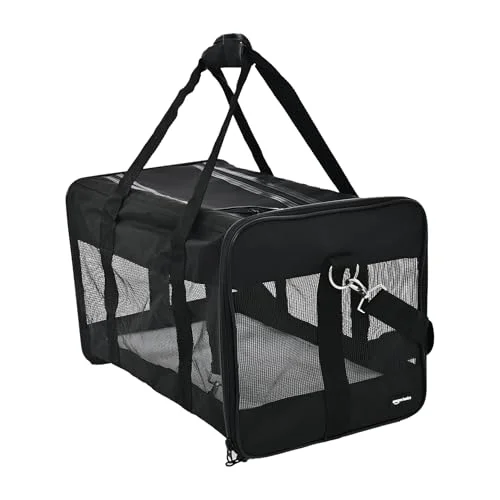
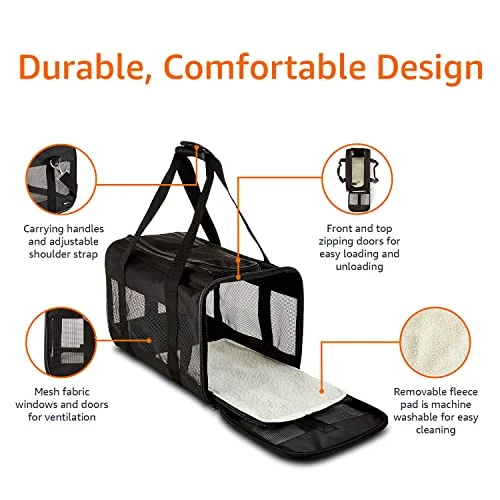
- Amazon Basics Airline Approved Soft-Sided Pet Carrier (~$31, check current) — 20 x 12 x 12 in and 2.9 lb empty, rated for a pet up to 22 lb, with mesh ventilation panels, front and top zip openings, a removable machine-washable fleece pad and an adjustable shoulder strap; Amazon lists it as conforming to the under-seat dimensions of most airlines, and the soft sides give at the corners to wedge into a tight gap. As a live Amazon listing you can confirm the exact external dimensions and weight rating against your own airline and pet before you buy.
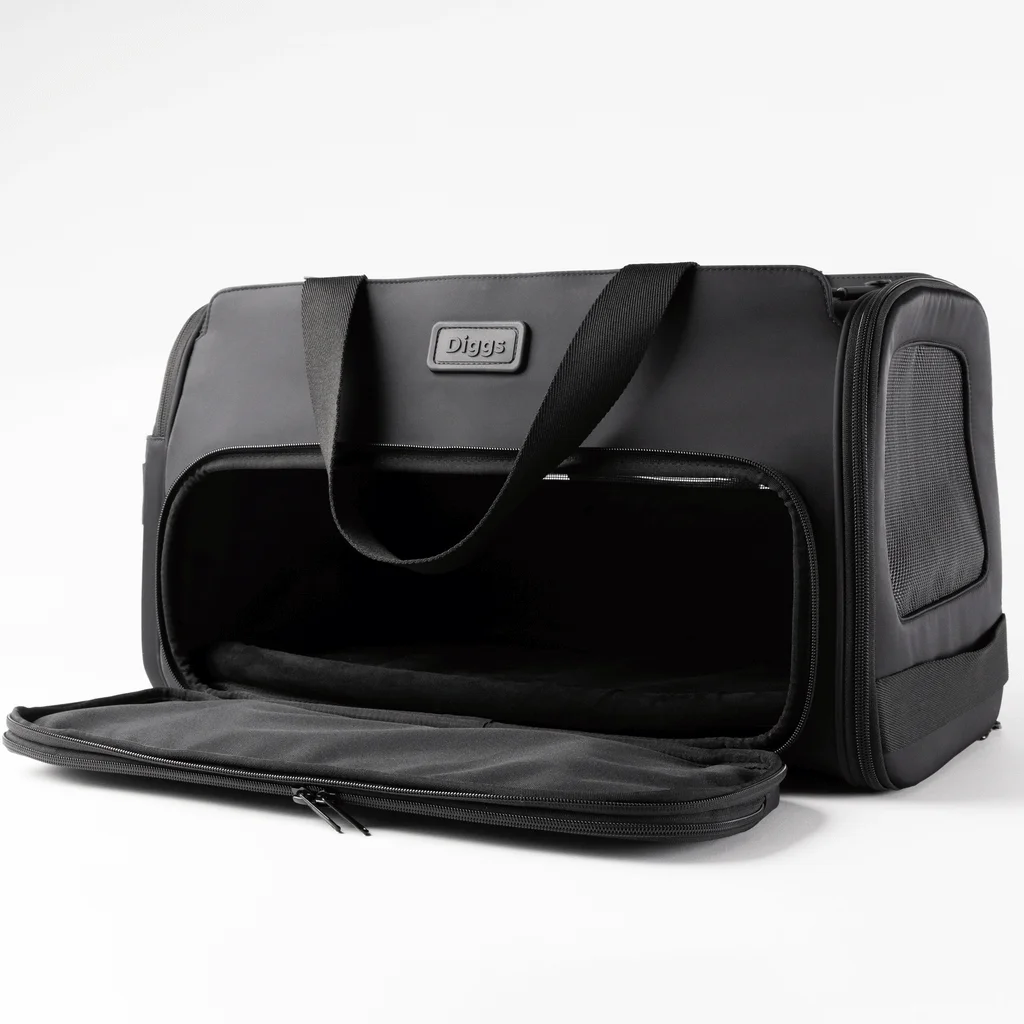
- Diggs Passenger Travel Carrier (up to 18 lb) (~$185, check current) — a five-star crash-rated carrier for pets up to 18 pounds with a clever swap-in waste-pad system and seat-belt clips; at 20 x 10.8 x 11.5 inches external it is one of the roomier options, so confirm your airline's under-seat dimensions before you fly with it. As a live Amazon listing you can confirm the exact external dimensions and weight rating against your own airline and pet before you buy.
Before You Fly: The Honest Bottom Line
A good in-cabin carrier comes down to three things in order: it fits your airline's under-seat space, your pet can stand and turn inside it, and it ventilates well and locks securely. Get those right and the brand on the bag matters far less than the marketing suggests.
- Read your specific airline's pet policy and under-seat dimensions, and reserve your pet's in-cabin spot before you buy anything.
- Measure your pet standing, and choose a carrier whose interior clears its height while the exterior still fits the airline limit with margin.
- Acclimate the pet to the carrier for weeks, and practice the take-it-out-at-security routine at home.