Why a $30 Tray Saves You a $150 Detailing Bill
I won't pay shop rates for anything I can sort myself, and that includes the back seat after a road trip with a toddler. The first long drive with my kid taught me the real cost of skipping a travel tray: a juice box on its side, a fistful of crackers ground into the upholstery, and a crayon that melted into the seat fabric somewhere around hour three. The detailing quote to undo it was $150. The tray that would have prevented it was $30.
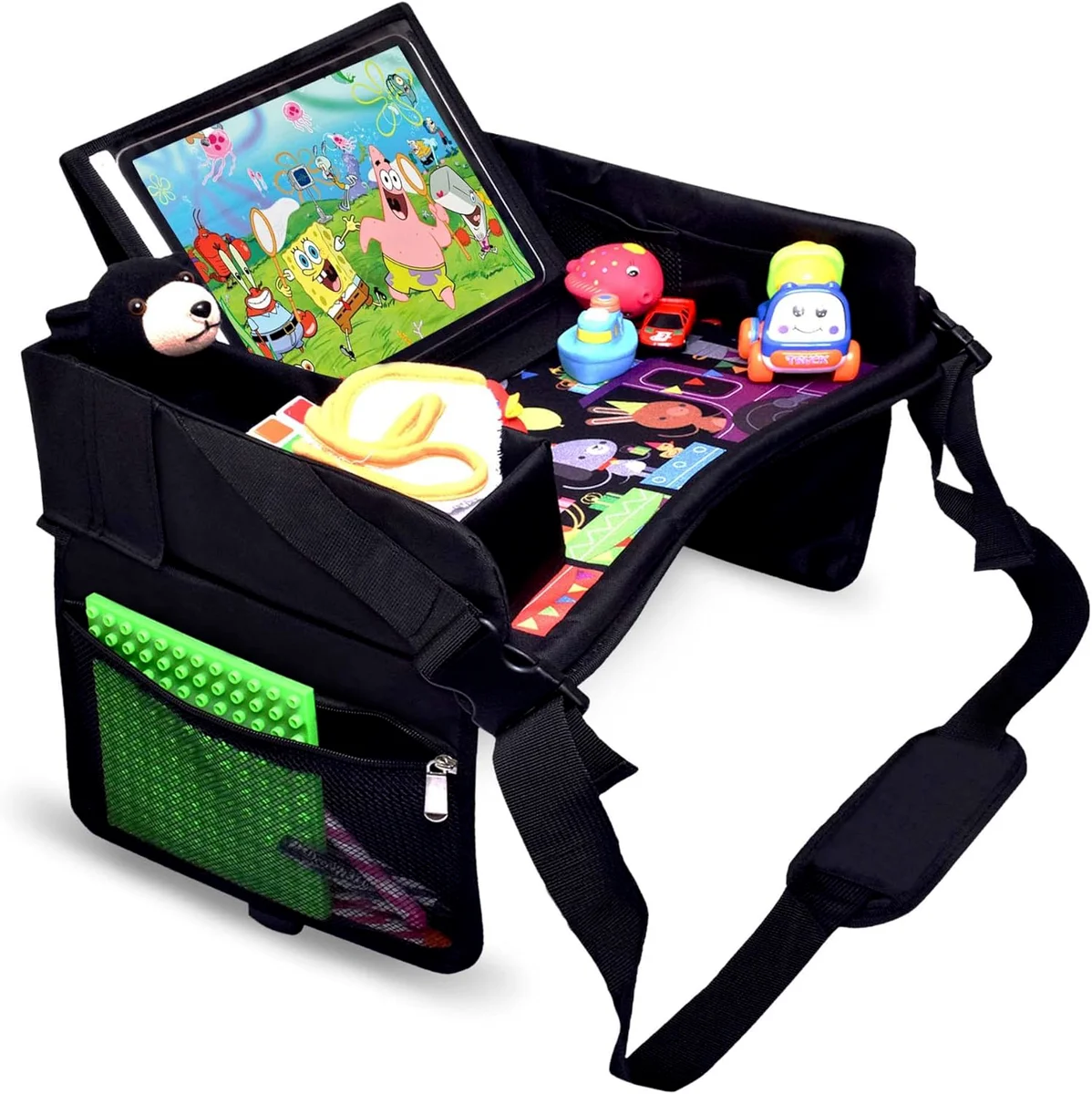
That's the whole pitch for a car-seat travel tray, and it's an honest one. It's a padded or semi-rigid surface that straps across your kid's lap in the car seat, giving them a flat place to color, snack, and park a tablet — and giving you a raised edge that catches the mess before it reaches the seat. It's cheap, it's simple, and like a lot of cheap car gear, it's easy to buy the wrong one.
Because here's the thing nobody mentions on the product page: the trays all look identical in the photos, and they are not the same. The difference between a tray that stays flat and one that sags into a hammock, between a strap that fits your car seat and one that fouls the harness buckle, between a wipeable surface and one that soaks up apple juice — that's the difference between a tray you use every trip and one that ends up in the trunk.
Below I'll break down the two real designs, the strap-and-fit check that decides whether it works with your specific car seat, the safety and spill details that actually matter, how to choose for your own kid, where the small price spread genuinely buys you something, and which tray I'd put in my own kid's seat. It's a $30 decision — but getting it wrong means buying twice, so it's worth two minutes.
How the Two Tray Designs Work
Strip away the branding and there are two designs, and they trade off the same way every time.
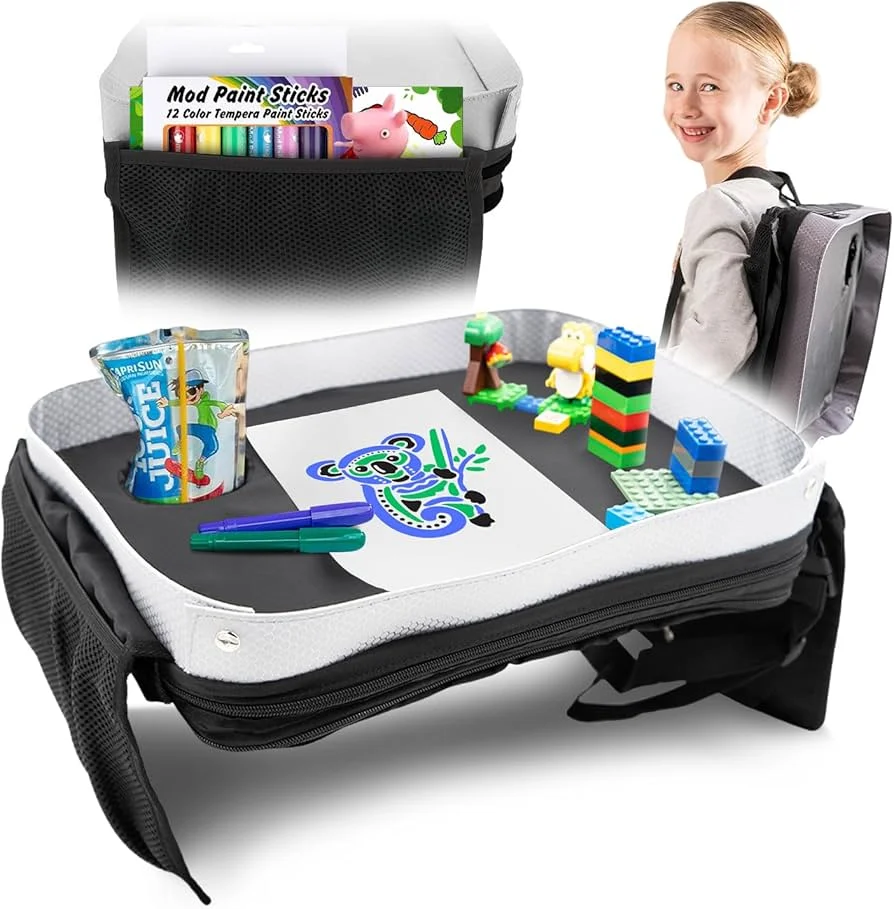
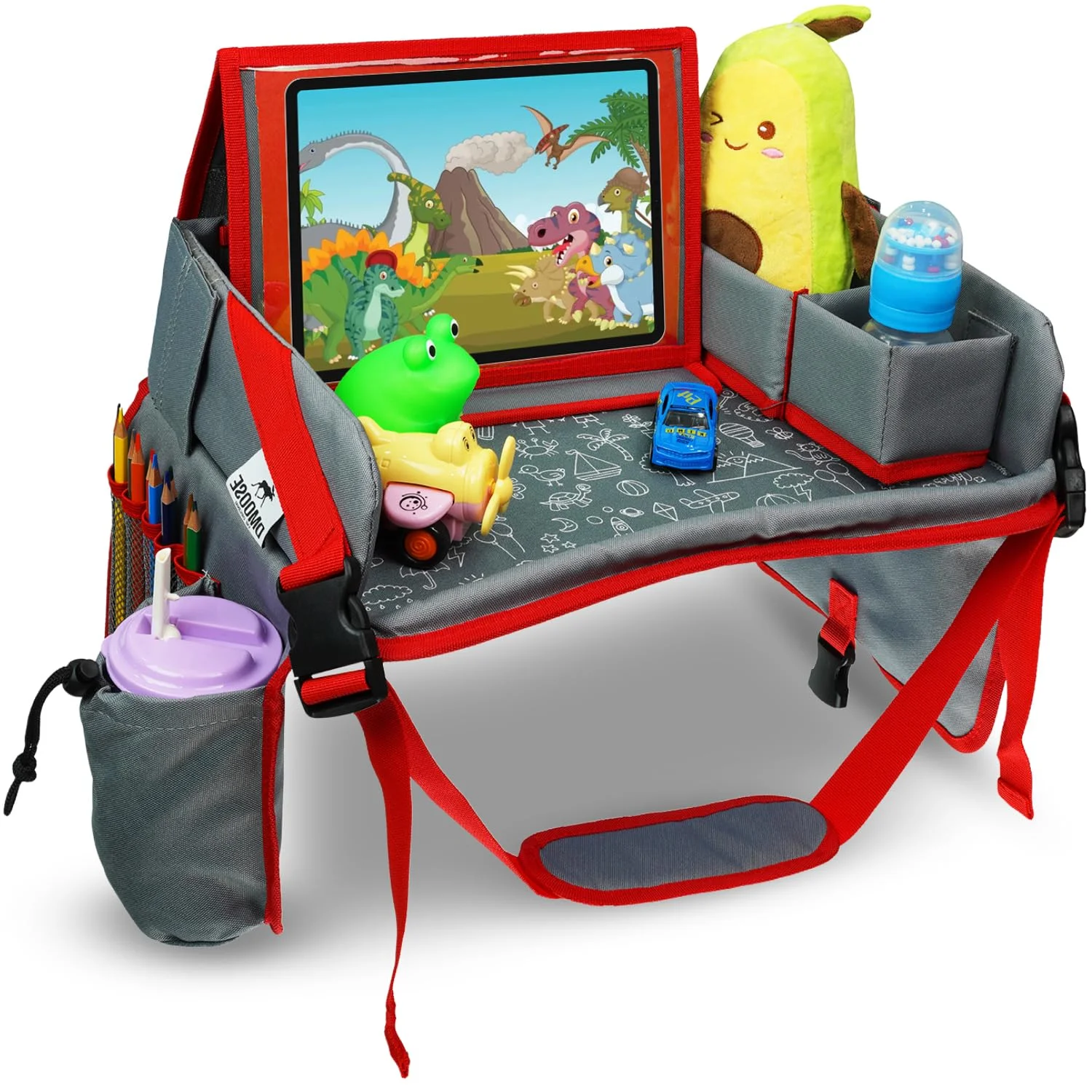
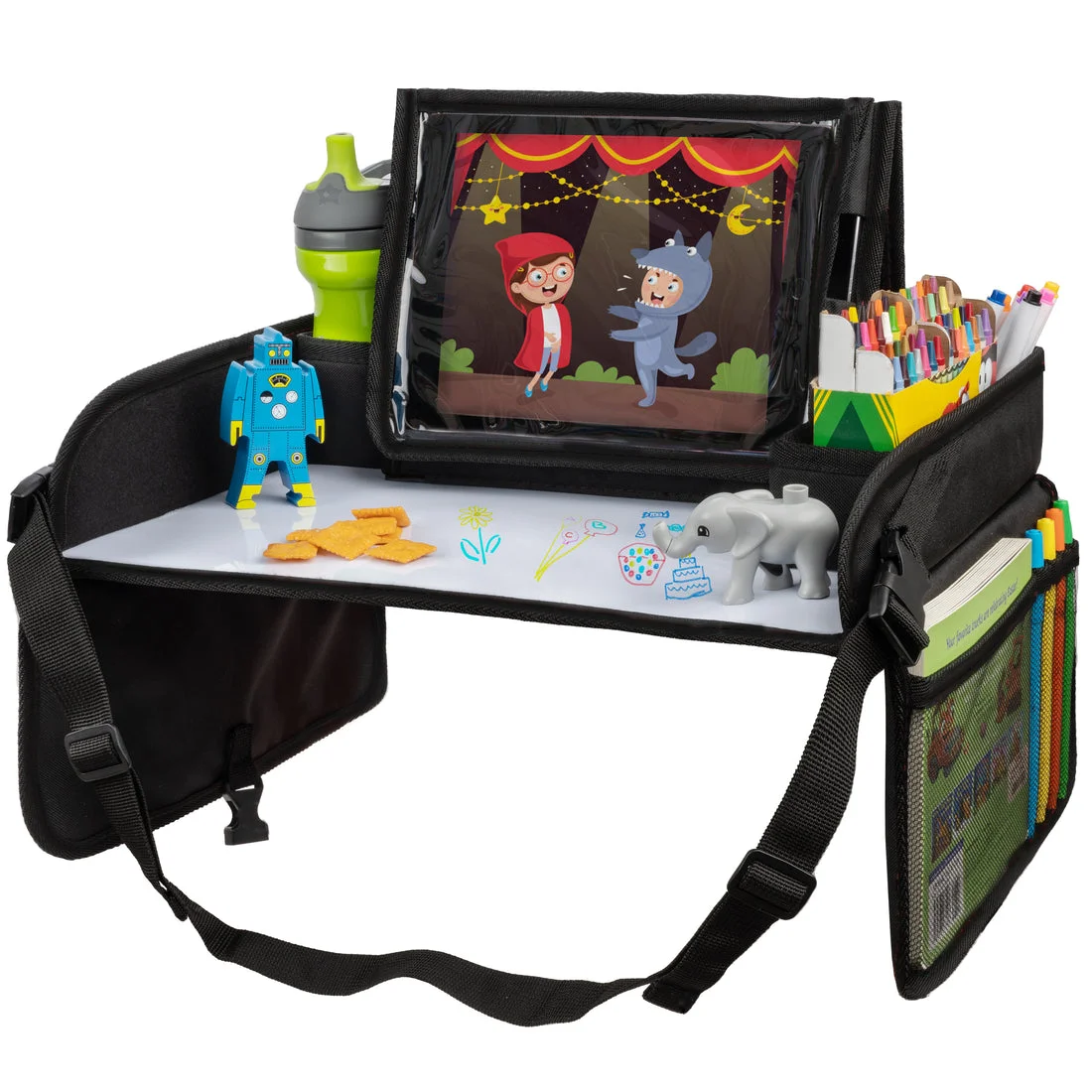
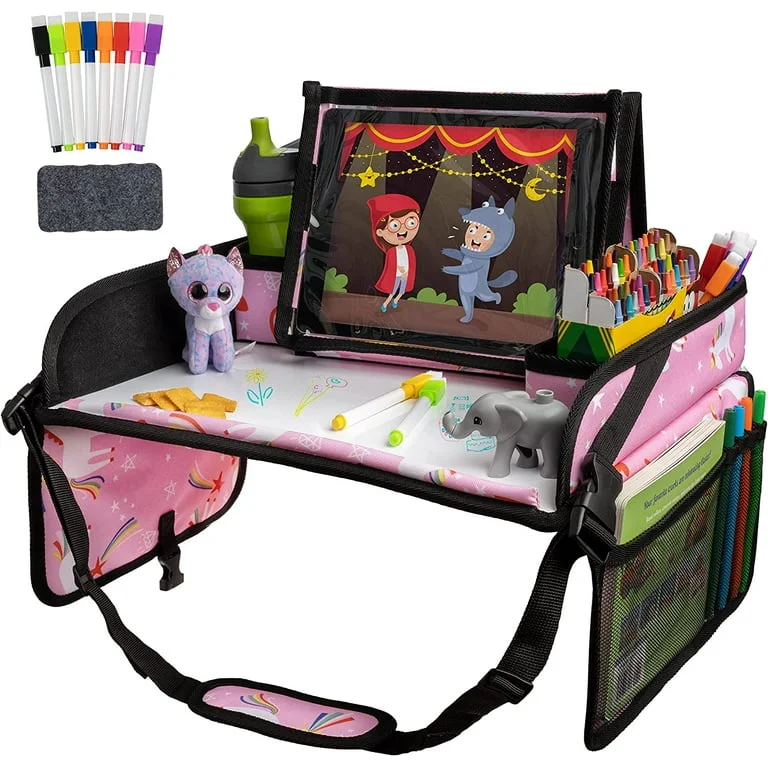
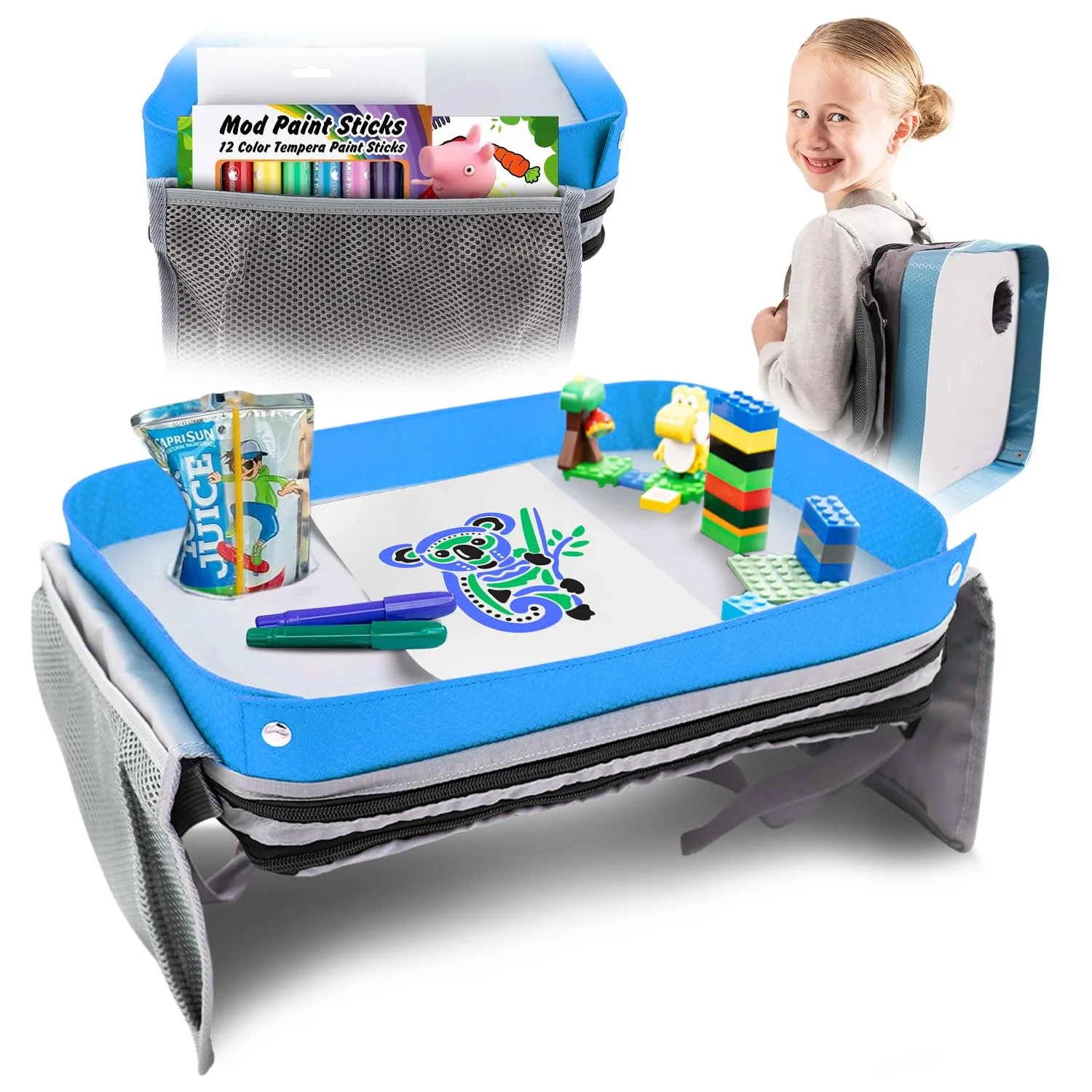
The semi-rigid surface tray — the Lusso Gear and the DMoose sit here — has a firm board or stiffened panel under the fabric, so it stays flat enough to draw on, build a little LEGO scene, or balance a snack cup without it tipping. That flat, stable surface is the whole point for a kid who wants to actually do something on a long drive. The trade is bulk: the rigid panel makes it a little heavier and less packable.
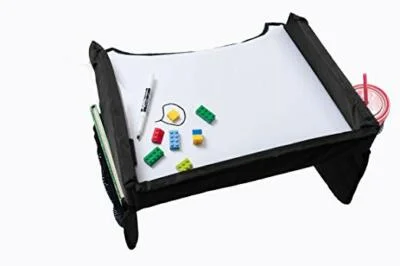
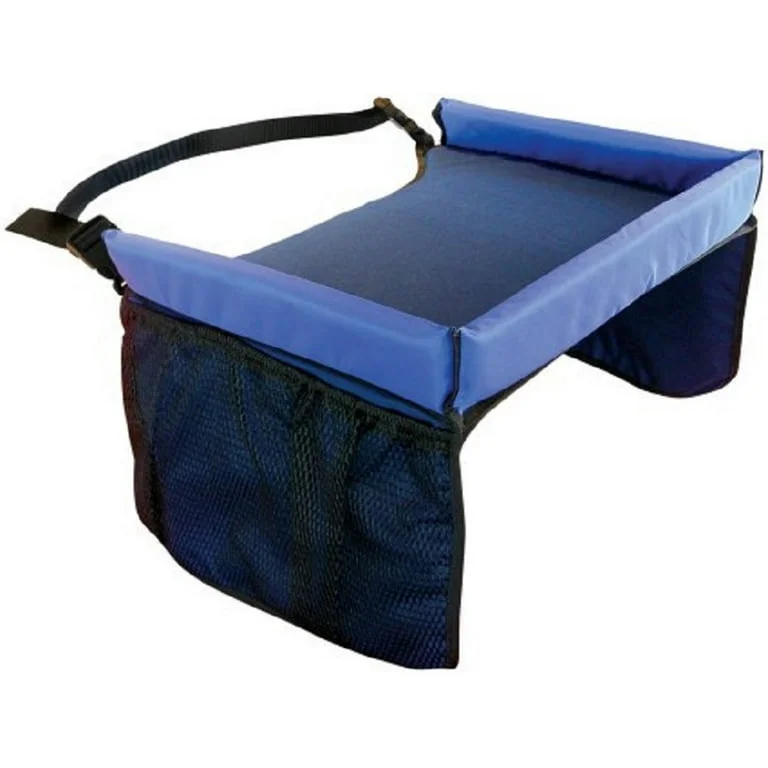
The soft fabric tray — the Star Kids and many budget options — is basically a padded mat with raised sides and pockets, no stiff board. It's lighter, folds away small, and works fine as a snack-and-go surface. But set a cup on it and the middle sags, and try to color and the paper buckles. For pure snacks and a tablet propped in the front pocket, it's fine. For drawing and play, the sag is a real limitation.
Most also include a clear plastic sleeve up front for a tablet or a coloring sheet, and mesh or open pockets along the sides for crayons, a cup, and small toys. Those pockets matter more than they look — a tray with good side storage keeps the small stuff off the floor, which is half the reason you bought it.
The bulk difference between the two designs is real on a road trip, too. A semi-rigid tray takes up room when it's not in use — it doesn't fold down to nothing, so it either stays on the kid or rides on the seat. A soft tray rolls or folds flat into a seat-back pocket between stops. For a single long drive that's a non-issue; for a trip where the tray comes on and off at every meal and bathroom break, the packability of the soft style is a genuine convenience that the rigid style trades away for its flat surface.
The honest split: if your kid wants to draw, build, and play on the drive, pay for a semi-rigid tray like the Lusso Gear — the flat surface is the feature. If you mostly need a contained spot for snacks and a propped tablet, a soft tray like the Star Kids does that job for less.
The Strap-and-Fit Checklist for Your Car Seat
This is the part that sends trays back, and it takes one minute to get right before you buy. A travel tray attaches one of two ways, and the attachment has to play nice with your child's car seat — which has its own five-point harness and buckle that must stay clear and usable.
The good trays use a two-piece strap system: a neck or shoulder strap plus side straps that clip behind or around the seat, so the tray is held up from above and steadied from the sides. That keeps it from sliding into your kid's stomach on a hard stop and keeps it off the harness buckle. Per NHTSA's car-seat guidance, the harness and buckle area must stay clear and properly fastened — a tray that pins the chest clip or blocks the buckle is a tray that compromises the seat, and that's a hard no.
- Harness clearance: the tray and its straps must not cover or interfere with the chest clip or buckle — you have to be able to fasten and release the harness normally.
- Strap length: confirm the straps reach around your specific seat; bulky convertible seats need longer side straps than a slim booster.
- Quick release: you want to lift the tray off fast for a bathroom stop without un-threading four straps.
- Sag under load: a tray that hammocks when a cup goes on it isn't a surface, it's a sling — the semi-rigid base is what prevents this.
- Edge height: a raised lip on all four sides is what actually catches the spills; a flat mat just relocates them.
Run that check against your actual seat first. Half the one-star reviews on these trays are really fit complaints from someone who didn't measure their seat's harness layout — not a defect in the tray.
Safety, Spills, and Cleaning — The Boring Stuff That Matters
A travel tray sits in front of a child restrained in a moving car, so the boring details aren't optional. The first is the one I already flagged: nothing about the tray can interfere with the harness. Beyond that, you want a tray that's soft-edged and lightweight — in a sudden stop, a heavy rigid tray with hard corners is the wrong thing in front of a kid. The semi-rigid trays handle this by wrapping the board in padding so the surface is firm but the edges are soft. Avoid anything with exposed hard plastic corners at chest height.
The second is the tablet-mount question. The clear front sleeve is handy, but a heavy tablet riding loose is a projectile. Keep it to a lightweight tablet in the sleeve, not a propped-up heavy device that can come free. For longer drives, a headrest-mounted holder is honestly the safer tablet answer, with the tray handling snacks and coloring.
The cleanup truth: the surface material decides whether this tray saves you money or just moves the mess around. A wipeable, water-resistant surface (most use a polyester with a coated face) means you wipe a juice spill and move on. A plain fabric tray soaks it up, and now you're washing the tray instead of the seat — same laundry, just a different victim.
There's one more safety angle parents miss: the tray should sit at a height that doesn't crowd the harness or block your kid's view of the road, because a kid who can't see out the window is a kid who gets carsick faster. A tray that rides too high turns into a motion-sickness machine on a winding road. The well-designed ones sit low across the lap with the play surface at a comfortable, glance-down height, not up at chest level where it walls the child in.
Check that the cover is wipeable or machine-washable, that the raised edges are tall enough to actually contain a tipped cup, and that the whole thing is light enough that a four-year-old isn't fighting its weight. Those three things are what separate a tray that earns its keep from one that becomes another thing to clean. A tray that's a chore to wipe, too heavy for a small kid to manage, or so flimsy it spills as much as it catches isn't saving you anything — it's just one more piece of gear cluttering the back seat.
How to Choose for Your Kid and Your Car Seat
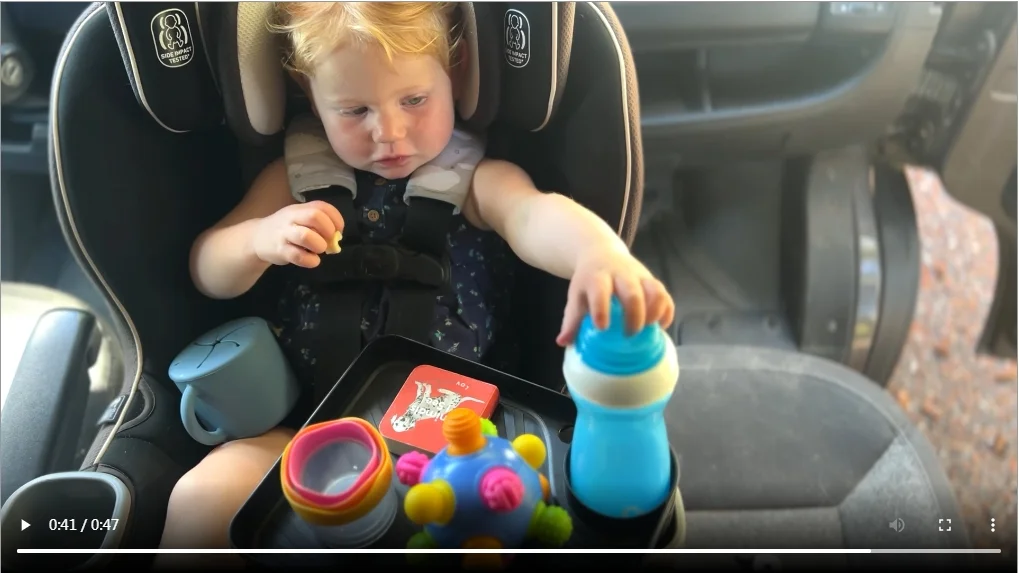
This is where a couple of honest questions save you from buying twice. Start with what your kid does in the car, because that drives the choice more than the brand. A kid who wants to color, build, and play needs the flat, stable surface of a semi-rigid tray; a kid who mostly snacks and watches a tablet is well served by a lighter soft tray. Buying a saggy mat for a kid who wants to draw is a guaranteed return.
Next, match it to your specific car seat. A bulky convertible seat needs longer side straps and a strap layout that clears its harness; a slim booster fits almost anything. This is the measure-first step people skip, and it's the one that decides whether the tray fits or fouls the buckle. Look at your seat's harness and buckle, then confirm the tray's straps route around them cleanly.
The one spec that decides it: harness clearance plus a non-sagging surface. A tray that keeps the buckle usable and stays flat under a snack cup is doing both jobs; one that fails either is going in the trunk. Everything else — pockets, colors, tablet sleeve — is preference.
Last, think about how often you'll really use it. For a couple of trips a year, a budget soft tray is honest value. For regular weekend drives and long road trips, the extra ten dollars for a semi-rigid, well-strapped tray pays for itself the first time it stays flat through a drawing session instead of dumping crayons in the footwell.
One last consideration is your kid's age and stage, because it shifts the right answer over time. A toddler who mostly snacks and naps gets everything they need from a simple soft tray with a couple of pockets. A preschooler who wants to draw, do sticker books, and build small things on a long drive is the one who genuinely benefits from the flat, stable semi-rigid surface — and that's also the age where a tray earns its keep most, because an occupied kid is a quiet kid. If you're buying for a child who's about to hit that stage, buying the sturdier tray now means you won't be back here in six months replacing the saggy one.
What Each Price Tier Actually Buys
The money spread on these is narrow — about $25 to $40 — which is good news, because there's no tier where you have to overspend to get a working tray. But the tiers do buy different things, and knowing which is which keeps you from paying for a name or underpaying into a saggy mat.
- $24-27 (the Star Kids / JoyChild bracket): soft fabric trays. Padded mat, raised sides, pockets, a tablet sleeve. Closes the snack-and-tablet need and folds away small. Fine if your kid mostly snacks and watches rather than draws and builds.
- $30-35 (the Modfamily / DMoose range): the step up to a stiffer surface and better straps. More stable for play, longer side straps that fit more seats, sturdier stitching. This is the value sweet spot for most families doing regular trips.
- $38-40 (the Lusso Gear tier): the most refined semi-rigid trays — flattest surface, best harness-friendly strap design, the most wipeable cover, the cleanest pocket layout. You're paying for the tray that stays flat for years and fits the widest range of seats.
The false economy here is the $12 no-name mat that sags under a cup and whose straps don't clear the harness buckle. It saves you fifteen dollars and ends up in the trunk after one trip, so you buy a real one anyway. For a part this cheap, spending into the middle tier once beats saving at the bottom twice — the same logic I use on every piece of budget car gear.
The Verdict After Cleaning Crayon Out of Upholstery
For most families on real road trips, the Lusso Gear Kids Travel Tray is the one I'd buy. The semi-rigid base stays flat enough to actually draw and play on, the four-point strap system fits a five-point harness without crowding the buckle, the raised edges catch the spills before they hit the seat, and the cover wipes clean instead of soaking up juice. At around $40 it's the top of this narrow price range, but it's the tray that stays useful trip after trip instead of ending up in the trunk.
If you want to spend less and your kid mostly snacks and watches, the Modfamily tray is the smart middle pick with a stiffer surface and good straps, and the DMoose is right there with it. The Star Kids Snack & Play tray is the honest budget call for a snack-and-go surface a few trips a year, and the JoyChild tray covers the same ground for a toddler who just needs somewhere to put the goldfish.
Whatever you choose, judge it by two things: does it keep your car seat's harness fully usable, and does it stay flat when your kid puts something on it? Measure your seat before you order, keep heavy tablets in a headrest mount rather than loose on the tray, and a $30 piece of padded fabric quietly removes the single biggest source of back-seat chaos on a long drive — which is exactly the kind of cheap fix that earns its keep. — Ray Ortiz
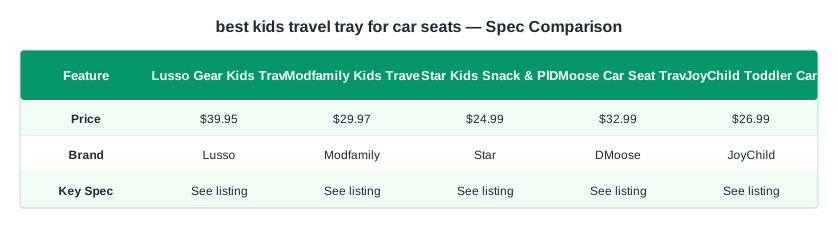
The complete lineup also includes Modfamily Kids Travel Tray ($29.97), DMoose Car Seat Travel Tray ($32.99), JoyChild Toddler Car Seat Tray ($26.99) — each compared on the same specs and reviewer consensus.