The picks at a glance
A camp table is the difference between cooking hunched over the tailgate and running a real kitchen at your site. The comparison table below is the whole answer in ten seconds; the sections below say why each made the list and how to choose. These picks lean on the published specs, the results from named testers at Outdoor Gear Lab and Switchback Travel, and the long car-camping threads, then run the one calculation the category actually turns on: how much table your cooking really needs versus the gap in your trunk.
The short version: the GCI Slim-Fold Cook Station is the pick if you cook, the ALPS Dining Table is the do-everything value all-rounder, and the Trekology is the answer when trunk space is your binding constraint. Families step to the Coleman; a long basecamp rewards the rock-solid Lifetime.
One spec frames the whole category for vehicle camping: packed thickness, not open size. A table that's huge when open but folds to three inches slides beside your cooler; a stable table that won't pack down fights you for cargo room every trip. Choose for the gap in your trunk first, the open surface second.
It's worth saying why a table earns its space at all when you already have a tailgate: a tailgate is the wrong height to cook on, slopes slightly, and forces you to lean into the car. A real table puts a level, properly-high surface wherever the view is best, and it's the difference between a camp that feels organized and one where dinner happens crouched over the open trunk. Spend a little and it pays you back every single meal.
The short version: GCI Slim-Fold if you cook, ALPS for all-round value, Trekology when trunk space is tight — and buy for packed thickness, not open size.
How this guide was built. Every pick is ranked on the specs that decide a camp table — packed thickness, open working area, leg stability, and whether the top is heat-rated — read from the manufacturers and cross-checked against named testing from Outdoor Gear Lab and Switchback Travel, plus the long car-camping threads. What this analysis adds is the number nobody prints on the box: how many square inches of table your actual cook setup needs, computed below, so you can buy exactly the surface your stove and your trunk gap call for — no more, no less.
One-line why per pick
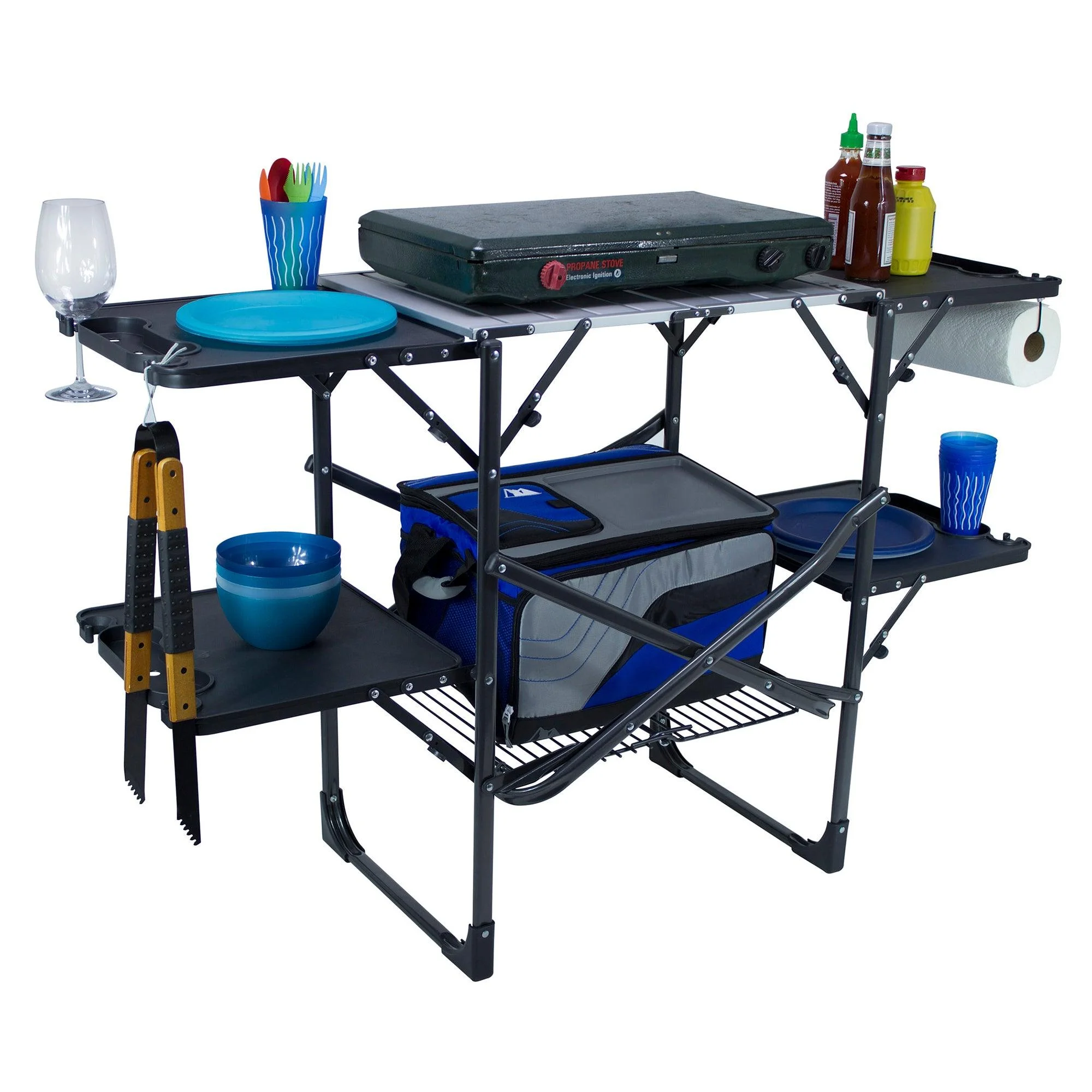
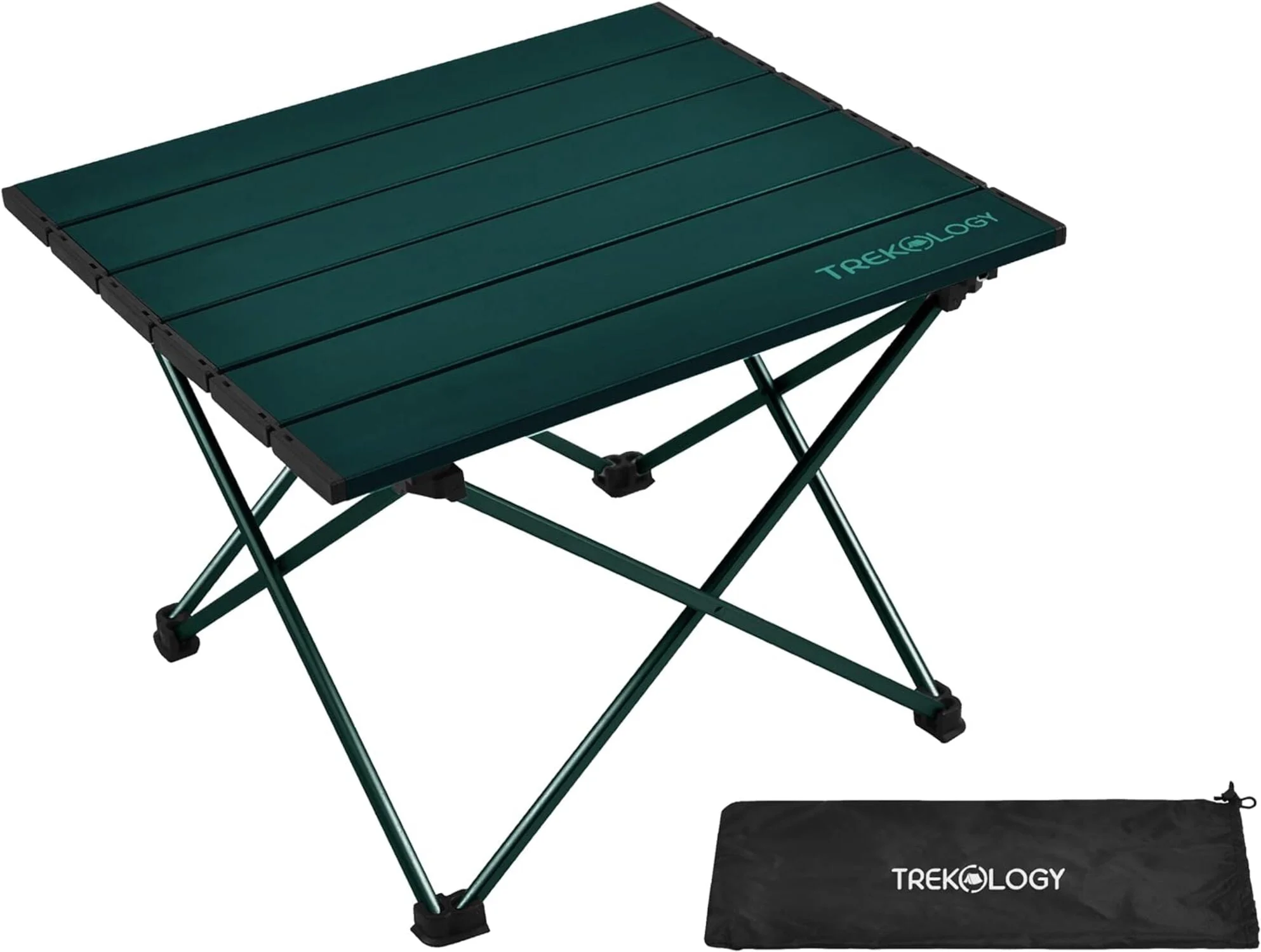
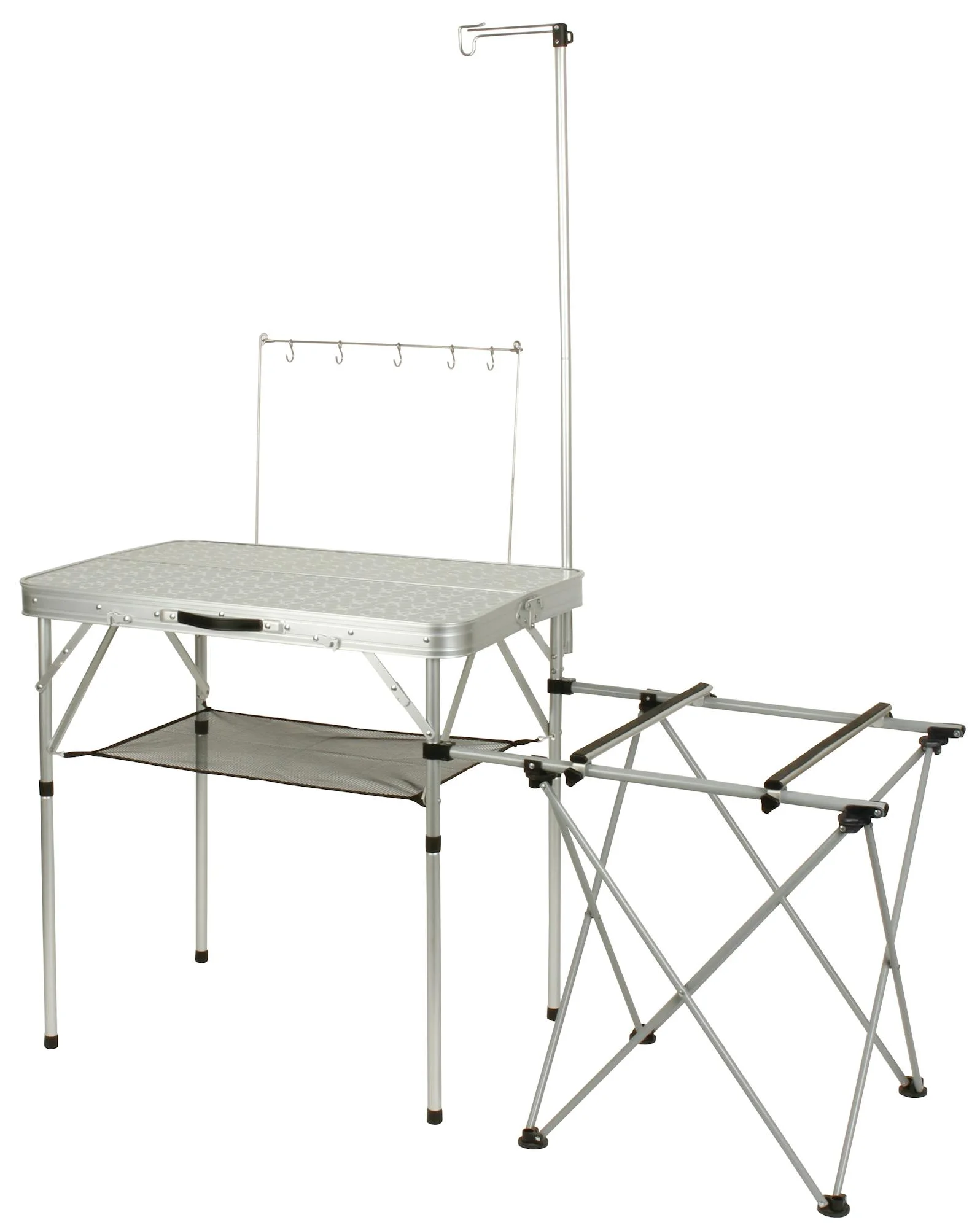
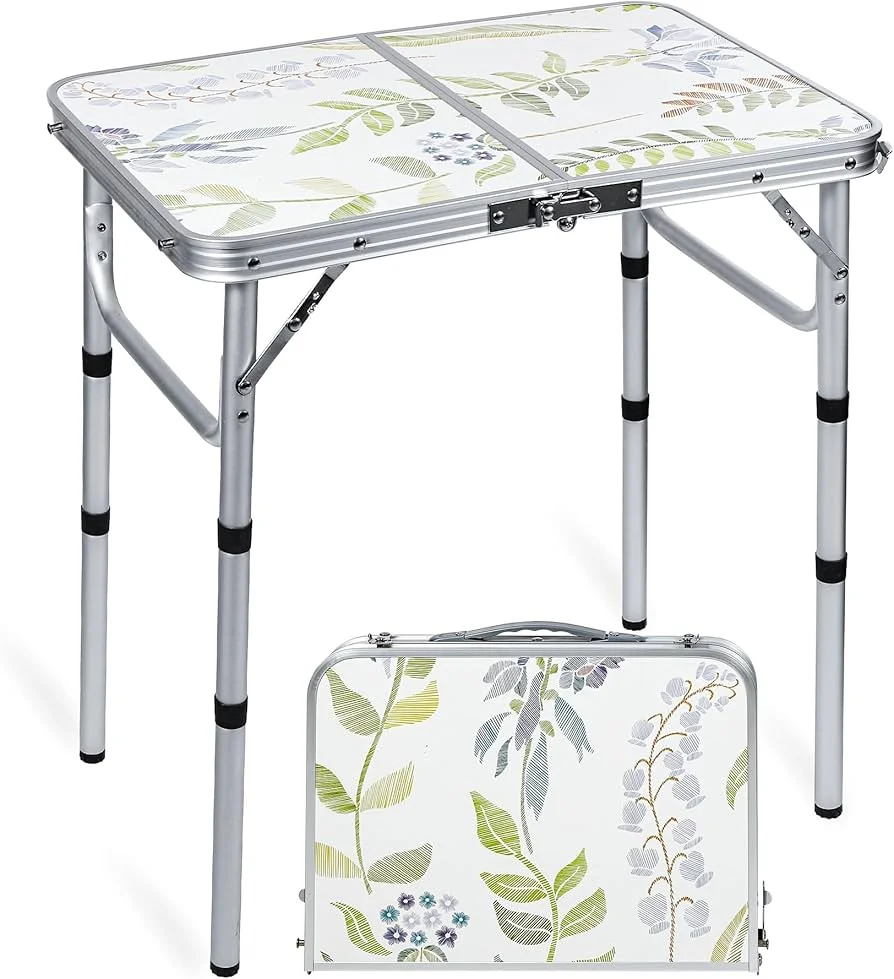
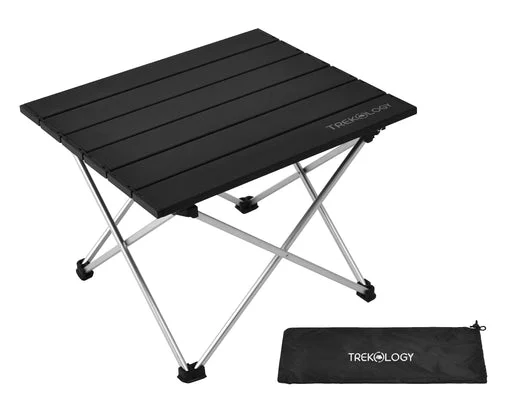
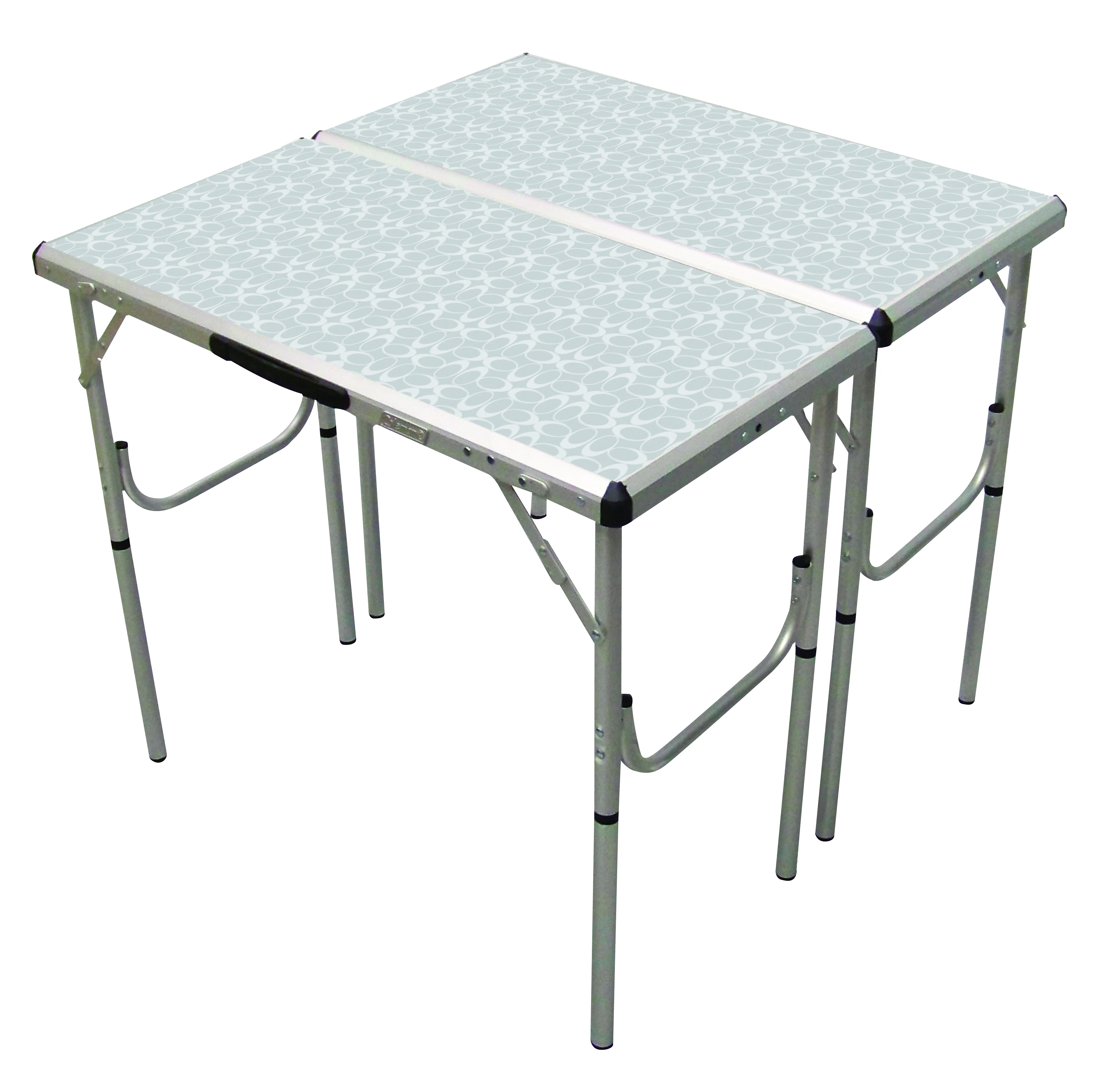
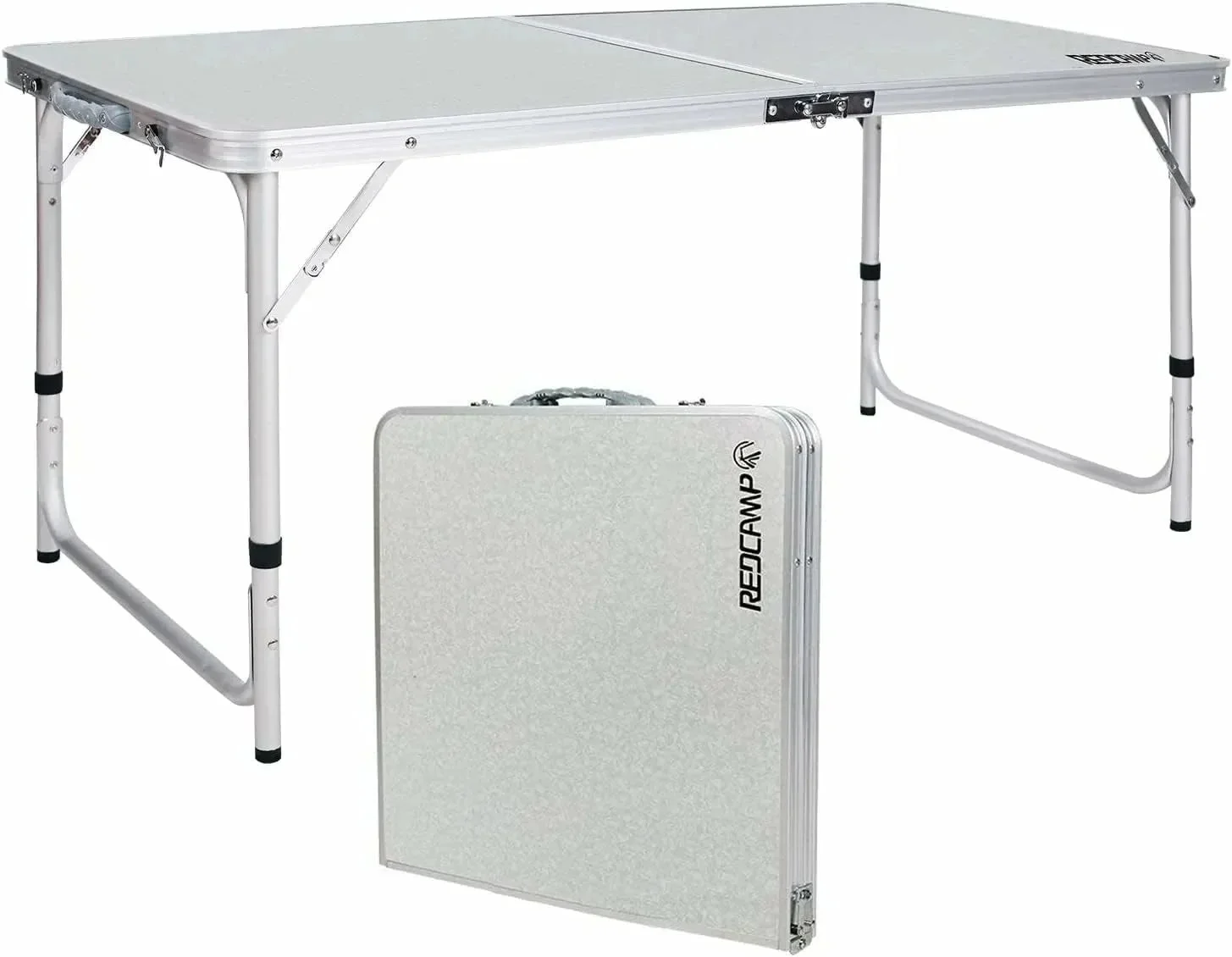
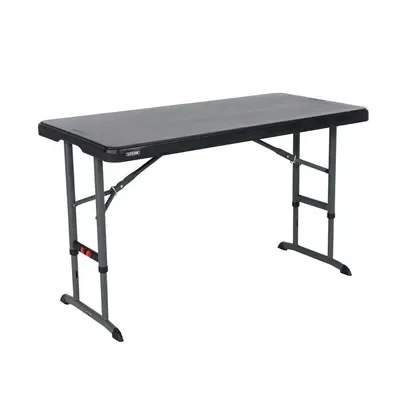
GCI Slim-Fold Cook Station — folds to about 3 inches yet opens into a full camp kitchen with side racks and a sink slot; the pick if you actually cook. ALPS Mountaineering Dining Table — roll-top aluminum that packs small, sets up in seconds and stays sturdy; the best all-round value. Trekology Portable — the smallest, lightest, height-adjustable option, the answer when cargo space rules. Coleman Pack-Away — adjustable height and cup holders make it the forgiving family pick. REDCAMP Aluminum — a sturdy roll-top at a low price. Lifetime 4-Foot — heavy and immovably stable for a long basecamp if you can spare the bulk.
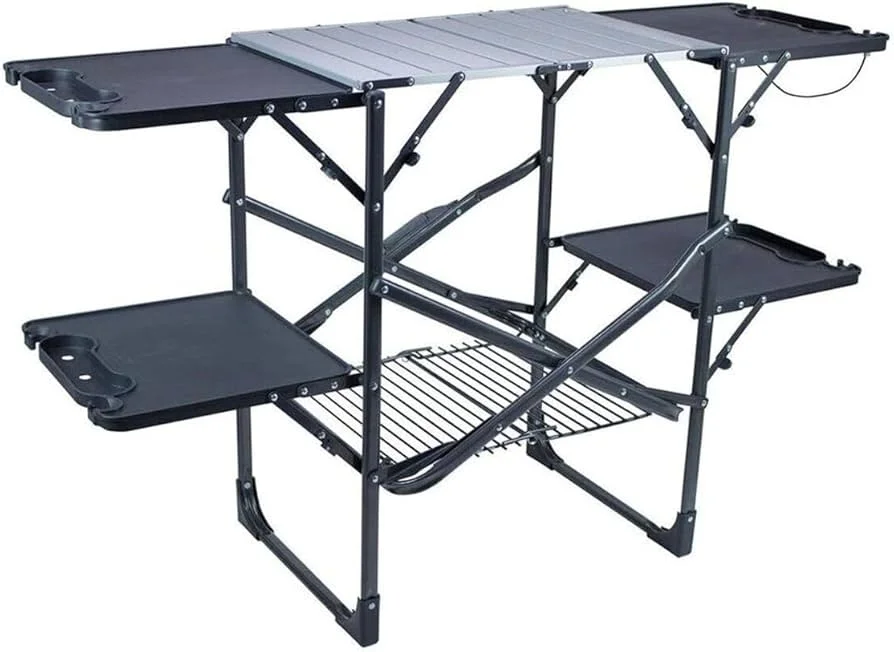
A little more on the two that win most buyers. The GCI Slim-Fold Cook Station is the one car campers who actually cook keep coming back to because it isn't really a table — it's a kitchen. The main surface is rated to take a hot stove, fold-out side racks hold your spices, oil and utensils at hand, and a hanging slot takes a collapsible sink or a trash bag so the whole wash-up has a home. It collapses to about three inches and stands itself up, which is why it earns its premium over a plain table for anyone who makes real meals at camp.
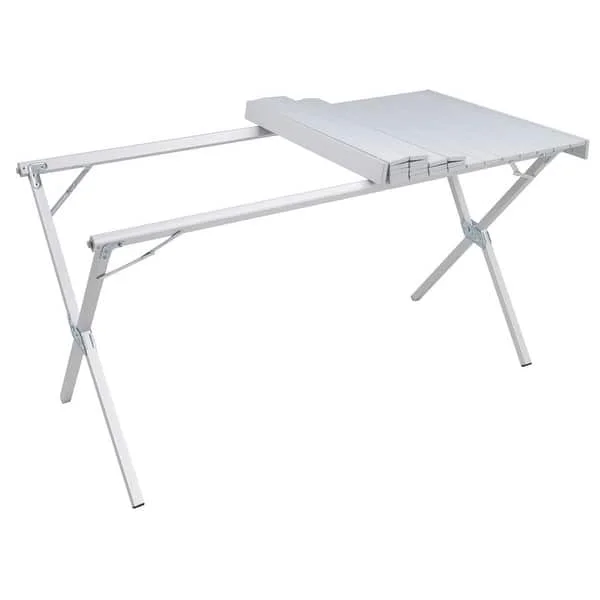
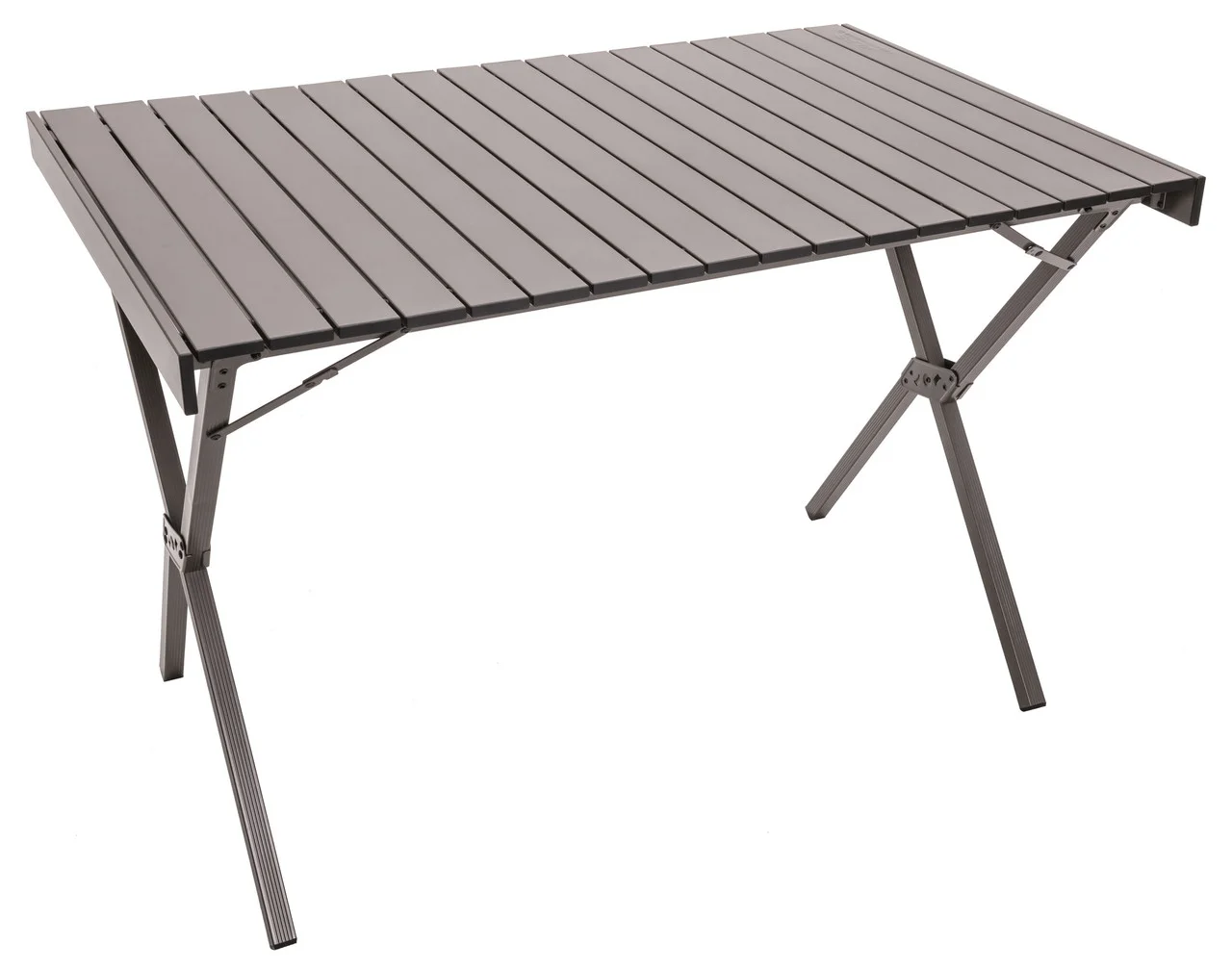
The ALPS Mountaineering Dining Table, by contrast, is the table to buy if you want one good surface for everything and nothing fancy. Its aluminum slats roll into a slim carry bag, the legs lock with a reassuring snap, and it sets up in about fifteen seconds. It's not heat-rated for a stove sitting directly on it, so it's a dining and prep table rather than a cook station — but as the do-everything-else surface at a fair price, testers and owners rate it the best all-round value in the category, and it's the pick I'd hand a first-time car camper.
How to choose in ten seconds
Match the table to how you camp:
- You cook real meals: GCI Slim-Fold Cook Station.
- One table for everything: ALPS Dining Table.
- Trunk space is tight: Trekology Portable.
- Camping with kids: Coleman Pack-Away.
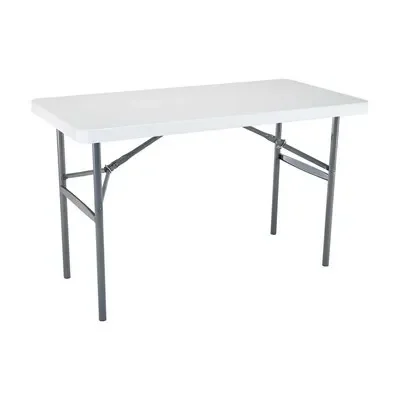
- Stable basecamp, bulk is fine: Lifetime 4-Foot.
Whatever you pick, the rules are the same. Check the packed thickness against your real trunk gap before anything else. Make sure the legs lock and the feet are wide enough not to sink in soft ground. And if you cook, confirm the surface is heat-rated where the stove sits — a plastic top under a roaring burner is a melted top.
How a good camp table earns its space
It sounds obvious, but a camp table does three jobs a tailgate can't. It gives you a level, stable surface for a stove so a pot of boiling water doesn't tip on uneven ground — the single biggest safety reason to carry one. It organizes the kitchen, getting food prep, the stove and the wash-up off the dirt and out of the bugs. And it doubles as the dining and card table after dinner, the social center of camp.
The engineering that matters is in the legs and the lock. Cheap tables wobble because the leg geometry is narrow or the locks are flimsy; the picks above are here because their legs splay wide and lock solid. Wide feet keep them from sinking in sand. Get those two things right and a $50 table outlasts a decade of trips.
The materials tell you most of what you need. Aluminum roll-tops (ALPS, REDCAMP) win on packed size and weight, but the rolling surface flexes a little under a heavy pot, so they're dining-and-prep tables, not stove platforms. Rigid panel tables with a heat-rated section (the GCI cook station) give a stable, non-flexing surface you can cook on, at the cost of bulk. Solid one-piece folders like the Lifetime are the most stable and cheapest per square inch, but they fold only in half, so they eat real cargo room.
Height matters more than people expect, too. A table fixed at one low height makes cooking a back-ache; the picks with adjustable legs (Coleman, Trekology) let you set a standing-prep height at the tailgate or a low sitting height by the chairs. For a kitchen you use every meal, that adjustability quietly becomes the feature you appreciate most.
Setup tips and mistakes
A few things that ruin a camp table or your dinner. Putting a hot stove on a non-heat-rated surface melts the table — read which part of the top is rated for heat. Setting up on a slope or soft sand without checking the feet gives you a wobble that tips your cooking. Buying for open size, not packed size leaves you wrestling a too-big table into a full trunk every trip.
And skimping so far down that the legs flex — a table that bounces when you chop is a table you'll resent. Spend the small amount it takes to get locking legs and a stable top, store it in its bag so the latches survive, and it disappears into the kit until dinner.
One more habit pays off all season: set the table up before anything else at camp. It becomes the staging surface for unpacking, the prep counter for dinner, and the spot your headlamp and keys live so they don't vanish into the dirt. A table is one of those quiet pieces of gear whose value is proportional to how early you deploy it — left in the bag it does nothing; set up first thing it organizes the whole campsite around it.
Sizing the surface to your cooking
Match the table to how you actually cook, not to the biggest top you can buy. If you run a two-burner stove and do real meals, you want the GCI cook station or a solid four-foot surface — room for the stove plus a cutting board plus the pot you just pulled off the heat, with the side racks keeping oil and spices off the cooking surface. Crowd a two-burner onto a tiny table and you'll spend dinner shuffling things to make room, which is how pots get knocked over.
If you run a single-burner or a Jetboil-style setup and mostly boil water and heat one-pot meals, a compact table (Trekology, ALPS) is plenty and packs far smaller — no reason to haul a four-foot table for instant coffee and a freeze-dried dinner. And if you're feeding a family, the Coleman's adjustable height and the extra elbow room earn their keep, since you're often prepping, serving and wrangling kids' plates at once. Size the surface to the cooking you really do and you carry exactly the table you need and not an inch more.
- Two-burner / real meals: GCI cook station or a 4-ft table.
- Single-burner / boil-and-go: compact Trekology or ALPS.
- Family: adjustable-height Coleman for elbow room.
Computed: how much table your cook setup actually needs. "Buy the right size" is useless without a number, so here is the working-area math. A standard two-burner camp stove footprint is about 21 × 12 in (≈250 sq in); add a cutting board (~120 sq in) and a landing spot for the hot pot you just lifted off the flame (~100 sq in), and required top = stove + prep + landing. Do that for each cooking style and you get a minimum clear-top target to check any table (and your trunk gap) against:
| Cooking style | What sits on the table | Working area needed | Min. clear top |
|---|---|---|---|
| Two-burner, real meals | Stove + cutting board + hot-pot landing | ~475 sq in | ~30 × 16 in |
| Single-burner / boil-and-go | Small burner + mug/bowl + light prep | ~230 sq in | ~20 × 12 in |
| Family dining (4) | Four place settings + a serving dish | ~550 sq in | ~32 × 20 in |
Now the picks sort themselves. A four-foot Lifetime (48 × 24 in = 1,152 sq in of top) or the GCI Slim-Fold Cook Station — whose fold-out side racks add exactly the prep-and-landing area a flat top makes you improvise — clear the two-burner budget with room to spare. A compact Trekology or ALPS comfortably clears the single-burner target but crowds a two-burner, which is the shuffling-pots-to-make-room problem in numbers. And a family wants the ~550-sq-in target, where the adjustable-height Coleman's elbow room earns its keep. Measure your stove, pick the row, then buy the smallest table that clears it and still fits your trunk gap.
Verdict
If you cook at camp, the GCI Slim-Fold Cook Station is the one to buy — it folds nearly flat, opens into a genuine kitchen, and is the table testers and car campers keep coming back to. If you just want one good table for everything that packs small and won't let you down, the ALPS Dining Table is the value all-rounder. Tight on cargo space, the Trekology disappears into a trunk gap; camping with kids, the Coleman's adjustable height and cup holders earn their keep.
Whichever you choose, buy for packed thickness first, make sure the legs lock solid, and confirm the cooking surface is heat-rated. Get those basics right and a folding table is one of the cheapest upgrades that makes camp feel like camp instead of a tailgate scramble.
If I had to spend the money twice, I'd still land on the same two tables — the GCI for cooking, the ALPS for everything else — because they nail the one thing that decides whether a camp table gets used or abandoned in the garage: they're easy. Easy to pack, easy to set up, stable when they're up. A table you resent dragging out is a table you leave home; one that deploys in seconds and disappears just as fast becomes part of how you camp. Buy the easy one in the right size and you'll wonder how you ever cooked off the tailgate.
The complete lineup also includes GCI Outdoor Slim-Fold Cook Station ($110) — each compared on the same specs and reviewer consensus.