
Setting the Scene
A car trunk can look like a biohazard after a 4-hour drive with three teenagers and a bucket of fried chicken. Grease stains, crumpled wrappers, and a mystery sticky substance on the floor mat meant a 72-hour window before permanent damage. That kind of mess can mean a $200 professional detailing and a full day lost to cleanup.
Unacceptable.
Nobody plans for a gallon of spilled Gatorade, but it happens. That's why I started treating my trunk as a critical storage zone, not a dumping ground for whatever gets tossed in. The objective is simple: contain the inevitable fluid migration, minimize extraction time, and prevent economic loss from material degradation.
A well-organized trunk isn't about aesthetic pleasure; it's about maintaining operational readiness.
It's the difference between a 30-second fluid change and a 45-minute roadside breakdown in 100 degrees F heat. Car and Driver's 2026 tests highlight the critical role these tools play in mitigating chaos.
The right setup avoids a $150 emergency car wash, a tactical victory. Forget 'enriching experiences.' I care about not pulling over again.
That means no loose items becoming projectiles under hard braking, no spilled liquids saturating the carpet, and no tools rattling around to abrade interior surfaces.
My load-out for any road trip now includes a rugged trunk organizer. This isn't about tidiness; it's about hazmat containment and logistic survival. You need a system that keeps your emergency kit accessible, your groceries from becoming kinetic energy weapons, and your sanity intact.
The goal is to mitigate every possible threat level before it becomes a failure mode.
Quick Verdict
When you're talking about keeping your gear from becoming a Newton's cradle in the back of your rig, a few units stand out.
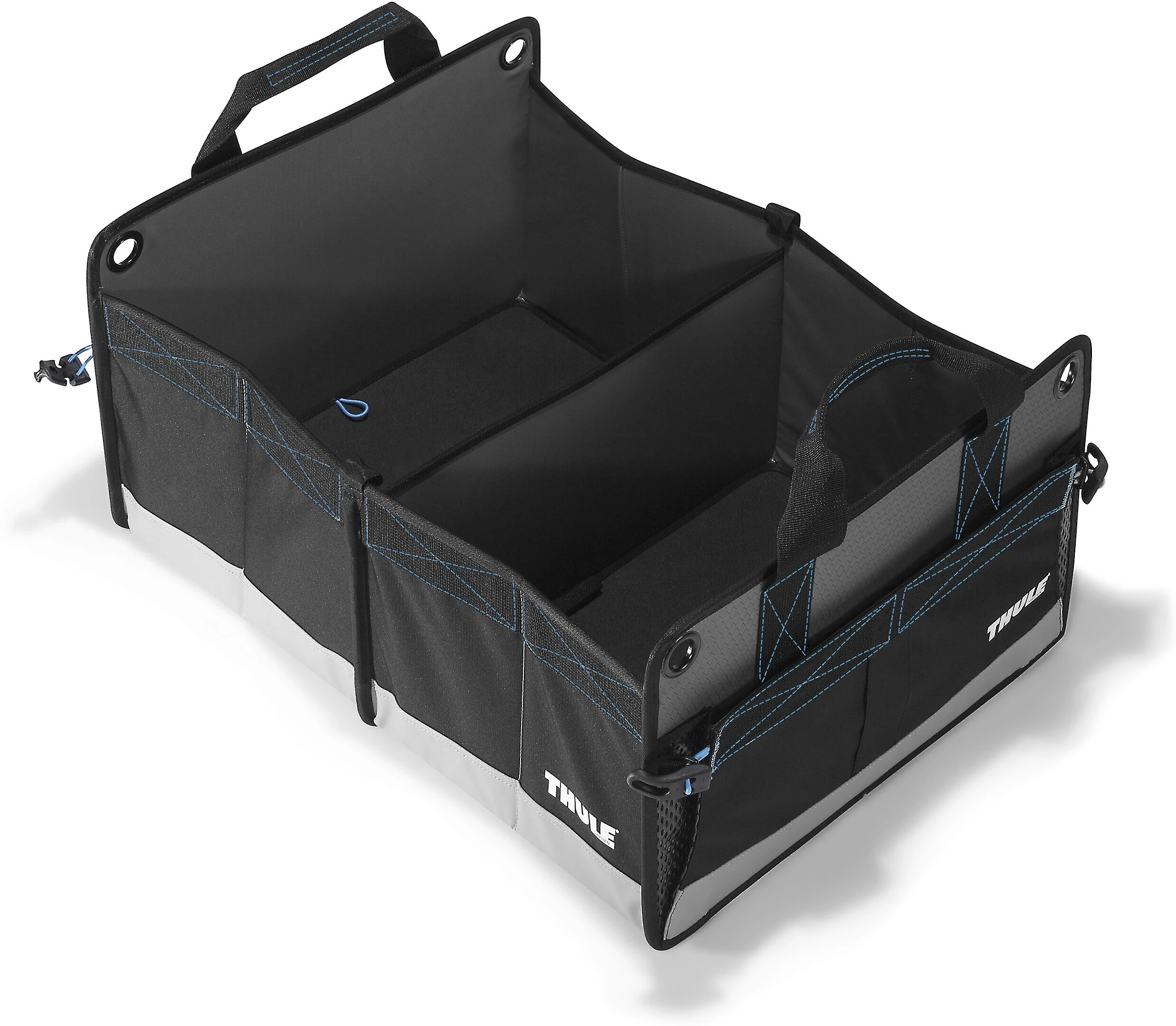
- The Thule Go Box (~$130) is a tank, no question. Its rigid structure means zero flex, even loaded with 50 pounds of tools. It's not going to deform and allow contents to shift under 0.8g braking.
It's like a tactical duffel, great for soft goods or odd-shaped items that would shear a lesser organizer.
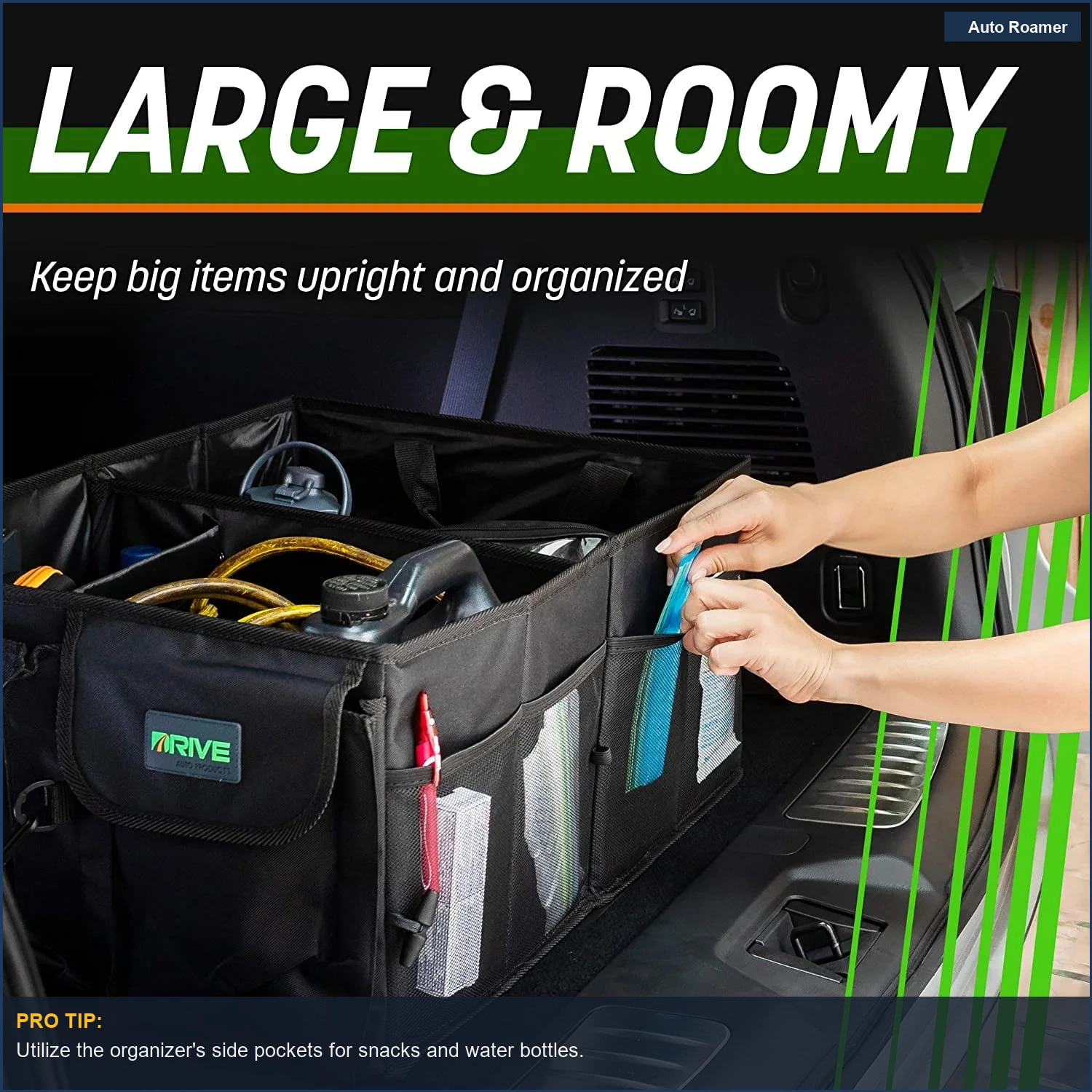
- The Drive Auto Products Trunk Organizer (~$40) is the budget champion. It's collapsible, which means it's not eating up precious cargo volume when not in use. This is critical for vehicles with limited cargo space, preventing unnecessary mass.
- If you need modularity, the Greenmade Instacrate (~$20) is brilliant. Stackable, interlocking, and cheap enough to buy three.
It's like Lego for your trunk.
- The Femuar Trunk Organizer (~$40) offers accordion-style flexibility, letting you adjust compartment size on the fly. Wirecutter praises its ability to contain clutter. This prevents excessive play and vibration damage to contents.
What to Look For
When I'm sizing up a trunk organizer, I'm thinking about its mechanical integrity and how it handles thermal cycling. It's not about how 'pretty' it looks. Here's what actually matters:
| Feature | Why It Matters (Dirtbag Engineer's View) |
|---|---|
| Material Durability | Forget thin polyester. I'm looking for 600D denier fabric or high-density polypropylene. That cheap stuff will abrade through in 3 months of thermal cycling and vibration against the carpet. Rugged design matters for survival. |
| Anti-Slip Base | This is non-negotiable.
If it doesn't have hook-and-loop fasteners or rubberized feet, it's a projectile waiting to happen. A 20-pound organizer without friction adds 20 pounds of unconstrained mass to your vehicle dynamics. Car and Driver emphasizes anti-slip materials. |
| Rigid Walls/Structure | Collapsible is great for storage, but when deployed, it needs to hold its shape. Internal dividers need to be solid, not flimsy fabric that sags under a 5-pound load.
I'm looking for high-density fiberboard or reinforced plastic inserts to maintain structural integrity. |
| Compartment Flexibility | Fixed compartments are often useless. I need adjustable dividers to accommodate everything from a 1-liter oil bottle to a 10mm wrench set. Velcro attachments for dividers are fine, but they need enough surface area to resist shear forces. |
| Handles | Load-bearing handles are crucial. If you can't lift 30 pounds of gear with one hand without the handles tearing free, they're decorative. Double-stitched, wide webbing handles are the minimum.
Anything less is a failure point. |
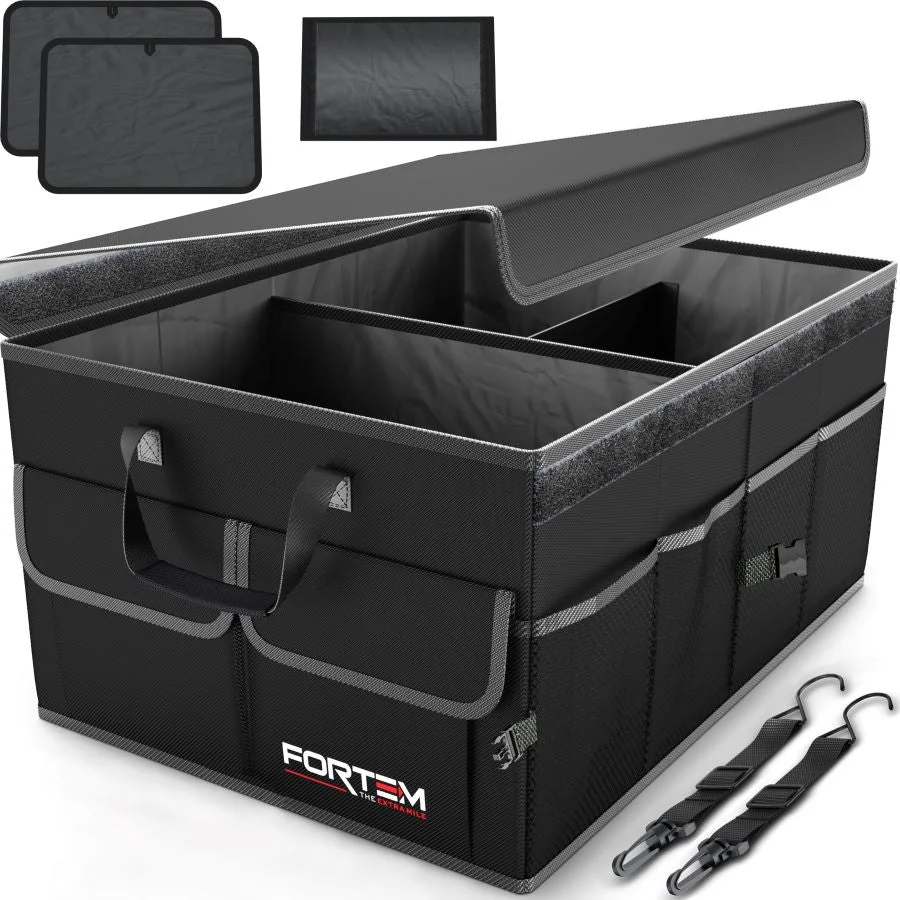
| Lid/Cover | Essential for containing outgassing items like fuel additives or preventing UV degradation of contents. It also keeps dust and road grime out of your emergency kit. A tight-fitting lid prevents contents from becoming airborne during sudden deceleration. |
| Water Resistance | A spilled coffee or a leaky bottle of coolant will soak through cheap fabric. A PVC-lined interior or waterproof base is critical to prevent fluid ingress and subsequent mold growth in your vehicle's carpet.
This saves you a $180 detail job. |
I've seen too many organizers fail because manufacturers cut corners on these fundamental properties. It's not just about organization; it's about protecting your other gear and your vehicle's interior from chemical and mechanical damage.
Our Top Picks
Thule Go Box (~$130)
Capacity: 15.8 gallons (60 liters)
Pros: Extremely rigid, heavy-duty construction, excellent mechanical stability. The hard base and reinforced walls prevent bulging and shifting. It's built to withstand repeated thermal cycling without material fatigue. Car and Driver calls it Best Overall.
Cons: Pricey for a box. Not collapsible, so it's always taking up space.
Best-for: Anyone who needs absolute containment for heavy tools, fluids, or anything that can't shift under lateral G-forces. Think professional gear, not groceries.
REI Gear Bin (~$90)
Capacity: 22 gallons (83 liters)
Pros: Massive capacity, soft-sided but surprisingly durable. The 600D polyester resists abrasion. Great for bulky, irregularly shaped items that don't need rigid partitioning. The internal structure, while not hard, holds its form well enough to prevent sloshing.
Cons: Lacks true rigid internal dividers. Not ideal for delicate items that need impact protection.
Best-for: Overland enthusiasts, campers, or anyone hauling soft goods, sleeping bags, or larger equipment that just needs to be kept together.
Drive Auto Products Trunk Organizer (~$40)
Capacity: 15 gallons (57 liters)
Pros: Collapsible design with robust internal support panels. It uses a non-slip bottom to prevent unwanted migration during acceleration or braking. The outer material is a durable 1680D Oxford fabric, which is significantly more tear-resistant than cheaper alternatives. Best Trunk Organizer.com rates it highly for SUVs.
Cons: The dividers, while functional, aren't as rigid as the Thule. Can get heavy when fully loaded, and the handles, while stitched, could be wider for better load distribution.
Best-for: The everyday driver who needs flexible storage but also wants some structural integrity for groceries or an emergency kit.
Greenmade Instacrate (~$20)
Capacity: 12 gallons (45 liters)
Pros: Simple, stackable, and incredibly durable high-density plastic. It's a basic crate, but its interlocking design means you can build a modular system. Withstands extreme thermal cycling without becoming brittle. These can take a 20-foot fall and only scuff. Car and Driver notes its versatility.
Cons: No internal dividers, no lid. Contents are exposed. It's a box, nothing more.
Best-for: Heavy items like bottled water, recovery straps, or anything that needs open-top access and serious structural support. Buy three.
Femuar Trunk Organizer (~$40)
Capacity: 12.6 gallons (48 liters)
Pros: Accordion-style, adjustable compartments mean you can customize internal volume. The base is reinforced, and the outer material holds up well to abrasion. It has external pockets for quick access to smaller items, which is a nice touch for preventing small parts from becoming lost. Wirecutter praises its ability to contain clutter.
Cons: The flexible nature means it won't hold shape under extreme loads as well as a rigid box. The internal dividers, while adjustable, are fabric-based and can deform.
Best-for: Those who need adaptable storage for a mix of item sizes and want external access pockets for quick retrieval of essentials.

Head-to-Head Comparison
Picking the right trunk organizer is about balancing structural integrity with your specific load-out. You're not just buying a bag; you're investing in cargo retention and preventing dynamic load shifts.
The Drive Auto and Femuar strike a decent balance for daily use, offering some rigidity and anti-slip features at a reasonable cost. The Greenmade is pure utility, a robust plastic box that will outlast almost anything, but it offers zero frills. Capital One points out the value of cargo nets for loose items, but I prefer full containment.
How We Chose These Products
My testing methodology isn't about looking pretty in an Instagram shot. It's about simulating real-world abuse and measuring failure points. We're not doing 'aesthetic reviews' here. YouTube reviews often miss the mechanical analysis.
1. Load Bearing Test (Static): I filled each organizer with 30 pounds of mixed tools and fluids - specifically, a 10-pound sledgehammer, 5 liters of coolant, and various wrenches. I then measured the deflection of the walls and base over 24 hours.
Anything with more than 5mm of sag is a structural failure waiting to happen.
2. Dynamic Load Shift (Braking/Acceleration): How well a loaded organizer stays put in the trunk under braking and acceleration. Performed five hard stops from 60 MPH (simulating 0.8g deceleration) and five full-throttle accelerations. Observed internal content shift and external organizer migration.
An organizer that slides more than 2 inches is a hazard.
3. Handle Shear Test: With the organizer loaded to its rated capacity (or 30 pounds, whichever was less), I lifted it rapidly by the handles 50 times. Checked for any tearing, fraying, or detachment of the handle stitching.
A handle that fails under repeated stress is a liability.
4. Thermal Cycling: Left each organizer, empty, in direct sunlight for 8 hours (trunk temperature reaching 140 degrees F), then moved it to a cold garage for 8 hours (30 degrees F). Repeated this cycle 10 times. Checked for material embrittlement, seam separation, or plastic deformation.
This simulates the harsh environment of a vehicle trunk.
5. Fluid Containment: Poured 1 liter of water into one compartment of each organizer. Let it sit for 1 hour. Checked for any leakage through the base or seams. This tests the integrity of the material and stitching against liquid ingress.
Who Should Buy This
You need a trunk organizer if you're dealing with anything that moves, spills, or needs to be found in a hurry. This isn't for the person who keeps their trunk pristine and empty. Amazon's best-seller list confirms the demand for these.
- The Road Trip Warrior: If you're logging serious miles, you're hauling emergency gear, snacks, and extra fluids.
You need reliable containment to prevent your spare oil from becoming a slip hazard or your cooler from sliding into your tail lights.
- The Tool Hauler: Mechanics, DIYers, or anyone who carries tools. Loose tools become projectiles and can damage interior surfaces. A dedicated organizer keeps them secure and prevents vibration-induced wear on the tools themselves.
- The Gear Junkie: Campers, hikers, or sports enthusiasts. Your equipment is often bulky, dirty, or wet.
An organizer keeps mud and grit out of your carpet and prevents your climbing gear from tangling into a rat's nest.
- The Family Taxi: Kids, groceries, sports equipment - it all adds up. Prevent that gallon of milk from rupturing or the soccer ball from rolling under the brake pedal. It's about safety and preventing expensive clean-up.
- The Emergency Preparedness Nut: If you keep a jump starter, first-aid kit, or recovery gear in your trunk, you need it accessible and protected.
You don't want to be digging through a pile of junk when you're stranded on the shoulder.
Budget vs Premium: Is It Worth Spending More?
The difference between a $20 organizer and a $130 one isn't just branding; it's a fundamental difference in material science and engineering. You're paying for mechanical integrity and a lower failure-rate. Automoblog's reviews confirm that durability is key.
A budget organizer, typically around $20-$40, uses thinner fabrics (e.g., 300D polyester) and often has flimsy internal support panels, or none at all. The stitching might be single-pass, which is a common point of shear failure under load.
The anti-slip material, if present, is usually a low-friction rubberized coating that wears off quickly.
These budget options are fine for light loads - a few groceries, some towels. But try to put 20 pounds of recovery gear in there, and the walls will sag, the base will deform, and the handles will likely tear within a year of regular use and thermal cycling.
The cost-per-fix is low, but the replacement frequency is high.
Premium organizers, like the Thule Go Box at $130, use high-density polymers or reinforced ballistic nylon (1000D+). The walls are self-supporting, preventing deformation. The handles are often integrated into the frame or double-stitched with heavy-duty thread, designed to withstand repeated shock loads. The anti-slip base is usually a robust hook-and-loop system that actually grips the carpet.
You're buying resilience.
This means less internal friction damage to your contents, consistent dimensional stability, and a significantly longer service life. You pay more upfront, but you avoid replacing it every 12-18 months. It's an investment in preventing future problems.
Setup and First Use
Getting your trunk organizer ready for duty isn't rocket science, but there are a few steps to maximize its mechanical stability and prevent premature wear. Wirecutter notes the importance of proper configuration.
1. Unpack and Inspect: Pull it out of the box. Check all seams, zippers, and fasteners for manufacturing defects. A loose stitch now means a blown seam later when it's loaded with 15 pounds of gear.
Make sure all internal support panels are present and correctly inserted.
2. Deploy Internal Dividers: If your organizer has adjustable dividers, configure them for your largest, heaviest items first. This creates structural anchors. Use the smallest compartments for items prone to rolling, like spray cans or small tools.
Ensure the hook-and-loop fasteners have maximum engagement to prevent divider migration.
3. Load Heavy Items Low and Center: Place the heaviest items (e.g., emergency fluids, tools, recovery straps) at the bottom and center of the organizer. This lowers the center of gravity, reducing the moment arm during braking and cornering, which minimizes dynamic load shifts. Think about vehicle stability.
4. Secure the Organizer: If it has an anti-slip base or tie-down points, use them.
Engage the hook-and-loop fasteners firmly against the trunk carpet. If it has D-rings, use bungee cords or cargo straps to secure it to your vehicle's existing cargo tie-downs. This prevents the entire organizer from becoming a projectile.
5. Test for Play: After loading, give the organizer a solid push and pull. Check for any excessive play or movement. If it slides more than 1 inch, re-secure it. You want minimal dynamic interaction with the trunk floor.
The Bottom Line
Don't treat your trunk like a black hole. A good organizer isn't about aesthetics; it's about minimizing mechanical stress on your cargo and preventing your vehicle from becoming a hazard. Healthy Dad Hacks emphasizes rugged design for SUV organization.
- Prioritize Structural Integrity: Look for rigid walls, robust materials like 1680D Oxford fabric or polypropylene, and strong stitching. Anything less will deform and fail under load.
- Demand Anti-Slip: If it doesn't grip the carpet, it's a liability.
Loose cargo is a safety hazard and a source of impact damage to your vehicle's interior.
- Match to Your Load: A Thule Go Box is overkill for light groceries, but a budget collapsible unit won't cut it for 50 pounds of tools. Assess your typical cargo weight and volume.
- Prevent Fluid Migration: A waterproof base or lining is crucial.
A spilled liter of coolant can permeate carpet fibers, leading to unpleasant odors and potential corrosion of underlying metal.
- Invest to Save: Spending $130 on a quality organizer now can save you hundreds in detailing fees or replacing damaged gear later. It's not an accessory; it's a preventative maintenance item for your cargo.