
Two premium boxes separated by mount and locks
Yakima and Thule build the two default premium hard cargo boxes, and at the ~16-cubic-foot size they are close enough that most buyers should decide on the mounting system, the lock ecosystem, and which bars they already own.
The Yakima SkyBox is Yakima's long-trusted line: dual-side opening, SKS lock cores that tie into Yakima's wider security system, and the broadest range of sizes from 12 to 21 cubic feet per its published specs. The Thule Force XT counters with the tool-free PowerClick quick-mount — a dial that clicks when it hits the right clamping torque — plus one-key central locking, and it is listed a few pounds lighter. Neither is a bad choice. If you want the easiest fit and a single key for your whole rack, lean Thule. If you want Yakima's lock ecosystem and the widest size ladder, lean Yakima.
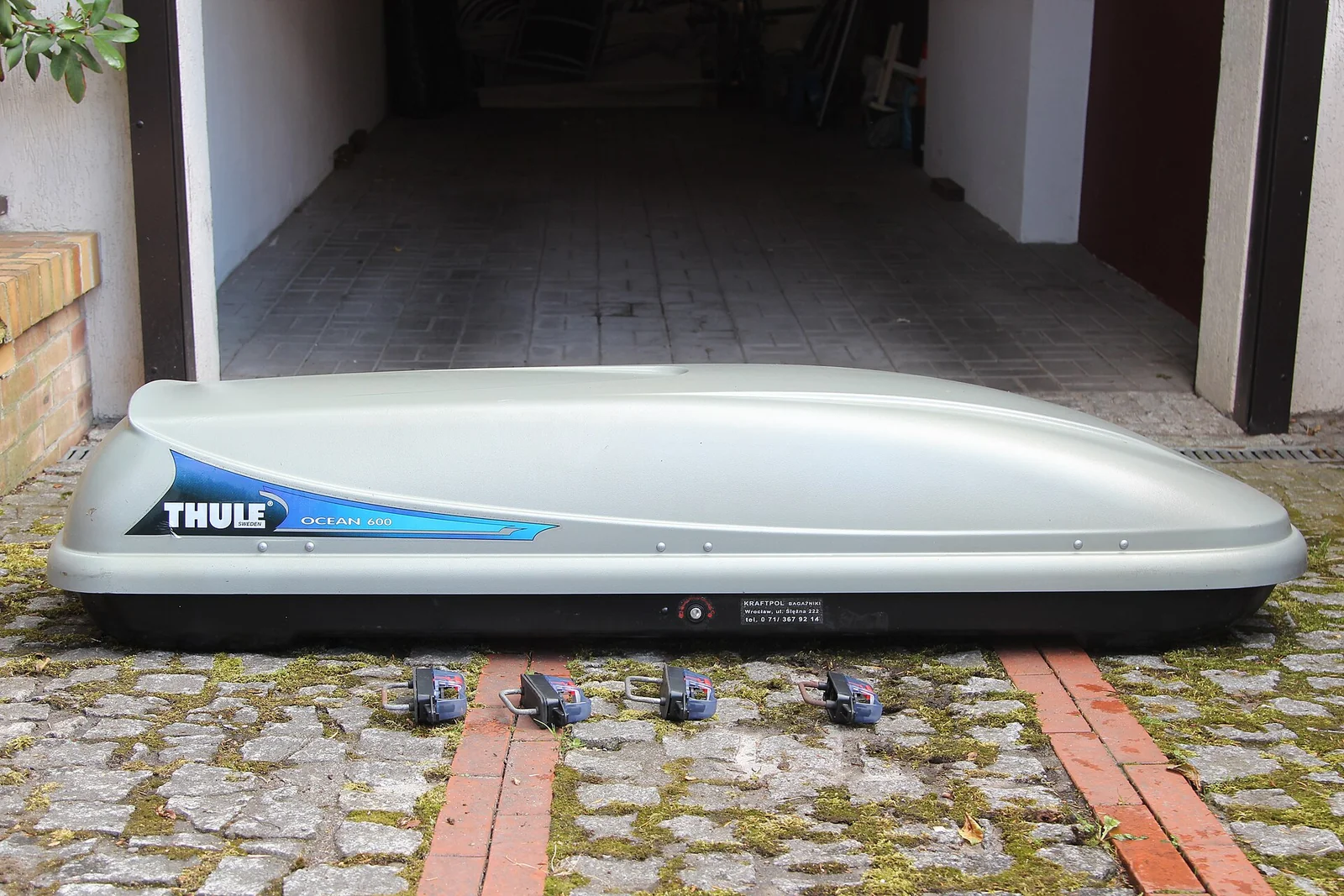
Specs at a glance
At the 16-cubic-foot size the two boxes carry nearly identical volume — Yakima rates the SkyBox 16 at about 16 cu ft and Thule rates the Force XT L near 450 liters, also about 16 cu ft. The full grid is in the comparison table above.
The measurable difference is weight: Yakima lists the SkyBox 16 around 47 lb while Thule rates the Force XT L near 40 lb. On a two-person rooftop lift, those pounds matter, and they factor into your roof's dynamic load budget too.
Capacity and what fits inside
Roughly 16 cubic feet is the family-road-trip sweet spot on both boxes: several duffel bags, sleeping bags, and soft camp gear, or a couple of sets of skis. Both Yakima SkyBox and Thule Force XT taper at the ends, so long, rigid items load best down the center channel.
- Both easily hold a weekend of soft luggage for a family of four, per each maker's rated volume.
- Skis and snowboards fit in both; check the maximum ski length in each size's fit guide before buying.
- Pack soft, heavy items low and rigid items along the spine so the lid closes cleanly on either box.
If you routinely max out a box, both lines offer 18-21 cubic foot sizes above this one.
Mounting: PowerClick vs quick-dial clamps
This is the clearest usability difference. The Thule Force XT uses Thule's PowerClick system: you turn a dial until it clicks, which per Thule's documentation signals the clamps have reached the correct torque — no guesswork and no tools. The Yakima SkyBox uses Yakima's quick-dial clamps, which are also tool-free and secure but rely a little more on your feel for tightness.
Both mount to round, square, factory, and most aero bars per their fit guides, but always confirm your specific crossbars in the maker's fit tool. For a first-time cargo-box buyer, the Force XT's torque-click is the more foolproof install.
Security and locking
If you already run Yakima accessories, the SkyBox's SKS locks let one key system cover your whole rack — and the same logic makes Thule's one-key central locking a strong draw for Thule owners.
The Yakima SkyBox uses Yakima's SKS lock cores, which can be keyed to match other Yakima mounts. The Thule Force XT uses one-key central locking that secures both sides and, per Thule's system, can be integrated with other Thule One-Key locks. Both prevent the lid from opening unless locked. The right answer is usually whichever brand's ecosystem you are already invested in.
Aerodynamics, noise, and fuel economy
Both are aero-shaped hard shells designed to cut wind noise and drag versus a boxy carrier, and both makers publish that a low, streamlined profile reduces the fuel-economy penalty. Any rooftop box adds drag and will lower highway MPG somewhat; independent testers consistently find the effect real but modest at legal speeds.
Neither maker claims a box eliminates the penalty. To minimize it on either, remove the box when it is not needed rather than leaving it on year-round.
Fit, roof rack, and vehicle compatibility
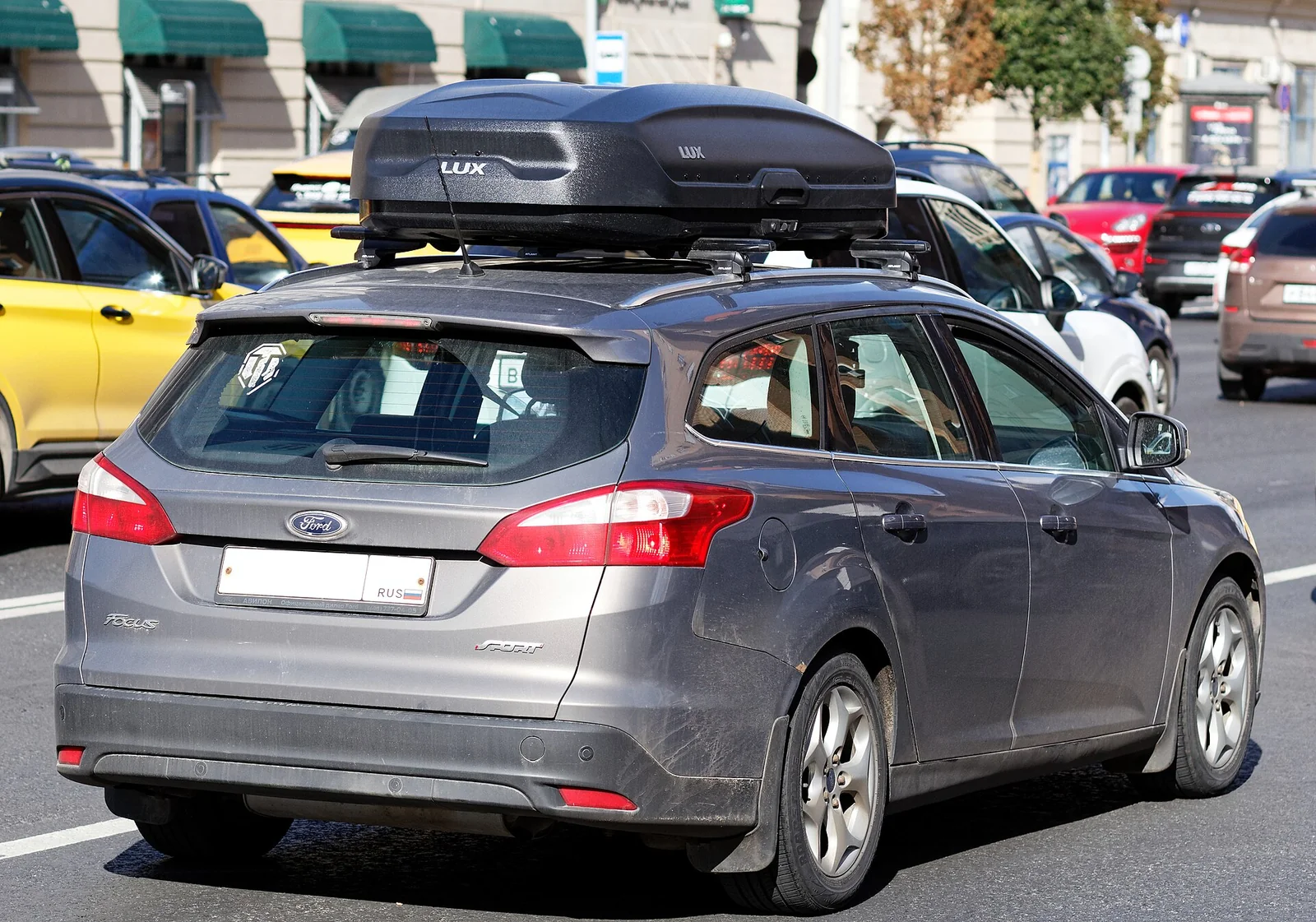
Both boxes need crossbars — they do not mount to bare roofs or to raised side rails alone. Confirm your crossbar spread and your vehicle's rated dynamic roof load before buying, because a loaded box plus its own weight must stay under that limit. The Thule Force XT's lighter published weight leaves slightly more of your roof budget for cargo than the heavier Yakima SkyBox.
Measure your garage height too: a mounted box adds roughly 15-17 inches to your vehicle's height, and both makers warn about clearance.
Durability and everyday use
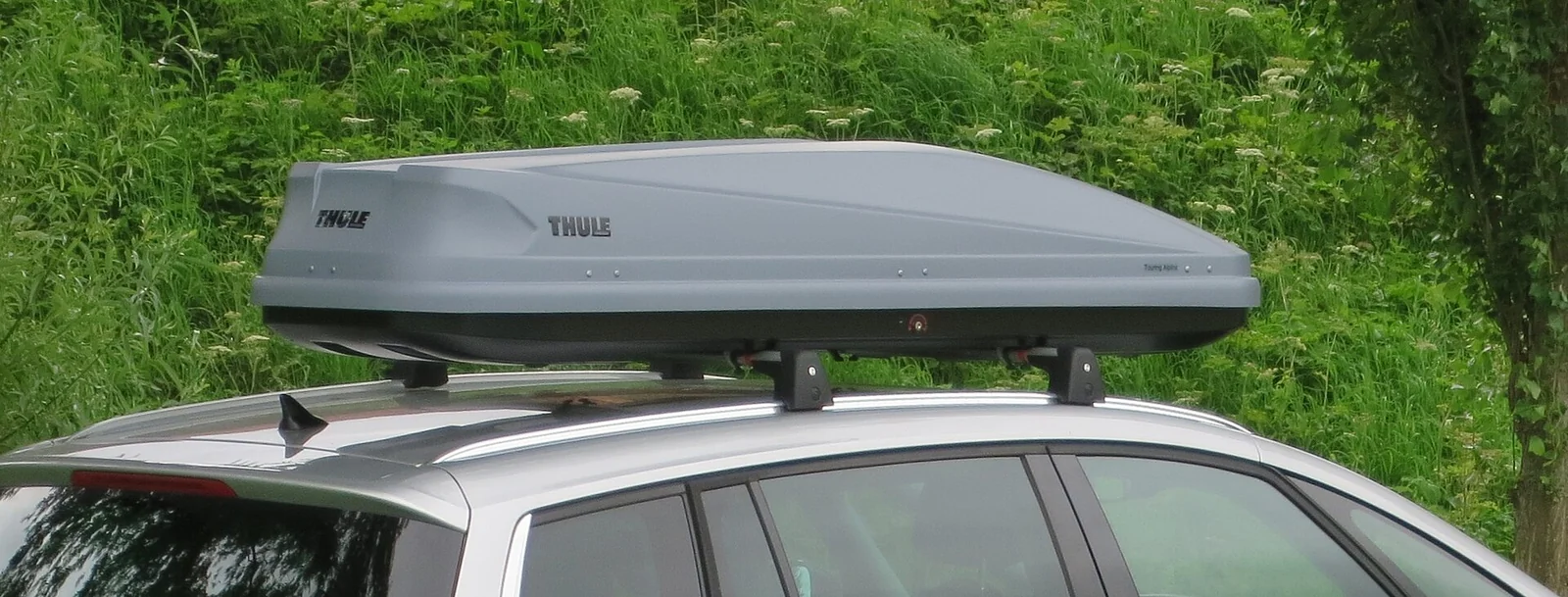
Both shells are rugged, UV-stable plastic backed by long manufacturer warranties, and both have survived years of independent testing in the elements. Dual-side opening on both means you can load from the curb side safely and reach gear from either door. The Yakima SkyBox's wider size ladder and the Thule Force XT's lighter body are the standout everyday differences.
Lift and mount either with two people the first time; both are manageable solo afterward with the box empty.
Price and value
The two lines price closely at each size, and both go on sale seasonally. Dollar for cubic foot they are near-identical, so value again tracks ecosystem and fit: the Thule Force XT for the easiest mount and one-key convenience, the Yakima SkyBox for Yakima security and size range.
Buy the size you will actually fill, not the biggest — a larger box adds weight, height, and drag you pay for on every mile.
Installing and removing the box
Both boxes clamp to your crossbars without tools once the box itself is on the roof. The Thule Force XT's PowerClick dial clicks when it reaches the correct clamping torque per Thule's documentation, which takes the guesswork out of a first install; the Yakima SkyBox's quick-dial clamps are similarly tool-free and secure. Getting the empty shell up top is the two-person moment on either — after that, mounting is quick.
- Lift the empty box with two people the first time; both are manageable solo afterward.
- Confirm the clamps seat on the bar, not just the box lip, before loading.
- Store the box on a wall hoist or padded rafters in the off-season to free garage space.
Because both mount and dismount in minutes, take the box off when you are not touring — you recover the fuel economy and the garage clearance every day it is not needed.
Weatherproofing and off-season storage
Both the Yakima SkyBox and Thule Force XT are sealed hard shells designed to keep rain and road spray out, and both back that with long manufacturer warranties. In practice, pack anything moisture-sensitive in a dry bag anyway, since any rooftop box can take on a little water through the lid seal over thousands of highway miles.
For the off-season, empty and dry the box, wipe the seals, and store it flat or on edge out of prolonged UV. Keeping the shell out of constant sun preserves the plastic and the seals on either brand, which is a large part of why these boxes last a decade of trips.
Which to buy: let your rack and priorities decide
- Buy the Thule Force XT if you want the tool-free PowerClick mount, one-key locking, and a slightly lighter box — the easiest first cargo box.
- Buy the Yakima SkyBox if you want Yakima's SKS lock ecosystem and the widest range of sizes from 12 to 21 cubic feet.
- Already own one brand's rack or locks: stay in that ecosystem for one-key convenience.
- Weight- or roof-load-limited: the Force XT's lighter published weight leaves more of your budget for cargo.
Both are excellent premium hard boxes. The Thule Force XT wins on mounting ease and locking; the Yakima SkyBox wins on lock ecosystem and size choice. Confirm your crossbars, then buy the one whose system fits your setup.