
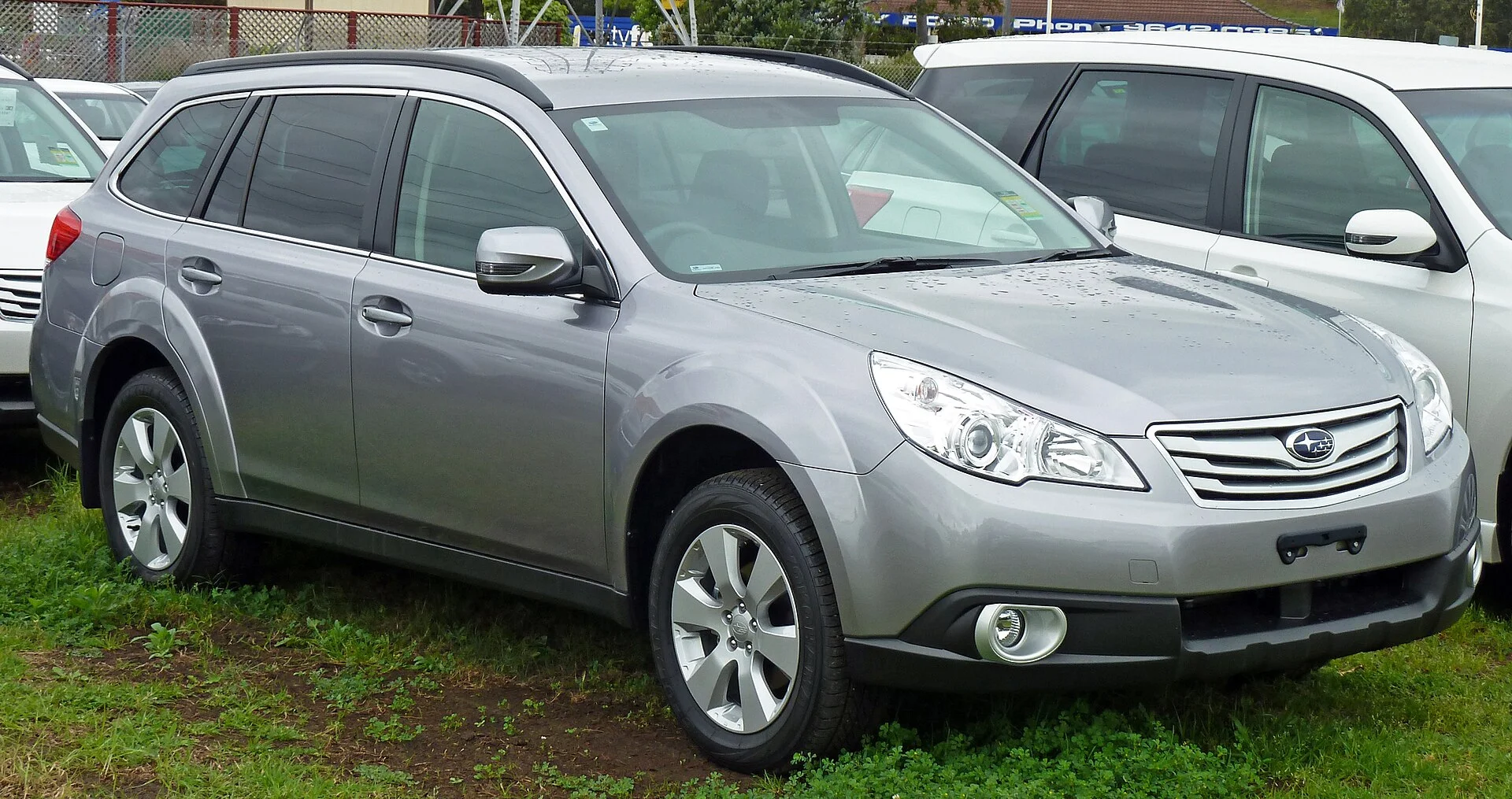
Two Subaru trail favorites, two very different beds
The Subaru Outback and the Subaru Crosstrek are the two vehicles Subaru shoppers most often cross-shop for a camp-capable daily driver, and both come with the brand's signature standard all-wheel drive and real ground clearance. But as beds they are not close: the Outback is a long, low wagon that turns into a genuine two-person sleeping platform, while the Crosstrek is a compact crossover that makes a snug, capable solo nest.
Both handle the drive to a rough trailhead better than most crossovers, and both need the same basics to sleep in — seats folded, a mattress cut to the floor, and window shades for privacy. The deciding question is simply how much room you need once you lie down, and how much vehicle you want to park and pay for the rest of the year. This comparison walks cargo volume and floor length, how flat each bed really is, power for your gear, and who each Subaru actually suits.
Cargo space and sleeping length: the Outback is in another class
This is where the two separate hard, and it's the Outback's decisive win.
| Spec | Subaru Outback | Subaru Crosstrek |
|---|---|---|
| Cargo behind rear seats | 32.6 cu ft | 20.0 cu ft |
| Cargo, rear seats folded | 75.6 cu ft | 54.9 cu ft |
| Folded floor | Long & flat (wagon) | Short, mild slope |
| Standard AWD | Yes | Yes |
| Rear-seat split | 60/40 | 60/40 |
| Household AC outlet | None (12V) | None (12V) |
The Outback gives you roughly 21 more cubic feet folded (75.6 vs 54.9) and, more importantly for sleeping, a long, low, genuinely flat load floor — the wagon body is the reason it has a cult following among car-campers. Most adults can stretch out fully, and two can sleep side by side with gear up front. The Crosstrek's 54.9 cubic feet is usable and its floor folds nearly flat, but the length is the constraint: taller sleepers will end up on a diagonal, and it's really a one-person bed. A cargo-area mattress cut to each vehicle's floor is what turns either into a level bed.
The sleeping platform
Fold the Outback's 60/40 rear seats and you get the shape car-campers dream about: a long, rectangular, low-lipped floor that sits close to level with a topper. It's long enough for most adults to lie fully flat and wide enough for two on a twin-to-double pad, which is why so many owners skip a rooftop tent entirely and just sleep inside. The low roofline means less sit-up headroom than an SUV, but for lying down it's excellent.
The Crosstrek asks for more compromise. Its floor folds nearly flat, but the shorter length means a taller sleeper sleeps corner-to-corner, and it's comfortable for one rather than two. The upside is that the Crosstrek is easier to tuck into a tight, stealthy spot and still delivers the same standard AWD and clearance to reach remote sites. For either, slide the front seats forward and recline them to reclaim a few inches, and buy a pad cut to the cargo area rather than a household air bed that gaps at the wheel wells. A foam topper over the folded seams is the single biggest comfort upgrade in both.
Two habits matter more than the vehicle in either Subaru. Insulate from below, since a folded floor sits close to the cold air passing under the car — a pad with genuine R-value does more than raw thickness. And manage condensation: breath fogs the glass in a sealed cabin overnight, so crack a window a half-inch, screened against bugs. The Outback's larger volume makes it easy to arrange ventilation around a two-person bed and still keep a fridge aboard, while in the Crosstrek you'll want to plan airflow and gear placement deliberately given the tighter space once the bed is made.
Power for your gear
Neither Subaru has a household outlet, so overnight power in both comes down to one accessory: a portable power station sized to your fridge.
Neither the Outback nor the Crosstrek is a plug-in or EV, and neither offers a factory 120V household outlet — both stick to 12V sockets and USB. That makes the power question refreshingly simple, because the answer is the same for both: a portable power station runs a fridge, lights, and device charging all night without touching the starter battery, so you never risk a dead battery and a no-start in the morning.
Size it to your fridge's running watts and a long weekend is covered in either vehicle. The only power-relevant difference is space to store it: the Outback's larger bay swallows a bigger battery and a fridge with room to spare, while in the Crosstrek you'll be more deliberate about where the power station and cooler ride once the bed is made. Plan the layout before you leave and both are easy to live with overnight.
Living with it: drive, clearance, and ownership
Both are excellent daily drivers with real off-pavement ability; the differences are about size and stance.
- Space and bed: the Outback is the clear winner for sleeping and hauling, with wagon-length cargo and a flatter, longer bed.
- Maneuverability: the Crosstrek is smaller, easier to park, easier to hide when stealth camping, and a little more efficient day to day.
- Capability: both come with standard symmetrical AWD and generous ground clearance; the Crosstrek's shorter overhangs actually help on rough two-tracks, while the Outback's clearance and available trims keep it composed too.
- Ownership: both hold value well and enjoy a huge aftermarket of camping and overlanding accessories built specifically for them.
In short: the Outback is the better basecamp, the Crosstrek is the nimbler daily that still gets you and one sleeper deep into the woods.
Which should you camp in?
Match the Subaru to how you actually sleep and drive:
- Choose the Outback if you want a real two-person bed, the longest flat floor, and room for a fridge and a big power station — it's the purpose-built car-camper of the pair.
- Choose the Crosstrek if you camp solo, want a smaller, cheaper, easier-to-park daily driver, and value stealth and nimbleness over outright space.
- Camp as a couple often? It's the Outback, without much debate — the Crosstrek is a genuinely tight fit for two adults.
Budget usually tilts toward the Crosstrek, which undercuts the Outback on sticker and running costs, so a solo camper on a budget gets a lot of capability for the money. If you want the full single-vehicle picture, our deeper guides on sleeping in each Subaru cover the layouts and gear that work best in that specific body.
The verdict
For car camping specifically, the Subaru Outback is the better tool by a wide margin: about 21 more cubic feet folded, a long, low, flat wagon floor that most adults can lie flat on, and room for two plus a fridge and power station. If sleeping in the vehicle is a real part of why you're buying it, this is the one.
The Subaru Crosstrek is the better pick for a specific buyer: the solo camper who wants a smaller, cheaper, more nimble daily driver with the same standard AWD and clearance, and who's happy in a snug one-person nest. It reaches the same trailheads — it just asks you to travel lighter once you get there.
Pick the Outback if the back of the car is a bedroom for two; pick the Crosstrek if it's a nest for one and you value size and price. Either way, a fitted pad, window shades, and a power station turn a Subaru's standard AWD into a go-anywhere basecamp.