
How to Choose the Right Size Sleeping Pad for Your Car Camping Tent
My first car camping trip was a $47 experiment in a Honda Civic hatchback in Shenandoah Valley. Mid-October. I had a Walmart foam pad, a sleeping bag rated to 40F, and zero idea that the temperature drops 15 degrees after midnight in the mountains.
My first car camping trip was a $47 experiment in a Honda Civic hatchback in Shenandoah Valley. Mid-October. I had a Walmart foam pad, a sleeping bag rated to 40F, and zero idea that the temperature drops 15 degrees after midnight in the mountains. By 2AM I was wearing every piece of clothing in my bag and still shivering. The fix was a $12 fleece liner from Amazon that turned my 40F bag into a 25F bag.
Three years later I still use that same liner on every trip.
The size of your sleeping pad matters, and not just for how cozy you are. It's about fitting it inside your tent without feeling like you're wrestling an octopus in a phone booth. For car camping, where you're not lugging it up a mountain, you have a little more leeway, but you still don't want to wake up with your feet dangling off the edge into the chilly night air.
REI suggests considering tent size and your sleeping habits when picking a width.
The Core Answer
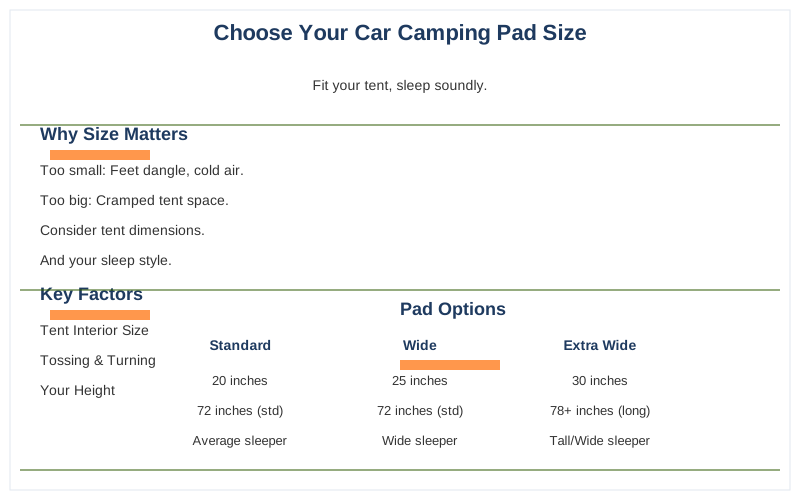
The real move for choosing a sleeping pad size comes down to two things: your tent's interior dimensions and how much you toss and turn in your sleep. Most car camping tents are designed to fit a standard-sized sleeping pad, usually around 20 inches wide. But if you're a wide sleeper, like I am after a big campfire dinner, you'll want to look at wider options, typically 25 or even 30 inches. REI mentions this directly when talking about tent fit. I learned this the hard way at an overcrowded state park in Ohio. My tent was advertised as a '3-person' tent, which I now know is code for 'sleeps 2 adults and their gear comfortably, or 3 very good friends who don't mind spooning.' My 20-inch wide pad filled most of the floor space, leaving zero room for my backpack or my hiking boots. Rookie mistake. If you're on the taller side, you'll need to consider length. Most standard pads are around 72 inches long, which is good for folks up to about 6 feet. If you're pushing 6'2" or taller, you'll want to find a 'long' or 'XL' size pad, which can add another 4-8 inches to the length. Therm-a-Rest points out that length is a key factor. What nobody tells beginners is that tent floor dimensions are often listed in inches, but the sleeping pad measurements might be in centimeters or even just described as 'regular' or 'long'. It's game-time to pull out that tape measure. Remember, a pad that's too wide might not fit, but a pad that's too short means cold feet and a sore back. For my 2023 Subaru Outback, which has a decent sleeping footprint, I ended up with a 25-inch wide pad and it made all the difference in comfort and space. When I first started, I just grabbed whatever pad looked thickest. I didn't even think about the width. That led to me trying to sleep on the uneven ground next to my pad more than once. The honest version is, you need to know your tent's floor dimensions. Most tent manufacturers list these on their website or the product tag. Measure the usable sleeping area, not the absolute edge-to-edge measurement. If your tent is, say, 70 inches long and 50 inches wide, and you're 5'10", a standard 72-inch long by 20-inch wide pad will fit fine. You'll have about 10 inches of space left in the width for your gear. But if you get a 30-inch wide pad, you're looking at only 20 inches of space left, which might be tight. Think of it this way: if your sleeping pad takes up the entire floor of your tent, where are you supposed to put your headlamp, your water bottle, or that book you're trying to read? Nowhere. That's why understanding the dimensions is crucial. Big Agnes confirms that car camping allows for more bulk for comfort, which includes having the right size pad. The $50 version of this lesson is buying a pad that's too big and then having to awkwardly roll it up just to cram it into your trunk, only to find out it still doesn't fit right in the tent. The $150 lesson is buying the right size the first time and actually sleeping through the night. GearX talks about how pad thickness and width contribute to comfort.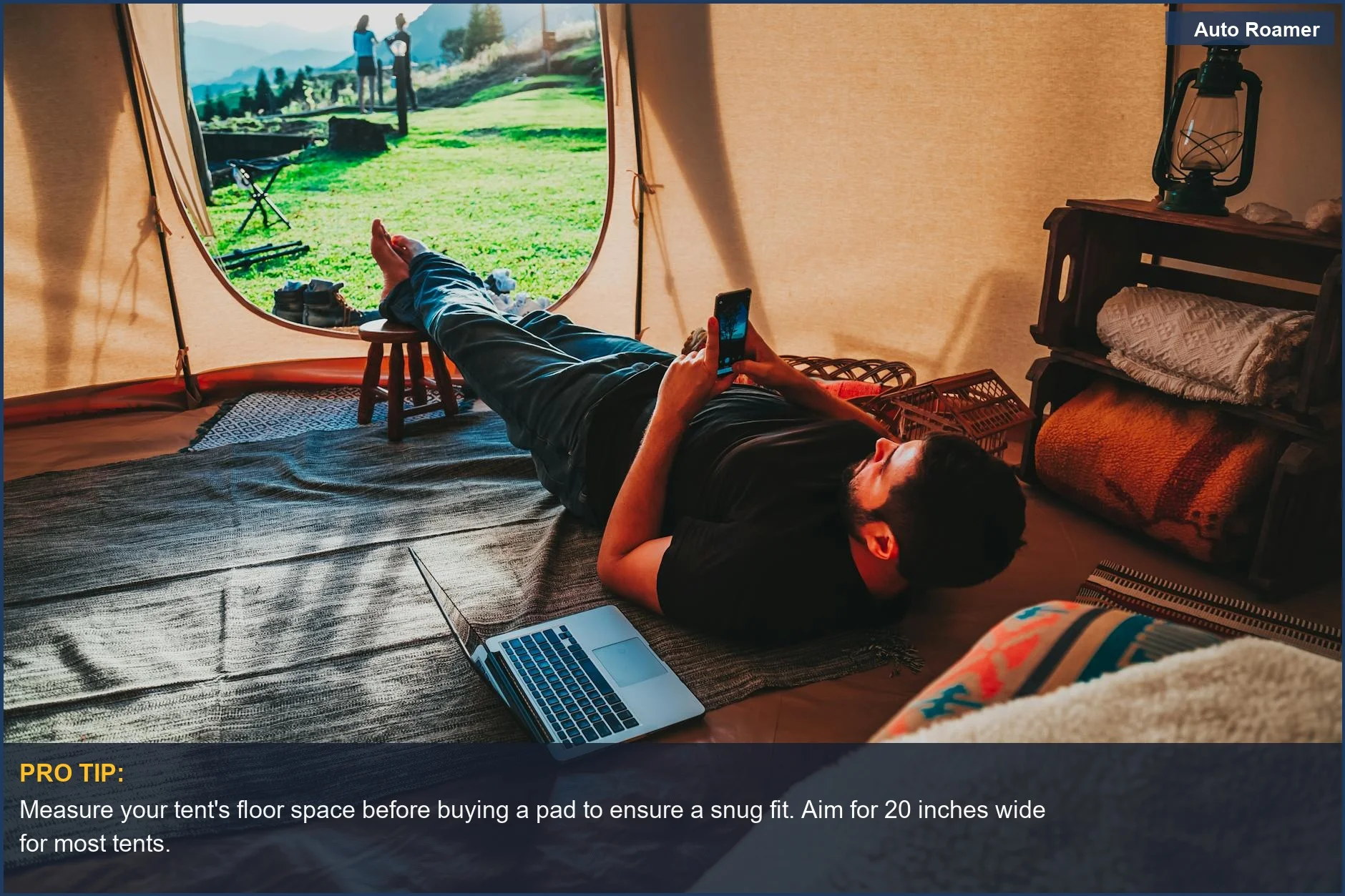
Why This Matters for Your Setup
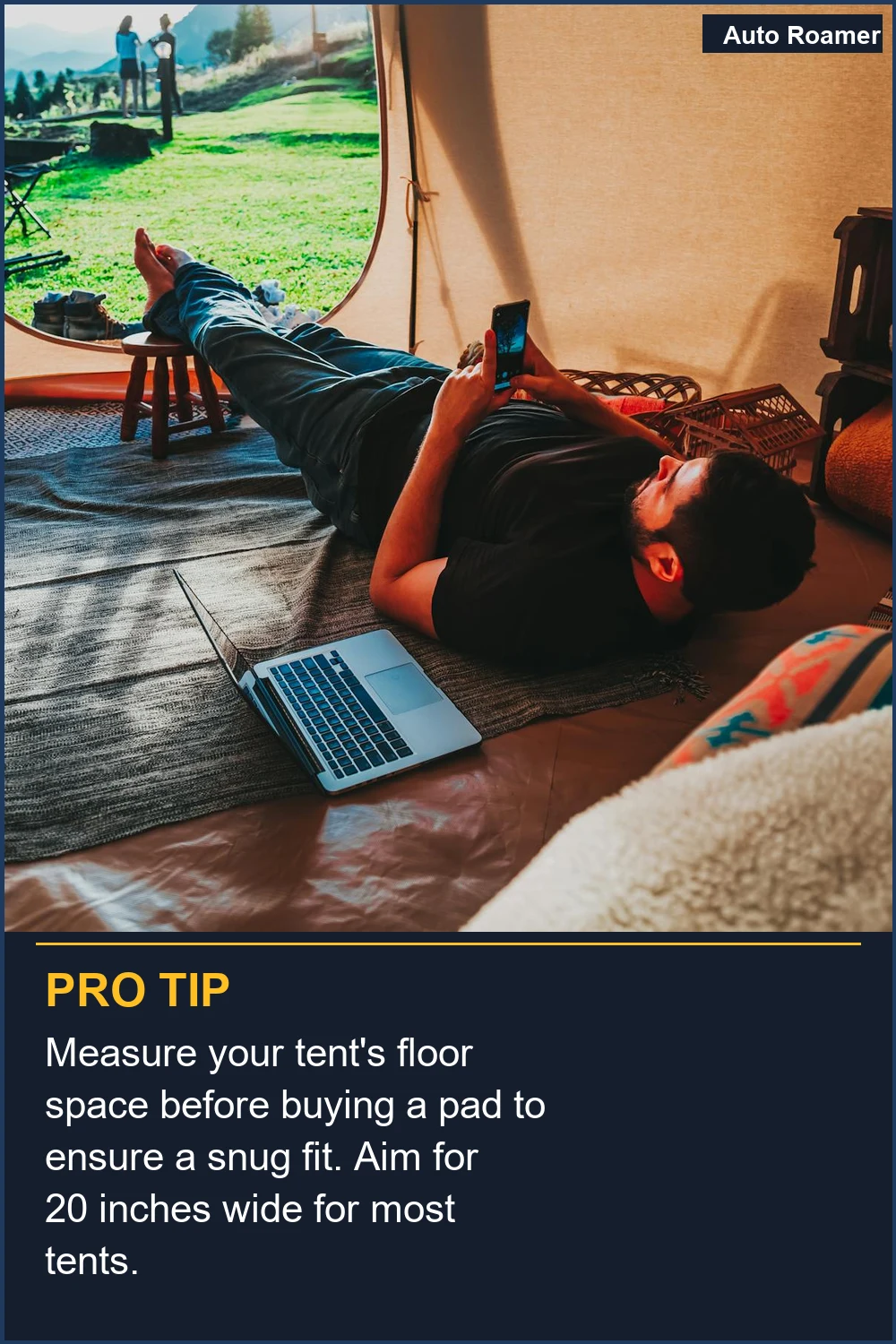
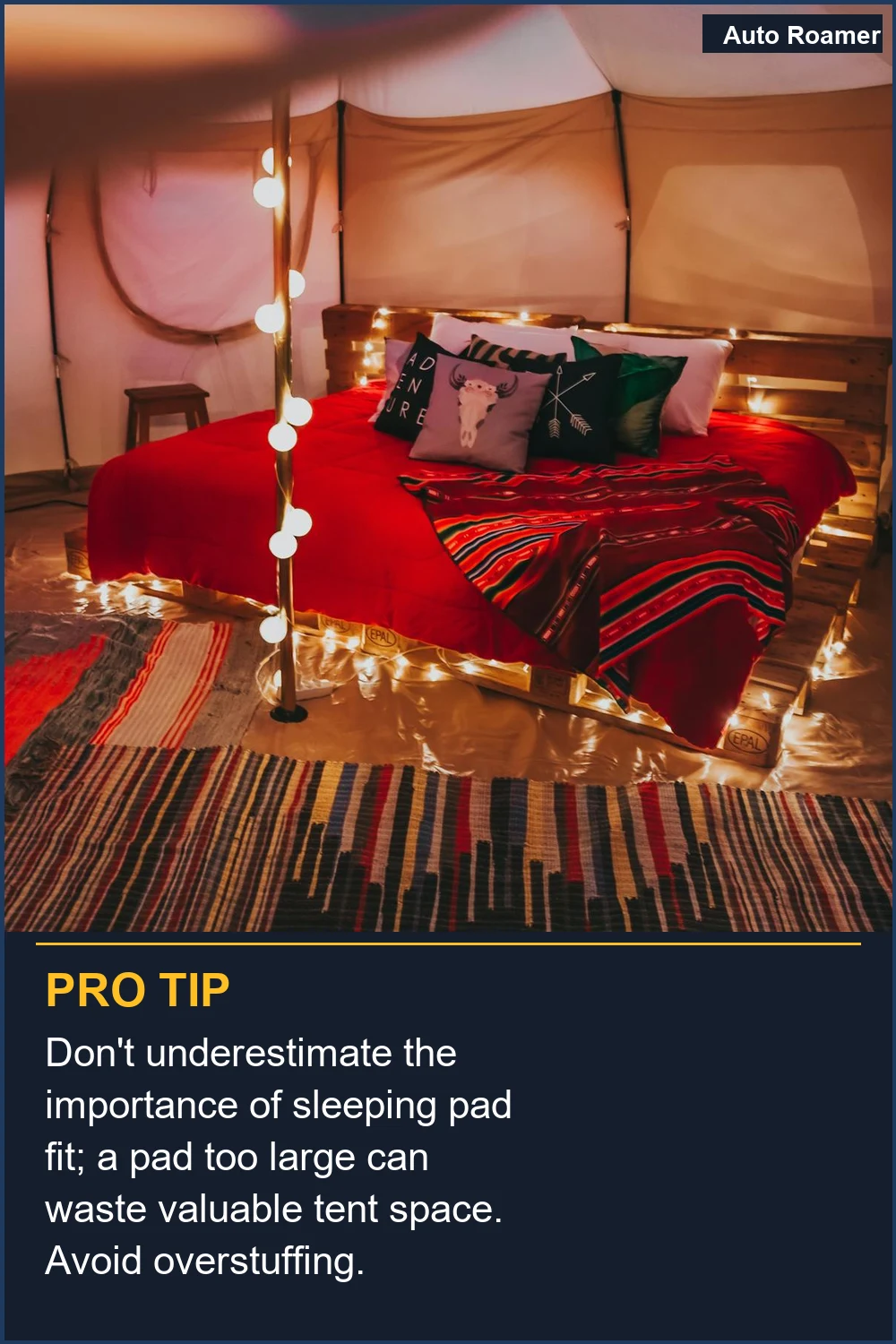
This isn't just about not feeling the rocks under your back; it's about maximizing your tent's actual living space. I once tried to squeeze a queen-sized air mattress into a 3-person tent. Brilliant engineering, I know. Here's the field notes version: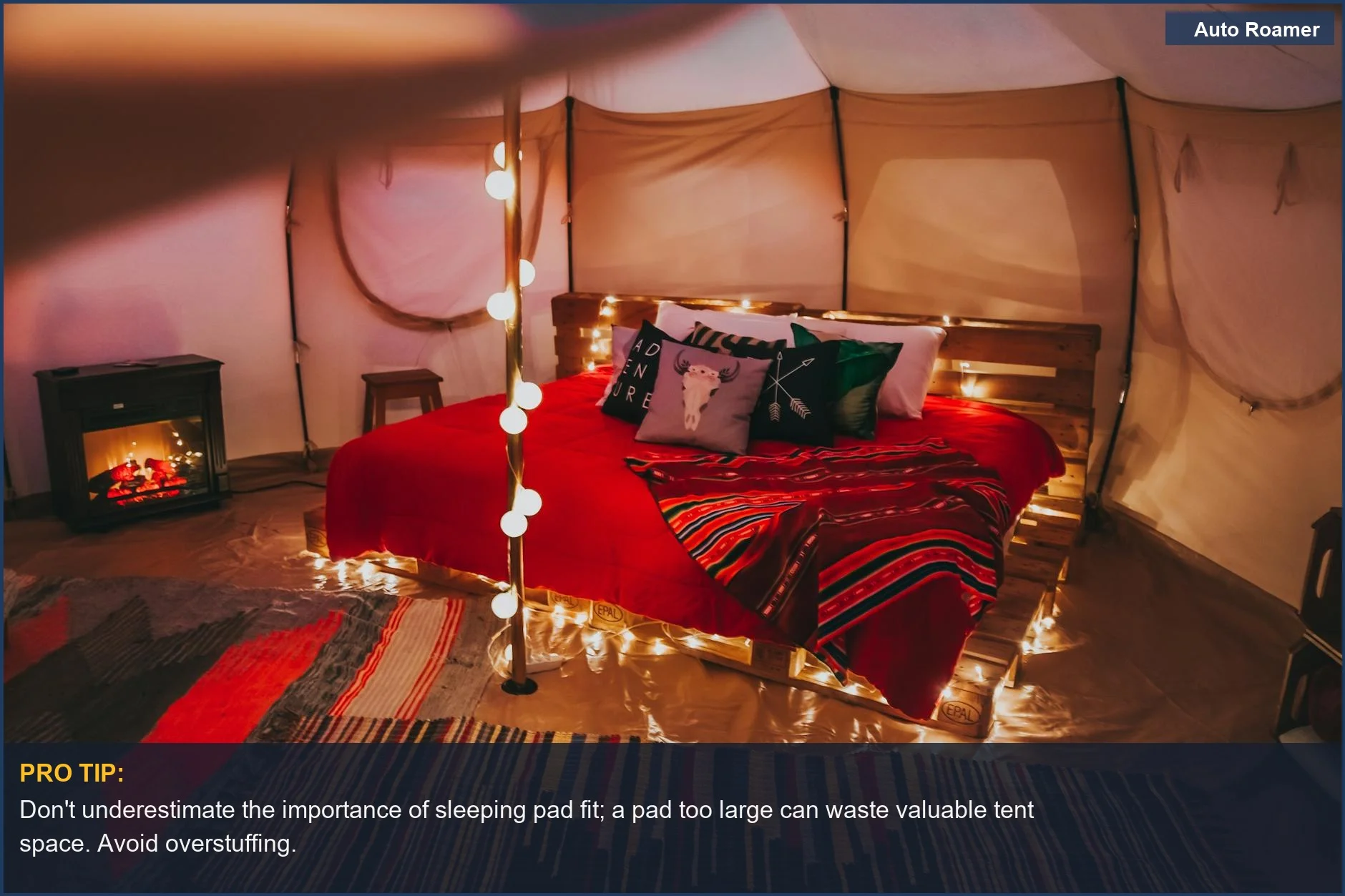
Making the Right Choice
Choosing the right size sleeping pad for your car camping tent boils down to a simple equation: tent dimensions minus your body plus your preferred sleeping wiggle room. Don't just grab the first pad you see; measure twice, buy once. Here's the takeaway: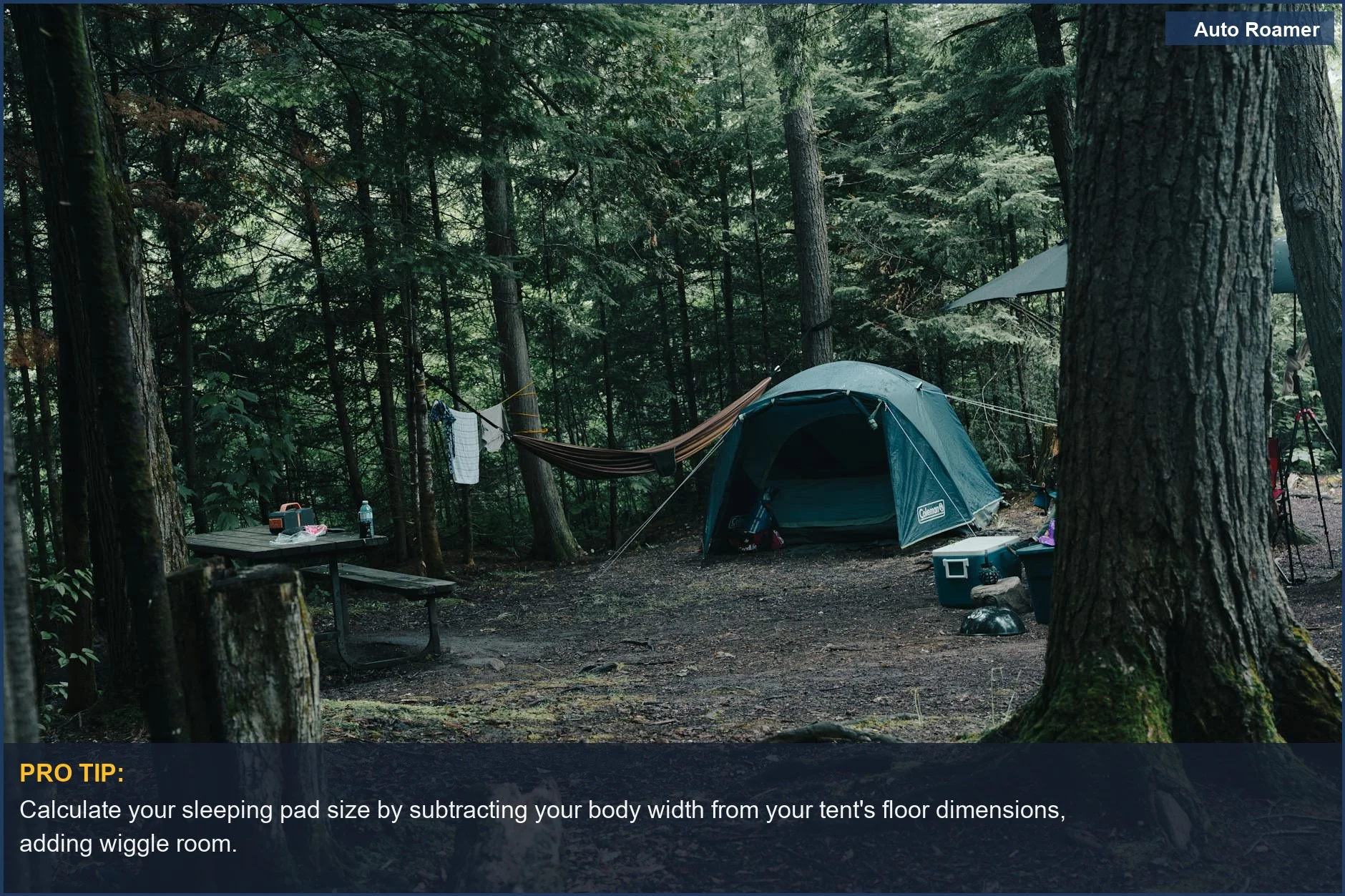
Frequently Asked Questions
Okay, I get the sizing thing, but how much should I expect to spend on a decent-sized pad for my car camping tent? I saw some online for $30 and others for $300. Is it worth paying more?
Do I really need to measure my tent floor? Can't I just eyeball it? I'm pretty good at guessing.
What if I buy a pad that's too wide for my tent? Can I just shove it in there and hope for the best?
If I get a pad that's too long for my tent, will it damage the tent or the pad in the long run?
I heard that wider sleeping pads are always better because they're more comfortable. Is that true?
🏅 Looking for Gear Recommendations?
Check out our tested gear guides for products that work with this setup:
Sources
- 4 Steps to the Perfect Car Camping Mattress | TrunkMate
- How to Choose a Sleeping Pad | Sea to Summit
- Find Your Perfect Sleeping Pad: The Best Choices for Camping Bliss
- choose-right-size-shape-camping-mattress?srsltid=AfmBOorzvnT6WXlNjOIcw01p41eXJo7VAwJzrE_IuofJ3vCUviQoI9s9
- Finding The Right Sleeping Pad | Big Agnes
- How to Choose a Sleeping Pad - Outdoor Gear Exchange
- How to Choose a Sleeping Pad for Camping and Backpacking - REI