
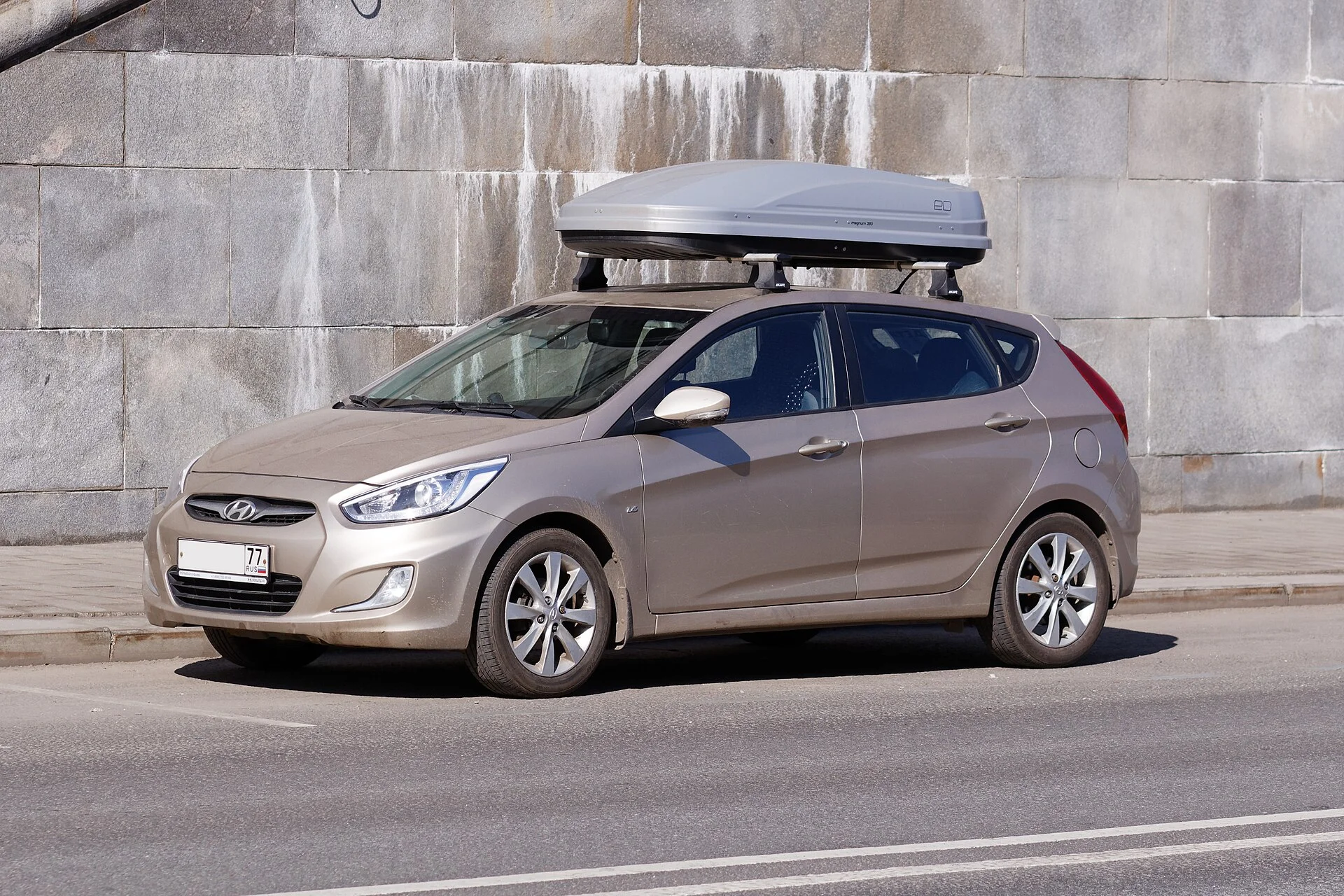
Two Questions, One Answer: Tight Enough, Not Cranked Down
You have the crossbars on and the box clamped down, and you are standing in the driveway with the wrench still in your hand, asking the two questions everybody asks: how tight is tight enough, and is this thing going to launch off the roof at 70 miles an hour? They feel like two problems. They are really one. The answer to both is that tightness on a roof rack is a specification — a torque number or an audible click — and not a feeling in your forearm. Get the spec right and a box does not fly off. Guess at it, in either direction, and you create the exact failure you are afraid of.
Here is the part that surprises people: cranking harder is not safer. A roof rack and a roof box hold on by clamping force, and every clamp has a window. Too little force and the part can slip or work loose; too much force and you crack the plastic, strip the threads, or deform the rail you are squeezing — sometimes leaving a clamp that looks tight but no longer grips. The single most common mistake confident people make is reefing on the bolt 'to be sure,' which quietly damages the one thing keeping their gear on the car.
This guide separates the two fasteners most people blur together — the hardware that holds the bars to the car and the very different hardware that holds the box to the bars — and gives you the right tightness for each. Then it answers the fear honestly: a correctly clamped, load-rated, latched, and re-checked box does not fly off, and the rare ones that do almost always trace to a short list of preventable mistakes. By the end you will know what 'tight' actually means here, how to confirm it without a torque wrench if you have to, and the simple re-check that turns 'I hope it holds' into 'I know it holds.'
Clamping Force Is the Whole Game — Why 'Harder' Isn't 'Safer'
One idea explains every tightness question on a roof: a rack does not glue or weld itself to your car, and a box does not glue itself to the bars. Both hold on by clamping force. A foot, a clamp, or a U-bolt squeezes against a structural part — a roof rail, the edge of the door frame, or the crossbar itself — and that squeeze is the only thing resisting wind pressure, braking, and the sideways throw of a hard corner. The fastener's whole job is to generate and hold the right amount of squeeze.
That reframes 'how tight.' The correct tightness is whatever produces the clamping force the engineer designed for — no more, no less. Too little force and the clamped part can creep, slip on the rail, or shake loose under vibration. Too much force does not add a safety margin; it works against you. Past the design point you stop adding useful grip and start deforming the mount, crushing a rail cover, cracking a plastic foot, or stretching threads toward stripping. There is a window, and both walls of it are failures.
The nasty twist is that over-tightening damage hides itself. A bolt you snapped down hard feels secure, but if you cracked the clamp body or stripped the thread, the part can no longer hold its designed force — so you now have a connection that looks tight and isn't, which is worse than one you know is loose. This is why the entire roof-rack industry has moved toward torque-limited hardware that clicks at the right number and refuses to go further. The goal is not maximum force. It is correct, repeatable force. Keep that in mind and the specific numbers below stop being trivia and start being the point.
How Tight Should the Crossbars Be? (Bars-to-Vehicle)
Start with the hardware that holds the bars to the car — the foot packs, clamps, or fit-kit brackets that grab your roof rails or door-frame edges. This is the more heavily torqued connection of the two, because it carries the entire system: bars, box, and everything inside. As a general guide, bar-mounting fasteners are commonly tightened to a manufacturer-specified torque in the neighborhood of 25 to 35 Nm. Treat that as a ballpark, not gospel: the exact figure varies by rack model and fit kit, and the honest, correct answer is always to read the torque number printed in your product's manual and hit that.
The good news is that most modern systems take the guesswork out. Thule's clamp uses a permanently attached, torque-limited dial that produces an audible click when the clamp reaches the right tension — you turn until it clicks and then you stop, and the mechanism makes it hard to over-tighten. Yakima's systems are also torque-limited but use a separate torque tool or key, which works just as well but is slower and easier to misplace, so keep that tool with the rack. If you want a fuller sense of how the two brands differ in daily use, our breakdown of Thule versus Yakima roof racks covers it.
What if your bars use plain bolts with no click and no torque tool? Then a small torque wrench is genuinely worth owning — it is the only way to hit a spec instead of guessing, and it pays for itself the first time it stops you from cracking a foot. No torque wrench at all? Hand-tighten until the bar is firmly seated and stops moving, then add a small, deliberate amount more — roughly a quarter turn past snug — and verify the bar will not slide, twist, or lift by pulling and pushing on it hard with both hands. That is a fallback, not a substitute for the spec, and it makes the after-the-first-drive re-check (covered below) non-negotiable.
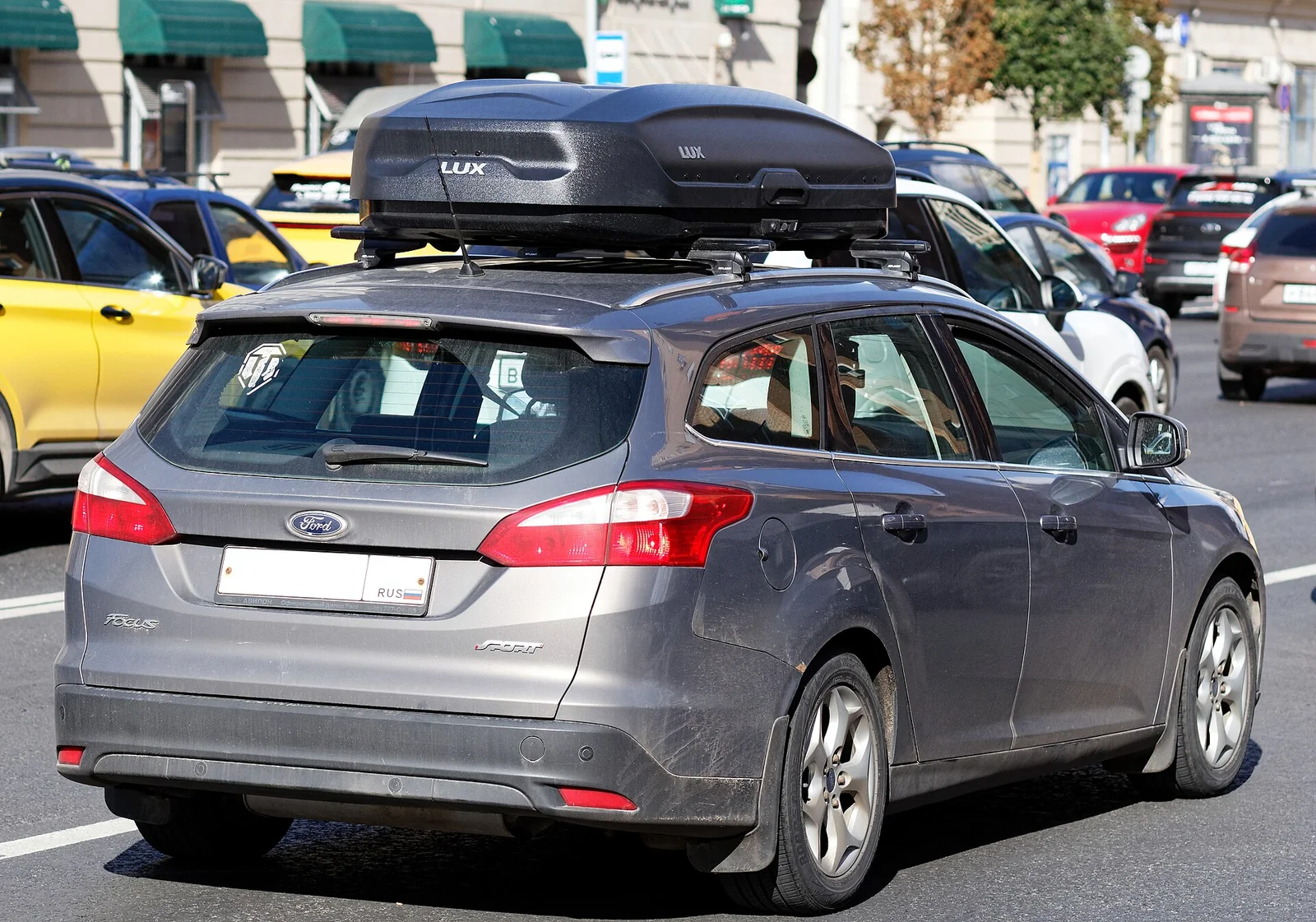
How Tight Should the Roof Box Be? (Box-to-Bars — Much Lighter)
Here is where most people go wrong, because they assume the box clamps want the same muscle as the bar mounts. They do not. The clamps, knobs, or U-bolts that hold a roof box onto the crossbars are a different, far lighter fastener, often tightened only to roughly 5 to 8 Nm — a small fraction of the bar-mounting torque. The clamp's job is to hook under the bar and pinch the box's base channel against it, and that takes surprisingly little force. Crank a box clamp like a lug nut and you will crack the plastic clamp or the box's mounting boss long before you make it 'more secure.' Always confirm the exact number in your box's manual, but expect it to be low.
This is exactly why good roof boxes tell you when to stop mechanically. A torque-limited knob — Thule's PowerClick-style and similar quick-grip knobs are the common example — makes an audible click or ratcheting 'crack' when it reaches the correct torque.
When it clicks, it is tight enough; turning past the click does nothing useful and risks damage.
If your box has these knobs, you do not need a torque wrench for the box at all — you need to turn each knob until it clicks and then leave it alone. The click is the spec.
Two details make or break the box clamp regardless of torque. First, the clamp has to fully hook under the crossbar — a clamp that is only partially engaged on the bar can be torqued perfectly and still peel off under wind load, because it was never really grabbing. Look underneath and confirm each clamp's jaw is all the way around the bar before you tighten. Second, the clamps belong at the manufacturer-specified positions along the box's base channel, not wherever they happen to land — those positions put the grip where the box is reinforced. Right position, full engagement, tighten to the click: that is a box clamp done correctly, and it is almost entirely about technique, not force.
The Over-Tightening Trap: Cracked Plastic, Stripped Threads, Bent Rails
It is worth dwelling on over-tightening, because it is the failure mode confident, capable people cause — the same instinct that serves you on a stuck jar lid betrays you on a roof rack. Excessive clamping force does real, specific damage: it can deform the mounting point, crack plastic feet and rail covers, strip threads, and create stress concentrations that turn into fatigue cracks over weeks of driving. None of that makes your gear more secure. All of it makes it less secure while feeling, in the moment, like diligence.
The damage is not always cosmetic and it is not always on the rack. Owners have cracked the vehicle's own roof or rail mounting area by clamping a loaded box too hard or by exceeding what the roof structure can take — a reminder that the car's sheet metal and rail mounts have limits too, and that more squeeze is not automatically safer for anything in the stack. A clamp that has crushed its contact point or a thread that has begun to strip will also relax over time, so the over-tightened joint often ends up looser than a correctly torqued one a few weeks later.
The practical rule that prevents all of this: if your hardware clicks, stop at the click. If it specifies a torque, hit that torque with a torque wrench and not a hair more. If you have neither, snug plus a small, controlled amount — never your full body weight on a long wrench. The mental model to delete is 'tighter equals safer.' Replace it with 'correct equals safe, and the manufacturer already decided what correct is.'
Will My Roof Box Actually Fly Off? The Honest Answer
Now the fear, answered straight: a roof box that is correctly clamped, within its weight and span limits, fully latched, and re-checked does not fly off under normal driving. The viral photos and forum horror stories are real, but they are not random misfortune — analyze the cases and they almost always trace to a specific, preventable mistake. 'My box flew off' is, the overwhelming majority of the time, 'I missed a step,' not 'roof boxes are a gamble.'
The real causes cluster into a short list:
- Clamps never fully engaged on the bar or rail — the box was sitting on a jaw that was only half-hooked.
- Fasteners that loosened from vibration over weeks and were never re-checked, until one finally let go.
- Exceeding the weight limit of the roof or the rack, so the system was overloaded before it ever moved.
- Bars spaced outside the box's allowed range, leaving the box under-supported and free to lever against its own clamps.
- A lid or latch left unclosed, so the contents — or the wind getting under an open lid — did the damage, not the mount.
Notice what is and isn't on that list. Correct torque appears only indirectly; the headline failures are mostly about engagement, weight, spread, and re-checking, not about whether you turned the knob hard enough. That is reassuring, because every item is something you control in the driveway in five minutes. The box does not have a mind of its own. It stays where the physics says it should — and the physics is on your side as long as you do not hand it one of these openings.
Why Tight Doesn't Stay Tight — and the Re-Check That Fixes It
Here is the step that quietly prevents most real-world failures, and it is the one people skip: re-checking. Even a perfectly torqued clamp does not stay put forever. Vibration and thermal cycling — the constant buzz of the road plus the daily heat-up and cool-down of metal and plastic — inevitably let some fasteners creep loose over time. A load-bearing bolt that has backed off even slightly is the start of a fatigue failure, which is exactly the slow, invisible path to a box that lets go on a trip months after a flawless install.
Two re-checks cover almost all of it. The first is shortly after installation — manufacturers commonly tell you to re-verify clamp tightness after the first stretch of driving, often cited around the first 15 to 25 miles or after the first trip.
Clamps settle and seat under their first real loads, so a knob that clicked in the driveway can need a touch more to click again once everything has bedded in.
The second is a habit re-check before any long highway drive and after rough roads: a thirty-second walk-around where you confirm each bar clamp and box knob is still at its click or spec and the box does not rock.
This is also the safety net under the no-torque-wrench fallback. If you had to tighten by feel, the after-the-first-miles re-check is what catches the connection that was a little under or a little over. Build it into the trip the way you check tire pressure: not because you expect a problem, but because the one time it matters, it really matters. A roof system is a maintained connection, not a set-and-forget one — the same lesson that shows up when a rack starts to whistle and the first fix is to stop roof rack wind noise by simply re-tightening everything.
Placement, Spread, and Weight: The Other Half of 'Will It Hold'
Tightness is necessary but not sufficient. A box clamped flawlessly to badly placed bars is still a box that can sway, bounce, and lever on its own clamps. Two geometry numbers matter. Crossbar spread — the distance between the front and rear bars — has to land in the box's allowed range. Bars too close together leave the long ends of the box unsupported, so it nods and bounces; bars too far apart can exceed the box's rated span. Many cargo boxes call for a minimum of roughly 24 to 30 inches between bars, so check your box's spec and set the bars to suit it.
Placement matters as much as spread. Crossbars are meant to clamp at the points where the roof structure is strongest, as defined by your fit kit, because the rack's rated capacity assumes those exact spots. Clamp the bars in the wrong location and you can undermine both capacity and stability even with the clamps torqued correctly. If your box visibly bounces or oscillates up and down at speed, treat that as a warning, not a quirk — it usually means the box is under-supported, mis-positioned, or the clamps are not fully seated, and it is the kind of motion that works fasteners loose.
Then there is the weight question, which sits underneath all of it. The rack eats into your budget before any cargo: crossbars can run about 10 to 15 pounds and a hardshell box is often around 40 pounds empty, and every bit of that counts against your vehicle's dynamic roof load limit. 'Will it hold' is partly 'is it within limits' — which is why it pays to understand your roof rack weight limits and how a moving load differs from a parked one before you load up. No amount of correct torque rescues an overloaded roof.

The Tighten-and-Verify Routine, Step by Step
Put it together as one ordered routine you run every install and every big trip. Do these in order so tightness, engagement, geometry, and weight all get confirmed — not just the bolt that happens to be in front of you.
- Step 1 - Place the bars on the strong points. Mount the crossbars at the fit-kit-specified locations on the strongest part of the roof, and set the spread within your box's allowed range (often a 24-30 inch minimum).
- Step 2 - Torque the bars to spec. Tighten the foot packs or clamps to the manual's number (commonly around 25-35 Nm). If they are torque-limited, turn until the dial clicks and stop. No tool? Snug plus a controlled quarter turn, then confirm the bar will not slide, twist, or lift.
- Step 3 - Fully hook the box clamps under the bars. Position the clamps at the box's specified spots and look underneath to confirm each jaw is all the way around the crossbar before tightening.
- Step 4 - Tighten the box clamps to the click. These are light (often ~5-8 Nm). Turn each knob until it clicks or cracks, then stop. Do not muscle them.
- Step 5 - Load within limits and latch the lid. Stay under the roof and rack weight limits, distribute the load, close the lid fully, and lock it. Confirm nothing blocks the latch.
- Step 6 - Shake test. Grab the box and push, pull, and rock it. A correctly mounted box moves with the bars as one unit; a box that shifts on the bars or bars that move on the roof are telling you a clamp is not engaged or not tight.
- Step 7 - Re-check after the first 15-25 miles. Pull over after the first short stretch and re-verify every bar clamp and box knob; re-click anything that settled.
- Step 8 - Re-check before long drives and after rough roads. Make the thirty-second walk-around a habit, the way you check tire pressure.
Run that once and it takes ten minutes; run it the third time and it takes three. It is the difference between trusting your roof because you cranked it hard and trusting it because you verified every link in the chain.
Tight Is a Spec, Not a Feeling — and a Verified Box Stays Put
Both questions you started with have the same root answer. How tight should the crossbars be? To the spec — commonly around 25 to 35 Nm for the bar mounts, far lighter (often 5 to 8 Nm) for the box clamps — and ideally to the click of a torque-limited dial or knob, which exists precisely so you never have to guess. Will the box fly off? Not if it is correctly clamped, within its weight and span limits, fully latched, and re-checked after the first miles. The fear and the tightness question dissolve into one principle: tightness is a specification, not a feeling, and more force is not more safety.
The mistakes that actually drop boxes are not exotic. A clamp that was never fully hooked under the bar. A fastener that loosened and was never re-checked. A roof loaded past its limit. Bars spaced wrong so the box levered itself free. A lid left unlatched. Every one of those is something you settle in the driveway, with your hands, in a few minutes — which is the genuinely good news here. You are not at the mercy of luck; you are in charge of a short, knowable checklist.
So treat the roof as a maintained system. Tighten to the click or the number, confirm engagement and spread, stay within the weight, latch and lock, and build the after-the-first-drive re-check into the habit. Do that and the wrench-in-hand anxiety in the driveway turns into the quiet confidence of knowing — not hoping — that what is on your roof is going to stay there for the whole trip. If you are still dialing in the setup, the companion guides on keeping a rooftop cargo box installation secure and on choosing the right roof box size pick up where this leaves off.