Pet Travel

How to Road Trip With a Cat Without Losing Your Mind (2026 Complete Guide)

Auto Roamer
14 min read
Prices verified February 2026
Includes Video

The muffled yowls from the back seat are starting to fray your nerves. You're only two hours into what's supposed to be a cross-country adventure, and your cat, usually a picture of feline indifference, is now a furry ball of pure terror.

The muffled yowls from the back seat are starting to fray your nerves. You're only two hours into what's supposed to be a cross-country adventure, and your cat, usually a picture of feline indifference, is now a furry ball of pure terror. This is precisely the scenario you want to avoid when you decide to travel with your cat in a car. Unlike their canine counterparts who often embrace the wind in their fur, most cats view car travel with the same enthusiasm they reserve for bath time. However, this doesn't mean a road trip with your cat is destined for disaster. With diligent preparation and a strategic approach, you can transform a potentially chaotic journey into a surprisingly smooth expedition. The key to success lies in understanding your cat's unique needs and proactively addressing their anxieties before the engine even turns over (Vetster). This guide will equip you with the essential knowledge to ensure your feline companion, and your own sanity, arrive at your destination intact.

For many cats, the unfamiliar sights, sounds, and smells of a car are inherently stressful. This is why gradual acclimatization is paramount. Start by simply placing their carrier in the car with the doors open, offering treats and praise, allowing them to explore it at their own pace. Once they are comfortable entering the carrier, begin with short, uneventful trips around the block, gradually increasing the duration and distance. This positive reinforcement training is crucial for reducing their overall anxiety (Vetster). Furthermore, selecting the right carrier is vital; it should be large enough for your cat to comfortably stand up, turn around, and lie down, offering a sense of security and space (The Ultimate Guide to Traveling With Your Pet). Even if your cat is harness trained, a secure carrier remains the safest method of transport for extended journeys (Driving Cross Country with Cats?). Ensuring you pack an ample supply of their regular food, along with portable water dishes, will also contribute significantly to a less stressful experience for both of you (Taking a Multi-Day Road Trip with Your Cat).

The Short Answer

Road-tripping with your cat without losing your mind is fundamentally about managing their anxiety through proactive preparation and environmental familiarity. Cats are creatures of habit and view cars as inherently stressful. Your mental framework should shift from simply transporting a pet to creating a mobile sanctuary that mimics their sense of security.

Preparation is paramount, starting weeks before departure. Introduce the carrier not as a vehicle for vet visits, but as a safe haven. Leave it out with comfortable bedding and treats, allowing your cat to explore it on their own terms Taking a Multi-Day Road Trip with Your Cat: The Ultimate Guide to .... This builds positive associations, making the carrier a place of comfort, not confinement.

Begin with short, low-stress car rides, gradually increasing duration. Start with just sitting in the parked car, then progress to brief drives around the block Traveling with a Cat in a Car: Your Guide to Stress-Free Pet Road .... The goal is to desensitize them to the motion, sounds, and vibrations, making the experience less alarming. Reassure your cat with a calm demeanor and occasional treats during these practice sessions Driving Cross Country with Cats? Save These 7 Tips.

For particularly anxious cats, consult your vet. They might recommend medication like gabapentin to manage stress and anxiety during travel. A small, 1/4 dose is often a good starting point to gauge its effect Redditors, I'm taking my cat on an 8-10 hour road trip! Any tips for .... This framework applies to any cat, but is especially crucial for those with a history of car phobia or motion sickness.

Ensure their carrier is large enough for them to stand, turn around, and lie down comfortably The Ultimate Guide to Traveling With Your Pet | Reviews by Wirecutter. Pack their familiar food, water bowls, and a favorite blanket to create a sense of home. This entire approach is about minimizing the disruption to their routine and maximizing their feeling of safety, transforming a potentially chaotic cat car travel experience into a manageable adventure.

If you're navigating travel with other companions, you might find helpful tips in our guide on road-tripping with a newborn.
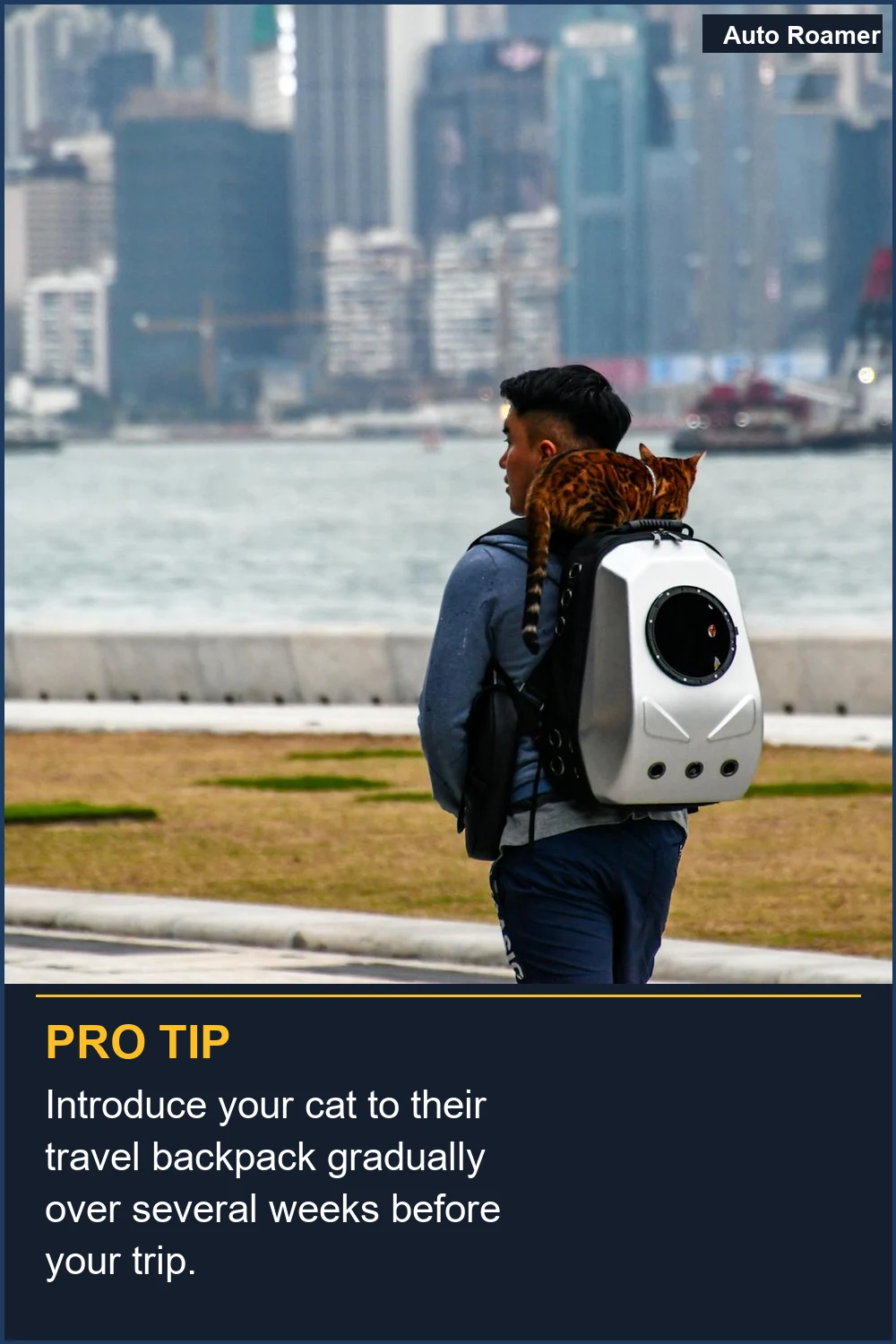
Introduce your cat to their travel backpack gradually over several weeks before your trip.
Embrace the journey! Seeing the world from a backpack can be a novel experience for your cat. Plan for 10-15 minute excursions initially to build confidence. | Photo by Hoi Wai

What You Need to Know

1
Carrier Acclimation is Key - Cats are creatures of habit and often view carriers as instruments of torture, especially if their only experience is the vet's office. Start introducing the carrier weeks before your road trip cat adventure by leaving it out in a common area with familiar bedding and treats. The goal is to make it a safe, non-threatening space, not a prison. This proactive approach significantly reduces anxiety when it's time to travel. Pet Lounge CR and Deziroo emphasize this early introduction.
2
Practice Makes Purrfect (or Tolerable) - Before embarking on a long haul, get your cat accustomed to the vehicle itself. Begin with short, calm drives, perhaps just 10-15 minutes, and gradually increase the duration as your cat shows more comfort PadsPass. Keep these initial trips low-stress, with no specific destination, focusing solely on familiarizing them with the motion and sounds. This rehearsal is crucial for a smoother Vetster experience.
3
Vet Visit and Pharmaceutical Support - A pre-trip Whisker check-up is non-negotiable, especially for interstate travel where health certificates and vaccination records are often required. Discuss your cat's anxiety levels with your veterinarian. They might recommend prescription medications like gabapentin to manage stress. If so, start with a small dose, such as a 1/4 dose, to gauge its effect on your cat before the actual trip, as advised by Reddit users.
4
Vehicle Setup Varies by Rig - The type of vehicle impacts how you secure your cat. In a sedan, a carrier can often be safely strapped to the back seat using a seatbelt. For SUVs, trucks, or vans, consider dedicating a specific area. In larger vehicles, you might use a crate or a securely fastened carrier, ensuring it cannot slide or tip during braking or acceleration. Always prioritize a secure, well-ventilated space where the cat can stand, turn around, and lie down comfortably Wirecutter. Avoid letting your cat roam freely; they can become a dangerous distraction and are prone to bolting when stressed Facebook.
5
Pack Smart for Cat Comfort - Beyond the essentials, pack enough of your cat's regular food for the entire trip plus two extra days, as well as portable water dishes PadsPass. Familiar toys, a favorite blanket, and Feliway spray can create a comforting environment within their carrier. Consider bringing a small, disposable litter box for emergency stops, though it's generally best to manage litter box needs during longer breaks outside the vehicle.
Just as leaving a dog in a car requires careful consideration, it's equally important to understand the risks of leaving a cat in the car.
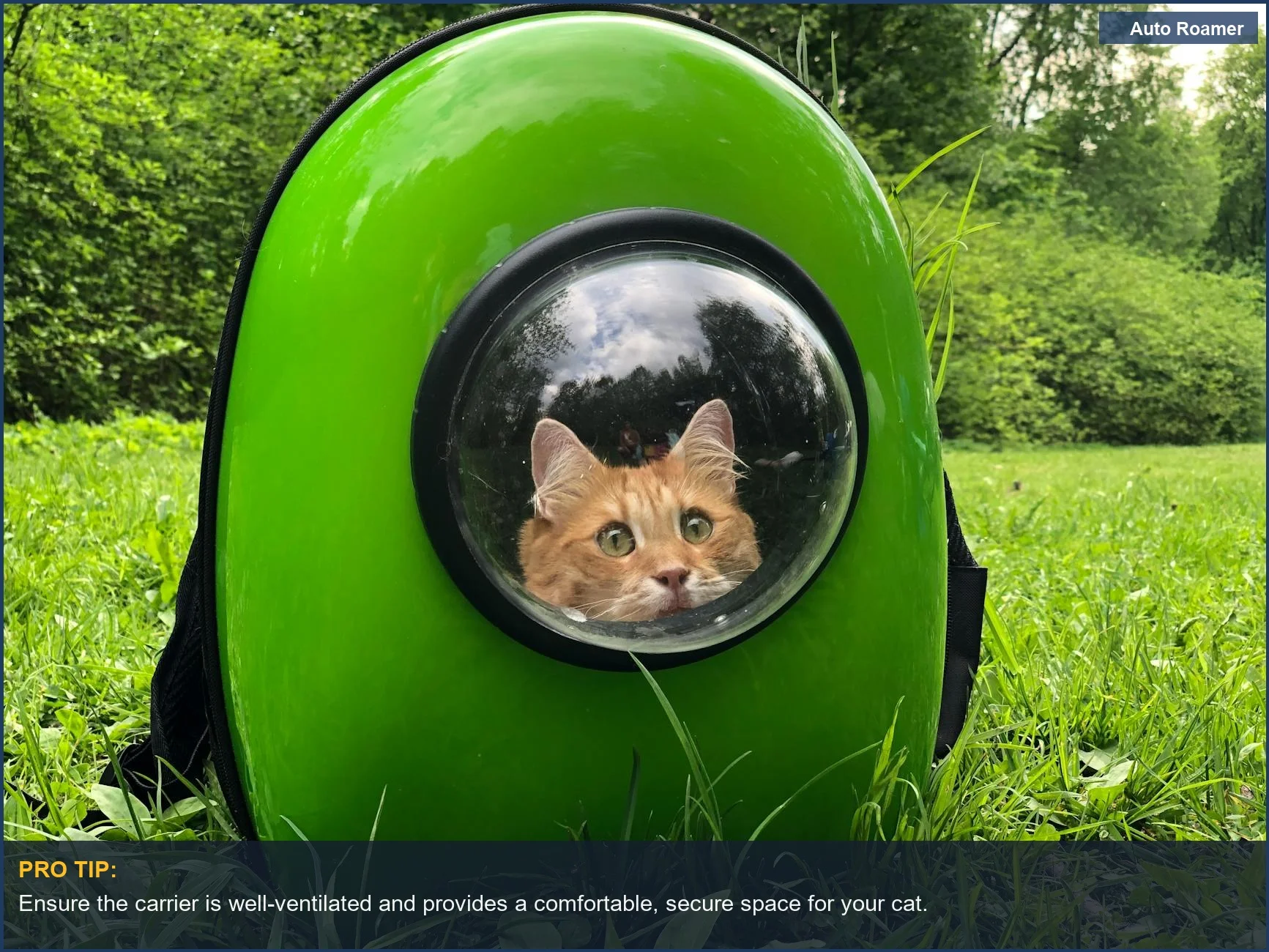
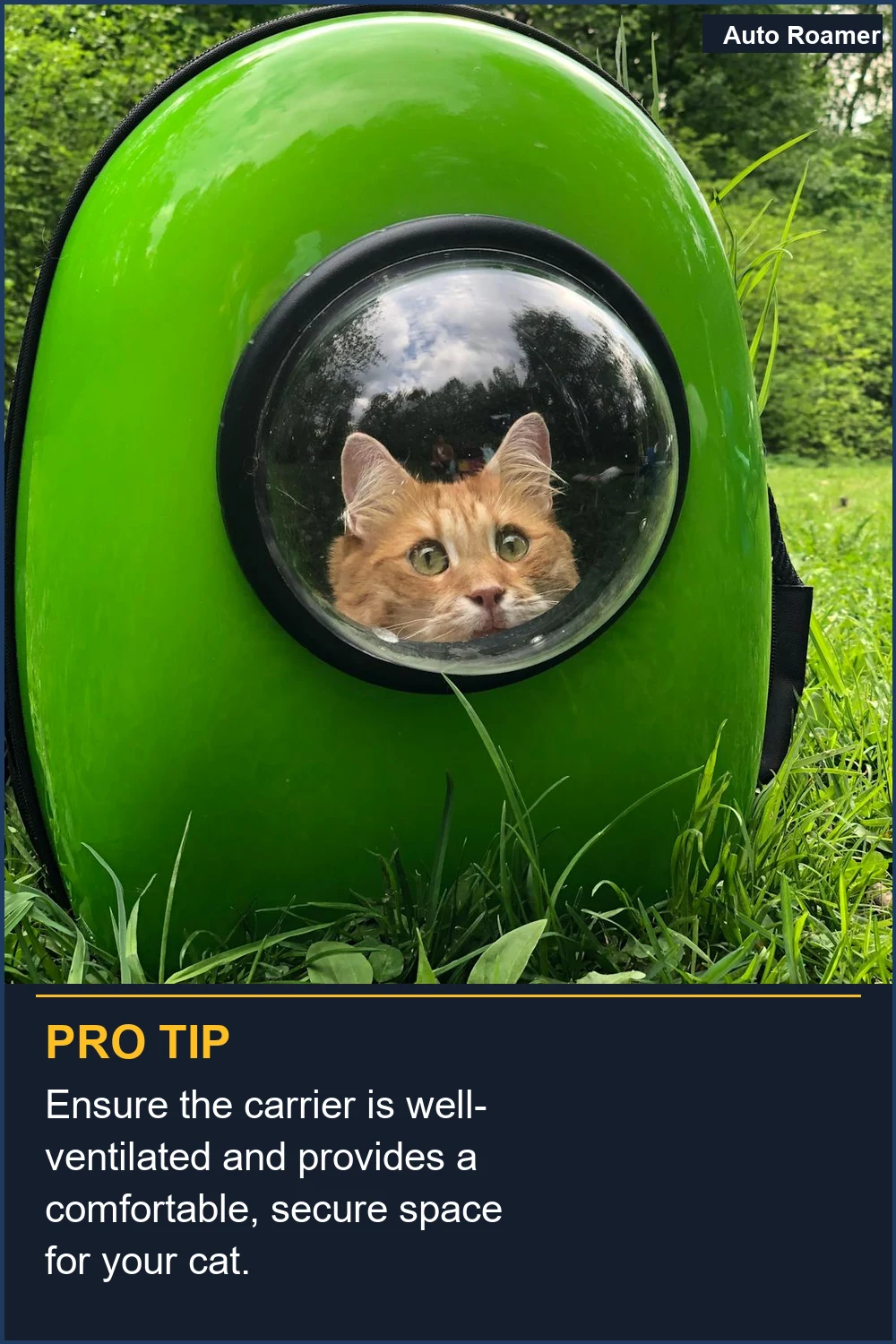
Ensure the carrier is well-ventilated and provides a comfortable, secure space for your cat.
Adventure awaits! This orange tabby enjoys the outdoors from their carrier. For successful travel with cat, prioritize comfort and safety in their transport. | Photo by Helen

How to Handle This

1
Acclimate to the carrier weeks before - Don't spring the carrier on your cat the day before you leave. Leave it out in a common area with treats and cozy bedding so your cat sees it as a safe space, not a prelude to a vet visit. This is crucial because, unlike dogs, most cats detest car rides and associate carriers with negative experiences Traveling with a Cat in a Car: Your Guide to Stress-Free Pet Road .... Skipping this means a stressed cat yowling for hours, potentially escalating into motion sickness or accidents.
2
Introduce short practice drives - Once your cat tolerates the carrier, start with short, uneventful car trips. Begin with 10-15 minute drives, gradually increasing the duration as your cat becomes more comfortable with the motion and sounds Taking a Multi-Day Road Trip with Your Cat: The Ultimate Guide to .... If you skip this, your cat will be unprepared for the sustained anxiety of a long road trip cat journey, leading to extreme distress and potential escape attempts when you stop.
3
Consult your vet for anxiety management - If your cat is particularly prone to stress, discuss prescription options with your veterinarian. Gabapentin, for instance, can be a lifesaver for anxious travelers; start with a small 1/4 dose to gauge its effect Redditors, I'm taking my cat on an 8-10 hour road trip! Any tips for .... Without this proactive measure, you risk a cat so panicked they become a danger to themselves and you, especially during unexpected stops or changes in scenery.
4
Pack an ample supply of familiar food and water - Always pack enough of your cat's regular food for the entire trip plus two extra days, and bring portable water dishes. Relying on finding their specific brand on the road, especially in unfamiliar towns or during off-hours, is a gamble Taking a Multi-Day Road Trip with Your Cat: The Ultimate Guide to .... If you run out, a sudden diet change can lead to severe digestive upset, turning your planned adventure into a veterinary emergency.
5
Secure the carrier properly in the vehicle - Never place the carrier loosely on a seat. Secure it with a seatbelt or wedge it between seats to prevent it from sliding or tipping during acceleration, braking, or turns. This prevents your cat from being thrown around the cabin, which is not only terrifying but can also cause injury Driving Cross Country with Cats? Save These 7 Tips. A loose carrier is an accident waiting to happen, especially if you encounter sudden weather changes or traffic.
To ensure a smoother experience, consider strategies from our guide on surviving road trips with young children.
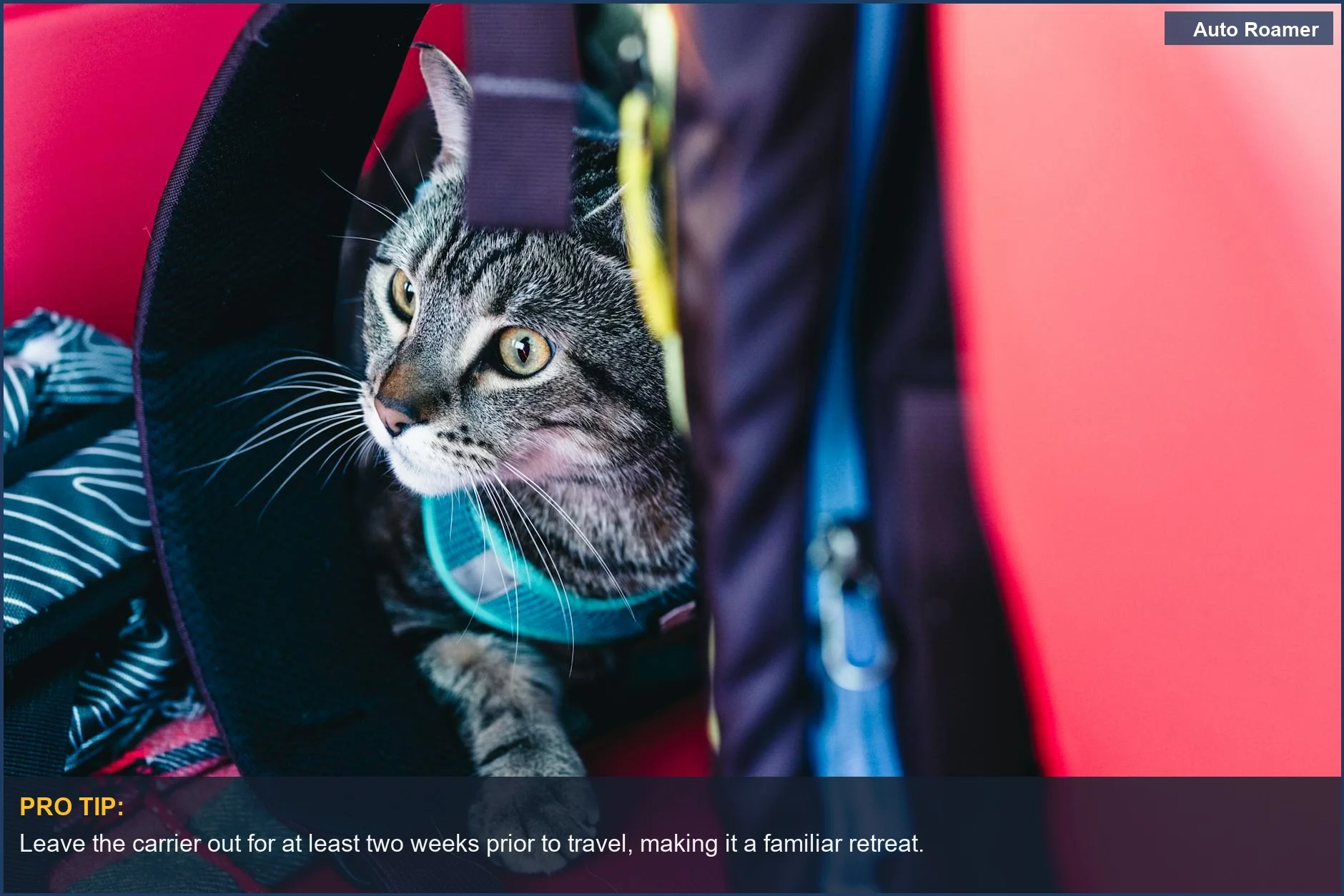
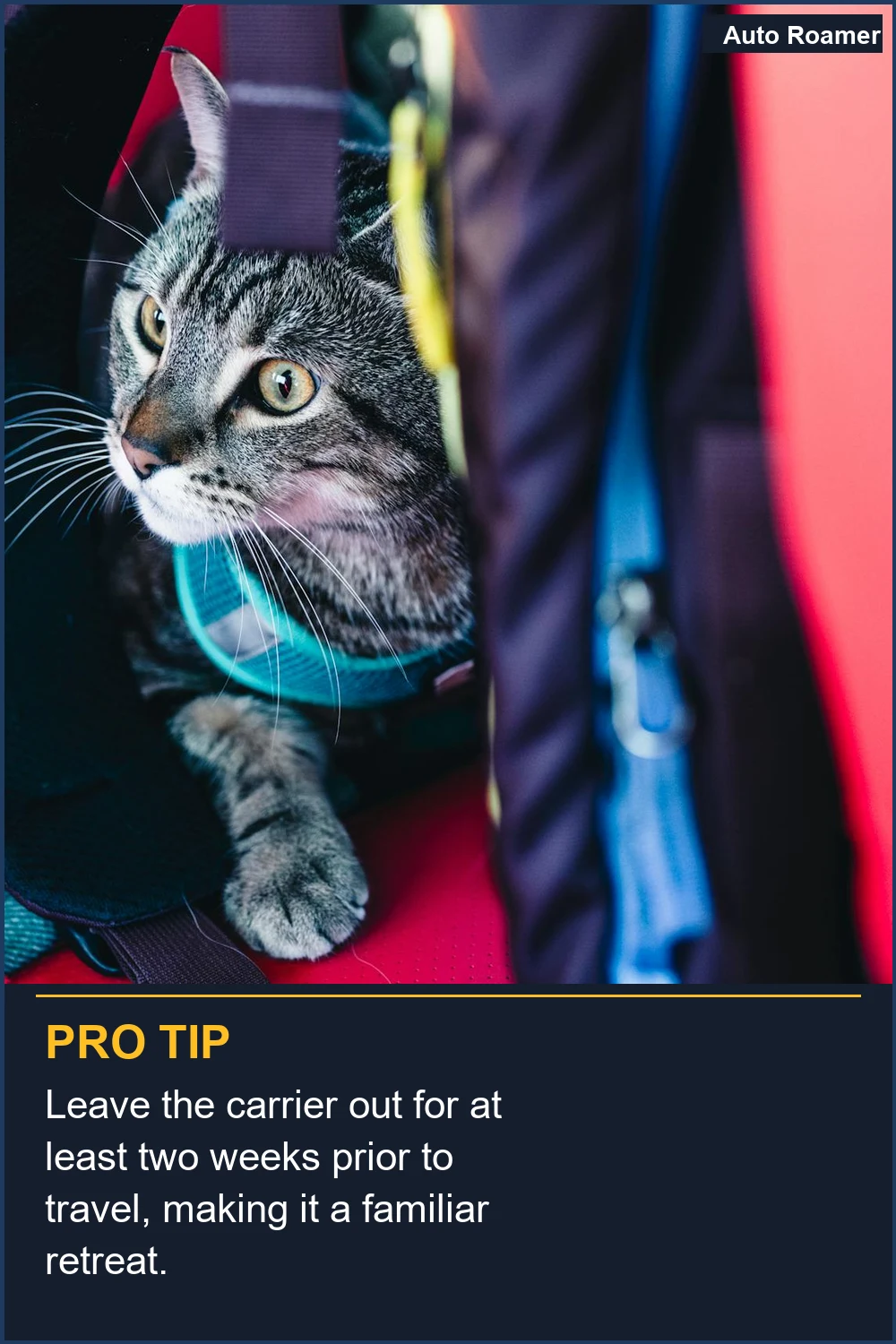
Leave the carrier out for at least two weeks prior to travel, making it a familiar retreat.
Curiosity captured! This tabby is peeking out, ready for adventure. Make the carrier a positive space weeks in advance to ease your cat's anxiety. | Photo by Ali Kazal

What This Looks Like in Practice

real_scenarios — ## What This Looks Like in Practice

  • Winter Mountain Pass in a Subaru Outback. A cross-country move during a blizzard meant navigating icy roads in a Subaru Outback. My cat, usually calm, became extremely anxious with the whiteout conditions and constant braking. We learned that gabapentin, prescribed by the vet, was crucial for managing her stress, and we started with a quarter dose to gauge her reaction. This experience highlighted the importance of having a veterinarian's advice on hand for stressful travel, as medication can be a lifesaver for anxious felines when used appropriately. Ensuring the carrier itself was a secure and familiar space, even amidst the chaos of a blizzard, also provided a much-needed sense of security for her.
  • Summer Desert in a Honda Civic. Driving through the Arizona desert in a Honda Civic presented a different challenge: extreme heat. Even with AC blasting, the car's interior quickly became a sauna during stops. We discovered that keeping the carrier shaded and using portable water bowls with plenty of fresh water at every break was vital. Hydration is paramount in extreme temperatures, and having readily accessible water sources, along with ensuring the carrier itself wasn't a heat trap, made a significant difference in her comfort and well-being. We also learned to prioritize shaded parking spots whenever possible to minimize direct sun exposure on the vehicle.
  • Rainy City Commute in a Toyota Camry. A routine vet visit in a notoriously rainy city involved a short drive in a Toyota Camry. The constant drumming of rain on the roof and the stop-and-go traffic made my cat incredibly vocal. Practicing short car rides, even just 10-15 minutes, before the trip helped her tolerate the sounds and motion much better than on previous, unprepared journeys. Desensitization through gradual exposure to car sounds and motion is a key strategy for reducing anxiety. This preparation, coupled with a comfortable and secure carrier, transformed a potentially stressful event into a manageable experience.
  • Coastal Highway in a Minivan. A multi-day trip along the coast in a minivan meant frequent stops for scenic views, which also meant opening doors. My cat, usually harness-trained, became a lightning bolt the moment the door cracked open. The key takeaway was that securing the carrier firmly and ensuring it was her safe haven, rather than a source of escape, prevented her from bolting. Even with harness training, a carrier provides an extra layer of security, especially when doors are opened frequently. It's essential that the carrier is large enough for the cat to stand, turn around, and lie down comfortably as recommended by experts, and that it's securely fastened to prevent any unexpected movements or opportunities for escape during stops.
To keep your car clean and your cat happy, consider some practical road trip snacks.
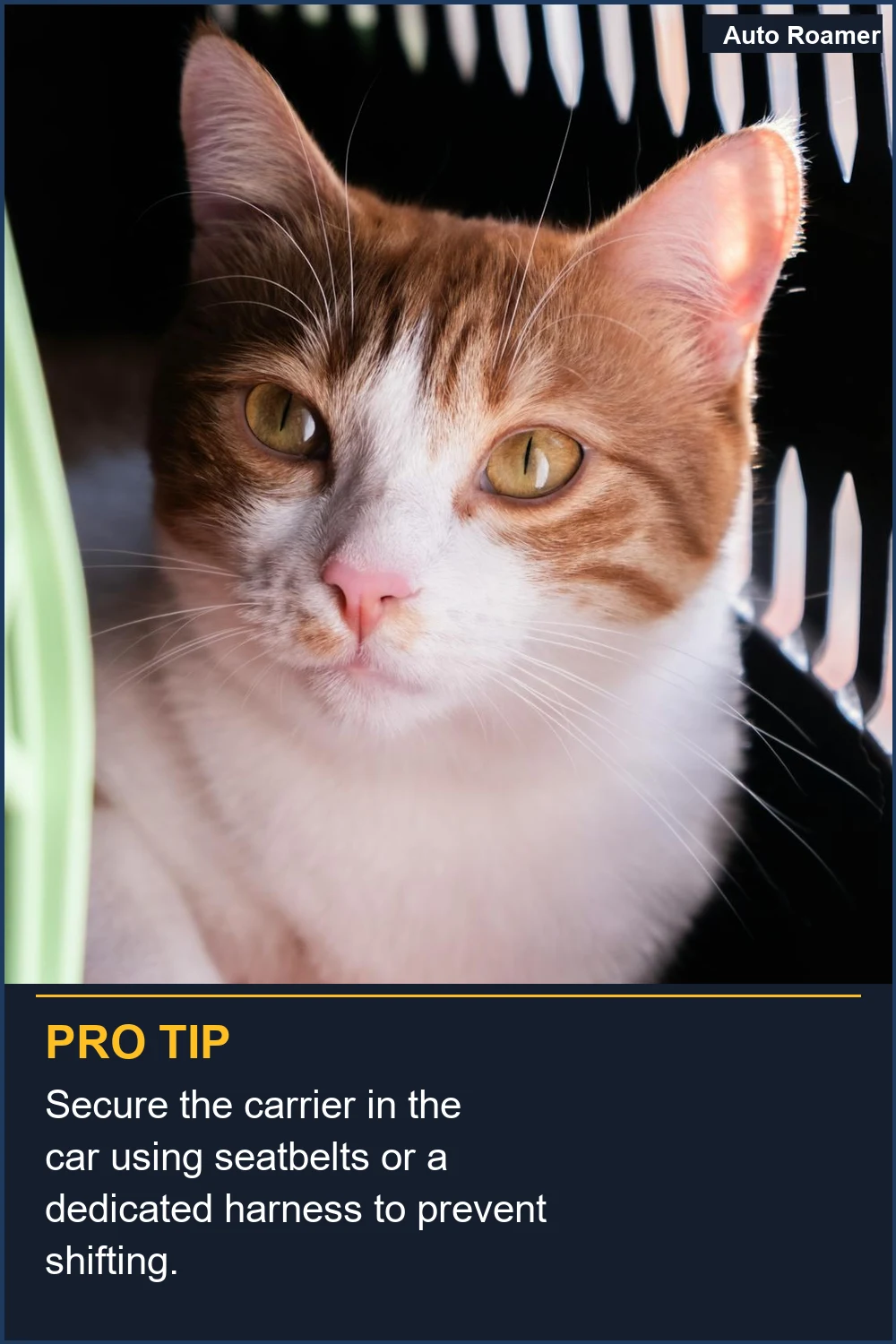
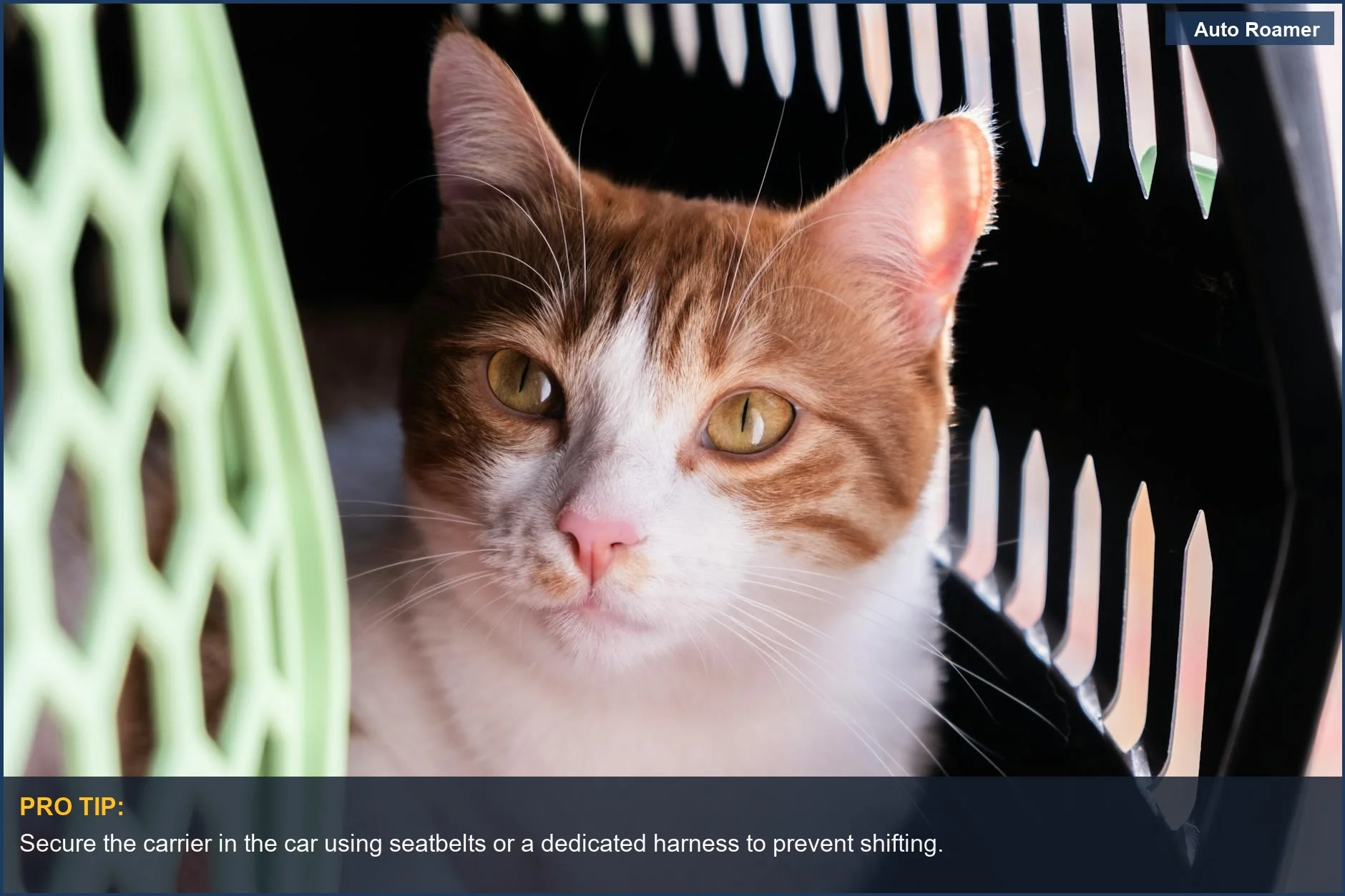
Secure the carrier in the car using seatbelts or a dedicated harness to prevent shifting.
Cozy and alert, this cat is settled in their carrier. Effective cat car travel involves securing their space; aim for no more than 6 inches of movement. | Photo by Batuhan Küçükdemir

Mistakes That Cost People

Symptom You think your cat will be fine in a carrier for a few hours without any comfort items because they "don't need anything."
Signal Constant, distressed vocalizations or destructive attempts to escape the carrier throughout the drive.
Fix Make the carrier a safe haven, not just a transport box. Leave it out with familiar bedding and treats for weeks before the trip. This turns it into furniture, not a prison.
Symptom You assume your cat will adapt to a new food or water source on the road without issue.
Signal Vomiting, diarrhea, or refusal to eat/drink, leading to dehydration and vet visits.
Fix Pack ample familiar food for the entire trip, plus two extra days. Bring portable water bowls and ensure your cat has access to their usual diet to avoid digestive upset. Consistency is key for a smooth travel with cat car experience.
Symptom You believe harness training negates the need for a secure carrier, allowing your cat to roam freely in the car.
Signal A panicked cat bolting out of an open door during a stop, or a cat becoming a projectile during sudden braking.
Fix Always use a carrier, even if your cat is harness-trained. A carrier is the safest way to travel with your cat, preventing escape and injury. Rehearse getting them into it regularly so it's not associated only with vet visits.
Symptom You only introduce the carrier when it's time for the actual road trip.
Signal Extreme anxiety and resistance when the carrier appears, making the start of your journey chaotic.
Fix Introduce the carrier weeks in advance. Leave it open in a comfortable area of your home with treats and familiar blankets. This positive association is crucial for a less stressful travel with cat car experience. This desensitization is non-negotiable.
Symptom You neglect to consider the impact of vehicle age and technology on your cat's comfort.
Signal Increased anxiety in newer, quieter vehicles where road noise is less apparent, making the cat more sensitive to subtle engine vibrations or electronic sounds. Conversely, older, louder vehicles might be overwhelming.
Fix Acclimate your cat to the specific vehicle. For newer cars, introduce them to the quiet environment gradually. For older cars, consider white noise machines or classical music to mask jarring sounds. Understanding your cat's sensory sensitivity is key.
Symptom You don't plan for potential motion sickness or anxiety, relying solely on your cat's presumed resilience.
Signal Vomiting, excessive drooling, panting, or extreme vocalization and hiding during the drive.
Fix Consult your veterinarian about anti-anxiety medications like gabapentin. A small 1/4 dose can significantly help stressed cats. Administering a test dose before the trip is recommended to gauge its effect.
To ensure your dog's safety on longer trips, consider our tips in the guide on traveling with dogs.
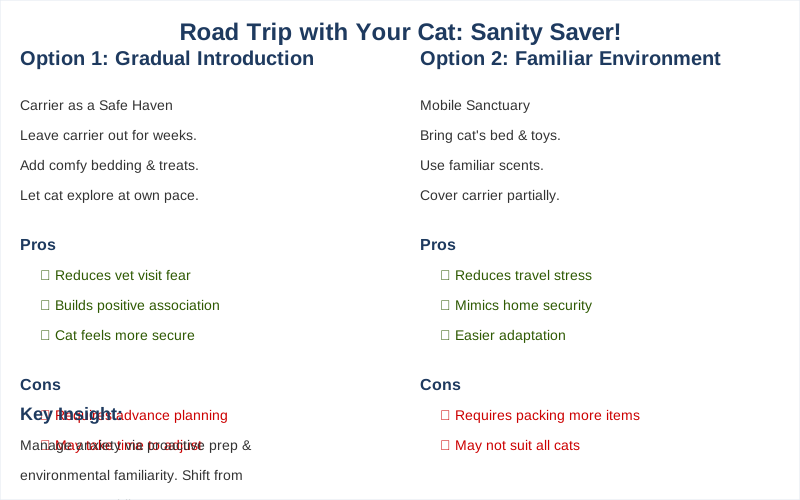
Infographic: Cat road trip pros & cons comparison.
Product comparison for How to Road Trip with a Cat Without Losing Your Mind

Key Takeaways

  • Prepare extensively before your road trip cat adventure. Introduce the carrier weeks in advance, making it a positive space with treats and comfort. Start with short practice car rides, gradually increasing duration, to help your cat adjust to motion and sounds (10-15 minute drives initially). This desensitization process is crucial for reducing travel-related anxiety, turning a potentially frightening experience into a more manageable one. Think of it as building positive associations with the car and carrier, similar to how you'd introduce a new toy or treat.
  • Schedule a vet visit to ensure your cat is healthy and get any necessary health certificates for interstate travel . Discuss anxiety management options; gabapentin can be a lifesaver for stressed travelers (a 1/4 dose is a good starting point). Your veterinarian can also advise on motion sickness remedies or pheromone sprays that can further aid in creating a calmer environment for your feline companion during the journey.
  • Always use a secure carrier for your cat car travel, even if they're harness-trained; it's the safest option . Ensure it's large enough for them to stand, turn, and lie down comfortably, . Keep the carrier in place during transit to prevent bolting. A well-secured carrier, perhaps on the floor behind the front seats or buckled into a seat, minimizes movement and provides a sense of security for your cat.
  • Pack ample familiar food, portable water dishes, and any necessary medications . Pack extra food for at least two days. Don't forget a litter box, scoop, and waste bags for necessary pit stops. Familiar bedding or a favorite toy can also offer comfort and a sense of home.
  • The single most important thing to remember for a successful road trip with your cat is: proactive preparation. A well-prepared cat is a calm cat. This includes acclimatizing them to the carrier and car, consulting your vet, and packing all essentials.
Understanding how to manage your cat's anxiety can enhance your travel experience, so consider reading about pet anxiety during car travel.

Frequently Asked Questions

I'm planning a long car trip with my cat, what's the best way to make sure it's not a total disaster?
The key to a successful road trip with your cat is extensive preparation, starting weeks before you leave. Introduce your cat to their carrier by leaving it out with cozy bedding and treats, making it a familiar and positive space. Practice short car rides to acclimate them to the motion and sounds, gradually increasing the duration as they become more comfortable.
What are the must-have safety items for traveling with a cat in the car?
A sturdy, well-ventilated carrier that allows your cat to stand up, turn around, and lie down comfortably is essential for safety, even if your cat is harness-trained Source. Ensure the carrier is securely fastened in the car to prevent it from shifting during the drive. Always keep your cat in their carrier while the vehicle is moving to prevent escape or injury.
My cat gets really anxious in the car, are there any tricks to help calm them down on a road trip?
To help manage your cat's anxiety during travel, consider asking your veterinarian about prescription anti-anxiety medication like gabapentin, starting with a small dose to see how your cat reacts Source. Positive reinforcement with their favorite treats and keeping your own demeanor calm can also significantly reduce their stress.
What should I pack for my cat on a multi-day road trip?
Pack enough of your cat's regular food for the entire trip, plus an extra two days in case of travel delays Source. Don't forget portable water bowls, their favorite toys, a comfortable bed or blanket, and any necessary medications or health certificates. A travel litter box setup is also crucial for longer journeys.
How do I get my cat used to their carrier before a long car journey?
Start by leaving your cat's carrier out in a common area of your home weeks before your trip, making it a comfortable and familiar space Source. Place their favorite blanket or toys inside, and offer treats or praise whenever they show interest in or enter the carrier. The goal is for them to associate the carrier with positive experiences, not just vet visits.

Sources

Related Articles