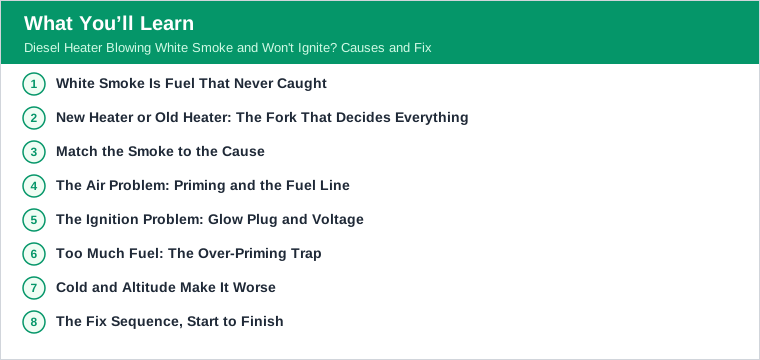
White Smoke Is Fuel That Never Caught
A diesel heater that coughs out a cloud of white smoke and never settles into a steady burn is doing one thing: pushing raw fuel out the exhaust. White smoke from a 12V diesel air heater is unburnt, partially vaporized diesel leaving the exhaust because the fuel is not igniting or combustion has not yet stabilized. It is not oil, it is not coolant, it is diesel that went in and came out without burning.
That single fact is what makes white smoke easy to reason about. If fuel is reaching the chamber but not lighting, then either the igniter is too weak to light it or there is too much fuel to burn cleanly. Both point at a short list of causes, and most of them are cheap or free to fix. This is not the failure mode that ends a heater's life.
The most useful first question is how old the heater is, because that single detail splits the diagnosis almost perfectly. On a newly installed heater, white smoke is almost always caused by air trapped in the fuel line rather than a hardware fault. On an older heater, persistent white smoke usually points to worn fuel-system parts or a degraded glow plug that no longer gets hot enough to ignite the fuel.
So before pulling anything apart, sort your situation into new or old. A brand-new install or a heater that just had its tank run dry is almost certainly an air problem. A heater two seasons in that used to light clean and now smokes is almost certainly a worn part. The fix for each is different, and starting in the wrong place wastes a cold evening.
New Heater or Old Heater: The Fork That Decides Everything
The new-versus-old split is worth pressing on because it saves the most time. A new heater has never proven it can burn clean, so the odds favor a setup or air problem, something in how it was installed rather than something that wore out. An old heater has a track record of burning clean, so a new smoking problem means something changed, and wear is the usual reason.
Take the new-install case first. Some light white smoke during the initial warm-up, before the flame is established, can be normal, since the full start cycle takes about 6 minutes and the chamber is still coming up to temperature. What is not normal is white smoke that never clears into clean, heat-shimmer exhaust. If it never clears, the fuel is not catching, and on a fresh install that almost always means the line still has air in it.
The heater's age is the single most useful clue you have. A new unit smoking white is a plumbing and priming problem; an old unit smoking white is a worn-part problem. Diagnose the age first and you are already halfway to the fix.
The old-heater case flips the priorities. The line has been purged of air for months, so air is unlikely to have suddenly reappeared. What degrades over time is the glow plug and the fuel-system parts, and a plug that used to reach ignition temperature but now falls short will leave fuel unburnt and smoking white. That is where an aging unit's diagnosis should start.
Match the Smoke to the Cause
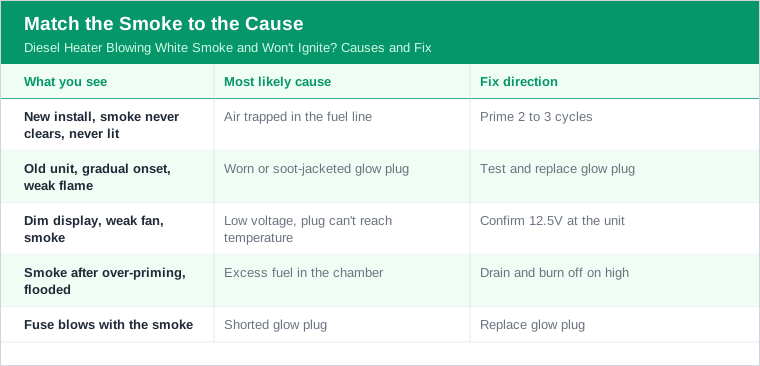
With the age sorted, line the exact symptom up against its likely cause. The details of when and how the smoke appears narrow it further.
| What you see | Most likely cause | Fix direction |
|---|---|---|
| New install, smoke never clears, never lit | Air trapped in the fuel line | Prime 2 to 3 cycles |
| Old unit, gradual onset, weak flame | Worn or soot-jacketed glow plug | Test and replace glow plug |
| Dim display, weak fan, smoke | Low voltage, plug can't reach temperature | Confirm 12.5V at the unit |
| Smoke after over-priming, flooded | Excess fuel in the chamber | Drain and burn off on high |
| Fuse blows with the smoke | Shorted glow plug | Replace glow plug |
The pattern to notice is that voltage and the glow plug sit behind most of the old-heater cases, while air sits behind the new-install cases. That is why the steps below lead with priming for a new unit and with the glow plug and voltage for an established one.
One symptom deserves its own note: if a blown fuse accompanies the white smoke, the glow plug has likely shorted and failed. A short both stops ignition, which produces the smoke, and draws the current that pops the fuse, so the two symptoms together point straight at the plug.
The Air Problem: Priming and the Fuel Line
For a new install, air in the line is the overwhelming favorite, so start there. The pump meters fuel in tiny doses, about 0.022 ml per pulse, and air is compressible, so a line with bubbles delivers almost nothing to the chamber. The result is a glow plug heating an empty or fuel-starved chamber, then a puff of unburnt fuel when a little finally arrives, which is exactly what white smoke looks like.
The cure is patient priming. A new install typically needs 2 to 3 priming cycles to purge all the air from the fuel line before clean ignition occurs. Use the controller's prime function and let it run those cycles rather than expecting a clean first light. You can confirm delivery directly: pull the fuel line off the heater and pump into a jar, and strong, air-free fuel delivery confirms the pump and line are clear.
The line itself is often the hidden culprit. The soft green fuel line supplied with many kits tends to introduce air bubbles, and swapping it for rigid nylon line reduces air-related white smoke. A length of proper diesel heater fuel line in rigid nylon is a cheap upgrade that fixes a recurring smoke problem the soft hose keeps re-creating.
Geometry matters too. The fuel pump should be angled at least 45 degrees upward so it does not trap and pump air pockets, and the whole run should be checked for the low spots where air collects. Get the air out and keep it out, and a new heater that smoked white on every attempt will light clean and stay lit.
The Ignition Problem: Glow Plug and Voltage
On an older heater, or a new one that primes clean and still smokes, the fuel is arriving but not lighting, which turns the focus to ignition. Two things stop a chamber full of good fuel from catching: a glow plug that cannot reach temperature, and a supply voltage too low to drive it there.
Take voltage first because it is quick. Chinese diesel heaters run on 12V, and the glow plug draws roughly 6 to 10 amps at startup. If voltage at the heater falls below about 12.5V during starting, the glow plug cannot reach ignition temperature, and raw fuel smokes white instead of burning. Measure at the unit during a start attempt, not just at the battery, because thin wiring can drop the voltage exactly when the plug needs it most.
If voltage holds and the plug still cannot light the fuel, the plug itself is failing. Soot forming a jacket over the glow plug eventually stops it igniting the flame, producing white smoke on start attempts, and a plug that has cooked for a couple of seasons simply loses its punch. A high or open resistance reading confirms a dead plug, and a blown fuse alongside the smoke confirms a shorted one.
The honest read on ignition is that it is a wear story. Voltage problems come from wiring and batteries, which you can restore; glow-plug problems come from age and soot, which you replace. Both are inexpensive, and both are far more common than any failure that would justify scrapping the heater.
Too Much Fuel: The Over-Priming Trap
There is a self-inflicted version of white smoke worth calling out, because the instinct to fix a no-light often causes it. Over-priming floods the combustion chamber with excess diesel, which then smokes white as the glow plug cannot burn all of it at once. A camper who keeps hitting the prime button hoping for a light is often making the smoke worse, not better.
The tell is a heater that smokes heavily right after repeated prime attempts, with the smell of raw diesel and sometimes fuel visible at the exhaust. The chamber is drowned, not starved. Adding more fuel to a flooded chamber only deepens the problem, which is why patience during priming matters as much as doing it at all.
The fix is to clear the excess rather than add to it. Drain the excess by tilting the unit toward the exhaust so the pooled fuel runs out, then run the heater on high to burn off the remainder. High power gives the hottest, most complete burn, which consumes the leftover fuel and clears the smoke as the chamber returns to a normal fuel load.
Avoiding the trap in the first place is mostly discipline. Give priming the 2 to 3 cycles it needs and then stop, rather than mashing the button until the chamber floods. If it has not lit after a proper prime, the problem is ignition or air, not a lack of fuel, and more priming only adds a flooding problem on top of the original one.
Cold and Altitude Make It Worse
Two environmental factors amplify white smoke, and both are worth knowing so you do not misread a conditions problem as a broken heater. The first is cold. Cold-weather and cold-start conditions worsen white smoke because low temperature reduces diesel atomization and delays ignition. The same fuel and the same plug that burn clean in mild weather can smoke on a hard cold morning simply because the diesel is not vaporizing as readily.
The practical consequence is that a heater which smokes only on the coldest starts, then clears once warm, may be perfectly healthy. The cold is stacking a delay onto a marginal start. Keeping the battery strong so voltage holds through the 6 to 10 amp glow-plug draw, and giving the roughly 6-minute start cycle time to stabilize, is often all a cold-weather smoker needs.
The second factor is altitude. At high altitude the thinner air leans out the mixture, and poor atomization and incomplete combustion at elevation can also show as white smoke. A heater carried up from sea level to a mountain camp can start smoking not because anything broke, but because the air changed and the fuel-to-air balance shifted.
Neither factor is a repair so much as a recognition. If the smoke tracks with cold mornings or high camps and clears otherwise, the heater is telling you about the conditions, not a fault. Restore the margins, voltage, a clean prime, and time to warm up, and the conditions-driven smoke usually resolves on its own.
The Fix Sequence, Start to Finish
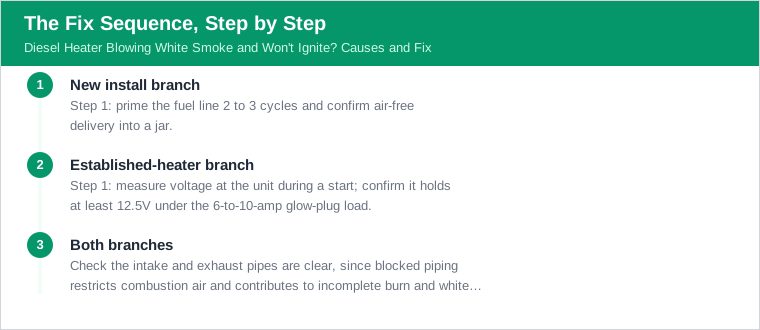
Put the causes in order and the diagnosis becomes a short checklist. Sort by the heater's age first, then work the matching branch.
New install branch. Step 1: prime the fuel line 2 to 3 cycles and confirm air-free delivery into a jar. Step 2: if the soft green line is in the kit, replace it with rigid nylon, and confirm the pump is angled at least 45 degrees up. Step 3: expect some light smoke in the first minutes of the 6-minute warm-up, and only treat smoke that never clears as a fault.
Established-heater branch. Step 1: measure voltage at the unit during a start; confirm it holds at least 12.5V under the 6-to-10-amp glow-plug load. Step 2: test the glow plug and replace it if resistance is high, if it is soot-jacketed, or if a blown fuse points to a short. Step 3: if you over-primed chasing the problem, drain the excess by tilting toward the exhaust and burn it off on high.
Both branches. Check the intake and exhaust pipes are clear, since blocked piping restricts combustion air and contributes to incomplete burn and white smoke. And in cold or at altitude, recognize that conditions can drive smoke that no part replacement will fix. Work cheap and free steps first; the odds are strongly with them.
When It's a Part, Not a Procedure
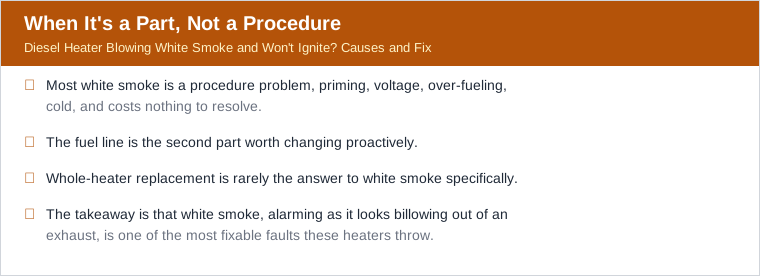
Most white smoke is a procedure problem, priming, voltage, over-fueling, cold, and costs nothing to resolve. But a share of cases are genuine worn parts, and knowing which parts wear keeps the fix cheap and the heater alive. The glow plug is the headline consumable, since a soot-jacketed or aged plug is the leading old-heater cause of white smoke, and a replacement is inexpensive.
The fuel line is the second part worth changing proactively. The soft green hose that ships with many kits keeps re-introducing air, so a one-time swap to rigid nylon line removes a recurring source of smoke rather than treating it over and over. Between a fresh glow plug and a proper fuel line, the large majority of parts-driven white smoke is solved for the price of a fast-food meal.
Whole-heater replacement is rarely the answer to white smoke specifically. Smoke is a burning problem, and burning problems come from ignition, fuel delivery, and air balance, all of which are serviceable. The failures that actually justify a new unit, a cracked chamber or a dead control board, present as more than smoke, usually with physical damage or a heater that will not run its cycle at all.
The takeaway is that white smoke, alarming as it looks billowing out of an exhaust, is one of the most fixable faults these heaters throw. Sort new from old, prime or replace the plug, keep the voltage up and the line rigid, and a smoking heater comes back to a clean, quiet burn without a trip to buy a replacement.
The Verdict: Diagnose the Age, Then the Link
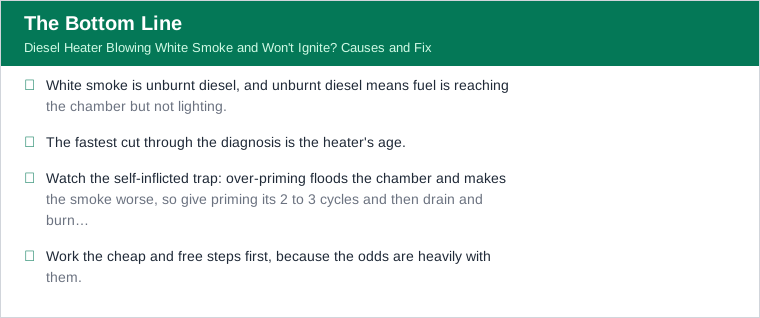
White smoke is unburnt diesel, and unburnt diesel means fuel is reaching the chamber but not lighting. That one fact turns an alarming cloud of exhaust into a short, solvable list of causes, none of which usually costs much to fix. The heater is not dying; it is telling you a link in the ignition or fuel chain is weak.
The fastest cut through the diagnosis is the heater's age. A new install smoking white is almost always air in the line, cured by 2 to 3 priming cycles and a swap to rigid nylon fuel line. An established heater smoking white is almost always a worn glow plug or low voltage, cured by confirming at least 12.5V at the unit and replacing a plug that can no longer reach ignition temperature.
Watch the self-inflicted trap: over-priming floods the chamber and makes the smoke worse, so give priming its 2 to 3 cycles and then drain and burn off any excess on high rather than adding more. And read the conditions honestly, since cold starts and high-altitude camps both drive white smoke that no part will fix, only restored margins will.
Work the cheap and free steps first, because the odds are heavily with them. A clean prime, a rigid line, a healthy battery, and a fresh glow plug cover almost every case of a diesel heater that smokes white and will not catch. Keep those few consumables with the unit and the failure becomes a short repair, not the end of a cheap and genuinely useful heater.