
What an E-08 Flameout Is Telling You
An E-08 is different from a no-start, and the difference is the whole diagnosis. On the common LCD controller, E-08 means flame-out: the flame died, or no fuel is reaching the heater for ignition, and the most frequent cause is fuel starvation or air in the fuel line. The heater lit, ran, and then lost its flame, which is a running fault rather than a starting one.
That distinction sends you looking for something that interrupts a burn already in progress, not something that stops it beginning. A heater that fires up normally and then quits minutes or hours later is describing an intermittent interruption, fuel that stops arriving, voltage that sags, a sensor that trips, and each of those leaves its own fingerprint.
Before trusting the code, though, confirm what it means on your unit, because the codes are not standardized. Error-code mapping varies by controller: E-08 reads as flame-out on many Chinese boards, but on some VVKB-style controllers E08 means undervoltage, and on other mappings E8 indicates a motor fault. Read the code table for your specific heater before acting, or you may chase the wrong problem entirely.
Assuming the flame-out meaning applies, the causes fall into a short list: fuel starvation, voltage sag, an overheat sensor tripping, or an exhaust restriction. This guide works them roughly in order of likelihood, starting with fuel, because a flame that dies is most often a flame that ran out of something to burn.
Match the Pattern to the Cause
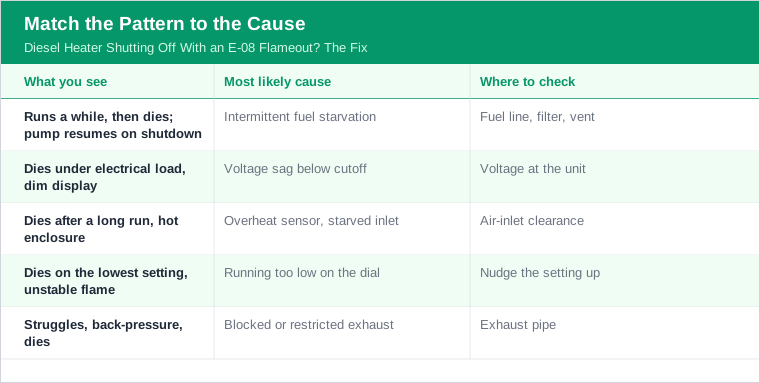
Flameouts have tells. When and how the heater dies narrows the cause before you touch anything.
| What you see | Most likely cause | Where to check |
|---|---|---|
| Runs a while, then dies; pump resumes on shutdown | Intermittent fuel starvation | Fuel line, filter, vent |
| Dies under electrical load, dim display | Voltage sag below cutoff | Voltage at the unit |
| Dies after a long run, hot enclosure | Overheat sensor, starved inlet | Air-inlet clearance |
| Dies on the lowest setting, unstable flame | Running too low on the dial | Nudge the setting up |
| Struggles, back-pressure, dies | Blocked or restricted exhaust | Exhaust pipe |
The first row is the classic E-08 signature and worth memorizing: a heater firing normally, then the pump stopping once up to temperature and flaming out, with the pump resuming during shutdown, points to intermittent fuel or sensor trouble. If that is your pattern, the fuel path and sensors are where to look.
The other rows separate the electrical cause from the thermal one. A heater that dies specifically when the battery is loaded, or when the cabin is cold and everything is drawing power, is describing voltage. A heater that dies only once it has run long enough to heat its own enclosure is describing an overheat or airflow problem. Match your pattern before choosing a branch.
The First Suspect: Fuel Starvation
Because a dying flame is usually a starved flame, fuel comes first. Air bubbles or pockets in the fuel line are a leading flameout cause, and driving with low fuel while the heater runs can pull air into the line. A tank sloshing at a quarter full over rough roads is a common way to feed the heater a slug of air that snuffs the flame.
Priming and line quality address most of it. A fresh install or a tank that ran dry must be primed, and skipping proper priming commonly triggers E-08 on first use. The soft green fuel line supplied with kits often introduces air bubbles, so replacing it with rigid nylon line prevents air-related E-08 faults. A length of proper diesel heater fuel line in rigid nylon removes a recurring source of flameouts the soft hose keeps re-creating.
A blocked or too-small tank-cap vent lets a vacuum build as the pump draws fuel, which starves delivery and flames the unit out. This one is easy to miss and easy to test by loosening the cap. As the tank empties, the vacuum grows, which is why a vent-starved heater often runs fine at first and dies later in the burn, exactly the E-08 pattern.
Geometry keeps fuel arriving steadily. The fuel pump must be angled at least 45 degrees upward and kinks in the line removed to keep fuel flowing without air. Keep the runs short, a maximum of 2 metres from tank to pump and a maximum of 5 metres from pump to heater, with the tank no more than 2 metres below the pump so the pump does not lose prime and starve the flame. The pump doses about 0.022 ml per pulse at roughly 1.4 to 5.5 Hz, so any interruption to that metered delivery shows up as a flameout.
The Second Suspect: Voltage Sag
If the fuel path is clean and the heater still flames out, voltage is the next suspect, and it is easy to overlook because a battery can read fine at rest and still sag under load. Chinese diesel air heaters run on 12V or 24V DC. On a 12V system a low-voltage cutoff triggers below about 10V, and on a 24V system below about 20V, and a sagging battery under load can cause an unexpected shutdown.
The heater needs at least 12.5V at the unit while running, and voltage sag under the roughly 6 to 10 amp glow-plug and startup load can drop it below the operating threshold and cause a flameout. The danger window is when the heater re-energizes its glow plug or the battery is doing other work at the same time; the momentary dip can cross the cutoff and drop the flame.
Measure voltage at the heater while it runs, not just at the battery at rest. A battery that reads fine unloaded can sag well below the 12.5V the heater needs the moment it loads it, and that dip is enough to flame out a running heater.
The fix follows the measurement. If the battery is the problem, charge it or run a larger one; if the wiring is dropping voltage between a good battery and the heater, upgrade the supply cable and clean the connections. A heater that flames out only when the battery is cold, low, or busy is almost always telling you about voltage rather than fuel, and it will keep doing it until the supply holds through the load.
The Classic Pattern: Fires, Then Dies When Hot
One flameout pattern is common enough to deserve its own treatment, because it looks like a deep fault and often is not. The heater fires normally, runs up to temperature, then the pump stops and the flame dies, with the pump resuming during the shutdown sequence. That signature points to intermittent fuel or sensor trouble rather than a simple no-fuel condition.
Read it as a heater that can start but cannot sustain. Starting is the easier job, a full chamber, a fresh prime, a rested battery. Sustaining exposes the marginal cases: a vent slowly building vacuum, a line occasionally passing air, a sensor tripping as the enclosure heats, or voltage sagging as the burn continues. The fact that it dies only once hot is the clue that the problem emerges with running, not with lighting.
Work it as a fuel-and-sensor problem first. Confirm the tank-cap vent is not building a vacuum, prime and check the line for the air that a hot, running heater exposes, and rule out the overheat sensor by checking the airflow the next section covers. These are the faults that let a heater start clean and then quit, which is precisely the complaint.
There is also a simple operating cause worth ruling out early. Running the heater too low on the dial for long periods can let the flame become unstable and drop out, so nudging the setting up can stop nuisance flameouts. A flame held at minimum is a flame with the least margin, and a small increase in output often steadies it enough to end the cutouts without any repair at all.
Overheat and Airflow: When the Sensor Pulls the Plug
Some flameouts are the heater protecting itself, and mistaking that for a fault leads to chasing the wrong thing. An overheat sensor will shut the heater down if the cooling-air inlet is starved, so the fix is airflow, not fuel. A heater tucked into a tight enclosure or with its inlet against a wall can overheat its own cooling air and trip the sensor even though combustion is fine.
Give the inlet room. Leave at least 4 to 6 inches, or 10 to 15 cm, of open space around the inlet so the heater can draw the cool air it needs. Gear, bedding, or a snug install crammed against the intake is a common cause of a heater that runs well for a while, heats its enclosure, and then cuts out as the sensor sees rising inlet temperature.
Recirculation is the subtle version of the same problem. The heater is not designed to draw intake air warmer than about 30 to 35 degrees C, and hot recirculated air can trip an overheat shutdown. If the heater's warm output finds its way back to the cool-air inlet, it feeds itself progressively hotter air until the sensor trips, which again looks like a random shutdown but is really a plumbing layout issue.
The fix is arranging the install so cool intake and warm output stay separated and the inlet stays clear. Route the cool-air intake to a genuinely cool source, keep the 4-to-6-inch clearance, and make sure output cannot loop straight back to the inlet. A heater that only flames out after a long run in a warm, enclosed space is usually asking for better airflow, not a new part.
Exhaust Restriction: The Overlooked Cause
The last common cause hides at the exhaust, out of sight and easy to forget. A restricted or blocked exhaust pipe raises back-pressure and can extinguish the flame, so the exhaust must be checked clear and free-draining. A flame needs its combustion products to leave freely; choke the exit and the burn destabilizes and dies.
Blockages come from a few predictable places. A crushed or kinked exhaust pipe, a muffler packed with condensation and soot, or a low exhaust outlet that pools water all raise back-pressure. On a heater that runs into snow or parks nose-down, the exhaust outlet can even ice or flood, choking the flame in a way that clears once the pipe drains.
Check the exhaust as a physical path, end to end. Confirm it is not crushed along its run, that the outlet is clear and pointed so it drains rather than pools, and that any muffler is not caked shut. Keeping the combined intake-plus-exhaust run within the standard limits matters here too, since an over-long exhaust adds its own back-pressure on top of any blockage.
Exhaust restriction pairs naturally with the hot-run flameout pattern, because back-pressure often worsens as the pipe heats and any trapped moisture turns to steam. A heater that dies well into a run, with the exhaust note sounding muffled or the flame sounding strained, is worth an exhaust check before deeper diagnosis. It is a five-minute inspection that solves a fault easily blamed on fuel or voltage.
The Fix Sequence, Start to Finish
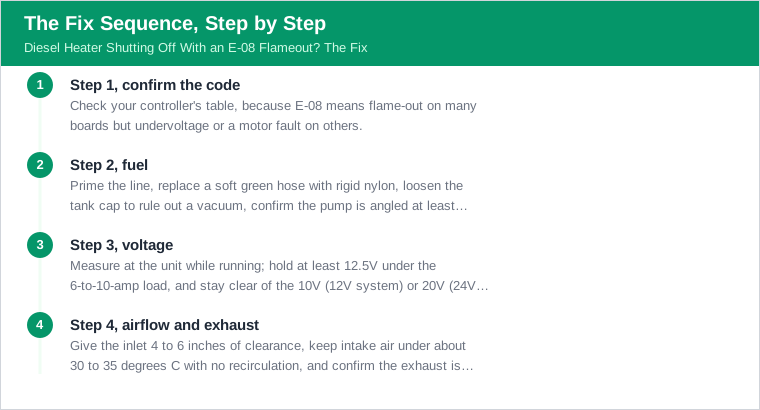
E-08 resolves in order: confirm the code, then work fuel, voltage, airflow, and exhaust. Stop when the heater holds its flame.
Step 1, confirm the code. Check your controller's table, because E-08 means flame-out on many boards but undervoltage or a motor fault on others. Diagnose for the meaning your unit actually uses.
Step 2, fuel. Prime the line, replace a soft green hose with rigid nylon, loosen the tank cap to rule out a vacuum, confirm the pump is angled at least 45 degrees up with no kinks, and keep the runs within the 2-metre and 5-metre limits. Avoid running the tank low over rough roads. In the cold, add about 2 litres of kerosene per 10 litres of diesel to prevent gelling.
Step 3, voltage. Measure at the unit while running; hold at least 12.5V under the 6-to-10-amp load, and stay clear of the 10V (12V system) or 20V (24V system) cutoff. Charge or upgrade the battery and cable if it sags.
Step 4, airflow and exhaust. Give the inlet 4 to 6 inches of clearance, keep intake air under about 30 to 35 degrees C with no recirculation, and confirm the exhaust is clear and free-draining. Nudge the setting up if it flames out only on minimum.
When It's a Sensor or Board, Not a Setup
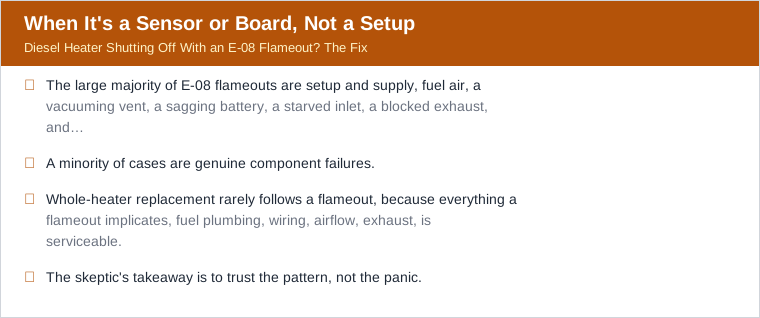
The large majority of E-08 flameouts are setup and supply, fuel air, a vacuuming vent, a sagging battery, a starved inlet, a blocked exhaust, and cost nothing but time to fix. Loose or corroded connections at the pump, glow plug, and controller can intermittently cut fuel or ignition and are worth reseating and cleaning before any deeper diagnosis, since a bad contact mimics both fuel and voltage faults.
A minority of cases are genuine component failures. A flame sensor that misreads a healthy flame as out, or a controller that trips protection erratically, can throw E-08 without a real fuel or voltage problem, but these are diagnosed by elimination, only after the setup and supply causes are cleared. Jumping to a sensor or board first usually means replacing a good part while the real vacuum or air lock stays.
Whole-heater replacement rarely follows a flameout, because everything a flameout implicates, fuel plumbing, wiring, airflow, exhaust, is serviceable. The exception is physical damage that a flame-out revealed, a cracked chamber or a dead board, and those announce themselves with more than a single code. A heater that responds to a prime, a charged battery, and a clear exhaust was never a candidate for the bin.
The skeptic's takeaway is to trust the pattern, not the panic. An E-08 is a flame that died, and a flame dies because it lost fuel, lost voltage, overheated, or choked on its own exhaust. Read the code for your controller, work those four in order, clean the connections along the way, and the heater comes back holding a steady flame through the night.
The Verdict: A Flame That Died, and Why
E-08 on the common controller means flame-out: the heater lit, ran, and then lost its flame. That makes it a running fault, so the search is for something that interrupts a burn in progress rather than something that stops it starting. First, though, confirm the code on your own unit, since E-08 means undervoltage or a motor fault on some other controllers.
Fuel starvation is the leading cause, so prime the line, swap a soft green hose for rigid nylon, rule out a vacuuming tank-cap vent, and avoid running the tank low over rough roads. The classic pattern, firing normally then dying once hot with the pump resuming on shutdown, is the fingerprint of intermittent fuel or a tripping sensor.
Voltage is the second suspect and the sneakiest, because a battery can read fine at rest and sag below the 12.5V the heater needs under the 6-to-10-amp load. Measure at the unit while running and keep clear of the low-voltage cutoff. After that, give the air inlet 4 to 6 inches of clearance to avoid an overheat trip, and check the exhaust is clear so back-pressure cannot snuff the flame.
Work the four causes in order, clean the connectors along the way, and nudge the setting up if it only dies on minimum. Nearly every E-08 is a setup or supply problem you can fix in the field with a prime, a charge, and a clear pipe. Read the flame for what killed it, and a heater that kept cutting out overnight settles into a steady, reliable burn.