
Developing a Family Road Trip Emergency Action Plan (2026 Complete Guide)
Sam - The Chaos Aunt
10 min read
Includes Video
A blown tire on I-80 in July has a threat level of 10. You have exactly 43 minutes before a small inconvenience turns into a full-blown heatstroke situation, especially with kids. Nobody plans for the unexpected, but I plan for the inevitable.
A blown tire on I-80 in July has a threat level of 10. You have exactly 43 minutes before a small inconvenience turns into a full-blown heatstroke situation, especially with kids. Nobody plans for the unexpected, but I plan for the inevitable. My field-tested approach to developing a family road trip emergency action plan is not about 'enriching experiences.' It is about logistic survival and biohazard containment.
The Short Answer
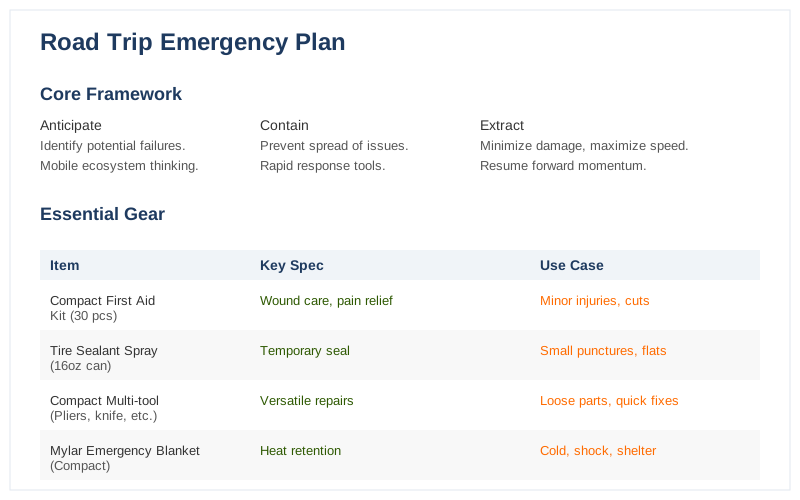
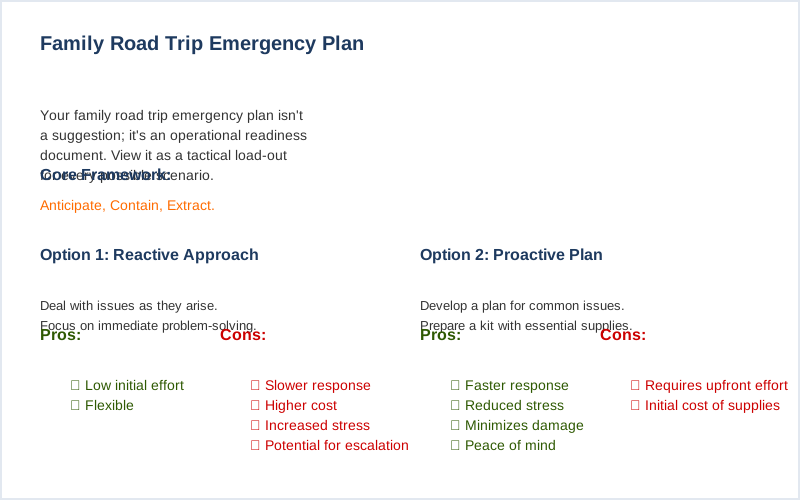
Your family road trip emergency plan isn't a suggestion; it's an operational readiness document. I view it as a tactical load-out for every possible scenario, from a Code Brown to a full-blown vehicle extraction. The core framework is simple: anticipate, contain, extract.
Anticipate every potential failure point. This isn't just about flat tires; it's about the half-life of a forgotten juice box or a child's sudden onset motion sickness. You need a mental model that treats your vehicle as a mobile, contained ecosystem. Every input has a potential output, and most outputs are messy.
Containment is key. A spill isn't just a spill; it's a spreading contaminant. Without immediate isolation, it will bond to your upholstery, seep into crevices, and degrade the air quality of your mobile command center. My focus is on preventing the spread, not just cleaning the initial incident. This means having the right tools for rapid response at arm's reach.
Extraction protocol means getting out of the situation with minimal long-term damage and maximum speed. This applies whether you are extracting a sticky toy from a floor mat or your entire family from a broken-down vehicle. The goal is to minimize exposure to the hazard and resume forward momentum. Without a clear plan, you're just reacting, and reactions are almost always slower and more expensive. This planning ensures everyone knows their role, reducing panic and increasing efficiency.
My sanity-saver comes from knowing I have a specific protocol for every threat level. It is not about avoiding problems; it is about minimizing their impact and half-life. The Red Cross also emphasizes making a plan with your household members, identifying responsibilities, and practicing it. This is not for fun; it is for survival.
To ensure you're fully prepared, consider our comprehensive packing checklist for road trips.


The Reality Check
A single broken serpentine belt can strand you on the side of the road in 15 minutes. It's not a slow failure; it's an immediate loss of power steering, alternator, and often the water pump. Your vehicle's systems are interconnected, and one failure can cascade into a complete operational shutdown. Understanding these failure points is the first step in tactical prep. Heat is the enemy of all things mechanical and biological in your car. A 90-degree F day can push interior temperatures to 130-140 degrees F in an hour, accelerating material degradation and creating prime conditions for biohazard growth. This is why a simple forgotten apple core turns into a mold experiment in 24 hours. I treat vehicle components like critical infrastructure. Each has a specific function and a known failure mode. Your job is to understand the symptoms and the immediate consequences. This isn't about becoming a mechanic; it's about recognizing when the system is compromised and initiating the correct extraction protocol. Reviewing hazard scenarios is critical for this.| Component | How It Fails | Symptoms | Fix Cost |
|---|---|---|---|
| Tire | Puncture, sidewall damage | Rapid pressure loss, steering pull | $150-$300 per tire |
| Battery | Internal cell failure, low charge | Slow crank, no crank, dim lights | $120-$250 |
| Serpentine Belt | Cracks, fraying, snapping | Squealing, loss of power steering/charging | $80-$200 |
| Cooling System | Hose leak, radiator puncture | Overheating, coolant smell | $200-$600 |
| Fuel Pump | Electrical failure, clogging | Engine sputtering, no start | $400-$800 |
| Brakes | Pad wear, fluid leak | Squealing, grinding, soft pedal | $250-$500 per axle |
To further prepare for the unexpected, explore strategies in managing car breakdowns with children.
How to Handle This
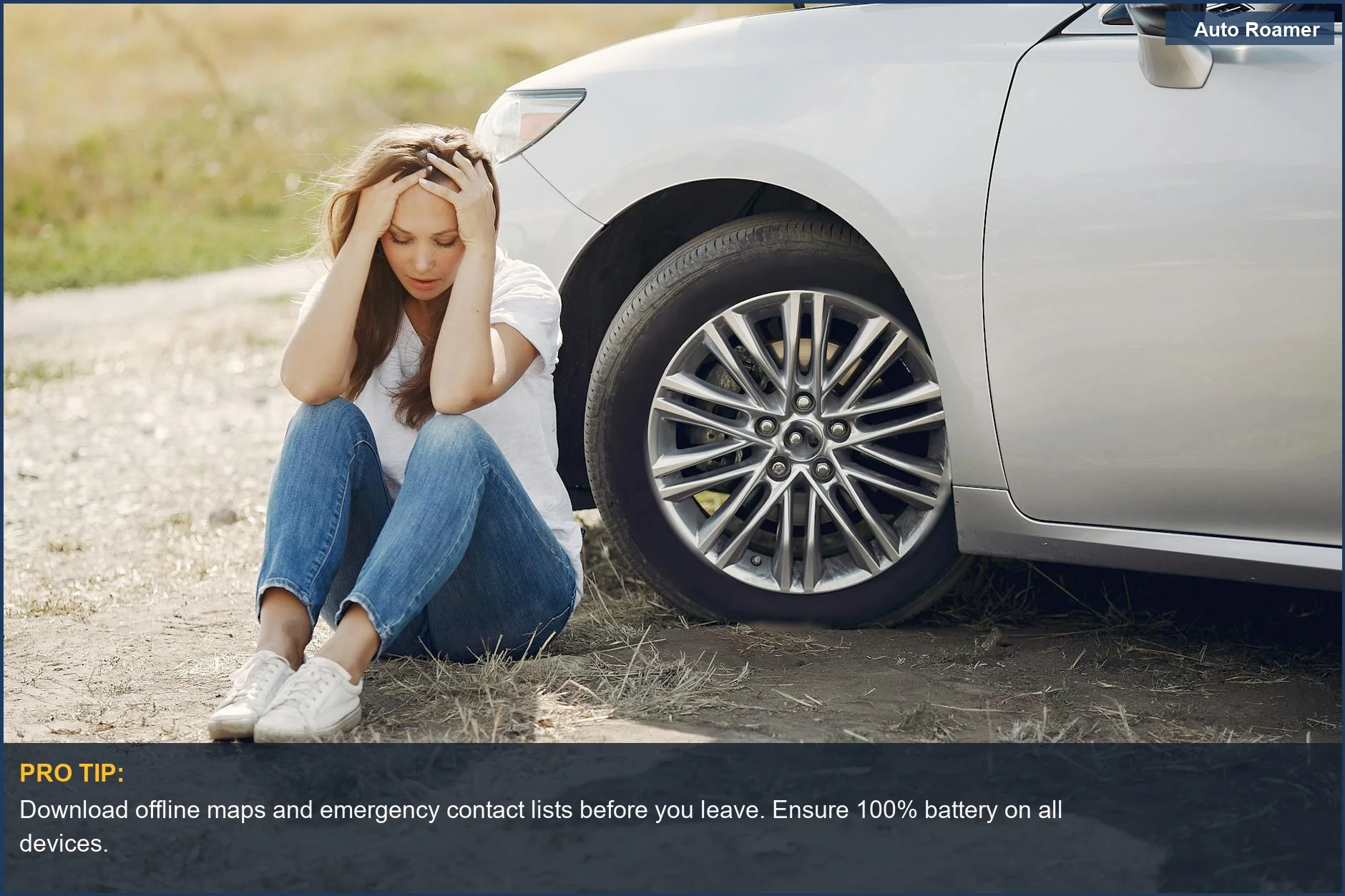
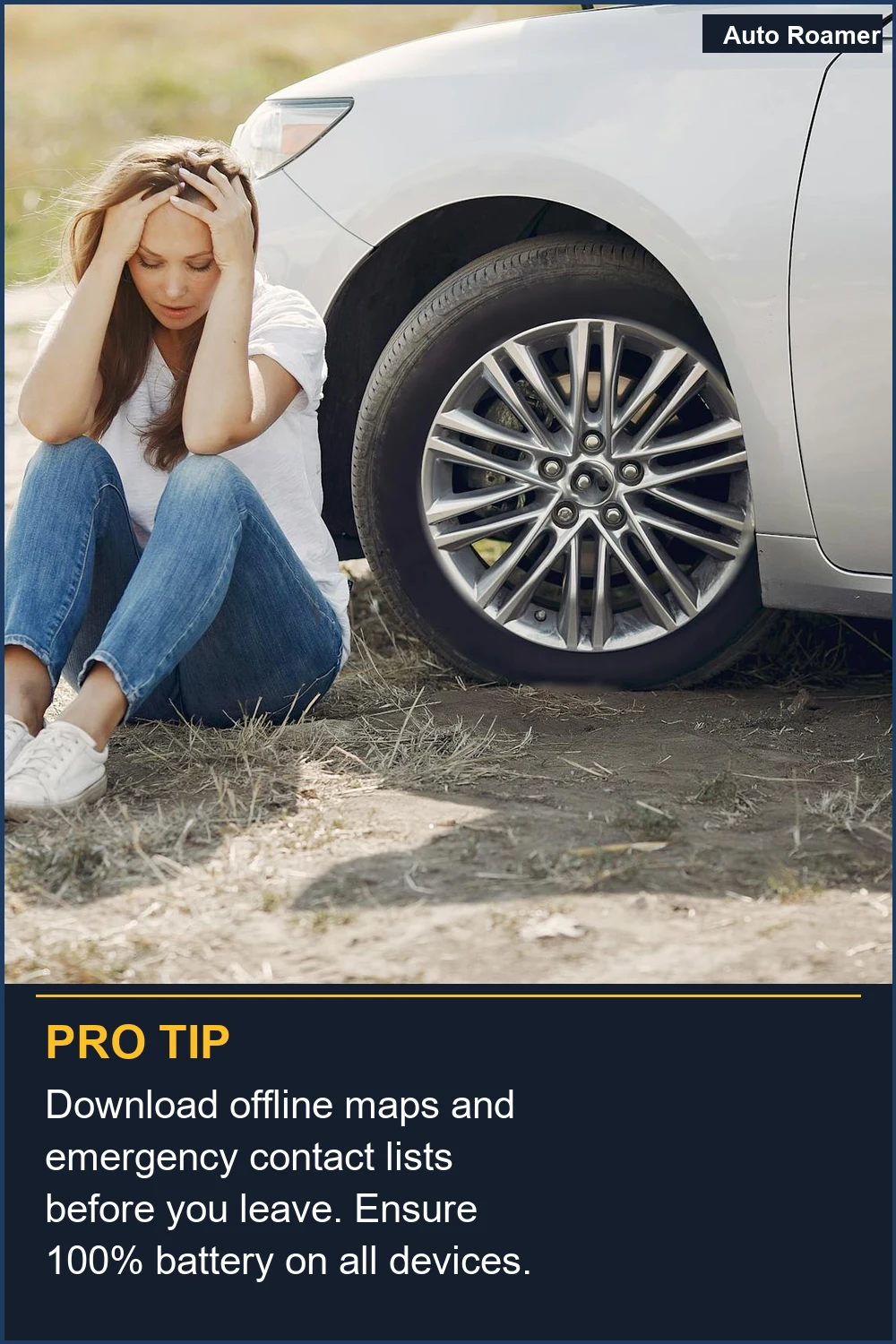
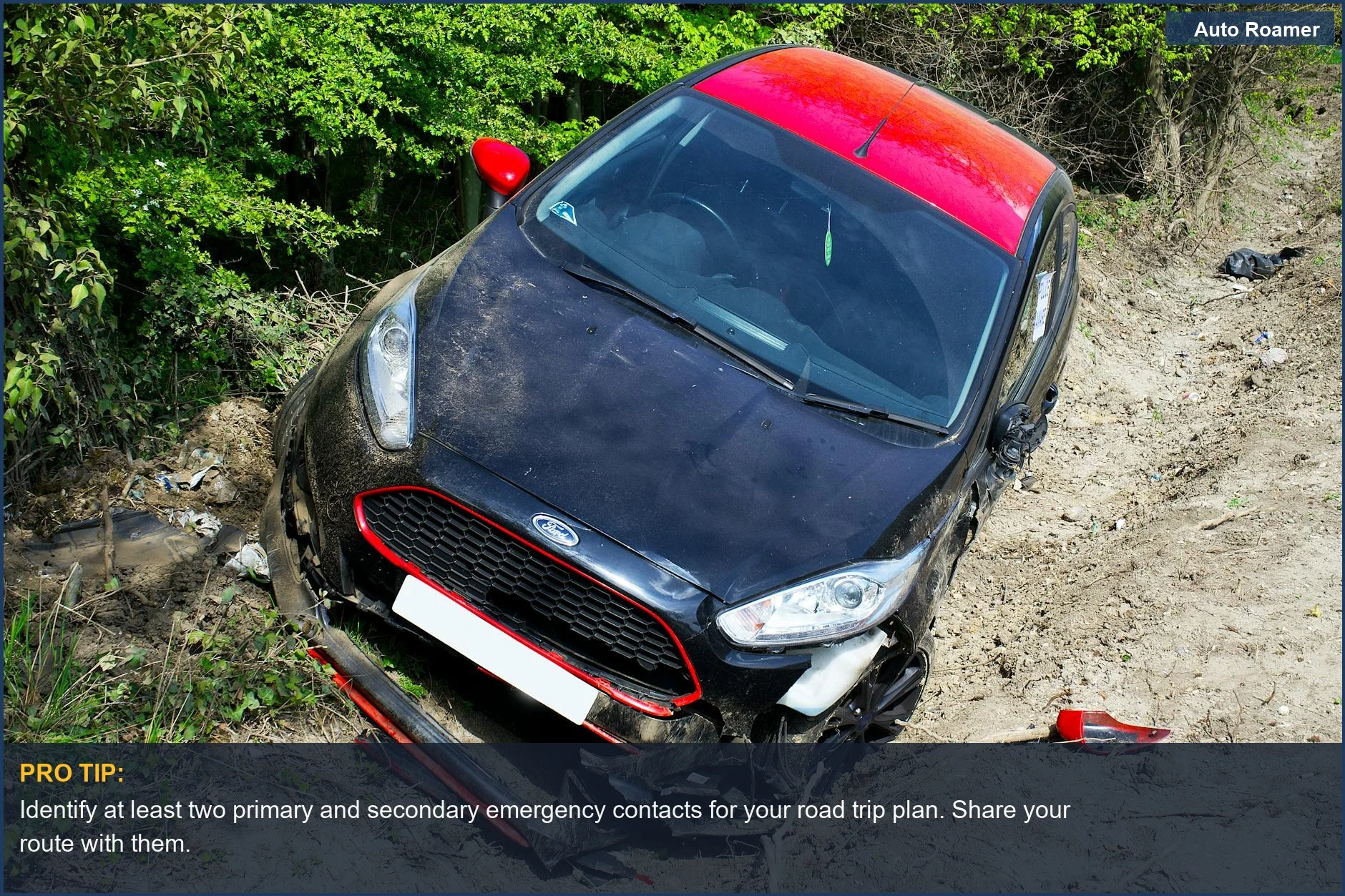
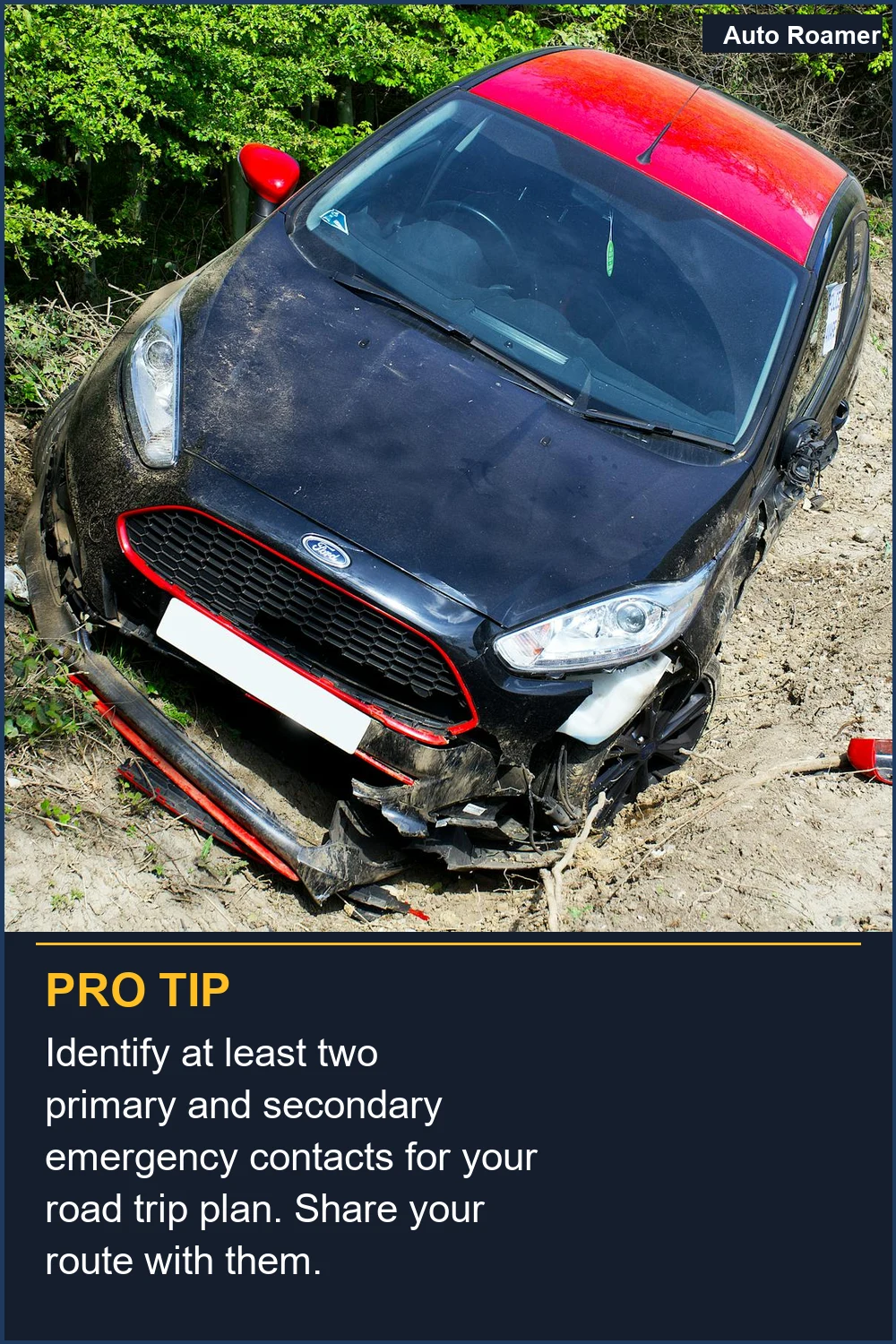
1. Map Your Hazard Zones and Contact Protocols: Before you even load the first juice box, pull up your route. Mark every major town, hospital, and rest stop. Identify cell service dead zones. Your comms plan needs to include primary and secondary contacts, and a designated meeting point in case of separation. The Red Cross recommends emergency contact cards for everyone. 2. Assemble Your Vehicle Extraction Load-Out: This is non-negotiable. My kit includes a 12V air compressor, a tire plug kit, jumper cables, a headlamp, and a basic tool kit (sockets, wrenches, screwdrivers). For under $100, you can handle 80% of roadside issues yourself. This is not about being MacGyver; it's about being self-sufficient for common failures. 3. Establish a Biohazard Containment System: Every passenger gets a gallon-size ziplock bag, pre-loaded with wet wipes and two small trash bags. This is for motion sickness, dropped snacks, or any other unscheduled fluid release. The ziplock seals the biohazard, preventing spread and odor. It buys you time until a proper disposal opportunity. 4. Create a Communications and Navigation Contingency: Cell service is not guaranteed. Download offline maps of your route. Have a physical paper map as a backup. Ensure all phones are fully charged, and carry a high-capacity power bank. A 20,000 mAh power bank can recharge two phones fully, providing critical communication time when your vehicle battery is dead. 5. Develop a Roadside Assistance Protocol: This is where the rubber meets the road. I've seen too many people stranded for hours because they didn't have a plan. You have options: a specific roadside assistance membership, or a credit card that offers it. A basic AAA membership costs around $60-$100 annually. This is a sanity-saver, not an expense. When selecting a roadside assistance provider, ask specific questions: What is the tow distance limit? Is there a flatbed option for AWD vehicles? How long is the typical wait time in your service area? Some plans offer 5-mile tows; others offer 200 miles. A 5-mile tow won't help you in the middle of nowhere. Some credit cards offer roadside assistance, but often with stricter limitations on services or higher out-of-pocket costs. Always confirm the details before you need it. Ready.gov also advises considering specific needs like medical equipment or pets in your plan. 6. Practice Your Evacuation Drill: Yes, practice. Know where your first aid kit is, how to access the spare tire, and where the emergency food/water is stored. If you have children, ensure they know the designated safe spot outside the vehicle in case of a breakdown. My rule: everyone out, away from traffic, immediately. Massachusetts provides guidance on making a family emergency plan that addresses evacuation or sheltering in place.
To ensure a smooth journey, it’s also wise to know what to do if your car breaks down.
What This Looks Like in Practice
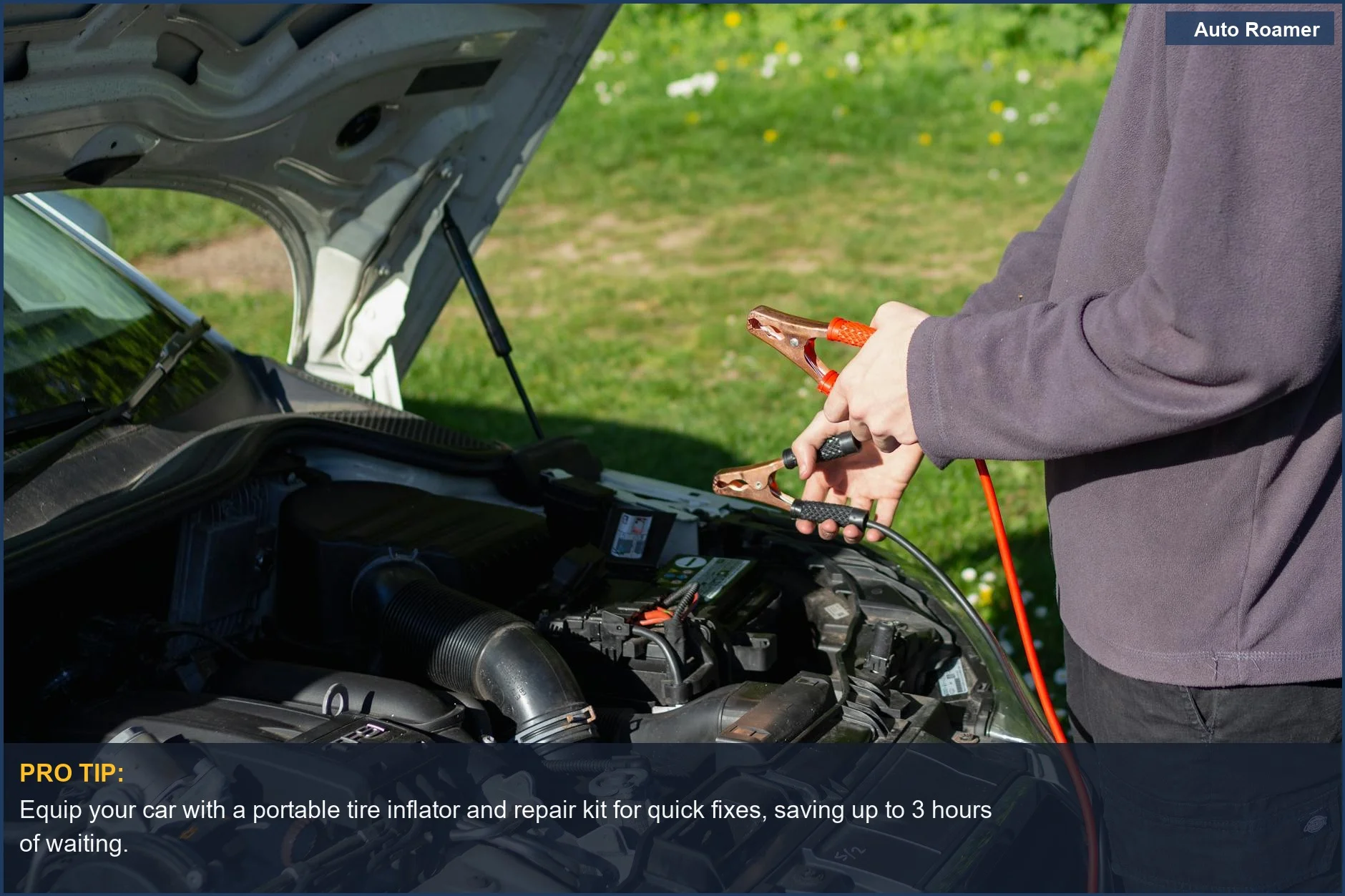
A flat tire at Mile Marker 187 with no cell service is not a crisis if you have a plan. My load-out, including a 12V air compressor and tire plug kit, means a 15-minute fix, not a 3-hour wait for a tow. Total cost for the gear: $45. The alternative: a $150 tow and wasted hours. Motion sickness hits the youngest passenger in the third row. Without my pre-loaded gallon ziplock bag, you're looking at a permanent odor and a 45-minute cleaning detour. With the bag, it's a 30-second containment, seal, and a quick wipe down. Minimal interruption, maximum efficiency. Assessing risks and building emergency kits are crucial here. Your check engine light comes on 200 miles from home. You don't know if it's a loose gas cap or a catastrophic engine failure. My OBD2 scanner, a $25 investment, tells me the error code. I can then cross-reference it with a quick Google search to determine if it's a 'drive to the next town' issue or a 'pull over immediately' threat. This prevents unnecessary panic and costly towing. Kids are bored and fighting, threatening to escalate into a full-blown distraction for the driver. My 'Emergency Entertainment Kit' - a pre-loaded tablet with offline games and movies, plus a set of headphones - is deployed. It's a 2-minute deployment, restoring peace and driver focus. Avoiding distractions like cell phones is critical, as they cause almost 30% of all crashes.
To ensure a smooth experience, it's wise to be prepared for any issues, so consider our tips on emergency preparedness.
Mistakes That Cost People
| Mistake | Consequence | Mitigation |
|---|---|---|
| Relying solely on cell phones for navigation | No service in remote areas, dead battery | Offline maps, paper map, power bank |
| Ignoring pre-trip vehicle maintenance | Increased breakdown risk, higher repair costs | Fluid checks, tire pressure, battery test |
| No designated emergency cash | Unable to pay for small services/emergencies | Keep $100-$200 in small bills separate |
| Forgetting prescription medications | Health crisis, forced detour for pharmacy | Dedicated medical kit, 7-day supply |
| No plan for pet emergencies | Pet injury, abandonment, vet search delays | Pet first aid, water, leash, carrier |
| Not having a communication plan for separation | Panic, lost time, increased danger | Designated meeting points, out-of-state contact |
| Assuming roadside assistance is instant | Long wait times, exposure to elements | Self-reliance kit, emergency blankets/water |
To ensure a smooth journey, don’t forget to review our comprehensive road trip packing list.
Key Takeaways
A family road trip isn't a vacation; it's a mobile operation. My golden rule is that every trip requires a tactical load-out and a debrief for potential scenarios. You're a field commander, not a tour guide.
Understanding vehicle modifications can also help prevent issues during your travels, so consider how road trip gear might affect your car's performance.
Frequently Asked Questions
Is it really worth buying a $15 tire plug kit when a professional repair is only $20?
A professional tire repair at a shop costs $20, but the tow to get there could be $100-$200 if you're stranded. My $15 kit allows a 15-minute roadside fix, getting you to the shop on your terms. That's a minimum $85 saving, plus avoiding the 2-hour wait for a tow.
Do I really need to carry an OBD2 scanner? Can't I just Google the check engine light?
You can Google the light, sure. But without an OBD2 scanner, you're guessing. My $25 scanner gives you the exact error code (e.g., P0420) in 30 seconds. This immediately tells you if it's a 'drive to the next gas station' issue or a 'pull over now and call a tow' situation, preventing further damage.
What if my roadside assistance plan only covers a 5-mile tow and I'm 50 miles from the nearest town?
Then you're paying out of pocket for the remaining 45 miles at $5-$10 per mile, which is $225-$450. This is why you must verify your tow distance limit before you need it. My protocol: a backup plan is always needed, or a premium membership with a 200-mile tow limit.
Can leaving a sticky spill in my car permanently damage the interior?
Absolutely. A sugary spill left for 24-48 hours in warm temperatures will bond to fabric fibers and plastics, attracting mold and insects. This creates a permanent stain and a biohazard, requiring professional detailing that can cost $150-$250 to mitigate, not fully fix.
My uncle said you don't need a spare tire anymore, just rely on run-flats or a patch kit. Is he right?
Your uncle is operating on outdated intel. Run-flat tires get you 50 miles at 50 mph, then they're done. A patch kit handles punctures, but not a sidewall blowout. My load-out includes a full-size spare and the tools to change it. Your uncle's advice leaves you stranded for a minimum 2-hour tow with a non-repairable tire.
🏅 Looking for Gear Recommendations?
Check out our tested gear guides for products that work with this setup:
Sources
- Disaster Preparedness Plan | Make a Plan - Red Cross
- Complete Guide to Family Preparedness for 2026
- Prepare My Family for a Disaster | Homeland Security
- Disaster Preparedness Plan | Make a Plan - Red Cross
- Family preparedness plan - Habitat for Humanity
- Emergency Plan for Family: Your Essential Guide for 2026
- Make A Plan | Ready.gov
- Make a Family Emergency Plan - Mass.gov
- Developing a Family Emergency Action Plan in 2025 - MIRA Safety
- The Ultimate Road Trip Safety Guide: Proven Tips for 2026
- Emergency Response Plan | Ready.gov