
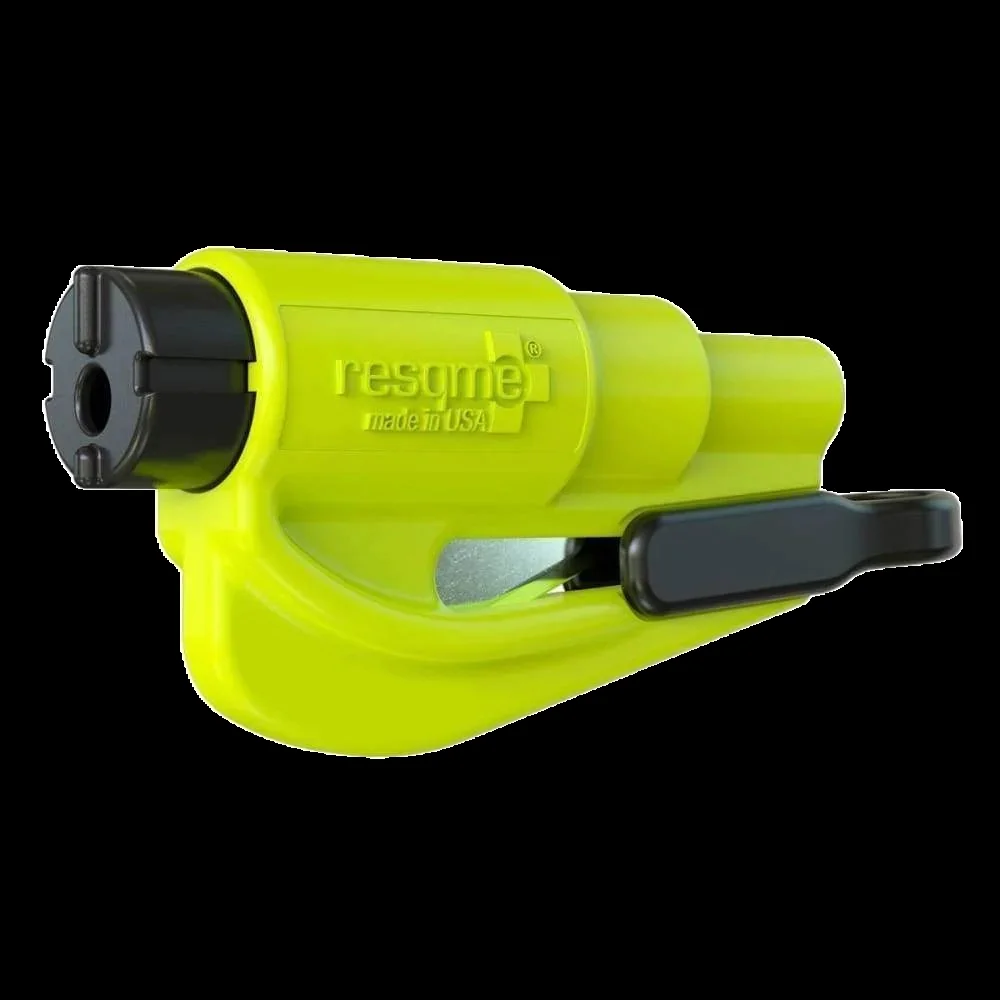
The two-job tool you hope to never use
A car escape tool does exactly two things, and both only matter in the handful of seconds after something has already gone wrong: it cuts a jammed seatbelt, and it breaks a side window so you can climb out. That narrow job is the whole point — the best tool is the one that does those two things simply, the one time you need it.
Before comparing models it helps to understand why they work, because the physics decides everything else: which glass you can break, which mechanism to trust, and — the part most people get wrong — where the tool has to live to be any use at all. Get those three right and the specific product almost picks itself.
This guide walks the physics first, then the two mechanisms, then placement, and ends with the two tools worth buying: the keychain resqme and the mounted LifeHammer.
Why side windows break and windshields don't
Almost every escape-tool question traces back to one fact about automotive glass. Your side and rear windows are tempered glass, engineered to shatter into small blunt granules the instant a hard point concentrates force on them — which is exactly what an escape tool is built to do.
Your windshield is different. It is laminated glass: two panes bonded to a plastic interlayer so it holds together in a crash rather than showering the cabin. That is a safety feature, but it also means no keychain punch or safety hammer will get you through it. An escape tool is a side-window tool, full stop — in an emergency you go for a side window, never the windshield.
One practical corollary is worth knowing: because tempered glass shatters all at once rather than cracking, you do not need to hit it repeatedly or hard across a broad area. A single sharp point in the right spot does the whole job, which is why a keychain-sized tool with no swing behind it works just as well as a heavy hammer. The rear window is tempered too, so it is a fallback if a side window is blocked.
This single distinction quietly rules out a lot of marketing. Any tool that promises to break a windshield is selling something that physics does not allow, and the extra bulk that comes with such claims is bulk you do not want on a tool whose entire value is that it works, simply, under stress.
Punch or hammer? The two mechanisms that actually work
Every credible breaker uses one of two mechanisms, and the right one depends less on power than on where the tool lives and how much room you have to use it.
- The spring-loaded punch. You press the head flat against the glass and a captive spike releases with a click — no swing, no wind-up. That makes it the easier tool under stress and in a cramped or overturned cabin, which is why it suits a compact keychain tool like the resqme.
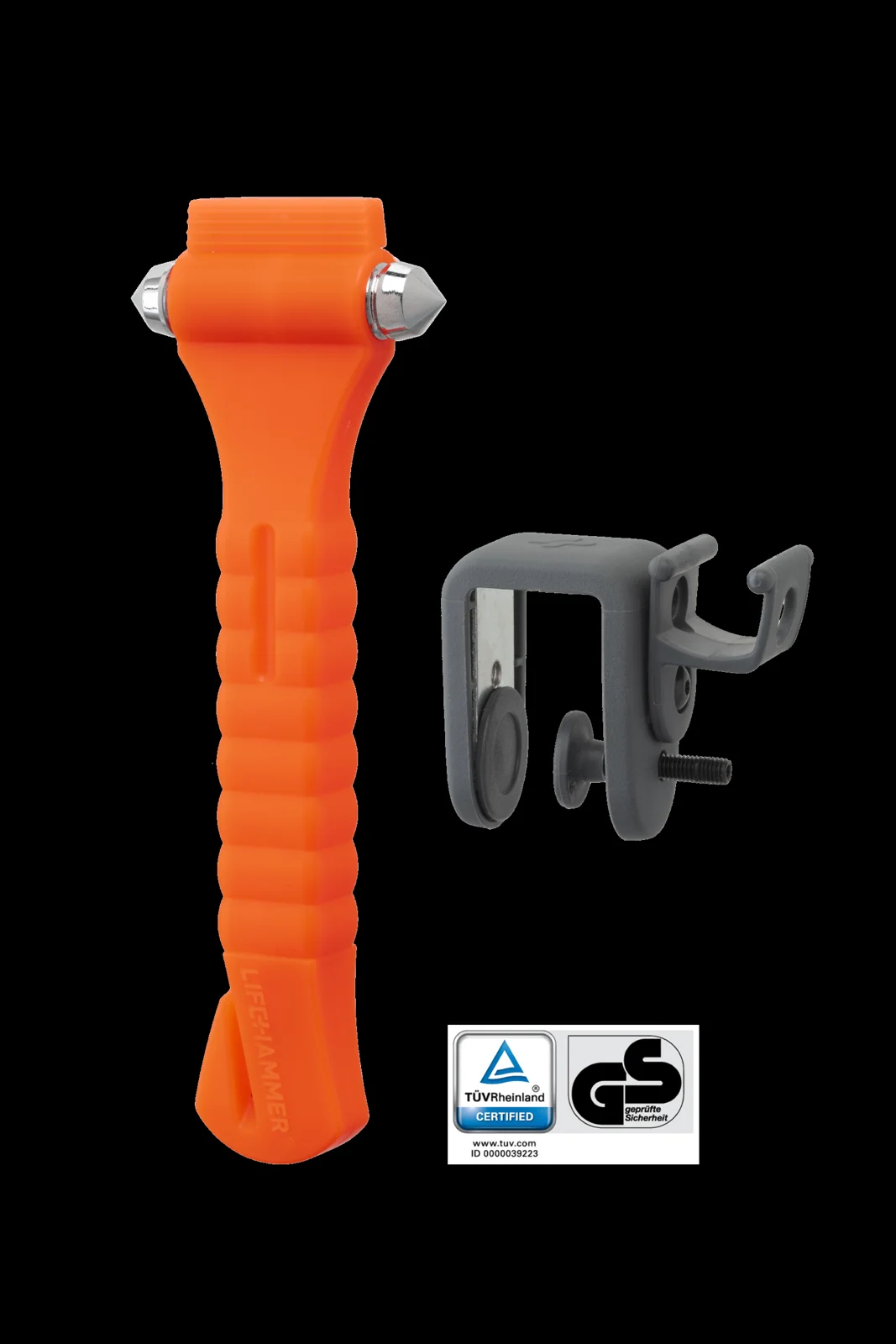
- The swing hammer. A hardened point on the end of a handle you strike the glass with. It needs room to move, but it gives you a firm grip and doubles as a sturdy, deliberate tool — the classic mounted LifeHammer design.
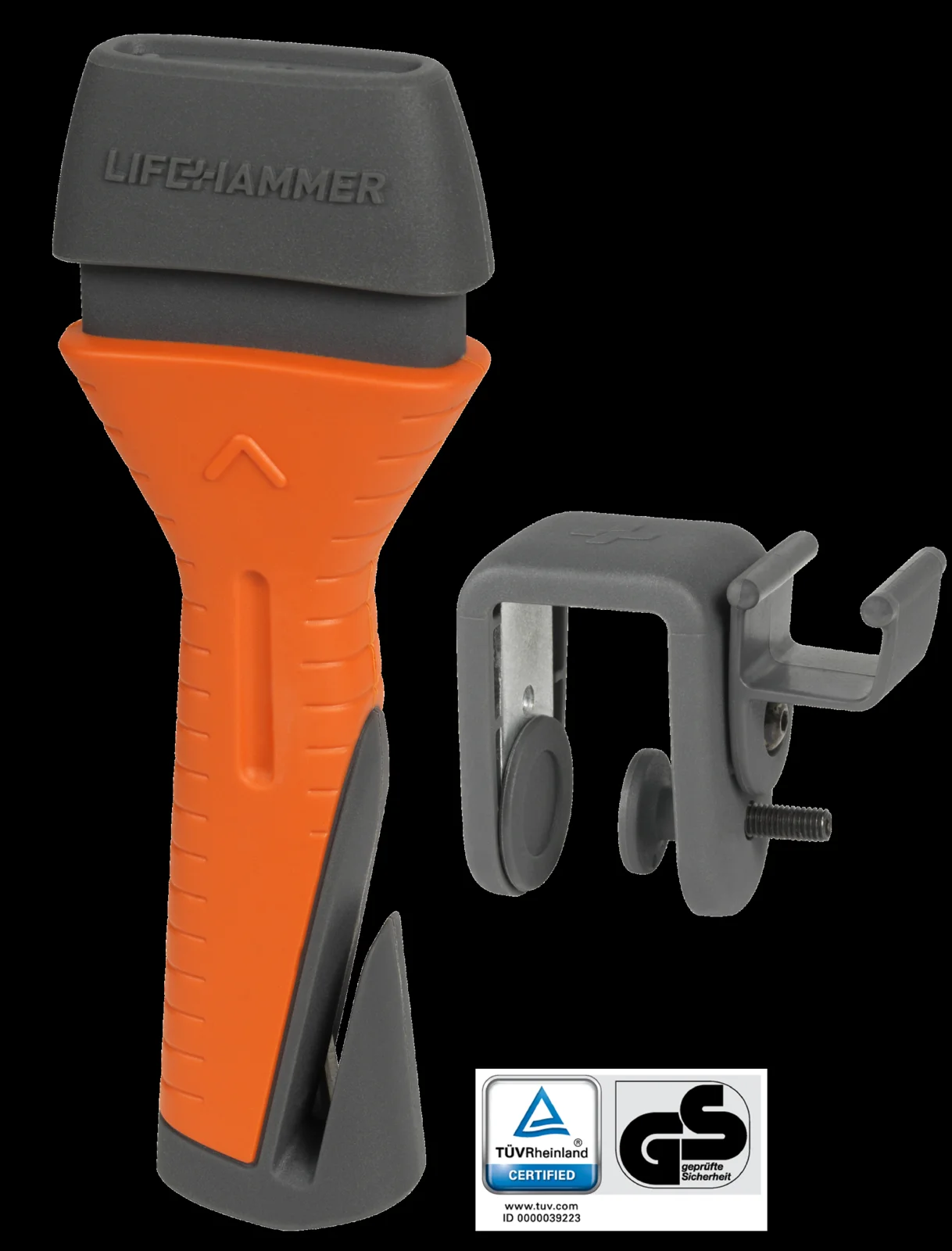
Neither is wrong; they suit different places in the car. The LifeHammer EVO even combines them, adding a spring punch to the hammer body so you can press when there is no room to swing. What every good tool shares is a recessed seatbelt blade — a hooked channel that slices the webbing but can't cut your hand as you fumble for it in the dark.
The mistake that makes any tool useless: where you keep it
The single most common failure is not the tool — it is the location. A perfectly engineered breaker is worthless in a locked glovebox you can't reach when the car is on its side or filling with water. Reachability beats every other feature.
- Keychain tools like the resqme solve this by design: they ride on your keyring, so they are wherever you are the moment you leave the driver's seat.
- Mounted hammers need a bracket somewhere you can grab from a normal driving position — the base of the A-pillar, the side of the console, or a seat rail all work; the glovebox does not.
- A second tool on the passenger side is cheap insurance if you regularly carry people who might need to get themselves out.
There is a reason this matters more than any spec. In a real emergency you may be disoriented, injured, or holding a child with one arm, and the car may not be sitting the way it normally does. A tool you have to think about, unclip, or dig for is a tool you will not reach in time. The whole design goal is to remove those steps.
Whatever you choose, handle it once a year so your hands know where the blade and the breaker are without looking. The tool you have actually touched is the one you will use when it counts.
How to use it when seconds count
Under stress you do what you have rehearsed, so it is worth knowing the sequence before you ever need it:
- Free yourself first. If the buckle won't release, slide the hooked blade under the belt and pull firmly — the recessed edge cuts the webbing without your having to find a blade in the dark.
- Aim for a corner, not the center. Glass is weakest near its edges. Press a spring punch flat into a lower corner until it fires, or strike the same corner sharply with a hammer.
- Clear the frame and get out. Tempered glass falls away in blunt granules; push out any remaining pieces and climb through.
For a vehicle going into water the order is the same but urgent: unbuckle, break a side window immediately while there is still an air gap rather than waiting, and go through the opening. Doors are nearly impossible to open against outside water pressure, which is precisely why a glass-breaking tool earns its place. For more on that scenario, see our guide to breaking a car window in an emergency.
What to buy: start on your keychain, back it up on a bracket
For most drivers the answer is the resqme Original first. It is inexpensive, it does both jobs — spring-loaded window punch and recessed seatbelt cutter — and because it lives on your keyring it beats every fancier tool locked in a glovebox. Reachability is the whole game, and the keychain wins it by default.
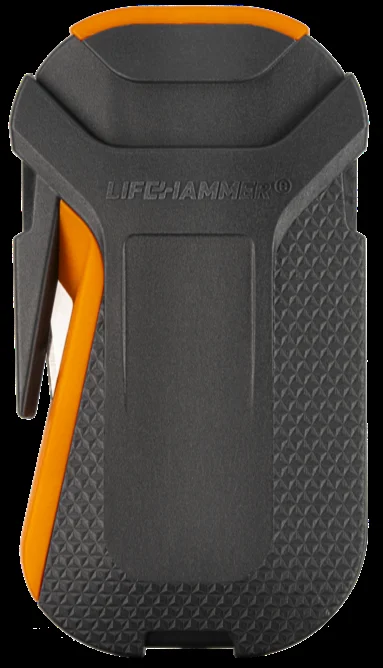
If you want a fixed backup, or you carry passengers, add a LifeHammer. The LifeHammer Classic is the proven mounted hammer; the EVO is the pick if you want a spring punch as well as a swing head for tight cabins; the Smart is the tidiest to live with in a modern interior. Mount it where you can grab it, not where it looks neat.
Skip the overbuilt multi-tools and anything promising to break a windshield. Buy one tool you can reach and understand, keep it within arm's length, and handle it once a year. That is the entire recipe for being ready. Pair it with a car first-aid kit and you have the two things worth having when a drive goes wrong.